Hot!
Is China’s BRI Project yielding results in Africa?


- /home/u249204778/domains/spectator.com.gh/public_html/wp-content/plugins/mvp-social-buttons/mvp-social-buttons.php on line 27
https://spectator.com.gh/wp-content/uploads/2023/11/BRI_BG.jpg-scaled.webp&description=Is China’s BRI Project yielding results in Africa?', 'pinterestShare', 'width=750,height=350'); return false;" title="Pin This Post">
- Share
- Tweet /home/u249204778/domains/spectator.com.gh/public_html/wp-content/plugins/mvp-social-buttons/mvp-social-buttons.php on line 72
https://spectator.com.gh/wp-content/uploads/2023/11/BRI_BG.jpg-scaled.webp&description=Is China’s BRI Project yielding results in Africa?', 'pinterestShare', 'width=750,height=350'); return false;" title="Pin This Post">
Many people might have heard of China’s Silk Road Economic Belt and the 21st Century Maritime Silk Road Project, collectively called the Belt and Road Initiative (BRI), but paid little or no attention to it.
The Project was unveiled by the Chinese President, Xi Jinping, exactly 10 years ago, this year,2023.
It focuses on Asia, Europe and Africa to provide common economic prosperity for countries along the ancient Silk Road trade route, however, it is open to all countries to enjoy.
And, aims at improving connectivity and enhancing cooperation on trans- continental scale and has become a major development opportunity even for the entire world.
According to the “Governance of China” book, by President Xi Jinping,”China is having an accurate perspective of the trends in economic globalization and to support countries around the world in opening up wider while rejecting unilateralism and protectionism,…this is vital if we are to take humanity to a better future”.
Speaking on “Let China’s Openness Benefit the World”, at the opening ceremony of the fourth China International Import Expo on November 4, 2021, President Xi Jinping intoned, “China will promote high-quality Belt and Road cooperation to provide development opportunities and deliver real benefits to more countries”.
And, true to that, over the past decade, the BRI has gained worldwide traction and garnered overwhelming support from the international community.
In Africa, the massive support for BRI cannot be over-emphasized as it is growing by leaps and bounds.
At a recent event on September 8, 2023, which marked a significant milestone in Sino-Africa cooperation, the Africa Union (AU) and the Chinese Mission to the AU pledged together to deepen cooperation under the BRI towards achieving common economic prosperity.
It is an open secret that Africa has been faced with challenges, such as hindrances to sustainable growth and development.
In Ghana, and other African countries, transport networks including roads and railways were built in colonial days to link mines, plantations and other key sites of exploitation which are connected to ports, with the ultimate aim to transport resources to faraway countries which are not benefiting the African people.
But, the introduction of BRI Project to the continent, is seeing the injection of new impetus into various industries, which appears to steer the African countries along a sustained path of economic transformation and resilience.
Undoubtedly, with the introduction of BRI, there has been a strengthened cooperation and promotion of hard and soft infrastructure development such as digital connectivity and people-to-people exchanges, among the lots, in Africa.
The BRI has become central to national actions to tackle challenges and structural deficiencies which are evident in key sectors in Africa including transport.
Gradually the BRI project is leaving its footprints on the African continent and it would be appropriate, for this article,
to cite Nigeria, which is Africa’s largest economy, where social and economic gains reaped under the BRI are vivid.
To mention, just a few, the China-built Lagos-Kano standard gauge project.
It is the first standard gauge railway in Nigeria and West Africa, which has significantly improved mobility.
There is also the Abuja-Kaduna railway which is the first segment of the project which commenced operation in 2016 and it is believed to have safely transported about 6 million passengers.
From January 2023, Nigeria began witnessing the completion and opening of major projects under the BRI, including the first phase of the Lagos Rail Mass Transit Blue Line project and the Lekki deep-water port, the largest deep-water port constructed by China Harbour Engineering Company Limited.
Nigeria stands to rake in about US$360 billion from the project and can create about 170,000 jobs.
The example of Nigeria, sums up a message of President Xi Jinping in his “Governance of China Book”, during the opening ceremony of the third Belt and Road Forum for International Cooperation, in Beijing on October 18, this year.
President Xi Jinping’s “Governance of China” Book states: “We in China will not lose our resolve to open wider at a high standard, we will not lose our determination to share development opportunities with the rest of the world, we will not lose our commitment to economic globalization that is more open, inclusive, balanced and beneficial to all;
“Over these 10 years, we have endeavoured to build a global network of connectivity consisting of economic corridors, international transportation routes and information highway as well as railways, roads, airports, ports, pipelines and power grids…this network has boosted the flow of goods, capital, technologies and human resources among countries involved and injected fresh vitality into the millennia-old Silk Road in the new era”, it underscored.
The forum, under the theme, “High-Quality Belt and Road Cooperation: Together for Common Development and Prosperity”, brought together over 130 foreign media executives, senior editors and journalists from over 110 media outlets in 75 BRI partner countries.
BY KINGSLEY E.HOPE


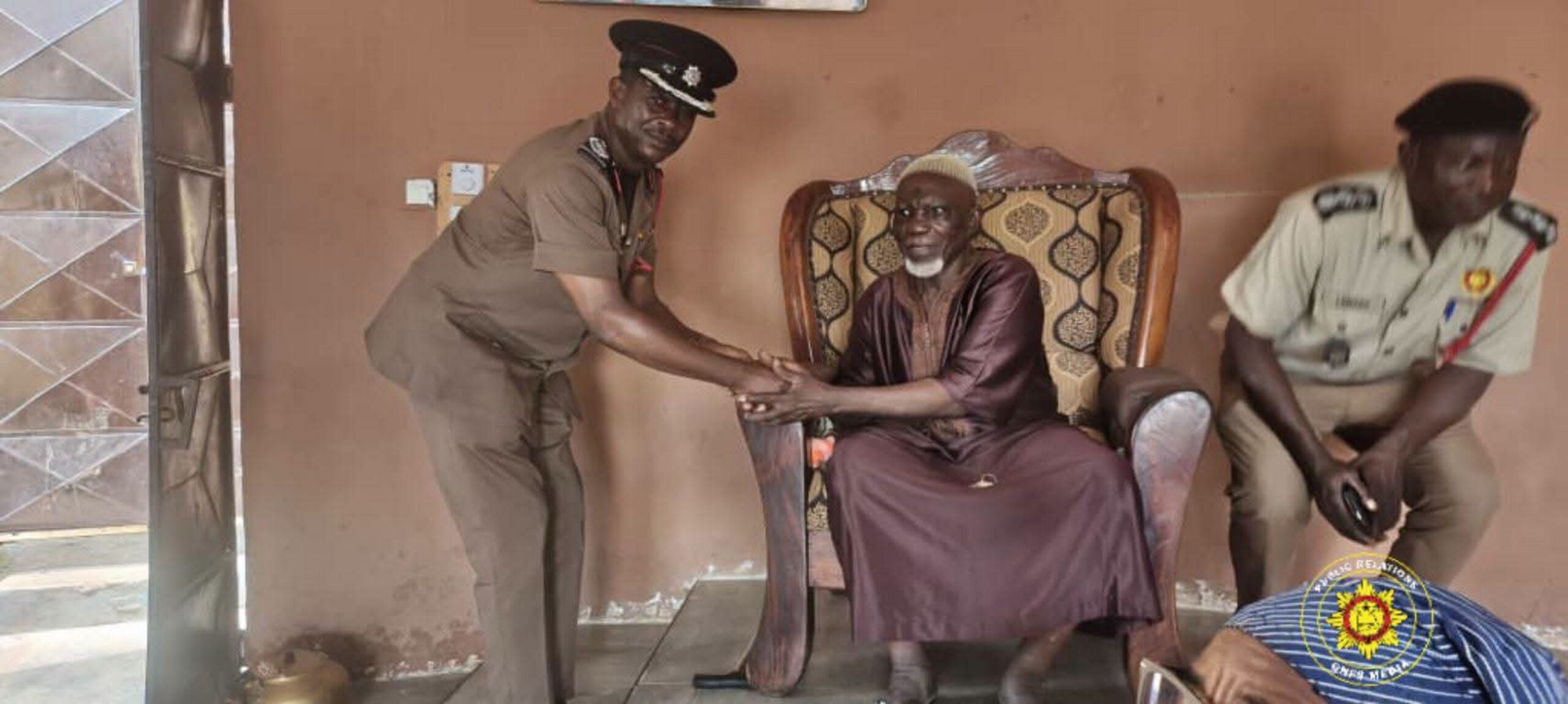
The Paramount Chief of Bamvum, Abdulai Ziblim, has donated a one-acre plot of land at Jongshegu, a suburb of Tamale, to the Ghana National Fire Service (GNFS) for the construction of a new fire station.
The Northern Regional Commander of the GNFS, ACFO I Joseph Koranteng, led a delegation to formally accept the land and expressed appreciation to the Chief for his commitment to public safety.
The proposed fire station is expected to improve emergency response times and strengthen fire safety coverage as Jongshegu and surrounding communities continue to expand rapidly.
The Chief called on stakeholders to support the swift development of the facility, while ACFO I Koranteng described the donation as a strong example of collaboration between traditional authorities and state institutions to protect lives and property.
By Edem Mensah-Tsotorme

A 24-year-old tricycle (Pragyia) rider, has been jailed three months by the Nkawie Circuit Court in the Atwima Nwabiagya South Municipality of the Ashanti Region for biting a Community Police Assistant (CPA) at Nkawie.
Abdul Aziz pleaded guilty to the charge of negligently causing harm and was convicted on his own plea.
Police Inspector Kwaku Frimpong, prosecuting told the court presided by Mr Robert Addo that, complainants in the case were officers from the Nkawie Divisional Motor Traffic and Transport Department (MTTD) of the Ghana Police Service.
He said on September 3, at about 8:40am, the complainants led by Chief Inspector Abedi Larbi, were on their official patrol duty to ensure safety at Nkawie township and met the convict, who was in-charge of a Pragya tricycle with registration number M-25-A-3722.
He explained that, after a careful inspection, it was detected that the convict was without licence and other required documents, so Alhassan Seidu, the CPA, was instructed to lead him to the office for the next action.
On their way to the office, the convict took a different direction, so the CPA directed him to take the right route to the police station, but he disobeyed and attacked the CPA, resulting in a struggle between them.
In the process the convict bit the CPA on the chest, so he shouted for help and some nearby youth rushed to the scene and helped him to arrest the convict.
In his caution statement, he admitted the offence and after further investigations he was charged and brought before the court. –GNA
SKIP THE QUEUE, TAP THE NEWS
You can now read the Ghanaian Times and The Spectator newspapers from the comfort of your device via TimesNewsPlus.
Join our WhatsApp Channel: https://whatsapp.com/channel/0029VbBElzjInlqHhl1aTU27