Hot!
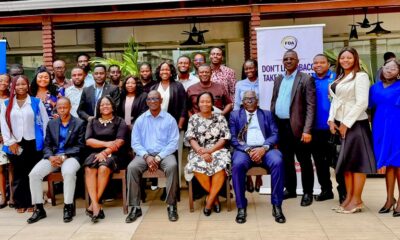
Intensify fight against wildlife crimes


- /home/u249204778/domains/spectator.com.gh/public_html/wp-content/plugins/mvp-social-buttons/mvp-social-buttons.php on line 27
https://spectator.com.gh/wp-content/uploads/2022/03/Participants-at-the-programme.jpg&description=Intensify fight against wildlife crimes', 'pinterestShare', 'width=750,height=350'); return false;" title="Pin This Post">
- Share
- Tweet /home/u249204778/domains/spectator.com.gh/public_html/wp-content/plugins/mvp-social-buttons/mvp-social-buttons.php on line 72
https://spectator.com.gh/wp-content/uploads/2022/03/Participants-at-the-programme.jpg&description=Intensify fight against wildlife crimes', 'pinterestShare', 'width=750,height=350'); return false;" title="Pin This Post">
There is an urgent need to intensify the fight against various wildlife crimes and other human activities that cause species reduction because they pose severe danger to the ecosystem which is the lifeline for human existence. It is, therefore, a call of duty to increase the awareness on wildlife conservation.
Ms.Georgina Antwi, Assistant Education Officer of the Ghana Wildlife Society who made the remarks said that, it was imperative to draw young people’s attention on the significance of wildlife (plants and animals) in our ecosystem and get them to acknowledge their contribution to the conservation of wildlife in the country.
Ms Antwi was speaking at a sensitisation programme organised by The Ghana Wildlife Society in partnership with Ghana Recycling Initiative by Private Enterprises (GRIPE) in some basic schools to educate and raise the awareness among young people on the need to conserve wildlife during the commemoration of this year’s World Wildlife Day on March 3, 2022.
Held under the theme “Recovering key species for ecosystem restoration”, Ms Antwi again explained that, humans had coexisted with wildlife forages which had become an important part of our lives.
“Wildlife benefits us in numerous ways; they provide us with food, medicines, oxygen, regulate the climate, influence rainfall, increase soil fertility and replenish our natural resources. Recognising the contribution of wildlife in our environment, and acknowledging their essentiality for existence of life on earth, is important and a big step towards wildlife conservation”.
“Unfortunately, we are losing our wildlife to human-induced factors like habitat destruction, illegal wildlife trade, deforestation, pollution, over exploitation, climate, among others and the rate at which the number of species of animals and plants are depleting keeps increasing at an alarming rate” she added.
“According to scientists, approximately 200 species of plants and animals are estimated to be getting extinct every 24 hours, which accounts for nearly 73,000 species of plants and animals annually”, and considering the contribution of wildlife in balancing the ecosystem, we cannot afford losing our wildlife as they are essential for the survival of humans,” she said.
Ms Antwi further stated that “the earth with no wildlife will be a desolate and dry planet, impossible for human survival. Therefore, it is important that we protect and conserve our wildlife for our own good, our communities and for the longevity of the planet.”
On her part, Ms. Louisa Kabobah, Project Manager on the Ghana Recycling Initiative by Private Enterprises (GRIPE) also advised the pupils to desist from indiscriminate disposal of post-consumer plastics on our beaches, saying that, “when plastics are improperly disposed, they could cause serious health problems for humans, and lethal consequences for marine life especially sea birds, whales, dolphins, and sea turtles””.
She urged the pupils and Ghanaians in general, to segregate their waste into plastics, paper and organic at school, and get in touch with the appropriate collectors and recyclers to pick them up.
Furthermore, she appealed to all and sundry to commit to conserving our invaluable and irreplaceable wildlife for the benefit of current and future generations adding that World Wildlife Day should be viewed as an occasion to celebrate all species, whether common or rare, as they all had significant roles to play in the food web.
The day was commemorated with education and awareness campaigns at the Prince of Peace Presbyterian School located in Tema, and the DPS International School at Dwahenya as Wildlife magazines and posters were donated to schools to enhance their knowledge in environmental sustainability, and circularity, and for them to take actions for people and the planet.
World Wildlife Day, commemorated every 3rd March is used to observe the signing of the Convention on International Trade in Endangered Species of Wild Fauna and Flora (CITES) which started in 1973.
By Portia Hutton-Mills



The Tema Regional Police Command has arrested a 32-year-old man for allegedly posing as a soldier and extorting money from unsuspecting members of the public at Ashaiman.
The suspect, identified as Bright Atsu Kudiabor, was arrested by the Ashaiman Police on Wednesday, September 16, 2026, at about 7:00 a.m.
According to the Police, he was arrested at an area known as “I Shall Return”, where he was allegedly parading himself as a soldier and demanding money from people.
The Police said Kudiabor, who is an ex-convict, was initially arrested by personnel of the Ghana National Fire Service in Ashaiman with assistance from other members of the public.
A search conducted on him after he was handed over to the Police reportedly led to the recovery of a set of military camouflage uniform.
The suspect is currently in Police custody and assisting with investigations.
The Tema Regional Police Command said he would be processed for court after investigations are completed.
The Police urged the public to remain vigilant and report anyone who falsely presents themselves as a soldier or a member of another security agency to deceive or extort money from the public.
By: Jacob Aggrey
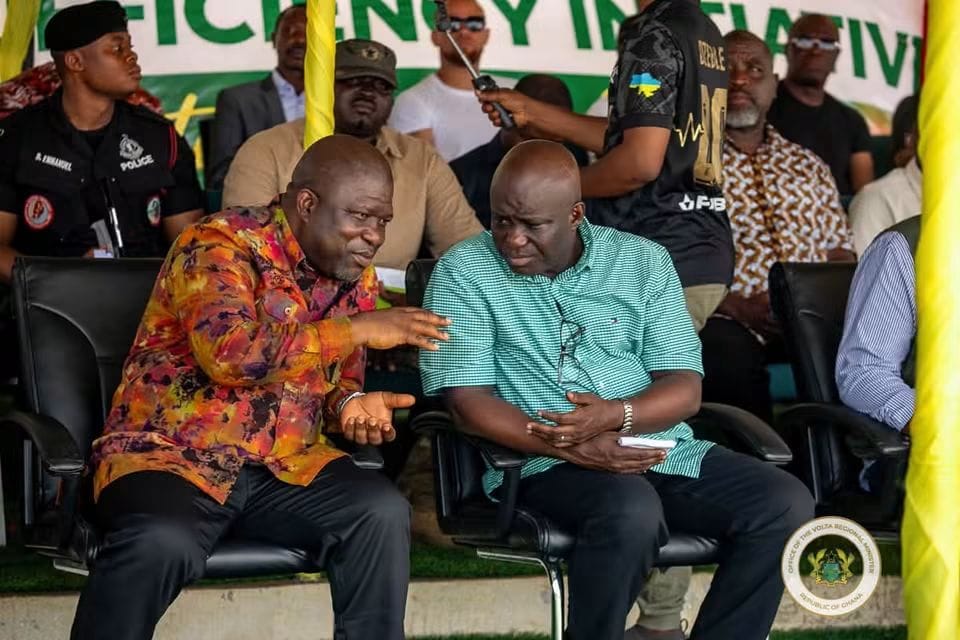
Volta Regional Minister, James Gunu, says the Volta Region holds enormous agricultural potential and efforts must be geared towards connecting farmers to the needed resources to unlock that potential.
He said focus must be on linking farmers to resources, technology, financing and markets to increase production, create jobs and build sustainable livelihoods.
Hon. Gunu made the remarks at the national launch of the Ghana Tomato Self-Sufficiency Initiative (GHATSI) held at Anloga in the Volta Region on Tuesday, September 15.
The initiative, under the theme “Produce at Home. Feed the Nation. Export the Surplus,” seeks to boost local tomato production, processing and marketing while reducing Ghana’s heavy reliance on imported tomatoes.
The launch was attended by the Minister for Food and Agriculture, Eric Opoku, his Deputy, John Setor Dumelo, Feed Ghana Coordinator, Bright Demordzi, Members of Parliament, traditional leaders, MMDCEs, farmers and other stakeholders.
Mr.Gunu expressed appreciation to the Minister for Food and Agriculture for the support announced for the region, including two excavators, 200 cartons of organic fertiliser, and GH¢200,000 for Ms. Kuatudzo Esther Dela, a tomato farmer and processor from Ziope.
He described the initiative as an important step towards making agriculture a stronger driver of food security, job creation and economic growth in the Volta Region.
By Edem Mensah-Tsotorme