Sports
Integrating School Sports and Colts Football: Ghana’s Untapped Goldmine for Youth Development

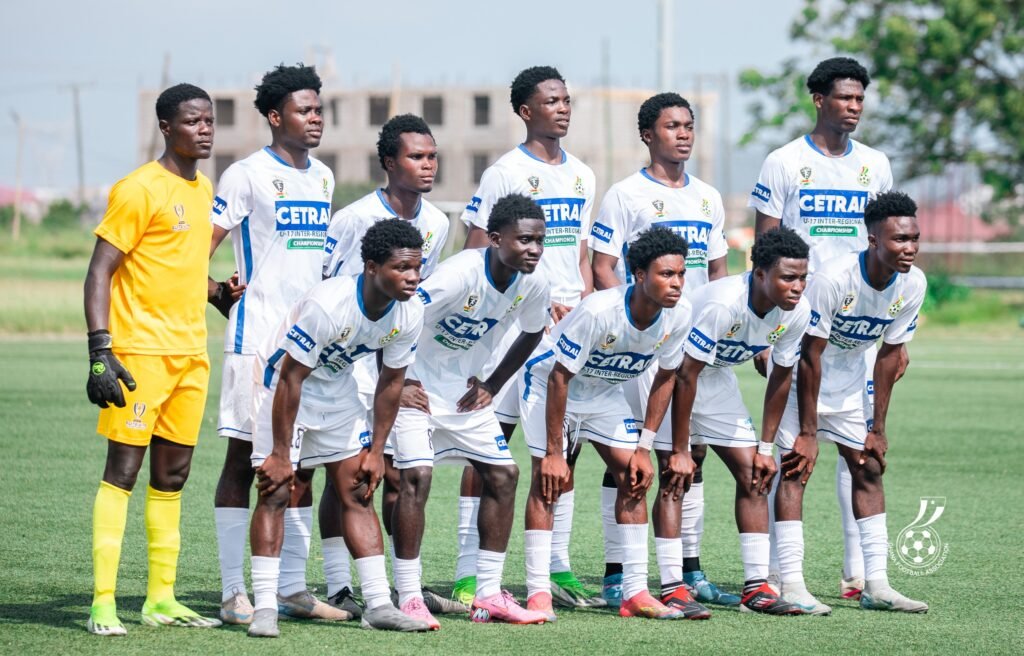
From Nima to the manicured fields of Achimota, the game has always been the heartbeat of communities. Yet, behind the Black Stars’ celebrated victories lies a troubling reality — the disconnect between school sports and colts football, two powerful engines of youth development that have for too long operated in isolation.
Experts argue that bridging this gap could be the single most transformative step for Ghana’s sporting future.
Why Integration Is Necessary
For decades, schools and colts clubs have functioned as parallel systems of talent development.
Schools, governed by the Ghana Education Service (GES), emphasise discipline, structure, and education. Colts football, regulated by the Ghana Football Association (GFA), thrives on raw passion, community pride, and early exposure to competitive football.
Unfortunately, these systems rarely intersect. This has led to duplication of efforts, missed talent, and players slipping through the cracks after graduation.
“Some of our finest footballers — Abedi Pele, Michael Essien, Asamoah Gyan — all passed through colts football. But many others who shone brightly in inter-school competitions never found their way into structured football after school,” says Mr. Yaw Ampofo-Ankrah, a veteran sports journalist.
Integration would ensure a clear pathway from school competitions to colts leagues, and eventually to professional academies and national teams.
Implications of Integration
The move would not be without challenges. For one, it requires strong cooperation between government agencies and football authorities. The Ministry of Youth and Sports, GES, and the GFA would need to design a unified structure where:
- Schools provide academic discipline and facilities
- Colts clubs supply competitive training and community support
- Both feed into a centralised database that tracks players from childhood
Such an approach would mean that every promising 12-year-old in a village in the Upper East Region could be monitored and developed just as effectively as a boy in Accra.
Benefits for Student-Athletes, Schools, and Communities
For Students:
Integration guarantees a dual focus — education and sports. Talented youngsters will not have to choose between school and football. They gain access to better coaching, nutrition, mentorship, and career guidance.
A boy who might otherwise drop out after JHS for football can now pursue SHS and still play in structured competitions.
For Schools:
Schools can once again become true hubs of talent. Just as Mfantsipim was known for producing national leaders, it could also be recognised for producing Black Stars players.
Strong sports programmes can attract sponsorships, enhance school prestige, and instil discipline and teamwork in students.
For Communities:
Colts football has always been the pride of Ghana’s towns and villages. Integration will deepen this pride, as local heroes transition smoothly from community pitches to national recognition.
Communities will also benefit economically from tournaments, merchandise, and sponsorships.
Benefits for the Nation
The advantages stretch beyond football. Ghana’s sporting economy could grow significantly, creating jobs in coaching, physiotherapy, sports science, media, and merchandising.
Countries like Germany and Spain revolutionised their football fortunes by revamping their youth systems — integrating schools, clubs, and federations. Ghana could do the same.
“If we want to win the World Cup one day, we must fix the pipeline,” says former Black Stars coach Kwesi Appiah.
Moreover, football remains a unifying force. At a time when political and social divisions often dominate, a strong youth sports system could strengthen national identity and pride.
Suggestions for Successful Integration
- Unified Policy Framework: The Ministry of Youth and Sports, GES, and GFA should draft a policy mandating collaboration at district, regional, and national levels.
- Central Database: Every school and colts player should be registered in a digital system, ensuring no talent goes unnoticed.
- Capacity Building: PE teachers and colts coaches must undergo joint training to harmonise coaching standards.
- Shared Competitions: Instead of separate inter-school and colts tournaments, Ghana should host integrated district and regional championships.
- Funding and Sponsorship: Corporate Ghana should be incentivized to invest in youth football as part of CSR projects.
- Partnerships with Academies: Renowned academies like Right to Dream should link their scouting systems with schools and colts clubs.
Roadmap to Integration
Short Term (1–2 years):
- Form a national task force to design integration policies.
- Pilot programmes in selected districts.
- Build the first prototype of a national talent database.
Medium Term (3–5 years):
- Roll out nationwide integrated competitions.
- Train 2,000 PE teachers and colts coaches together.
- Secure partnerships with local businesses for funding.
Long Term (5–10 years):
- Establish regional youth academies linked to both schools and colts.
- Mandate every professional club to run youth teams tied to schools.
- Aim for Ghana to consistently reach the semi-finals of youth World Cups.
Conclusion
Ghana’s football story is one of raw talent, burning passion, and global recognition — but passion alone is not enough. Without a structured pathway linking schools and colts football, the country risks wasting its greatest resource: its youth.
The integration of these two systems is not just about producing the next Abedi Pele or Asamoah Gyan. It is about creating opportunities for thousands of young people, strengthening communities, boosting the economy, and uniting the nation under one flag.
The roadmap is clear. What remains is political will, institutional cooperation, and community support to make it happen.
If Ghana gets this right, the dream of lifting a World Cup trophy may no longer be a distant hope — but an achievable reality.
By Cletus Nyarkoh Atuahene (Fada Cann)
Join our WhatsApp Channel now!
https://whatsapp.com/channel/0029VbBElzjInlqHhl1aTU27

Sports
Black Starlets arrives in Morocco on U-17 AFCON mission …FA boss charges team to make Ghana proud
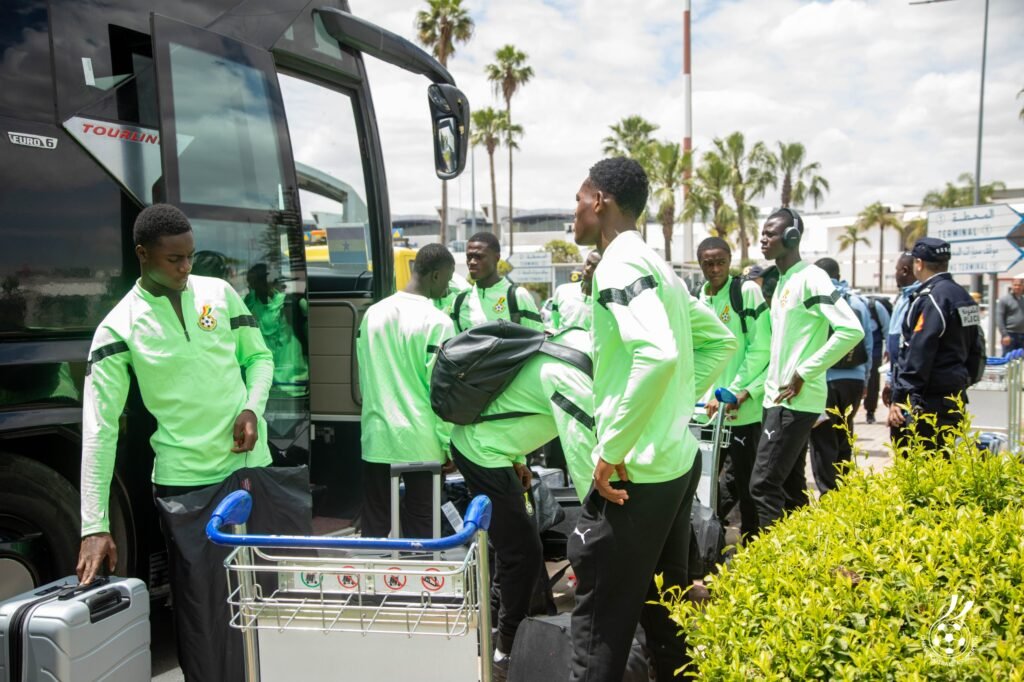
The Black Starlets, the national U-17 male team, have safely arrived in Casablanca ahead of the 2026 U-17 Africa Cup of Nations (AFCON).
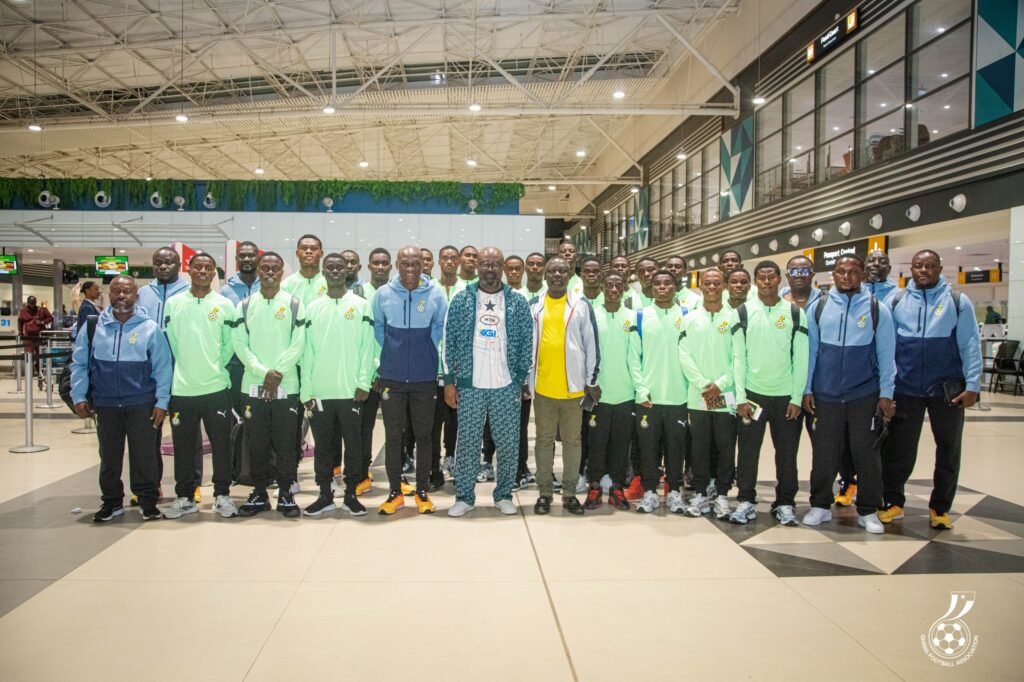
The team departed Accra on Wednesday, travelling with a 35-man contingent made up of 21 players and 14 officials, all focused on delivering a strong campaign on the continental stage.
They completed a smooth five-hour flight to Morocco, where final preparations will continue before the tournament kicks off.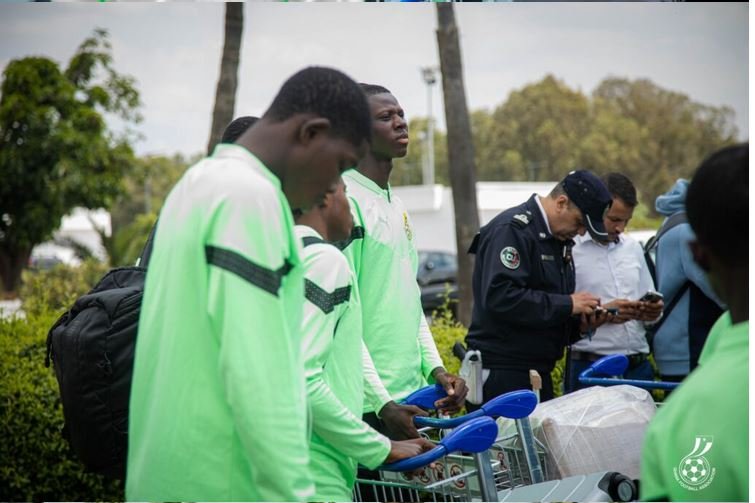
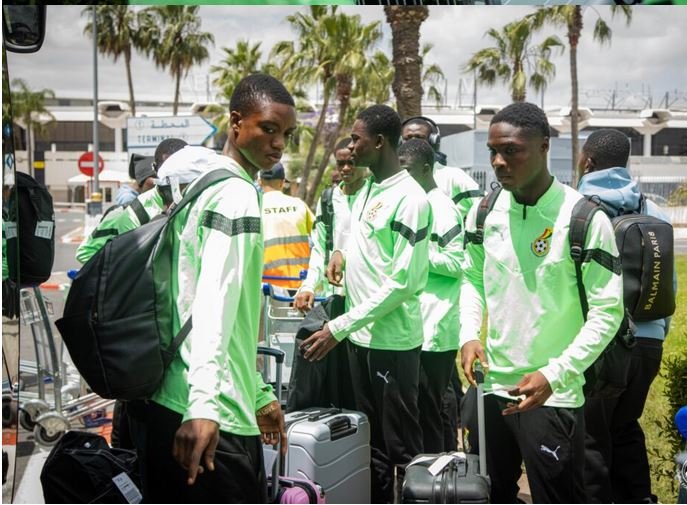
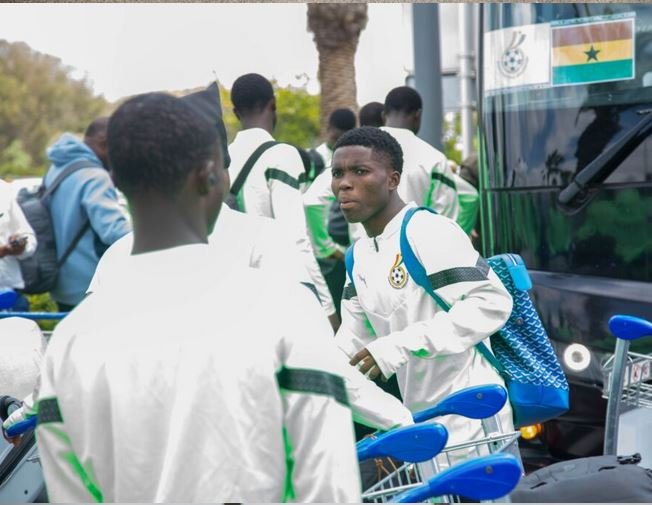
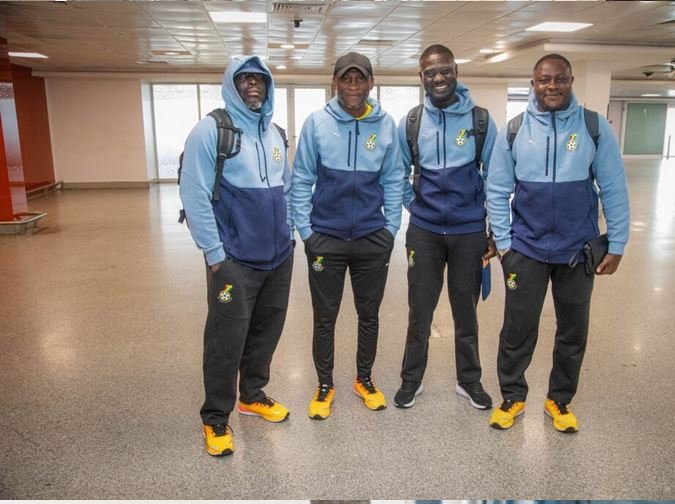
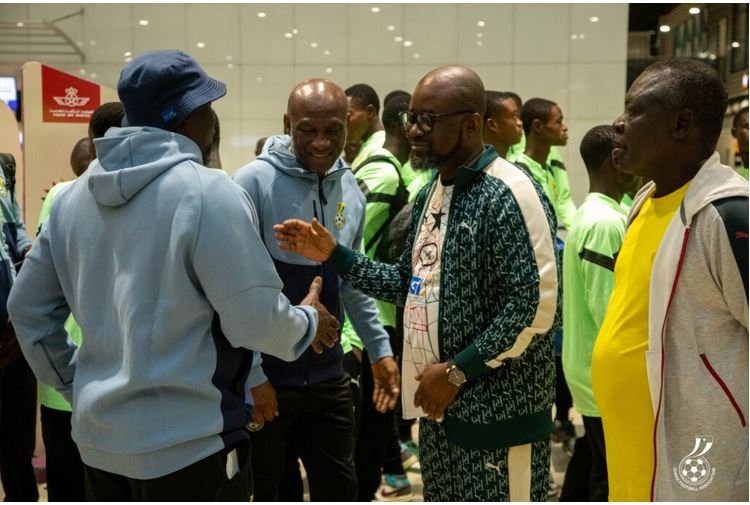
The technical team is expected to fine-tune tactics and build cohesion among the squad as they gear up for the competition.
The Ghana Football Association (GFA) President, Mr Kurt Edwin Simeon-Okraku, was present at the Accra International Airport to bid farewell to the team.
Speaking during a brief farewell at the Airport, the FA President urged the team to carry a ‘never say die’ spirit into the competition.
President Simeon-Okraku emphasised the importance of mental strength and unity, particularly in difficult moments during matches. His message was inspired by the team’s recent friendly encounters against Cote d’Ivoire, where they bounced back strongly after an initial defeat.
“I’m very happy that when you lost to Cote d’Ivoire in your first game during your friendly matches, you were able to bounce back—not only to dominate but to outscore them in the second game,” he said. “I read a lot of meaning into that, and I want all of you to keep that in your heads—that, it’s not over until it’s all over,” he added.
The FA president stressed that the ability to respond positively to setbacks would be crucial in a tournament as competitive as the AFCON.
He encouraged the players to stay united and support one another when the pressure intensifies on the continental stage.
“When the chips are down, that’s when we need to hold each other together,” Okraku added. “So go out there and make Ghana proud.”
Ghana will compete in Group D alongside Algeria, Senegal, and South Africa, with their opening match scheduled for Thursday, May 14.
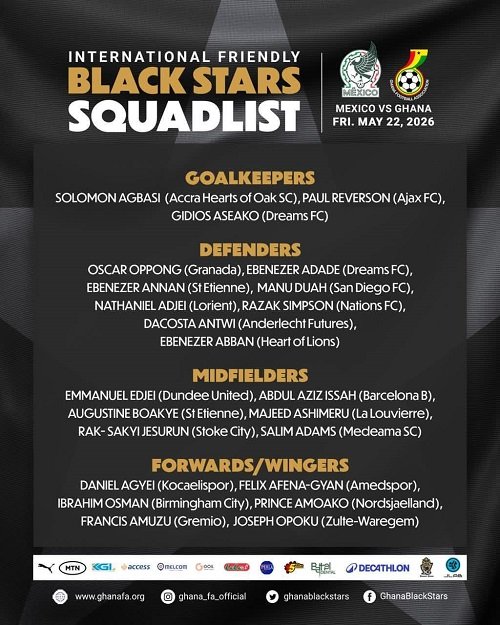
Twenty-three (23) players have been called up for this month’s international friendly against Mexico.
The squad is composed of star players from the domestic league and European leagues who are closely monitored by Coach Carlos Queiroz, as well as U-23 players who will soon represent Ghana in the upcoming Olympic Games qualifiers.
Notable names include Majeed Ashimeru, Felix Afena-Gyan, Razak Simpson, and Birmingham City’s Ibrahim Osman.
Ashimeru returns to action after a long spell on the sidelines due to a muscle injury that limited his appearances at both club and national level.
Also in the team is Felix Afena-Gyan, whose last appearance for Ghana was in May last year when he featured against Trinidad and Tobago in the Unity Cup in London.
Barcelona B’s Abdul Aziz Issah, Ebenezer Annan of AS Saint-Étienne, Ibrahim Osman of Birmingham City, and Paul Reverson of Ajax FC have also been included in the squad.
Midfielder Salim Adams, one of the key players for Ghana Premier League leaders Medeama SC, leads the group of home-based players.
Others are Heart of Lions’ Ebenezer Abban, Ebenezer Adade of Dreams FC, and Nations FC captain Razak Simpson. Ghana will travel to Mexico for the international friendly on Friday, May 22, 2026.