News
Hope and focus in difficult times


The past two years has been unlike any we can remember, and one we’ll never forget. We’ve been tried and tested, and in the process, we’ve learned more about ourselves and our world. It has been a time of adjustments, disappointments, and some cancelled events. Even worse, it has been a time of many losses, as many of us have lost loved ones. Sadly, no one has been left untouched by this global pandemic.
One university president said of his students at the start of the outbreak: “They will put up with absence and isolation …, and they will redouble their efforts to achieve the best things. They are determined to convert this disruption into an opportunity for excellence.”

That’s not the typical way of looking at disruption or tragedy. Most of the time, we just want to minimise the damage, heal as much as possible, and try to return to normal, even if we still have to carry some scars. But could there really be something better than “normal” ahead of us? Can we “convert this disruption into an opportunity for excellence”?
For example, could our experiences make us more compassionate or more loving; what the Bible calls the “more excellent way”? Perhaps, as we remember some of the isolation we felt during lockdowns, we will find ways to reach out to people who (for whatever reasons) might still feel isolated. As we reflect on the generosity of neighbours who shared with us when food ran out, we can find ways to share what we have with others in need. As we think of the innovations, large and small, that have helped us push through our difficulties, we can thank the medical personnel on the front lines and in the laboratories, who worked day and night to facilitate everything from ventilators to vaccines.
And perhaps most important, as we remember those who are no longer with us, we can consider how they would want us to go forward with our lives. What kind of excellence could we pursue in their memory?
Without question, the experiences of the past two years will change us. We will never truly be “back to normal.” But maybe normal is not what we want anyway, as long as “an opportunity for excellence” is within reach.
For two years, the pandemic has given us something this world has rarely faced; a common hardship. While everyone’s experience has been different, no person, no corner of the world, has been left untouched by this modern-day plague. The world feels different now; jobs and schools and so many other things have been forced to adapt. Yet, in the midst of all this change and instability, we’ve also rediscovered some things that never change, everlasting things that we value, now more than ever before.
For one, we have rediscovered the value of connection, of contact, and of love. We need one another. While video calls and online streaming are miraculous innovations, the pandemic has taught us that nothing can take the place of a face-to-face conversation with a dear friend or a warm hug from a family member. There’s just something irreplaceable about being together.
We have rediscovered how much we need kindness, compassion, and patience. One sad consequence of so much social distancing is the distance it too often puts between hearts and minds. The result is that people are more likely to use sarcasm, anger and criticism to express disagreement, especially online. At the same time, we’re more inspired than ever when someone resists those trends with kindness, gratitude, and respect. The power of kindness is never more apparent than when it takes us by surprise.
Of course, we’ve always known that closeness and kindness are important. These true principles have brought hope and joy to humanity during every trial and tragedy we’ve ever faced. But sometimes, in the midst of our troubles, we focus on the wrong things.
A beloved religious leader, Russell M. Nelson has said, “The joy we feel has little to do with the circumstances of our lives and everything to do with the focus of our lives.” God doesn’t always spare us from difficult circumstances, but He does give us true principles to keep us focused. If we focus on our most treasured relationships, on connecting with people we love, we’ll find strength to endure. If we focus on helping and caring about others, we’ll find that our own problems become smaller. Most of all, if we focus on the Lord and His goodness, we’ll find joy. It has always been available; we just need to know where to look.
By Samuel Enos Eghan


A Professor at the University of Ghana Medical School, Prof. Vincent Boima, has called for a major shift in the treatment and prevention of chronic kidney disease (CKD) in Ghana and across Africa, warning that the continent cannot rely on dialysis alone to manage the growing health burden.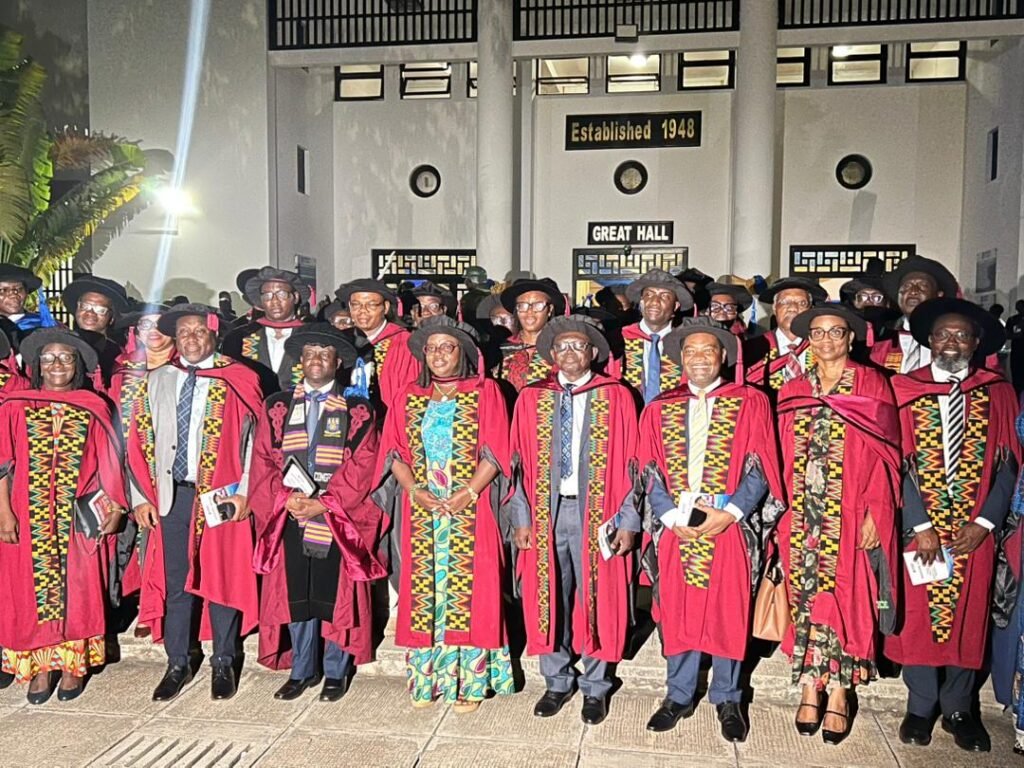
Delivering his inaugural lecture at the university’s Great Hall on Thursday, Prof. Boima stated that chronic kidney disease was more common in Africa than in many high income countries, with most patients seeking treatment only when the disease had reached advanced stages.
Speaking on the theme, “From Genes to Mind: Holistic Pathways to Precision Kidney Care for Africa,” he explained that hypertension and diabetes remained the leading causes of kidney disease in Ghana, where many younger and economically active people were being affected.
According to him, the high cost of dialysis, limited transplant facilities and unequal access to treatment raised concerns about whether many cases of kidney failure could have been prevented through earlier interventions.
Prof. Boima proposed what he described as the “Genes–Mind–Community” model, which combines genetics, mental health and community based healthcare approaches to improve kidney care in Africa.
He explained that the “Genes” pillar focused on understanding the role genetics played in kidney disease among Africans, particularly the APOL1 risk variants common in West Africa.
The professor noted that studies in Ghana and other West African countries had shown that many people carried high risk APOL1 genes, which increased the chances of developing non diabetic kidney disease when combined with factors such as infections, hypertension and environmental pollution.
However, he cautioned that genetic information should be used responsibly and ethically, stressing that it should improve treatment decisions without increasing stigma or inequality.
Prof. Boima therefore called for more African led research into kidney disease genetics, affordable testing methods for early detection and stronger health systems to prepare for future gene targeted treatments.
On mental health, he indicated that psychological wellbeing was an important part of kidney care because many patients with hypertension, chronic kidney disease and those on dialysis experienced depression, anxiety and emotional distress.
He explained that financial difficulties, irregular access to medication and weak follow up systems often worsened the mental health burden on patients, affecting their ability to continue treatment.
To address the problem, he proposed routine mental health screening in hypertension and kidney clinics, together with culturally sensitive counselling and support systems.
Prof. Boima stressed that psychological care should become part of chronic disease management rather than being treated as optional.
Touching on the “Community” pillar, he stated that prevention remained the most effective and affordable strategy for reducing kidney failure, stroke and heart disease in Africa.
He disclosed that community studies in Ghana had shown that large scale blood pressure screening programmes could identify many people living with undiagnosed hypertension.
Despite this, he pointed out that many patients struggled to continue treatment because of transport costs, long hospital waiting times, expensive medication and inadequate financial support.
Prof. Boima proposed decentralising healthcare through community based services and primary healthcare centres, while also empowering nurses, pharmacists and other non physician health workers to assist with prevention and treatment.
He further recommended the use of simple technologies such as text message reminders to help patients take medication, reduce salt intake, exercise regularly and attend medical appointments.
The nephrologist also encouraged the use of family and faith based support systems to improve treatment adherence and continuity of care.
Speaking on the state of kidney treatment in Ghana, Prof. Boima explained that dialysis remained the main form of kidney replacement therapy in the country, although treatment was expensive and available mainly in a few locations.
He observed that many patients paid for dialysis from their own pockets, creating serious financial hardship for families, while kidney transplantation services also remained limited.
According to him, these challenges highlighted the need for Ghana to focus more on prevention, primary healthcare and long term chronic disease management instead of depending heavily on dialysis centres.
He called for expanded National Health Insurance coverage for essential medicines and diagnostic services, improved data systems, stronger primary healthcare and policies to support mental health and ethical genetic care.
Prof. Boima concluded by urging African countries to lead a new era of “precision kidney care” that focused on people rather than only treating diseased organs.
The Vice Chancellor of the University of Ghana, Professor Nana Aba Appiah Amfo, commended Prof. Boima for his work, stating that the lecture had reshaped thinking on kidney healthcare in Africa.
She noted that the presentation highlighted the hidden financial and social costs of kidney disease and reinforced the need for healthier lifestyles, including reducing salt intake, exercising regularly and taking blood pressure checks seriously.
Prof. Appiah Amfo added that Africa must not only participate in precision medicine but should also help shape its future direction.
By: Jacob Aggrey

The Ministry of Foreign Affairs has announced that passport applications that remain incomplete for more than two months will be automatically cancelled.
According to a public notice issued on May 15, the new directive takes immediate effect and applies to all passport applications from the date they are first submitted.
The Ministry explained that incomplete applications include cases that require further vetting, missing supporting documents, incomplete biometric capture or applications awaiting biometric re capture.
It warned that applicants whose submissions are cancelled will lose the fees already paid because the payments are non refundable.
Affected persons will therefore be required to begin a fresh application process and pay the required fees again.
“The general public is therefore encouraged to complete applications on time to avert cancellations,” the notice stated.
The Ministry also urged applicants to respond quickly whenever they are asked to provide additional documents or update their biometric information to avoid delays.
Officials explained that the policy is aimed at reducing delays and clearing backlogs caused by abandoned and incomplete passport applications in the system.
The Ministry assured the public of its commitment to improving passport service delivery across the country.
Applicants seeking further information have been advised to contact the Ministry’s 24 hour call centre
By: Jacob Aggrey

 News3 days ago
Ghana’s Chris Koney participates in high-level dialogue at Africa Forward Summit 2026
- News1 week ago
Isaac Adongo defends BOG Governor, says Ghana “in safe hands”
- Features3 days ago
Fix It Fast or Lose Them Forever: The Ever-Rising Importance of Service Recovery in Competitive Industries