Hot!
Homosexuality a mental disorder, not biological – Prof Akwasi Osei

- /home/u249204778/domains/spectator.com.gh/public_html/wp-content/plugins/mvp-social-buttons/mvp-social-buttons.php on line 27
https://spectator.com.gh/wp-content/uploads/2021/11/1.21275557.jpg&description=Homosexuality a mental disorder, not biological – Prof Akwasi Osei', 'pinterestShare', 'width=750,height=350'); return false;" title="Pin This Post">
- Share
- Tweet /home/u249204778/domains/spectator.com.gh/public_html/wp-content/plugins/mvp-social-buttons/mvp-social-buttons.php on line 72
https://spectator.com.gh/wp-content/uploads/2021/11/1.21275557.jpg&description=Homosexuality a mental disorder, not biological – Prof Akwasi Osei', 'pinterestShare', 'width=750,height=350'); return false;" title="Pin This Post">
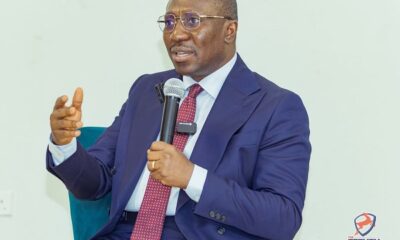
Professor Akwasi Osei, a member of the National Coalition for Proper Human Sexual Rights and Family Values, has stated that homosexuality is an abnormal behaviour, mostly learned and not biologically determined.
Prof Osei, who is also the Chief Executive Officer of the Mental Health Authority, said the argument that “homosexuality is normal” was, therefore, not tenable.
Prof Osei stated this in his presentation to the Constitutional, Legal and Parliamentary Affairs Committee of Parliament public hearing on the “Promotion of Proper Human Sexual Rights and Ghanaian Family Values 2021 Bill”, in Accra.
“Just about one to three per cent of any society in the world are homosexuals, the vast majority are straight, so 97 to 99 per cent are straight,” he stated.
“So, if you have only one to three per cent (being homosexuals), how do you say it is so common that you want to consider it as normal?”
The presentation of the Coalition focused on addressing the real issues of LGBT.
He emphasised that people learned homosexuality as a habit; adding that only a few homosexuals were born with the homosexual tendencies.
Prof. Osei said the assertion that the biological base of homosexuality was scientific was false and that homosexuality was not a human right.
There was no national record of on LGBTQI individuals but a study by an NGO indicated that there were about 650,000 people in the country with homosexual (LGBTQI) tendencies, he explained.
He said the total number constituted about 0.02 per cent of the Ghanaian population, saying “how can you say 0.02 per cent is a common phenomenon and therefore, it is normal?”
Prof Osei said a majority of homosexuals learnt it from peer pressure, while others were simply out of adventure and curiosity.
He said there were others who developed hatred for the opposite sex because of childhood defilement or rape, and as result sometimes became lesbians or gays.
“There is a scientific way of determining what is normal, so, it is not opened to people’s whims and caprices. Normality is determined by the frequency of occurrence, not by birth scientifically……”
Mr Moses Foh-Amoaning, Executive Secretary, National Coalition for Proper Human Sexual Rights and Family Values, said the Coalition had developed a holistic sexual therapy system that addressed the real issues of LGBT people.
He said the Coalition had come to the Bill with about 10 years’ experience investigating, researching and dealing with LGBT people, emphasizing, “hundreds and hundreds of them”.
“So, the question is what is the strategic goal of the LGBT Movement? Is there an LGBT Moment? Yes. That is a distinction must be made between those who lobby, who fund, who push the idea….
“A distinction must be made between those people and then those who are genuinely involved in those activities and suffer for it because of biological reasons, psychological reasons and other reasons,” he stated.
Mr Foh-Amoaning said the basic strategic goal of the LGBT Moment was “to say that all of us must accept homosexuals and other LGBT behaviour, they don’t change, that is their strategic goal. Their basic strategy is propaganda, lies, half-truths, that is what they do”.
He said the LGBT Movement’s strategy was to move away from what they did to focus on abstract things – such as human rights and minority rights.
Mr Foh-Amoaning said the greatest single victory of the gay movement was shifting the debate from their behavior to identity.
He alleged that some NGOs were being funded to promote the LGBT Agenda in the country.
Prof Afua Hesse, a member of the Coalition, said the Bill provided for the medical care of children and multidisciplinary team for the disorders of sexual development.
Children needed protection from sexual abuse, especially sodomy with sufficient deterrents, she sated.
Likewise, there should be psychosocial and medical health for the victims and the perpetrators as the Bill was proposing and the holistic sexual therapy system, which integrated all the knowledge that one would expect from various scientific areas together. -GNA


General Secretary of the New Patriotic Party (NPP), Justin Kodua Frimpong, has filed his nomination to contest the position of General Secretary again as the party begins its rebuilding efforts ahead of the 2028 general elections.
He was accompanied by party stalwarts and supporters who were in high spirits, expressing confidence that he is the right person to hold the position.
Speaking after filing his nomination, Mr Kodua Frimpong assured the rank and file of the party that he would not disappoint them.
“I can assure you that the faith the rank and file of the party have had in me, I will never disappoint them,” he said.
He also pledged to run a clean campaign devoid of personal attacks.
“I can assure you that our internal campaign will be devoid of personal attacks,” he told his fellow contestants and the rank and file of the party as he seeks to retain his position.
His tenure has seen the party through the 2024 general elections, where the NPP lost power to the National Democratic Congress (NDC) after eight years in government.
The party is currently in a rebuilding phase, with internal elections scheduled to elect new national executives to lead its reorganization towards the 2028 polls.
The General Secretary position is considered one of the most influential in the party’s administrative structure, responsible for the day-to-day running of the party secretariat and implementation of party decisions.
By Edem Mensah-Tsotorme

The University of Ghana Medical Centre (UGMC) has disputed claims made on social media by comedian Michael Blackson concerning the treatment given to his late mother, saying a review found that the allegations did not accurately reflect what happened during her stay at the hospital.
In a statement issued in Accra on August 5, 2026, the management of UGMC expressed condolences to Mr. Blackson and his family over the death of his 83-year-old mother, who died at the facility on July 16, 2026.
The hospital said it had taken the concerns raised by Mr. Blackson seriously and conducted a thorough review in line with its clinical and administrative procedures.
According to the statement, the facts presented by Mr. Blackson on social media contained “numerous inaccuracies” and did not accurately reflect the medical care provided to his mother.
UGMC explained that she was referred to the facility from another hospital and received treatment there from May 27 to July 16, 2026, a period of about eight weeks.
The hospital stated that it would not release details of her diagnosis, treatment, medical records or other aspects of her care because it had a duty to protect patient confidentiality, even after death.
It said the decision was intended to respect the dignity of the deceased and the privacy of her family.
UGMC further stated that all clinical decisions at the facility are made by qualified healthcare professionals based on medical judgment, established standards of care and the best interests of the patient.
The statement added that such decisions are made in consultation with authorised family representatives where necessary and that billing and financial procedures are governed by institutional policies and are separate from clinical decision-making.
The hospital noted that it values feedback from patients and their families and considers both positive and negative comments important for improving the quality of care.
Mr. Blackson had earlier used social media to criticise the care his mother received at UGMC, prompting the hospital’s response.
By: Jacob Aggrey