News
GoldBod secures 30% of large-scale gold output for national reserves

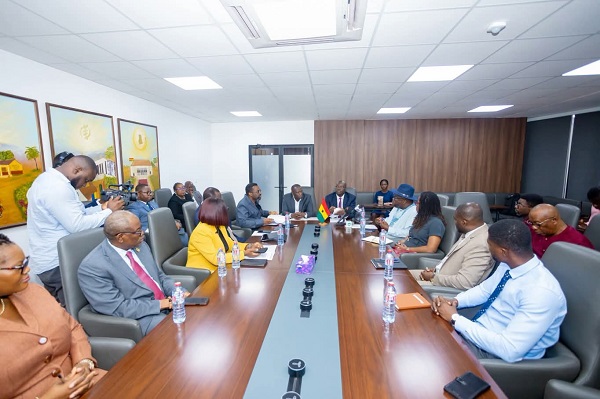
The Ghana Gold Board (GoldBod) has joined key government institutions and the Ghana Chamber of Mines to secure 30 percent of the country’s large-scale gold production for Ghana’s strategic reserves.
The agreement was reached through a Memorandum of Understanding (MoU) under the Ghana Accelerated National Reserve Accumulation Policy (GANRAP).
The MoU was signed by GoldBod, the Ministry of Finance, the Ministry of Lands and Natural Resources, the Bank of Ghana and the Ghana Chamber of Mines, with participating mining companies also involved in the initiative.
Under the arrangement, GoldBod will serve as one of the main implementing institutions of GANRAP.
It will purchase and aggregate the gold and channel it into local refining and the accumulation of Ghana’s strategic reserves.
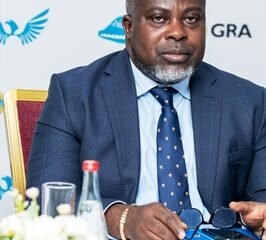
GoldBod, led by its Chief Executive Officer, Sammy Gyamfi, described the agreement as an important step towards strengthening the country’s economic resilience.
The initiative is expected to help Ghana build stronger foreign exchange reserves, support the stability of the cedi and reduce the country’s vulnerability to external economic shocks.
Under GANRAP, Ghana is targeting 15 months of import cover by 2028. This is significantly above the internationally accepted benchmark for adequate reserves.
The policy is also expected to reduce the country’s dependence on costly external borrowing by using Ghana’s gold resources to build its reserves.
GoldBod expressed appreciation to the Ministry of Finance, Ministry of Lands and Natural Resources, Bank of Ghana, Ghana Chamber of Mines and the participating mining companies for supporting the initiative.
The Board described the agreement as an important national undertaking aimed at using Ghana’s gold resources to strengthen the country’s economy and protect the value of the cedi.
By: Jacob Aggrey





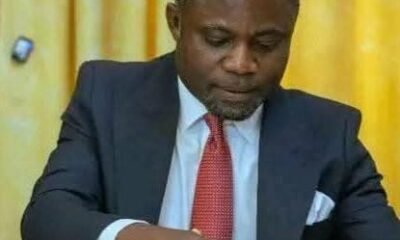


Management and staff of Owass FM have announced the passing of media personality, comedian and politician Seth Kwame Dzokoto following a medical emergency during a live morning show discussion at the station earlier today.
According to the station, Dzokoto was participating in a panel discussion on its morning show “Oman Nkoso” when he suddenly took ill and collapsed.
A statement from the station said its team immediately rushed him to the hospital for medical attention, but he was pronounced dead by the attending medical doctor upon arrival.
“We are deeply saddened by this unfortunate incident, which occurred in the course of our regular programming. Our thoughts and prayers are with his family, loved ones, colleagues, and all those who have been affected by his passing,” the statement said.
Management acknowledged that information about the incident is already circulating in the public domain, but appealed to the public and colleague media houses to respect the privacy of the bereaved family and refrain from circulating unverified information or speculation regarding the circumstances of his death.
Owass FM extended its heartfelt condolences to the family of Seth Kwame Dzokoto.
By Edem Mensah-Tsotorme

The State through the Attorney General (AG) has filed an appeal at the Supreme Court challenging the suspension of the trial in the case of The Republic v Hanan Aludiba and Faiza Seidu.
On Monday, the Court of Appeal suspended the trial in the case. But the prosecution says it has filed an appeal against the suspension order.
According to the update, the law does not allow a criminal trial to be suspended simply because an accused person has complained about some of the charges on the charge sheet, particularly when those complaints were dismissed as meritless.
It argues that if the Court of Appeal’s decision is allowed to stand, no prosecution will ever be possible, since all it would take for a trial to be suspended is an accused person complaining about anything on the charge sheet.
By Edem Mensah-Tsotorme