News
Gold Board opens applications for Jewellery and refinery licences


- /home/u249204778/domains/spectator.com.gh/public_html/wp-content/plugins/mvp-social-buttons/mvp-social-buttons.php on line 27
https://spectator.com.gh/wp-content/uploads/2025/10/WhatsApp-Image-2025-10-22-at-17.06.30-1-1000x600.jpeg&description=Gold Board opens applications for Jewellery and refinery licences', 'pinterestShare', 'width=750,height=350'); return false;" title="Pin This Post">
- Share
- Tweet /home/u249204778/domains/spectator.com.gh/public_html/wp-content/plugins/mvp-social-buttons/mvp-social-buttons.php on line 72
https://spectator.com.gh/wp-content/uploads/2025/10/WhatsApp-Image-2025-10-22-at-17.06.30-1-1000x600.jpeg&description=Gold Board opens applications for Jewellery and refinery licences', 'pinterestShare', 'width=750,height=350'); return false;" title="Pin This Post">
The Ghana Gold Board (GoldBod) has announced that applications are now open for Jewellery and Fabrication Licences (Categories A, B, and C) as well as Refinery Licences.
According to the Board, the initiative, which took effect from October 22, 2025, forms part of its efforts to formalize activities within the gold value chain, enhance regulation, and promote sustainable growth in the industry.
This move aligns with the Ghana Gold Board Act, 2025 (Act 1140).
GoldBod reminded the public that only individuals and companies licensed by the Board are permitted to engage in gold trading, jewellery manufacturing, gold fabrication, and refining.
It cautioned that operating without a valid GoldBod licence constitutes a criminal offence punishable by law.
The Board also indicated that all licences previously issued by the Ministry of Lands and Natural Resources for gold refining, jewellery manufacturing, and related activities are no longer valid under the new legal framework.
It therefore urged all existing operators to regularize their businesses by applying for new licences under Act 1140 before the December 31, 2025, deadline.
GoldBod explained that the new licences available for application include Jewellery and Fabrication Licence Category A, for Ghanaian sole proprietors and small-scale jewellery businesses producing for local sale; Category B, for fully Ghanaian-owned medium-scale manufacturers producing for local sale and export; and Category C, for large-scale local and foreign companies engaged in jewellery fabrication for both local and export markets.
It added that the Refinery Licence is open to entities seeking to operate gold refineries in Ghana.
The Board stressed that all applications must be submitted exclusively through its official website,as manual or in-person submissions will not be accepted.
Applicants are to create or log into their accounts, select the relevant licence category, upload the required documents, and pay the prescribed fees electronically.
GoldBod noted that applicants will receive automated updates on their application status and interview schedules through their registered email addresses and online accounts.
By: Jacob Aggrey




Over 20 structures built within the 50-metre buffer zone of the Kpeshie Lagoon at the Laboma Beach Resort in the La Dade-Kotopon Municipality were on Sunday demolished by the Greater Accra Regional Coordinating Council (GARCC).
Buildings such as single-unit semi-detached under construction and completed chalets at the resort were pulled down while portions of a newly constructed perimeter wall were also demolished. Read More
SKIP THE QUEUE, TAP THE NEWS
You can now read the Ghanaian Times and The Spectator newspapers from the comfort of your device via TimesNewsPlus.
Join our WhatsApp Channel: https://whatsapp.com/channel/0029VbBElzjInlqHhl1aTU27

About 120 golfers from clubs across Ghana participated in an 18-hole competition, dubbed ‘MTN 30th Anniversary CEO Invitational Golf Tournament’ held at the Achimota Golf Club on Saturday.
At the end of the hectic day, Frederick Semenu Duvor won the Men’s Group A event with 39 points, while Julienne Afi claimed the Ladies’ Group A title with the same score.
Yaw Mireku Jnr. won the Men’s Group B with an impressive 45 points, while Kous Louanges Mang took the Ladies’ Group B title with 38 points.
Kofi Mangesi won Men’s Group C with 40 points while Elorm R. Akuash Bonney claimed the Ladies’ version with 42 points.
In the Seniors Division, Jan Vogel emerged winner of the men’s category with 39 gross, while Helen Appah topped the ladies’ category with 44 gross.
Addressing participants, the company’s Board Chairman, Mr Ishmael Yamson, urged the company to approach its next phase with the same resilience, discipline and determination that have defined its success over the past three decades.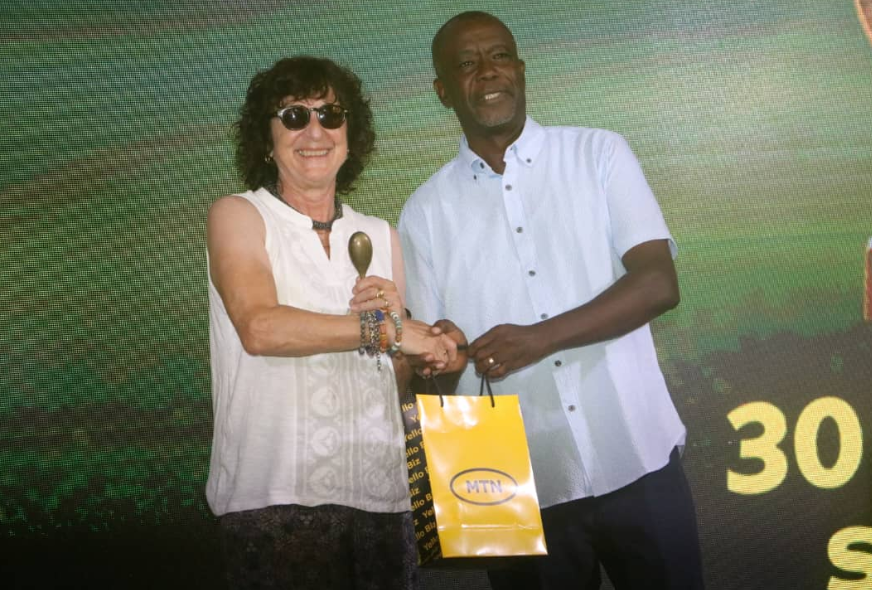
He drew a striking parallel between the game of golf and MTN Ghana’s three-decade journey, describing both as long games in which success depends less on one spectacular moment than on consistency, patience, judgment and the ability to recover from setbacks.
He said, golf had taught him a lesson that extended far beyond the fairways, thus, a round cannot be won on the first hole.
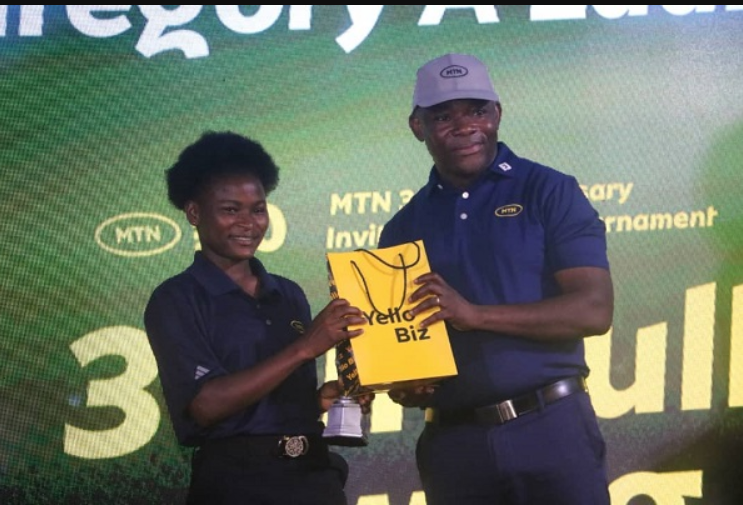
In golfing terms, he said, MTN Ghana had encountered its share of regulatory bunkers, competitive hazards and unexpected storms that had forced the company to pause, reassess and change its approach.
But those challenges, he suggested, were part of the journey rather than reasons to abandon it.
By Andrew Nortey
SKIP THE QUEUE, TAP THE NEWS
You can now read the Ghanaian Times and The Spectator newspapers from the comfort of your device via TimesNewsPlus.
Join our WhatsApp Channel: https://whatsapp.com/channel/0029VbBElzjInlqHhl1aTU27

 News1 week ago
48 Engineer Regiment to be major sub-contractor on Accra-Kumasi Expressway, $2bn ready- Prez Mahama
- Entertainment7 days ago
Rhythms On Da Runway returns November 28 with 16th edition themed ‘Unbound’
- Entertainment7 days ago
Ohemaa Mercy’s Tehillah Experience outfit was priestly regalia, not costume – Management clarifies