Sports
Ghana Black Stars’ call-up… Can we ever bridge gap between local, foreign-based?


- /home/u249204778/domains/spectator.com.gh/public_html/wp-content/plugins/mvp-social-buttons/mvp-social-buttons.php on line 27
https://spectator.com.gh/wp-content/uploads/2022/07/Ghana-1.jpg&description=Ghana Black Stars’ call-up… Can we ever bridge gap between local, foreign-based?', 'pinterestShare', 'width=750,height=350'); return false;" title="Pin This Post">
- Share
- Tweet /home/u249204778/domains/spectator.com.gh/public_html/wp-content/plugins/mvp-social-buttons/mvp-social-buttons.php on line 72
https://spectator.com.gh/wp-content/uploads/2022/07/Ghana-1.jpg&description=Ghana Black Stars’ call-up… Can we ever bridge gap between local, foreign-based?', 'pinterestShare', 'width=750,height=350'); return false;" title="Pin This Post">
• Princeton-Owusu Ansah, a resilient
former AshantiGold and Ghana defender
Would the home-based players ever enjoy their moments in the senior national team, Black Stars, as they used to do in the 80s and the 90s? This is one question that has been dangling on the lips of local fans for some time now.
Getting a decent number of the so-called locals in the Black Stars, is one of the most contentious issues in Ghanaian football circles – and has over the years generated a gamut of controversy.
In West Africa, especially, the senior national teams are fully dominated by players who ply their trade outside of the country, especially in Europe.
Painfully or frustratingly somehow, this has come to stay. Question: Is it the right way to go?
Indeed, as far back as the 1990s, there was a strong agitation from the public; in fact, supporters virtually badgered on the FA at the time to include local players in the national team. Their contention was that some of the locals were streets ahead of their foreign counterparts.

The issue was even raised at one of the FA Congresses after which the FA decided to give about a 40 per cent slot to the locals, whilst their foreign colleagues had 60 per cent of the composition. This was evidenced at the 1992 African Cup of Nations tournament where the Black Stars paraded not less than nine home-based players.
We had goalkeepers Edward Ansah (Asante Kotoko), Salifu Ansah (Hearts of Oak) and Abukari Damba (Great Olympics). Also on board were Nii Darko Ankrah (Great Olympics), Emmnauel Ampiah (Asante Kotoko), Kwesi Appiah (Asante Kotoko), Frimpong Manso (Asante Kotoko), Emmanuel Armah (Hearts of Oak) and Mohammed Gargo (RTU).
In subsequent years, other locals like Obuasi Goldfields’ Princeton Owusu Ansah, goalkeeper Sammy Adjei, RTU’s Hamza Mohammed, Hearts’ utility player Sam Johnson and many others featured for the Stars.
But do not forget, too, that those were the halcyon days where we had some marquee names at the local scene – who week-in, week-out were attracting the crowd to the stadia with feet that tantalizingly drew gorgeous patterns on the pitch.
Later, we can also easily recollect names like Shamo Quaye, Joe Debrah, Ablade Kumah, Charles Taylor, Emmanuel Osei Kuffuor, Ishmael Addo (name them) that glowed the local scene to stupor.
Today, let us be honest with ourselves, how many locally-based materials do we have that can fiercely challenge the overseas-based players for their shirts? How many players out there in the league are gorgeously attractive enough to pull many to the stadium? Truth is that a good number of fans go to the stadium today not really because they are going to watch a superlative, swash-buckling performance from the locals, but attend games because of the emotional attachment to their clubs.
Sadly, even in situations where we are fortunate to have one or two dazzling performers in the local league, they jump to the next available ‘exodus bandwagon’ to seek greener pastures elsewhere – making it easy for the GFA or the national team coach to rely on the foreign legion, which are their preferred choice, anyway.
Evidently, it is against this backdrop that the Confederation of African Football (CAF) in their own wisdom decided to introduce the Championship of African Nations (CHAN) tournament for the home-domiciled players, at least to encourage them to stay around and give the local league some thrill and excitement.
Latest Black Stars invitation
Indeed, there has been a whole lot of hullabaloo with regard to players who had recently switched nationality to play for the Black Stars. Personally, one does not see anything wrong about it. Question: Are they Ghanaians, yes! Are we looking to take a formidably winsome team to the World Cup in Qatar? Yes! Do we dream to go beyond quarter final in Qatar? Yes! So, what are we saying?
Though we qualified for Qatar, we must be honest enough to accept the fact that we do not have a very strong team, especially as regards our attacking unit and there is absolutely nothing wrong or unfair if that department is augmented? It is the reason many were thrilled that the football authorities were able to convince Inaki Williams, especially, to play for nation.
Some have argued that it is not fair for players, who did not take part in Ghana’s qualification journey, to shove off the main actors and make the Qatar cut. Well, there may be nothing to do about it. The world itself is unfair! Can we say all the players who qualified the Black Stars to their first World Cup in Germany 2006 – and the subsequent ones, got the opportunity to be in those tournaments.
See, we shall be the first people to condemn the FA if we go to the World Cup in Qatar with a ramshacle team and get flushed out in the very first round. We should not be sentimental about it, at all. Certainly, knowing the repercussions of what an early exit would mean to them, the FA may have decided to fall on those players to switch nationality.
Let us not forget that we are in a very tight group with Uruguay, South Korea and Portugal – and we need tested players for the Himalayan battles ahead.
Bridging the gap
The GFA may have to revisit its policy where a few slots of the local contingent would have a place in the Black Stars. So, in this vein, the FA Technical Team will be tasked to select, let us say the Most Potent Striker, Best Defender, Best Midfielder and Best Goalkeeper in the league to either fight for a place or be given an automatic choice.
It must be hammered home that sometimes, the kind of players we see in the Black Stars leaves much to be desired – and it is the reason many people think that the locals must be offered a slot.
BY JOHN VIGAH


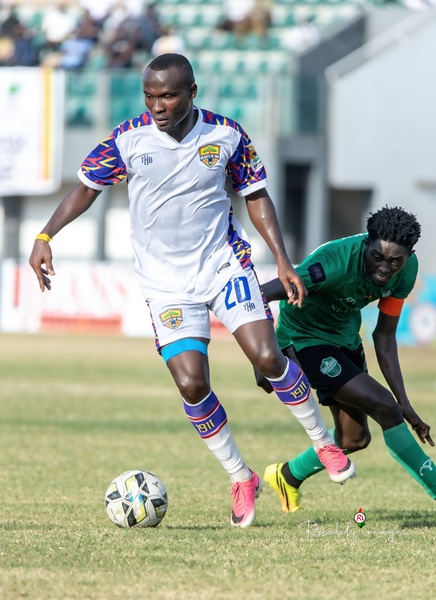
IN modern football, the final whistle doesn’t signal the end of the show; it signals the intermission.
The Top five European Leagues (Premier League, La Liga, Bundesliga, Serie A, and Ligue 1) have mastered a brutal truth of the digital age: you don’t just sell the match; you sell the marathon.
By weaponising transfer window tension, season reviews, and microscopic highlight reels, they’ve turned 90 minutes of sport into a 24/7/365 content vortex.
Meanwhile, back home, the Ghana Premier League (GPL) is haemorrhaging relevance not because the talent isn’t there but because the storytelling is dead.
The Football Association’s apathy is only rivalled by its hypocrisy.
The European Blueprint: Selling the ‘Appetite’
Why do fans tune into a random mid-table La Liga clash on a Friday night? Because they’ve been primed. Across the summer, broadcasters and clubs drip-feed ‘transfer sagas’ like high-stakes soap operas.
Will the star leave? Who is the mystery medical? This tension creates a parasocial investment that transcends the pitch.
Paired with this are season-review documentaries and hyper-curated game highlights tailored for TikTok, Instagram, and YouTube. These aren’t just goal clips; they are tactical breakdowns, sideline theatrics, and VAR controversies packaged into digestible and emotional bites.
This strategy has inflated broadcasting rights to astronomical sums (the Premier League’s recent domestic deal hit £6.7 billion).
They know that if you feed the audience year-round, they will binge-watch when it matters.
The GPL Vacuum: No Sponsor, No Story
Now, overlay this blueprint onto the Ghana Premier League. It is a stark, barren contrast.
The league is poorly run, lacking a headline sponsor to give it financial muscle or marketing prestige. Without that corporate backing, the media machine grinds to a halt.
The transfer market, which should be the peak of offseason intrigue, is a ghost town. We hear about signings, but the transfer fee is universally undisclosed.” We only get the contract length.
This kills the narrative. In Europe, a €100 million move generates weeks of debate; in Ghana, a move generates a one-line social media post, devoid of gravity. Fans cannot gauge ambition, nor can they measure a club’s financial muscle.
Most damningly, there are no reviews from the broadcasting rights holders. No glossy season-compilation DVDs. No weekly magazine shows dissecting past campaigns to build hype for the next.
The Broadcasting Right Holders (BRHs) treat the GPL as an obligation to air live, not as an IP to monetize through content. The league goes dormant the moment the trophy is lifted.
And the FA? They seem unconcerned. There is no strategic blue • A scene from the Ghana Premier League print to pump these ‘stuffs’ into the digital ecosystem. They treat the league’s media output like an afterthought, ignoring that a lack of online noise equals a lack of bums on seats.
The Black Stars Paradox: The Hypocrisy of Production
Here is the crushing irony that exposes the FA’s priorities. When the Black Stars assemble for a World Cup qualifier or an AFCON match, the narrative flips overnight.
Suddenly, the budget for proper camera operators and videographers appears from thin air. We get cinematic drone shots, multi-angle slow-motion replays, tunnel cams, and emotional post-match interviews.
Every moment, every tackle, every save, every passionate fan in the stands is captured in vivid, broadcast-ready quality. The national team gets the full ‘European treatment.’
This reveals a devastating double standard. The FA treats the Black Stars as the sole marketable asset, forgetting that the GPL is the engine room that produces these stars.
By diverting all production value to the national team while starving the domestic league of visual prestige, they are cannibalizing their own foundation.
The Verdict
You cannot build a football culture on national team fixtures alone.
Europe thrives because they understand that content is the currency of fandom.
Until the Ghana FA secures a headline sponsor, enforces transparent transfer disclosures (to fuel debate), and mandates that broadcasting partners produce engaging season reviews and highlight packages, the GPL will remain a hidden gem rather than a sparkling crown.
The players are there. The passion is there. But if the FA continues to save its best camera angles for the Black Stars while leaving the Premier League in the dark, they aren’t just failing the clubs; they are starving the very appetite they desperately need to feed
By Leslie Agyemang
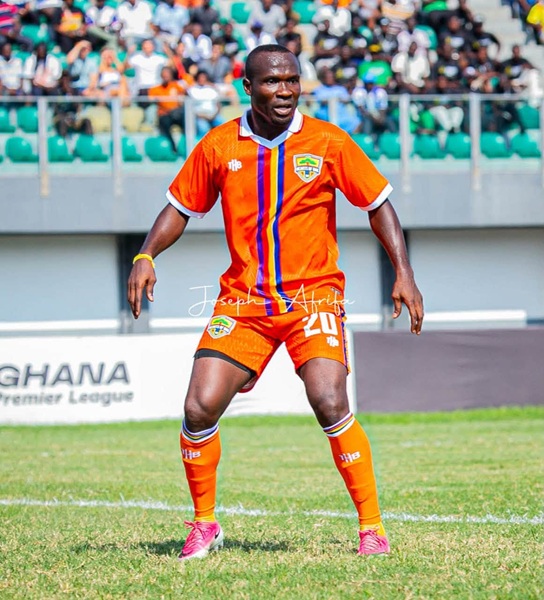
Accra Hearts of Oak and Dreams FC will headline Matchday 5 of the Ghana Premier League when the two sides meet at the University of Ghana Sports Stadium tomorrow, with both clubs seeking a result that could shape their early season campaign.
The encounter comes at a crucial moment for the two sides with the Phobians looking to recover from their first defeat of the campaign and Dreams still searching for their first victory after four matches.
The Rainbow lads started the season strongly but were beaten 1-0 by Karela United last weekend, while Dreams suffered a slim 1-0 defeat to Bechem United.
Hearts had earlier recorded impressive victories over Berekum Chelsea and Bibiani Gold Stars before drawing goalless with Bechem United, leaving the club with seven points from their opening four matches.
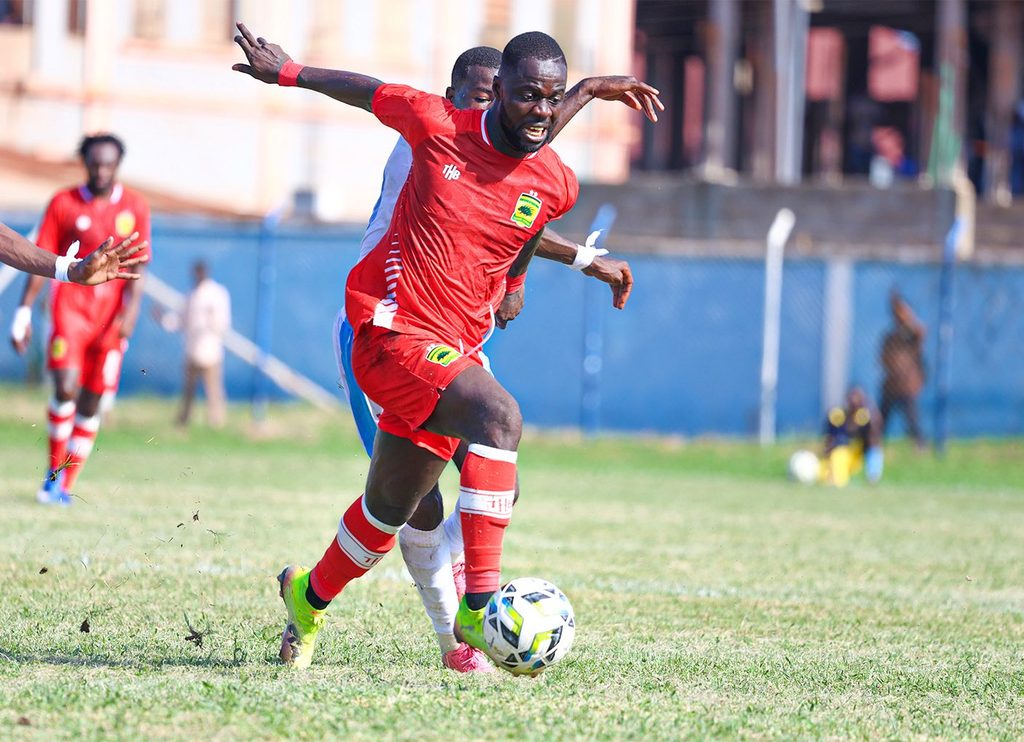
Their defeat at Karela United, however, means they will be under pressure to quickly return to winning ways against a Dreams side determined to make home advantage count.
Dreams, meanwhile, have endured a difficult beginning to the campaign and will see tomorrow’s fixture as an opportunity to change their fortunes.
The ‘Still Believe’ side have collected points from only their opening draws and are yet to register a victory, making the meeting with one of the country’s traditional giants an important test of their character.
Elsewhere, Vision FC will welcome Bibiani Gold Stars to the Nii Adjei Kraku II Sports Complex today, with both teams looking to strengthen their positions.
Vision have shown encouraging form in the early stages, while Gold Stars will be seeking a response after suffering a 2-0 home defeat to newcomers Port City FC.
At the Debibi Presby Park, newly promoted Debibi United will face defending champions Medeama SC tomorrow.
Medeama finally opened their account with a convincing 4-1 victory over Basake Holy Stars and will be hoping that the result marks the beginning of a stronger title defence.
Port City FC will continue their impressive debut campaign when they host Bechem United at the Daasebere Boamah Darko II Park.
Basake Holy Stars will attempt to recover from their heavy defeat to Medeama when they host Berekum Chelsea at the Ampain AAK II Sports Arena.
Aduana FC will welcome Swedru All Blacks to the Nana Agyemang Badu I Park after producing one of the weekend’s most notable results last Sunday.
At the Kpando Stadium, Heart of Lions will host FC AshantiGold ’04 in another meeting between sides coming off victories.
FC Samartex 1996 will meanwhile welcome Young Apostles FC to the Nsenkyire Sports Arena, with the home side seeking to maintain their unbeaten start to the campaign.
By Enoch Ntiamoah Siaw
SKIP THE QUEUE, TAP THE NEWS
You can now read the Ghanaian Times and The Spectator newspapers from the comfort of your device via TimesNewsPlus.
Join our WhatsApp Channel: https://whatsapp.com/channel/0029VbBElzjInlqHhl1aTU27