Sports
German, Bruno Labbadia, becomes 37th Head Coach of the Super Eagles


The Nigeria Football Federation has announced that it has reached an agreement with German tactician, Bruno Labbadia, to become the Head Coach of Nigeria’s Senior Men National Team, Super Eagles.
NFF General Secretary, Dr. Mohammed Sanusi, said in the early hours of Tuesday: “The NFF Executive Committee has approved the recommendation of its Technical and Development Sub-Committee to appoint Mr. Bruno Labbadia as the Head Coach of the Super Eagles. The appointment is with immediate effect.”
Born in Darmstadt, Germany on 8th February 1966, Labbadia, who won two caps for Die Mannschaft in his playing career that took him through clubs such as home-town team Darmstadt 98, Hamburger SV, FC Kaiserslautern, Bayern Munich, FC Cologne, Werder Bremen, Armenia Bielefeld and Karlsruher SC, triumphed in the German Bundesliga with Bayern Munich as a player in 1994.
He coached famous names Hertha Berlin and VfB Stuttgart this decade, and previously, VfL Wolfsburg, Hamburger SV, Bayer Leverkusen, among others, and holds a UEFA Pro License.
He is only the sixth German, after Karl-Heinz Marotzke (who had two stints between 1970 and 1974), Gottlieb Göller (1981), Manfred Höner (1988-1989), Berti Vogts (2007-2008) and Gernot Rohr (2016-2021) to lead the Super Eagles. Höner led the Eagles to runner-up position at the 1988 Africa Cup of Nations, while Rohr qualified and led Nigeria to the 2018 FIFA World Cup finals in Russia.
Labbadi’s immediate challenge is to take charge of the three-time African champions for two 2025 Africa Cup of Nations qualifying matches against Benin Republic (Saturday 7th September in Uyo) and Rwanda (Tuesday, 10th September in Kigali), with four other matches to conclude the qualifying race following in the months of October and November.
LIST OF SUPER EAGLES’ COACHES IN HISTORY
John Finch (England) – 1949
Daniel Anyiam (Nigeria) – 1954-1956; 1964-1965
Les Courtier (England) – 1956-1960
Moshe Beit Halevi (Israel) – 1960-1961
George Vardar (Hungary) – 1961-1963
Joey Blackwell (England) – 1963 – 1964
József Ember (Hungary) – 1965-1968
Sabino Barinaga (Spain) – 1968-1969
Peter ‘Eto’ Amaechina (Nigeria) – 1969-1970
Karl-Heinz Marotzke (Germany) – 1970-1971; 1974
Jorge Penna (Brazil) – 1972-1973
Jelisavčić ‘Father Tiko’ Tihomir (Yugoslavia) – 1974-1978
Otto Glória (Brazil) – 1979-1982
Gottlieb Göller (Germany) – 1981
Adegboye Onigbinde (Nigeria) – 1983-1984; 2002
Chris Udemezue (Nigeria) – 1984-1986
Patrick Ekeji (Nigeria) – 1985
Paul Hamilton (Nigeria) – 1987; 1989
Manfred Höner (Germany) – 1988-1989
Clemens Westerhof (Netherlands) – 1989-1994
Amodu Shaibu (Nigeria) – 1994-1995; 1996-1997; 2001-2002; 2008-2010
Johannes Bonfrere (Netherlands) – 1995-1996; 1999-2001
Philippe Troussier (France) – 1997
Monday Sinclair (Nigeria) – 1997-1998
Bora Milutinović (Yugoslavia) – 1998
Thijs Libregts (Netherlands) – 1999
Christian Chukwu (Nigeria) – 2002-2005
Augustine Eguavoen (Nigeria) – 2005-2007; 2010; 2022
Berti Vogts (Germany) – 2007-2008
Lars Lagerbäck (Sweden) – 2010
Samson Siasia (Nigeria) – 2010-2011; 2016
Stephen Keshi (Nigeria) – 2011-2014; 2015
Sunday Oliseh (Nigeria) – 2015-2016
Gernot Rohr (Germany) – 2016-2021
José Peseiro (Portugal) – 2022-2024
Finidi George (Nigeria) – 2024
Bruno Labbadia (Germany) – 2024-?





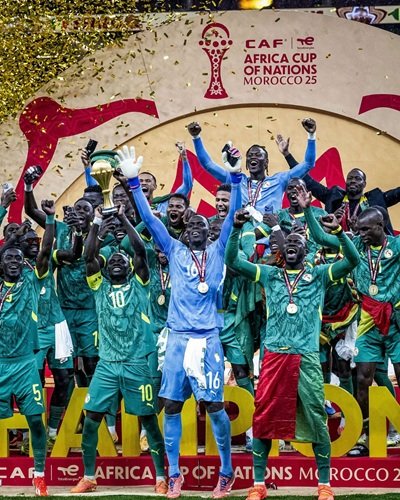
The Court of Arbitration for Sport (CAS) has upheld the appeal by the Senegalese Football Federation (FSF) against the Confederation of African Football (CAF) and the Royal Moroccan Football Federation (FRMF) concerning the final of the Africa Cup of Nations Morocco 2025 (AFCON 2025).
The decision rendered by the CAF Appeal Board has been set aside and the decision by the CAF Disciplinary Board reinstated. Consequently, the result obtained at the end of the AFCON 2025 final is confirmed — 1-0 for Senegal.
The FSF had appealed to CAS against a decision of the CAF Appeal Board declaring that the Senegal national team forfeited the AFCON 2025 final and recording the Moroccan national team as the winners.
In their appeal, the FSF argued that the decision of the Referee, Mr Jean-Jacques Ngambo Ndala, to resume the match at the 109th minute (90+19) during the final and to allow it to be concluded with a sporting result could not be reviewed, pursuant to the ‘field of play’ doctrine.
The FRMF argued, on the contrary, that the Referee’s decision did not fall under the ‘field of play’ doctrine, as it cannot be applicable to the disciplinary consequences of the Senegalese team’s behaviour.
The FRMF alleged that, by leaving the pitch temporarily, the Senegalese team breached Articles 82 and 84 of the AFCON Regulations, which should have led the Referee to bring the match to an early conclusion. The FRMF also argued that the Referee erred in law and that his decision was arbitrary.
After examining the arguments raised by the parties, the Arbitral Panel considered that the Referee’s decision to resume the match or to stop it fell definitively within his sole authority. By blowing his whistle to restart play, the Referee considered that the conditions for resuming the match had been met both teams were on the pitch again, and both expressed their willingness to resume.
In the Panel’s view, there is no doubt that the effects of the Referee’s decision were limited to the pitch. As such, the Panel considers that the Referee’s decision was covered by the ‘field of play’ doctrine.
Since Articles 82 and 84 of the AFCON Regulations are intended solely to determine the outcome of a match when a team’s conduct leads the referee to call off the game permanently, they are therefore not applicable in this case. In conclusion, the Panel considers that in resuming the match, the Referee did not err in law.
The Panel acknowledged that the Referee had to make a decision in an atmosphere of extreme tension. However, these circumstances do not justify describing the decision as “arbitrary”. On the contrary, the Referee’s judgment did not appear to have been affected by factors external to the game.
Regarding the disciplinary aspects of the case, the Panel noted that the FSF, the FSF coach Mr Pape Thiaw, and certain players had already been sanctioned by CAF following separate disciplinary proceedings.
Consequently, the appeal by the FSF was upheld. This was a unanimous decision by the CAS Panel.
The appeal by the FSF was registered by CAS on 25 March 2026. It sought to set aside the CAF decision declaring that the Senegal national team forfeited the AFCON 2025 final and recording the Moroccan national team as the winners of the match by 3-0. The appeal requested that CAS declare the FSF winners of AFCON 2025.
An in-person hearing took place behind closed doors at CAS headquarters, in Lausanne, on Thursday 8 October 2026.
By Edem Mensah-Tsotorme
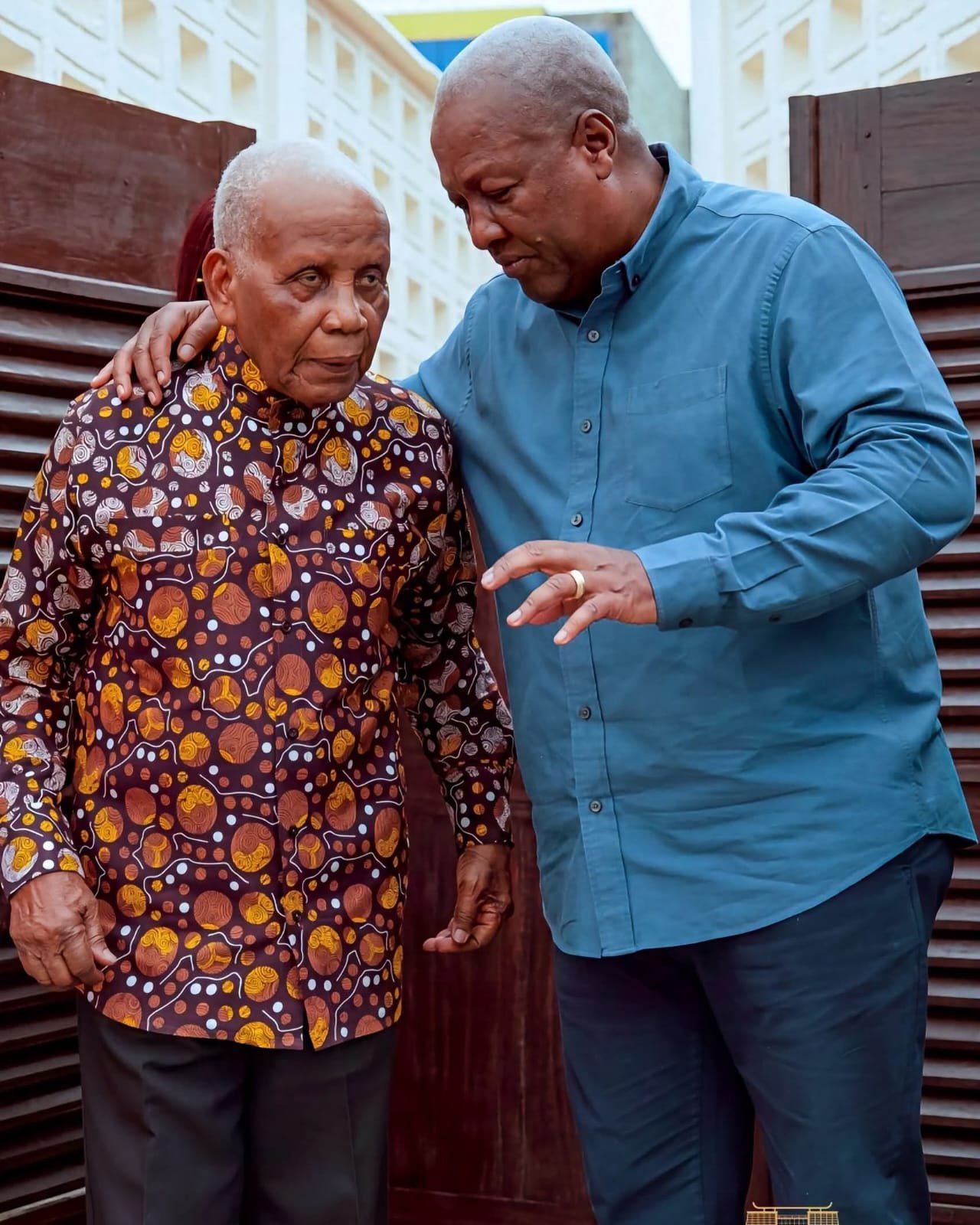
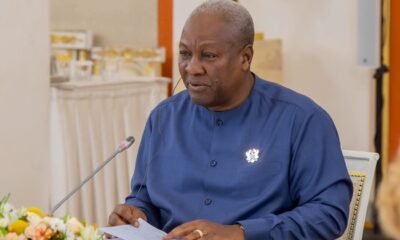
President John Dramani Mahama has paid a courtesy visit to veteran Ghanaian photographer and filmmaker, Dr Chris Hesse, in recognition of his invaluable contribution to the preservation of Ghana’s historical and cultural heritage.
Dr Hesse is renowned for documenting the life and presidency of Ghana’s first President, Dr Kwame Nkrumah.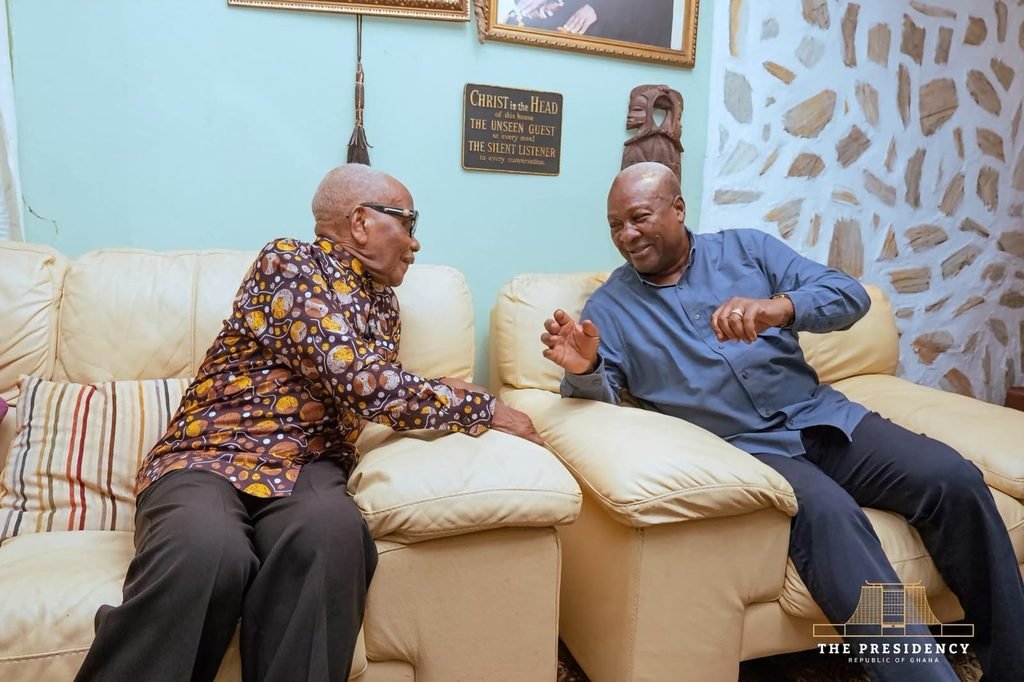
The visit, which took place at Dr Hesse’s residence at South La Estate Square, gave the President the opportunity to interact with the celebrated photographer and acknowledge his remarkable role in documenting some of the most significant moments in Ghana’s political and cultural history.
During the visit, President Mahama recounted his longstanding relationship with Dr Hesse, whom he affectionately described as Uncle Chris, and recalled his immense contribution to preserving Ghana’s historical film archives.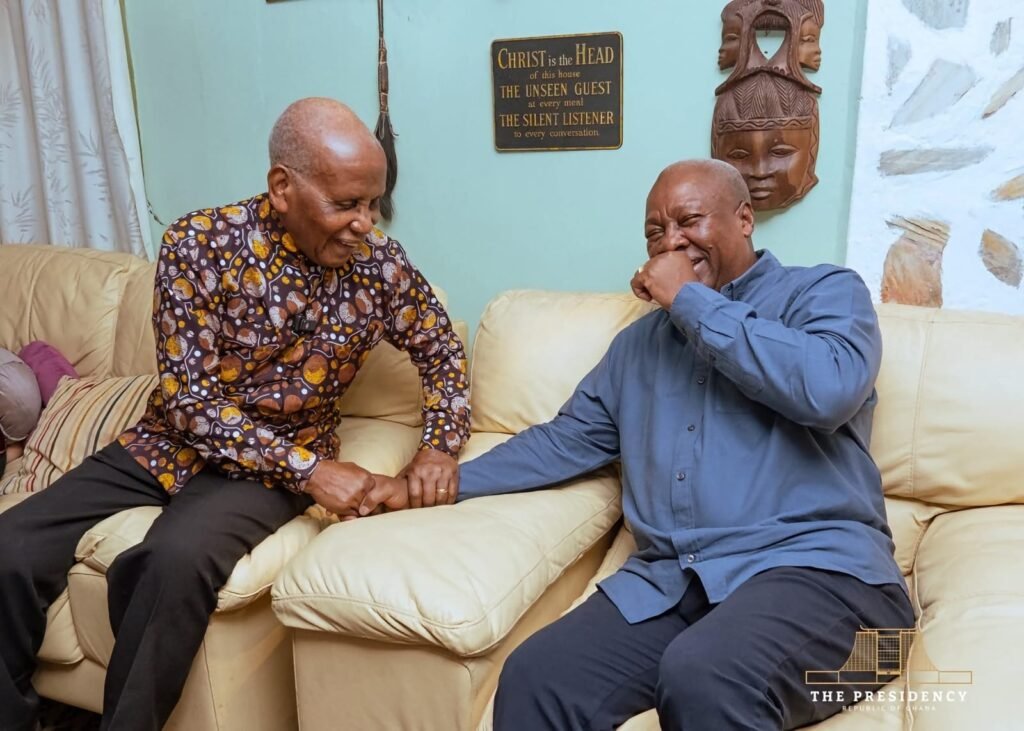
The President disclosed that he became more closely acquainted with Dr Hesse during his tenure as Deputy Minister for Communications, when the veteran filmmaker drew his attention to the deteriorating state of historical film materials held at the Information Services Department.
He explained that several reels of archival footage had suffered extensive deterioration due to age and poor storage conditions, particularly following the transfer of the Ghana Film Industry to private operators, whose modernisation efforts did not adequately prioritise preservation.
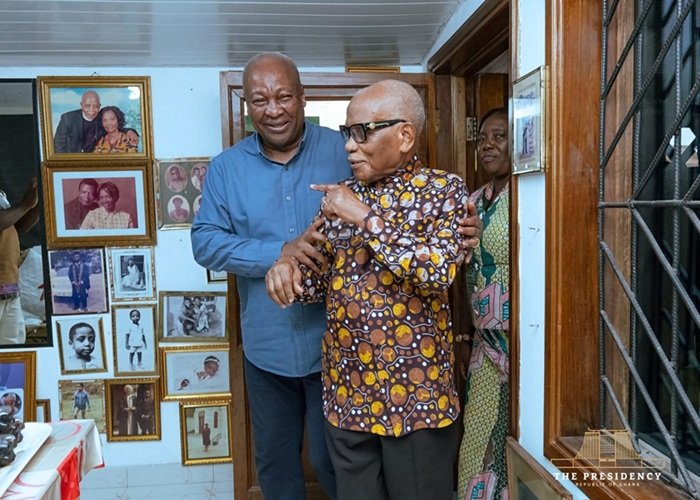
President Mahama recalled that through Dr Hesse’s intervention, efforts were made to retrieve and preserve some of the materials, including film copies that had been kept at the Rank Xerox laboratory in London.
He further recounted how government intervened to settle outstanding payments to prevent the destruction of the preserved materials, although the footage was eventually returned to Ghana and deposited at the Ghanaian Embassy in London after subsequent payments were discontinued.
According to the President, Dr Hesse subsequently took on the responsibility of ensuring that the historical footage was retrieved and digitised to safeguard it for future generations.
President Mahama expressed appreciation for the veteran photographer’s dedication, noting that some of the historical footage from Ghana’s early post-independence era, now accessible on social media and other platforms, is a result of Dr Hesse’s painstaking preservation efforts.
He described the work as an important contribution to national memory and the preservation of Ghana’s history, particularly the legacy of Dr Kwame Nkrumah.
The President was accompanied by the Deputy Minister for Tourism, Culture and Creative Arts, Yussif Issaka Jajah, who led officials from the Ministry and its agencies in representing the Sector Minister, Hon. Abla Dzifa Gomashie, who is currently out of the country.
The visit underscored the importance of recognising individuals whose dedication and professional contributions have helped preserve Ghana’s historical records, cultural identity and national heritage for present and future generations.
Other officials present included the Chief Executive Officer of the Ghana Tourism Authority, Maame Efua Houadjeto; the Executive Director of the Kwame Nkrumah Memorial Park, Dr Collins Rawlings Nunyonnam; the Executive Director of the National Film Authority, Kafui Danku; the Director of Culture and Creative Arts at the Ministry, Divine Kwame Owusu-Ansah; the Chairman of the National Film Authority Board, Mr Ivan Quashigah; and the Director of Human Resources at the Ministry, Mr Otto Langmagne, among other officials.
By Edem Mensah-Tsotorme

 News1 week ago
Fiifi Boafo questions Health Minister over Korle-Bu patient who paid GH¢77,561 but had no bed
- News6 days ago
Council of State member calls for investment in cultural heritage preservation
- News1 week ago
Côte d’Ivoire introduces mandatory online registration for travellers from African countries