News
Gender Minister commends Sunda International for promoting gender equity


- /home/u249204778/domains/spectator.com.gh/public_html/wp-content/plugins/mvp-social-buttons/mvp-social-buttons.php on line 27
https://spectator.com.gh/wp-content/uploads/2025/09/WhatsApp-Image-2025-09-18-at-14.51.10-1000x600.jpeg&description=Gender Minister commends Sunda International for promoting gender equity', 'pinterestShare', 'width=750,height=350'); return false;" title="Pin This Post">
- Share
- Tweet /home/u249204778/domains/spectator.com.gh/public_html/wp-content/plugins/mvp-social-buttons/mvp-social-buttons.php on line 72
https://spectator.com.gh/wp-content/uploads/2025/09/WhatsApp-Image-2025-09-18-at-14.51.10-1000x600.jpeg&description=Gender Minister commends Sunda International for promoting gender equity', 'pinterestShare', 'width=750,height=350'); return false;" title="Pin This Post">
The Minister for Gender, Children and Social Protection, Dr. Agnes Naa Momo Lartey, has commended Sunda International Company Limited for its commitment to gender equity and job creation in Ghana.
The Minister, who paid a working visit to the company’s facility at Weija, highlighted Sunda’s achievement of a 50–50 gender balance in leadership and decision-making roles.
She said this progress reflects the spirit and intent of the Affirmative Action (Gender Equity) Act, 2024, recently passed by Parliament.
Dr. Lartey praised Sunda International for creating thousands of jobs, particularly for the youth, stressing that such initiatives help reduce unemployment and improve livelihoods nationwide.
She encouraged more private sector players to follow Sunda’s example by making gender equity and youth empowerment part of their operations.
The Minister further announced that Sunda will soon be issued a Gender Equity Compliance Certificate in recognition of its adherence to the requirements of the new law.
This, she noted, places the company among the few leading institutions in Ghana that are translating gender equity policies into practice.
In addition, she revealed that government will partner with Sunda International in its flagship program to distribute free sanitary pads to schoolgirls across the country.
The initiative, she said, is aimed at promoting menstrual hygiene management and reducing absenteeism among female students.
Dr. Lartey explained that Sunda’s strong presence in the production of personal hygiene products makes it a valuable partner in delivering this social intervention.
The Minister concluded her visit by urging private businesses to emulate Sunda’s example, emphasizing that compliance with the Affirmative Action Act would not only promote fairness and inclusivity but also attract incentives and national recognition.
Sunda International, a subsidiary of the Sunda Group, is a leading manufacturer and distributor of fast-moving consumer goods in Ghana. Its product line includes sanitary pads, diapers, washing powder, and tissue products.
By: Jacob Aggrey










The Accra Regional Police Command has arrested former professional boxer Michael Ayitey Okai, popularly known as “Ayitey Powers,” over an alleged threat of death against the Director-General of the National Sports Authority, Yaw Ampofo.
According to the Police, the 46-year-old former boxer was arrested on Monday, August 24, 2026, in connection with the alleged threat.
The Police said the arrest followed a video circulating on social media in which Ayitey Powers is alleged to have issued the threat against Mr Ampofo.
He is currently in Police custody and is assisting with investigations.
The Accra Regional Police Command said investigations are ongoing to establish the circumstances surrounding the alleged threat and determine the appropriate action to be taken in accordance with the law.
The Command has urged the public to refrain from sharing unverified information about the matter while the investigation continues.
By: Jacob Aggrey
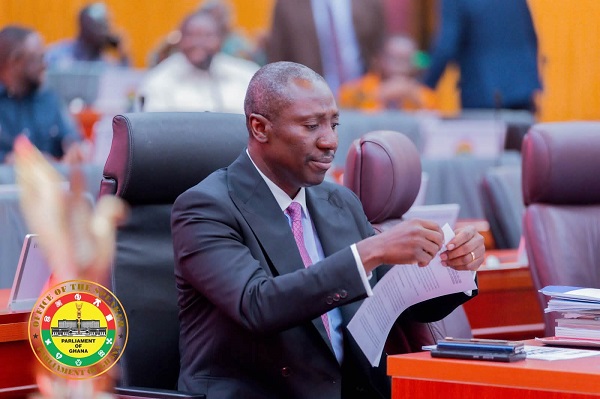
Minority Leader in Parliament Alexander Afenyo Markin has sued the Chief Executive Officer of the Ghana Gold Board (GoldBod), Sammy Gyamfi, and Multimedia Group Limited over alleged defamatory comments made against him on the Newsfile programme.
In a writ filed at the High Court in Accra, Mr Afenyo Markin is seeking GH¢15 million in damages, an apology and retraction of the statements, among other reliefs.
The suit follows comments allegedly made by Mr Gyamfi during the Saturday, August 22, 2026 edition of Newsfile, hosted by Samson Lardy Anyenini.
According to the statement of claim, Mr Gyamfi described Mr Afenyo Markin as an “extortionist” while responding to a question about GoldBod’s reported profits and its position on losses arising from its operations.
The plaintiff claims that Mr Gyamfi repeated the allegation when the host sought clarification on whether he stood by the description.
Mr Afenyo Markin further claims that Mr Gyamfi challenged him to sue him and insisted that the allegation was true.
The plaintiff argues that the statements created the impression that he engages in extortion, uses his political influence to put improper pressure on public institutions and officials, and conducts himself in a manner inconsistent with the standards expected of a lawyer and public office holder.
He denies the allegations and maintains that he is not an extortionist and has never engaged in the conduct alleged by Mr Gyamfi.
The Minority Leader also argues that the comments were made maliciously and were presented as facts without evidence being disclosed.
He claims the statements have damaged his reputation, professional standing and public image, particularly because of his position as a senior political figure and legal practitioner.
The suit also names Multimedia Group Limited as a defendant because, according to the plaintiff, the alleged defamatory comments were broadcast through JoyNews and subsequently circulated on social media platforms, including X, Facebook and YouTube.
Mr Afenyo Markin claims Multimedia failed to stop the comments or deactivate Mr Gyamfi’s microphone after the allegations were made.
He is therefore asking the court to award him general, aggravated and exemplary damages, as well as GH¢15 million in compensation and legal costs.
He is also seeking an order compelling the defendants to issue a full, unconditional and unequivocal retraction and public apology.
The plaintiff wants the apology and retraction to be given similar prominence and reach as the original publication, including through JoyNews and the social media platforms where the comments were disseminated.
He is further seeking a permanent injunction preventing the defendants from repeating the alleged defamatory statements or words with a similar meaning.
The writ requires the defendants to enter an appearance within eight days after being served.
It warns that failure to do so could result in judgment being entered in their absence.
The case was filed by lawyer Paa Kwesi Abaidoo of Dehyena Chambers on behalf of Mr Afenyo Markin.
By: Jacob Aggrey