News
Gambling: Politically unwise (Part 2)

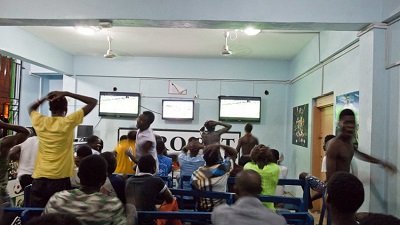
Gambling is also bad political policy. Solely in terms of its effects on society and government, a law that permits gambling is hard to justify, and a law that sponsors or promotes gambling is a sure loser.
It should not be surprising that many of the public policy arguments against gambling are mirror images of the moral and religious considerations reviewed last week. The moral codes of religion are rooted in our Creator’s teachings of how his children should live to be happy, prosperous, and at peace. A religious and moral person is generally a good neighbour and a good citizen. The encouragement of moral behaviour by citizens is generally good public policy.
Columnist George F. Will explained it this way:“Gambling is debased speculation, a lust for sudden wealth that is not connected with the process of making society more productive of goods and services. Government support of gambling gives a legitimsing imprimatur to the pursuit of wealth without work.”In the words of Former Governor of Florida Bob Graham, “What the lottery says about success is the wrong message. What it says is that you don’t have to work hard, you don’t have to try to improve yourself. All you have to do is just take your roll of the dice.”
A Catholic priest, Monsignor Joseph Dunne, deplores what the lottery teaches children: “Why should they get an education when with a little bit of luck they can win a bundle of money for life? That’s what lotteries are doing to our youth.”The philosophy of something for nothing or something for far less than it is worth is at the root of a multitude of crimes: theft, robbery, looting, embezzlement, fraud, and many other kinds of plunder. By nourishing and legitimating that philosophy, gambling is a threat to the prosperity and peace of any nation.
Gambling is especially wicked when it is administered by government or when government relies on it as a substantial source of public revenue. In times when a government’s appetite for taxes seems insatiable, government officials who depend on gambling to finance a share of the public budget have a strong temptation to promote gambling and to protect it from opposition.
You can’t run a successful lottery by telling the whole truth. You need hard-sell promotion, often vague and misleading about the odds and the prizes. That enterprise of parting the gullible from his hard earn money is questionable enough in the free marketplace; it’s no business for a nation or government whose purpose is to serve and protect the people.
As a Newsweek business section writer noted: “The strongest case against lotteries may simply be that they are inefficient.”Most methods of taxation cost only one to two cents to bring in each dollar of revenue. In contrast, between 60 and 75 cents of every dollar spent on a lottery ticket goes to operating expenses and prizes.
Lottery is the worst form of taxation ever invented when operated by the government. This is because the poor pay a higher proportion of their income than the rich. Economists describe this kind of tax as highly regressive. Writing in the National Tax Journal,one economist stated that most forms of gambling, including lotteries and numbers games, turn out to be “two to three times more regressive than sales taxes.”
An official with a firm that markets lottery products told a trade audience that the typical player of a numbers game is a labourer or service worker who is male with less than a high school education. Scholarly studies confirm that lotteries draw their revenues from the poor and disadvantaged.
A national lottery encourages many non-gamblers to take up gambling. Its goal, as explained by an official of the Public Gaming Research Institute, “is to get lots of people to play a little bit.” That is what happens. Like a virus, official sponsorship spreads gambling like an epidemic.
Advocates of legalised gambling argue that their games will eliminate illegal gambling, but there is no evidence that this has occurred. Instead, legalised gambling wins new participants, which expands the market and the potential revenues of illegal gambling. Just by example see the number of young people flocking betting dens all day of the week take a chance on sport betting.
The only beneficiaries of a national lottery are the businesses that sell the specialised products and services used in lotteries. Those businesses are behind the campaigns to adopt them. National sponsored lotteries are a good news/bad news proposition. The good news is for a handful of businesses that are sure to profit by it, and for professional gamblers and the crime syndicate that will benefit from having their most profitable enterprise promoted and legitimised by the state. It is also good news for a tiny number of winners who cannot be predicted in advance but who are sure to be fewer than one in a thousand of those who participate.
The bad news is for the hundreds of thousands of losers and for the citizens at large. As a method of raising revenue to support any worthy object, a national lottery is the most unfair and expensive form of taxation, and its victims require increased state expenditures for social welfare and law enforcement. In short, the national lottery is costly, ineffective, and unfair.
I conclude this discussion of public policy arguments against gambling with several moral objections. Law is concerned about morality, and there are serious legal-moral objections to lotteries and gambling. I quote five of these objections from a publication of the Southern Baptist Convention’s Christian Life Commission:
“It is a moral issue when the state decides to derive income from an activity which is a highly regressive form of taxation that affects poor people more extensively than affluent people. It is a moral issue when a state decides not only to tolerate gambling but to get in the business of planning games, engaging in promotional activities … and targeting its citizens through extensive marketing analyses in the hopes of creating new gamblers.
“It is a moral issue when a state adopts a form of gambling which in all probability will increase the extent and the amount of illegal gambling. It is a moral issue when a state adopts a form of gambling that will draw off large amounts of money, especially from the poor people for whom the state supposedly has a responsibility to provide assistance.
“It is a moral issue when a state engages in naive projections and adopts financial planning that amounts to putting a shoddy patch on a state’s long-term financial problems.”
To summarise: that governments would tolerate gambling is regrettable; that governments would promote gambling is reprehensible.So what should we do about gambling a people? We should not participate in any way, and should encourage others, especially our family members, not to participate.
If as Christians, Moslems and high minded people in the society members do not oppose immoral and pernicious practices, who will? If not now, when? We can make a difference! May God help us to do so.
By Samuel Enos Eghan

The Ghana Health Service (GHS) will undertake a nationwide Human Papillomavirus (HPV) vaccination exercise in schools from October to December 2026 to protect eligible girls against cervical cancer and other HPV related diseases.
The exercise, organised in collaboration with the Ghana Education Service (GES) and its partners through the School Health Education Programme (SHEP), will be conducted in two rounds.
The first round is scheduled for October 19 to 23, 2026, while the second will take place from November 30 to December 4, 2026.
In a press release dated October 19, the GHS explained that health workers would visit schools across the country to vaccinate eligible girls aged 9 to 14 who have not yet received the HPV vaccine.
The exercise forms part of efforts to raise awareness about the routine HPV vaccine, increase vaccination uptake and strengthen the country’s routine immunisation programme.
The GHS has called on school authorities, parents, guardians, teachers and community leaders to cooperate with health teams to ensure the successful implementation of the exercise.
The Service reaffirmed its commitment to protecting the health and well-being of Ghanaians, particularly children, through vaccination and other public health interventions.
By: Jacob Aggrey

Vice President Professor Jane Naana Opoku-Agyemang has held high-level discussions with organisers of the 2026 Global South Academic Forum in Shanghai, seeking to draw lessons from China’s acclaimed rural revitalisation and poverty reduction drive.
The meeting, led by the Forum Chair, Professor Lu Xinyu, explored practical areas of cooperation and knowledge exchange between Ghana and China, with focus on community-driven development, fisheries and aquaculture, local governance, sports initiatives, and infrastructure development.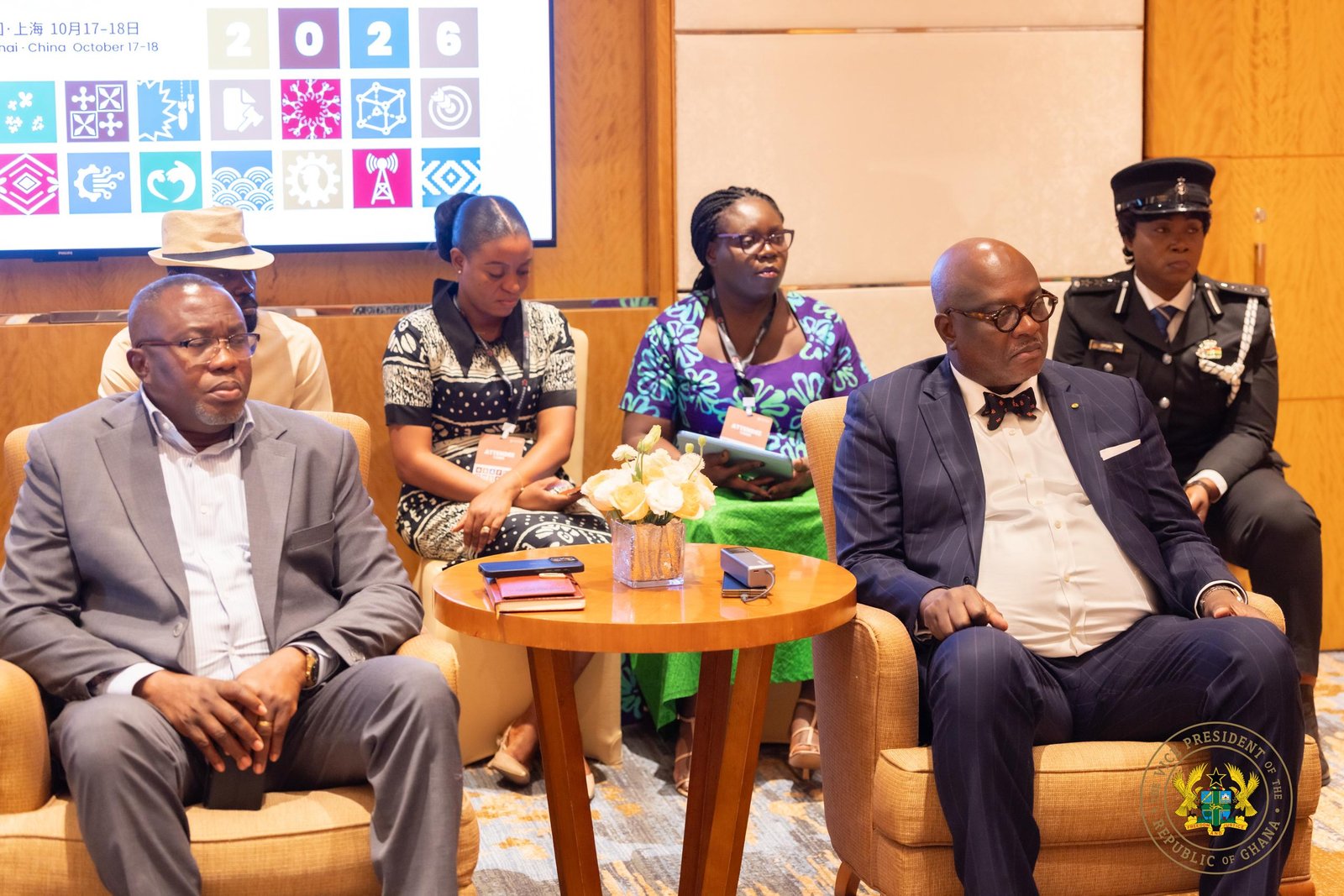
According to officials, the engagement is part of a broader effort by the Ghanaian government to study tested development models that can be adapted to the local context to promote inclusive growth, empower local communities, and improve livelihoods across the country.
China’s success in lifting over 800 million people out of poverty through targeted rural policies, investment in agriculture and local infrastructure has become a global reference point for developing nations.
The Vice President’s team says insights from the Forum will help inform policy direction, particularly in strengthening decentralised governance, boosting the fisheries and aquaculture sector, and investing in community-level infrastructure and youth sports development.

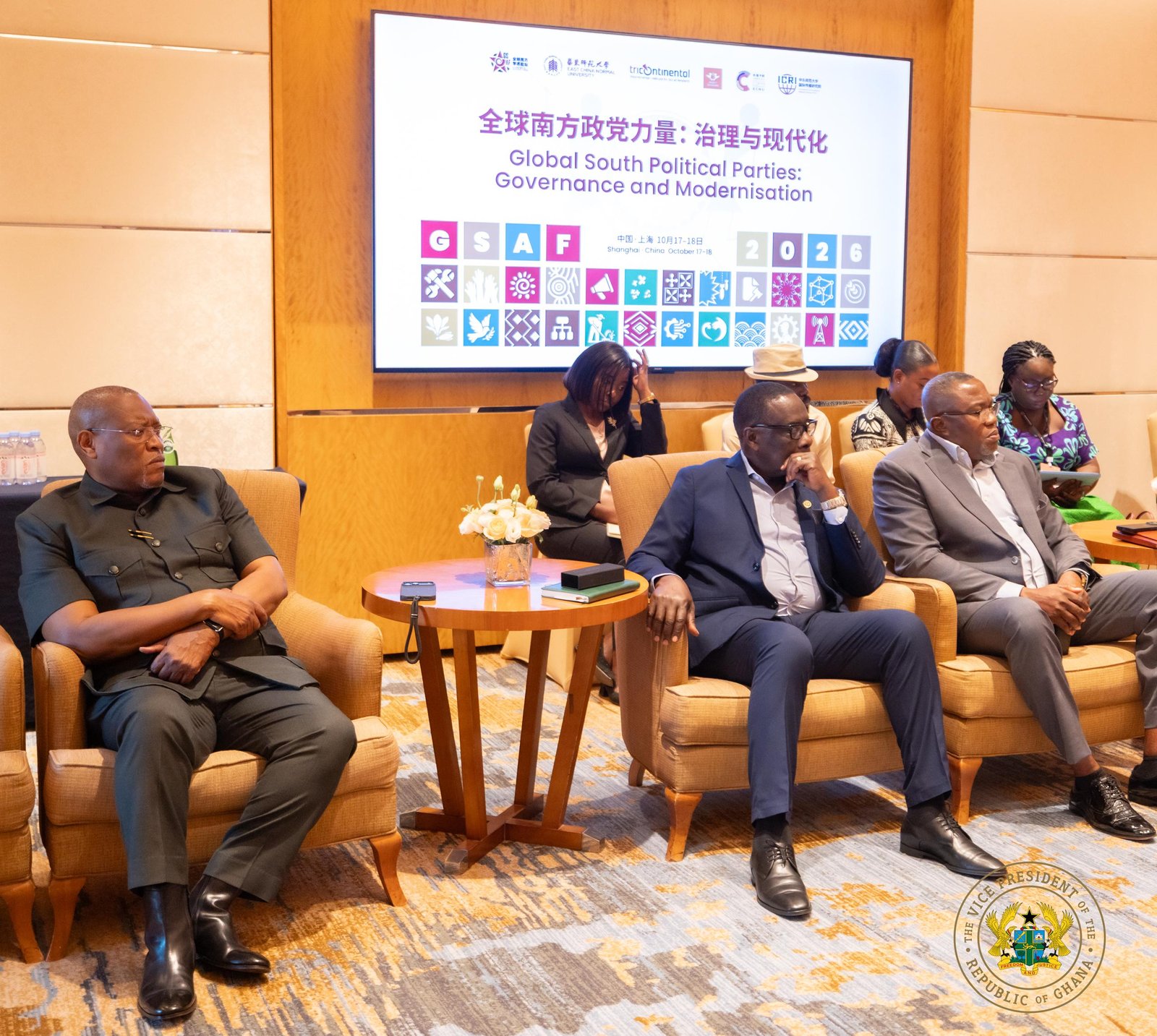

Professor Opoku-Agyemang is expected to continue engagements with academic and development institutions while in China.
By Edem Mensah-Tsotorme