Hot!
From culinary passion to record-breaking feats: Hilda Bassey rekindles debate on gender bias in the culinary world …Richard Dela Sky writes


Two days ago, I found myself engrossed in a conversation with a law school friend, captivated by tales of an extraordinary individual named Hilda Bassey. This Nigerian chef possesses an unwavering determination to surpass the Guinness World Record held by an accomplished Indian cook. Intrigued by my friend’s infectious enthusiasm, I embarked on a quest to unravel the story further. To my astonishment, Bassey had garnered worldwide acclaim, captivating thousands of viewers on her TikTok livestream as she valiantly strove to surpass the previous record of 87 hours — an awe-inspiring feat that extended to a staggering 100 hours.
Culinary Gender Bias: The Debate on Women in the Kitchen
During our dialogue, my friend disclosed her father’s request for her culinary prowess. I seized the opportunity to inspire her, encouraging her to showcase her culinary skills and bring profound pride to her parents. However, much to my surprise, she levelled the accusation of sexism against me. Perplexed, I defended my intentions, explaining that I merely sought to motivate her to bring boundless joy to her family through her culinary endeavours. Ironically, I couldn’t help but notice the inconsistency. While she marvelled at another woman’s dedication to culinary excellence over an extended period, albeit within a different context, she found offence in my suggestion that she undertake the same endeavour for her own parents. She later explained that her accusation was merely a rhetorical device intended to provoke a spirited discussion, devoid of any genuine seriousness.
Sharing My Own Culinary Journey: From Frustration to Triumph
Nonetheless, I took the opportunity to share with her my own culinary prowess, assuring her of my enviable skills in the kitchen. Notably, in 2016, I received a well-deserved accolade for my cooking abilities, securing the prized second position in a highly-regarded cooking competition hosted by my employers at Citi FM. I scored 78 marks (An “A” Grade) out of 100, coming second to my good friend and former colleague, Kojo Akoto Boateng. The likes of Bernard Koku Avle, Philip Kofi Ashong and Kweku David trailed me in that order.
The flames of my passion for cooking were ignited during my formative years, sparked by a specific incident. One scorching afternoon, upon returning home from school famished, I was disheartened to find the pots devoid of sustenance. Meanwhile, my mother, engrossed in preparations for a community gathering at Adafienu in the Volta Region, firmly instructed me, “If you wish to satiate your hunger, you must take charge of the culinary fire. At your age, it is well within your capabilities,” her resolute expression leaving no room for negotiation, as is customary in our Ewe heritage. Though initially frustrated, the rumblings in my stomach and my mother’s unwavering determination left me with no alternative. Reluctantly, I embarked on the journey of igniting my own culinary fire, immersing myself in the depths of the art of cooking, with tears flowing like an endless tide. However, when faced with formidable challenges, my mother graciously stepped in to guide me towards triumph in that seminal cooking lesson before leaving for her event.
Nurturing Independence: Flourishing in Culinary Expertise
From that point onward, I flourished into an independent individual proficient in an array of domestic tasks, with particular expertise in the rich culinary traditions of the Ewe people. Throughout my years studying law in the United Kingdom, sustenance primarily emanated from the creations emerging from my personal kitchen. The moral of this tale is resoundingly clear: there is no impropriety in a young gentleman acquiring mastery in the culinary arts. In fact, it can prove to be their most formidable asset in overcoming life’s adversities.
Returning to the story of Bassey, there is much to learn from what she set out to achieve and what she did achieve. Indeed, politicians, celebrities, and an enthusiastic crowd cheered her on throughout the event, ferrying her safely to beat the current record set at 87 hours and 45 minutes in India in 2019. Guinness World Records is reviewing the evidence to determine if she has broken the record. Although there were no officials from the organisation present, CCTV cameras monitored the venue in Lagos, Nigeria’s commercial capital.
Bassey had initially planned to cook for 96 hours but extended her challenge to reach the 100-hour milestone due to the encouragement from the crowd. She had predominantly cooked Nigerian meals, including jollof rice and other rice and pasta dishes. During her breaks, Bassey received medical attention, including cold compresses and foot massages, to alleviate physical strain. Her determination and the support she received showcase the strength of young people with the right platform and backing. Bassey’s passion for cooking was inspired by her mother’s culinary skills, and her recipes are all homemade.
The 10 Lessons from Bassey
Through her remarkable feat of non-stop cooking for 100 hours, Bassey has fascinated the world and imparted invaluable lessons that extend beyond the confines of her kitchen in Lagos. From zealous dedication to cultural celebration, each lesson serves as a guiding light, inspiring us to overcome obstacles and relish the taste of triumph. The following are the 10 main lessons I have distilled from Bassey’s transformative culinary odyssey:
i. Persistence overcomes challenges: Bassey’s nonstop cooking for 100 hours demonstrates the power of persistence and determination in overcoming obstacles.
ii. Showcase cultural excellence: Bassey’s goal to put Nigerian cuisine on the map highlights the importance of showcasing and celebrating cultural excellence.
iii. Propagate culinary traditions: Creating numerous recipes and meals promotes the propagation of culinary traditions, expanding awareness and appreciation for a diverse range of flavours.
iv. Aim high: Bassey’s decision to aim for 100 hours after surpassing the previous record encourages setting ambitious goals and pushing beyond one’s limits.
v. Believe in the best: Bassey’s conviction that Nigerian cuisine is the best inspires confidence and pride in one’s heritage and culinary traditions.
vi. Community support is invaluable: The outpouring of support from fans, friends, and celebrities demonstrates the power of community in achieving remarkable accomplishments.
vii. Dedication despite adversity: Bassey’s ability to remain in high spirits and continue cooking despite sleep deprivation serves as a testament to dedication and passion for her craft.
viii. Inspire the youth: Bassey’s feat serves as an inspiration to younger generations, showing them that dreams can be realised with hard work and perseverance.
ix. Unite for common goals: The collective support of the Nigerian community illustrates the strength that emerges when people come together to support a shared purpose.
x. Miracles can happen: Bassey’s perseverance and the incredible outcome she achieved serve as a reminder that miracles can occur when determination and support align.
Conclusion
Hilda Bassey’s remarkable journey of cooking non-stop for 100 hours has inspired us all. Her passion, determination, and cultural celebration have shattered boundaries and showcased the power of setting ambitious goals. Through her story, we are reminded that greatness can be achieved when we believe in ourselves and unite for a common purpose. Bassey’s culinary odyssey carries invaluable lessons — commitment to excellence, the propagation of traditions, inspiring the youth, and overcoming adversity. Her achievement serves as a guiding light, reminding us to embrace our own extraordinary potential and take pride in our cultural heritage.
As we celebrate Bassey’s ground-breaking feat, wherever we may be, let us carry her inspiration with us, breaking records, pushing boundaries, and leaving a lasting legacy that resonates with generations to come. Let us rekindle a deep-seated pride in the art of home cooking, celebrating the richness of our cultural heritage. With unwavering determination, we can overcome any challenge that crosses our path. It is our duty to impart upon younger generations the wisdom that there is no shame in women or men expressing their culinary prowess within the kitchen’s sacred confines. While the stories as told here provide valuable perspectives, it is important to acknowledge that this discourse is not exhaustive. Views on, particularly, women and their role in cooking may diverge depending on cultural, social, and individual contexts.
In the meantime, I find myself enticed by the idea of embarking on a 200-hour culinary marathon, a veritable gastronomic voyage, in order to demonstrate that what women like Bassey can accomplish in the kitchen, dedicated men can exceed with unparalleled finesse. Contemplation ensues: Should I dare take on this audacious challenge?
Written by Richard Dela Sky


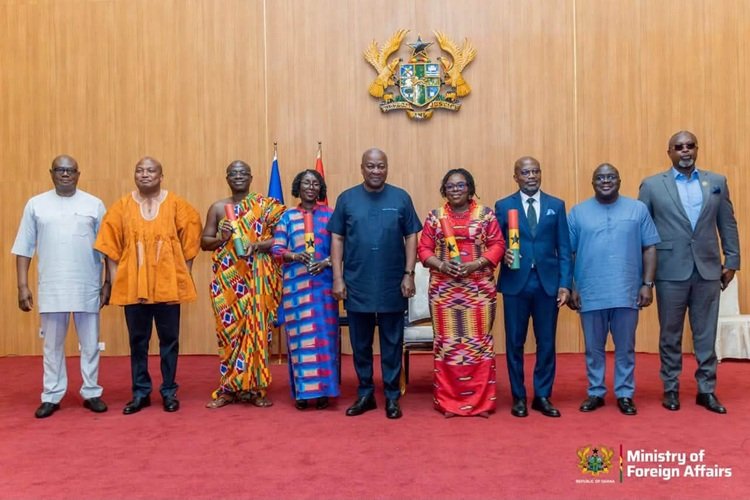
President John Dramani Mahama has commissioned four career diplomats as ambassador-designates to represent Ghana in four countries.
The commissioning ceremony took place on Friday, October 16, 2026.
The new envoys are Her Excellency Nana Antwiwaa Dodoo, Ambassador-Designate to Angola; His Excellency Louis Kwame Obeng, Ambassador-Designate to Qatar; Her Excellency Evelyn Korantemaa Ofosu-Amable, Ambassador-Designate to Israel; and His Excellency Jedidiah Reuben Adogla, Permanent Representative-Designate to Switzerland.
President Mahama charged them to advance Ghana’s national interests through strategic partnerships, economic diplomacy, investment mobilization, and expanded access to international markets.
He said Ghana’s diplomatic engagements must deliver tangible economic benefits, create jobs, and strengthen the country’s standing on the international stage.
The four envoys are career diplomats with over 27 years of experience.
On behalf of her colleagues, Her Excellency Nana Antwiwaa Dodoo thanked the President for the confidence reposed in them and pledged their commitment to emulate his leadership and deliver on the mandate given to them.
By Edem Mensah-Tsotorme
The professor who spends his days exploring the intricacies of African languages found himself at the centre of a different kind of lesson on Friday, October 2, 2026. 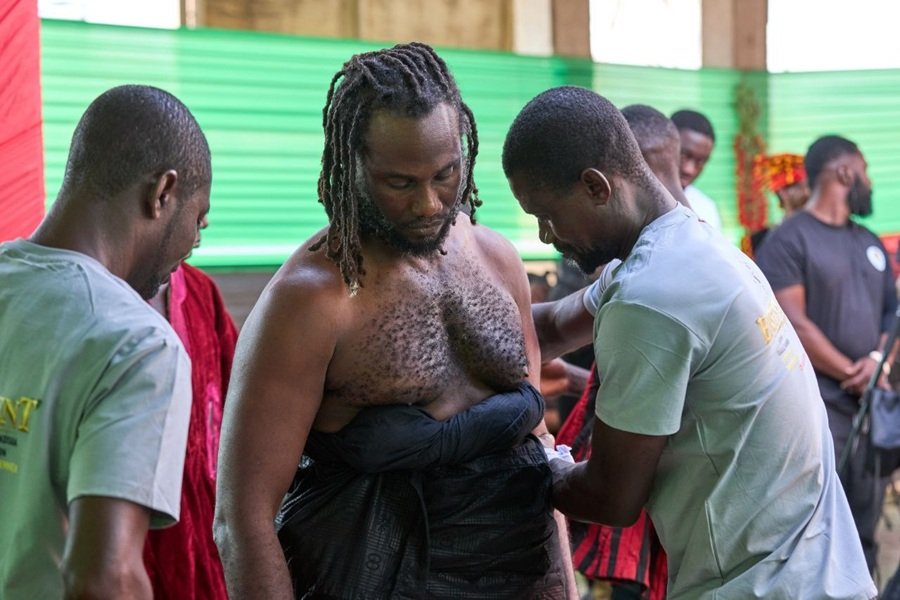
This time, there were no lecture notes, academic arguments or university classrooms. Instead, there was the weight of tradition, the rhythm of a community celebration and the solemnity of an oath at a royal palace.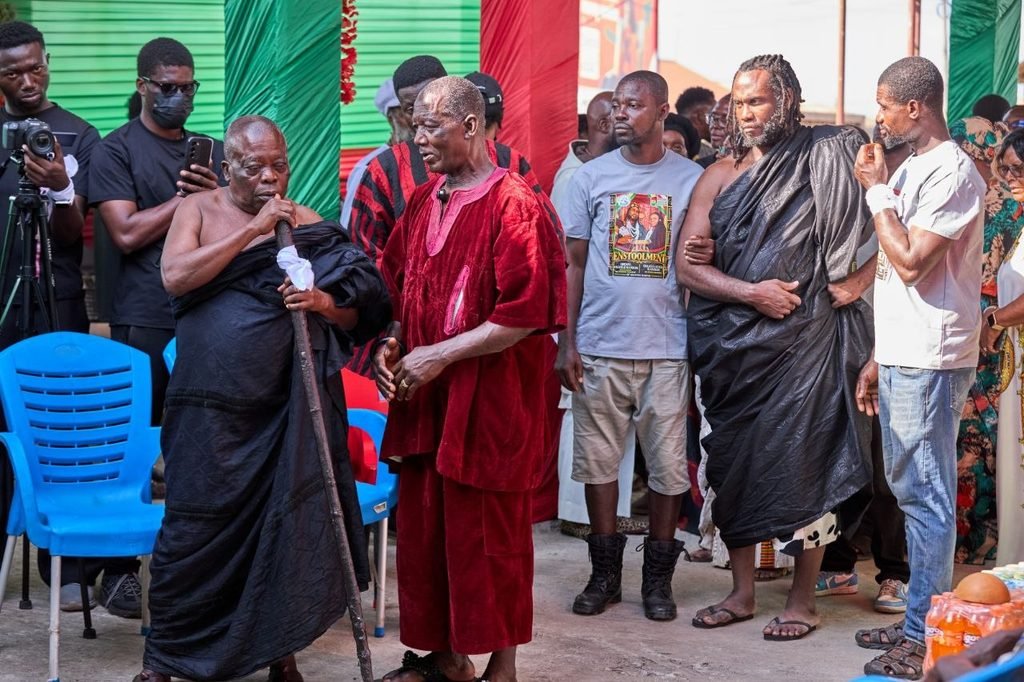
Professor Ọbádélé Kambon, a full Professor of African Linguistics at the University of Ghana, was enstooled as Apagyahene and Sunsum Ɔsahene of Akuapem Mampong in the Eastern Region in a ceremony that brought academia and traditional authority together.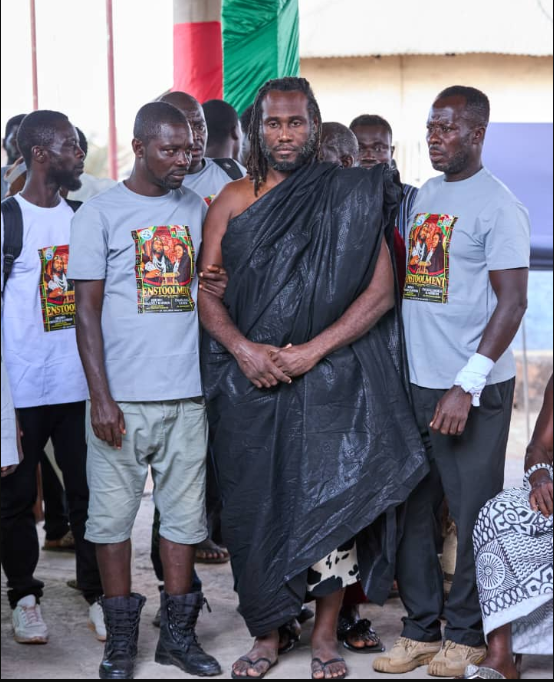
For the professor, the occasion was more than a new title. It was a moment that connected his academic interests in African languages and indigenous knowledge with the living traditions of an Akan community.
The day’s events unfolded through a series of customary observances. Kambon was first taken to the compounds of the Ɔkyeamehene and Gyasehene, where the preparations for his installation continued.
Then came the application of hyire, the white kaolin powder associated with traditional rites.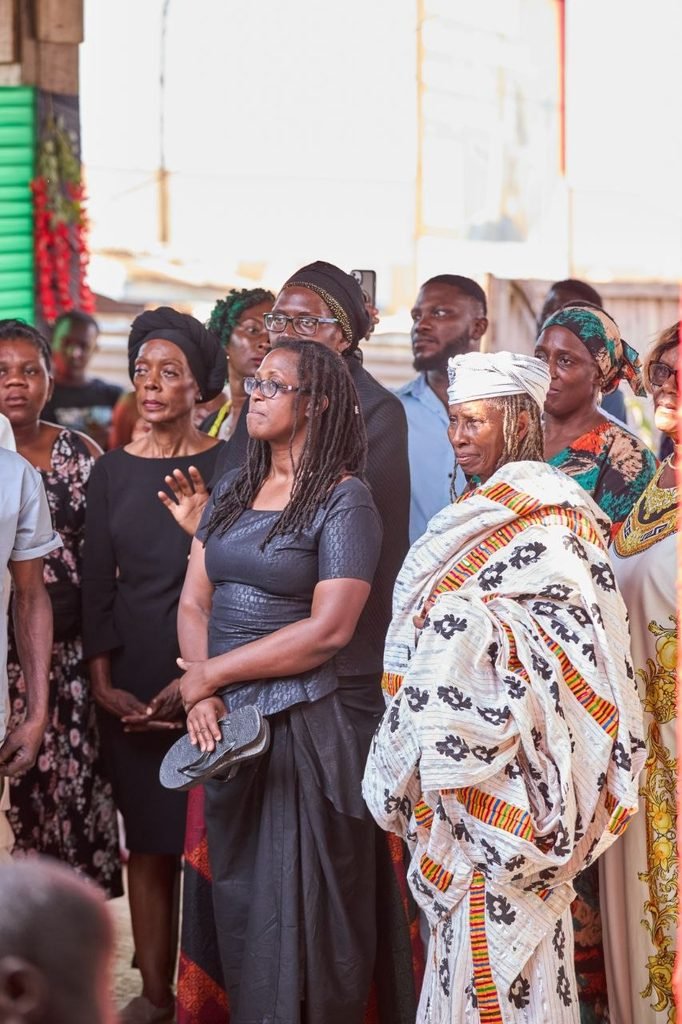
With the customary proceedings underway, the new chief was lifted onto the shoulders of celebrants and carried along the main thoroughfare of Akuapem Mampong.
The procession transformed the streets into a public stage for a ceremony rooted in the community’s traditional institutions.
There was something striking about the image, a university professor, accustomed to the measured language of academic discourse, being carried through the town in a display of traditional recognition.
Yet the celebration was not complete with the procession.
A ram was sacrificed at the Mamponghene’s compound before Kambon was taken to the palace, to swear the oath associated with his new offices.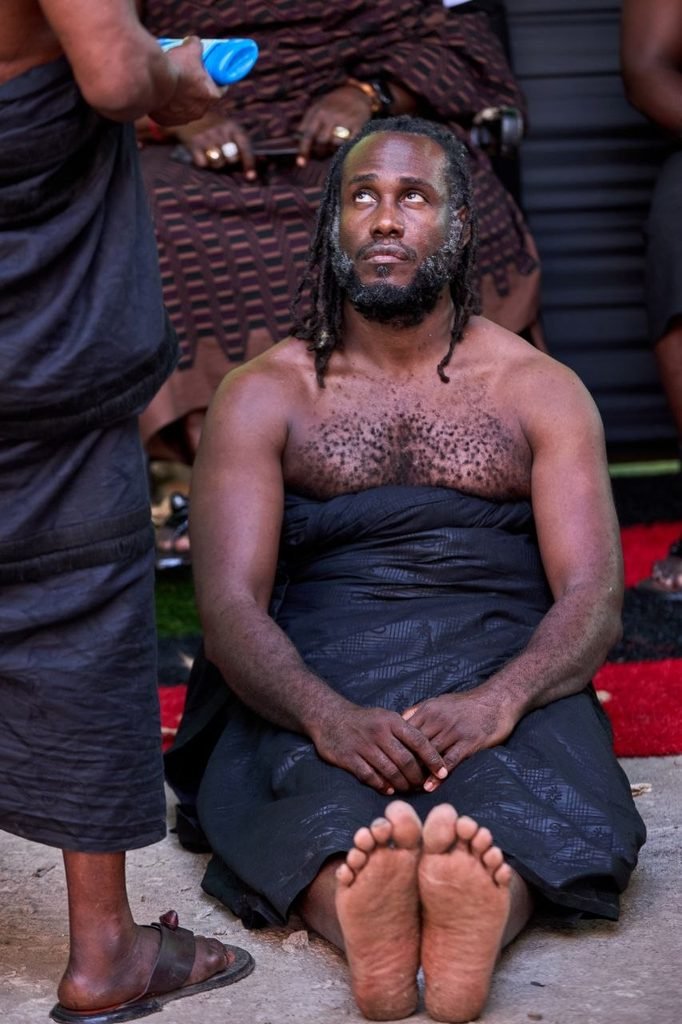

The ceremony brought him formally into his roles as Apagyahene and Sunsum Ɔsahene.
Beyond the colourful proceedings, the titles themselves carry layers of historical meaning.
Kambon in his research explores the historical connections between Apagya and Akan political and military organisation.
Accounts cited in his work linked Apagya to an asafo, or military company, while historical writing traces an Apagya stool in Asante to the reign of Opoku Ware I in the eighteenth century.
These historical associations offer a glimpse into the institutions that have shaped Akan society over generations, although they do not automatically define the precise responsibilities of the office in Akuapem Mampong.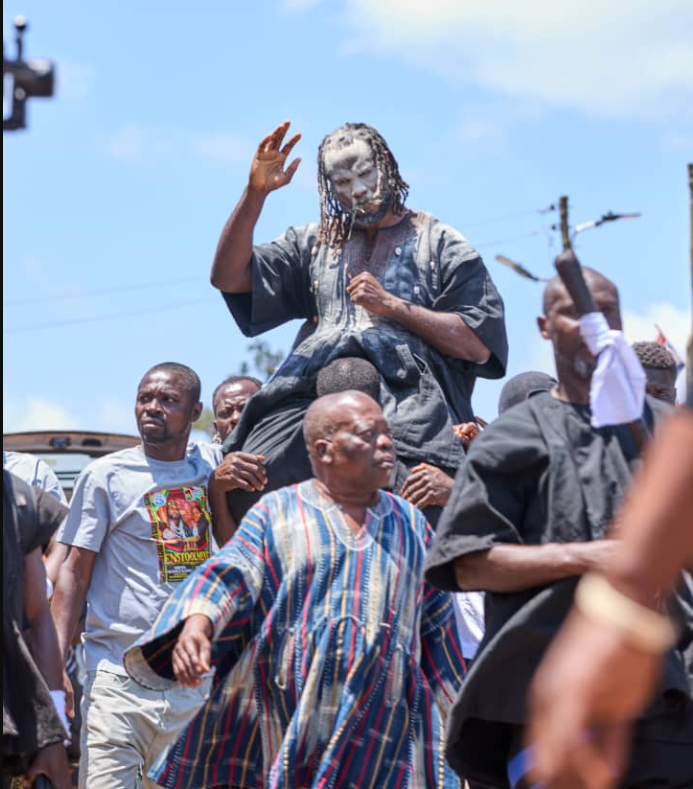
Kambon’s own professional life reflects a similar interest in preserving and examining African knowledge.
His work encompasses Akan language structure, naming practices across the Black world, proverbs and indigenous intellectual traditions.
Through Abibitumi, the platform he founded, he also promotes language learning, scholarship and cultural engagement.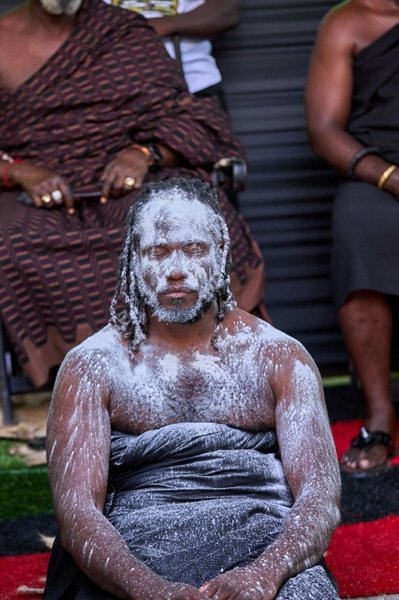
But tradition was only one part of the story that day.
When the formal ceremony gave way to a reception, the occasion expanded into a celebration of three milestones: Kambon’s enstoolment, his promotion to full professor and his daughter Ama’s admission to the University of Ghana.
The gathering therefore carried a personal significance that went beyond the honours bestowed on one man. 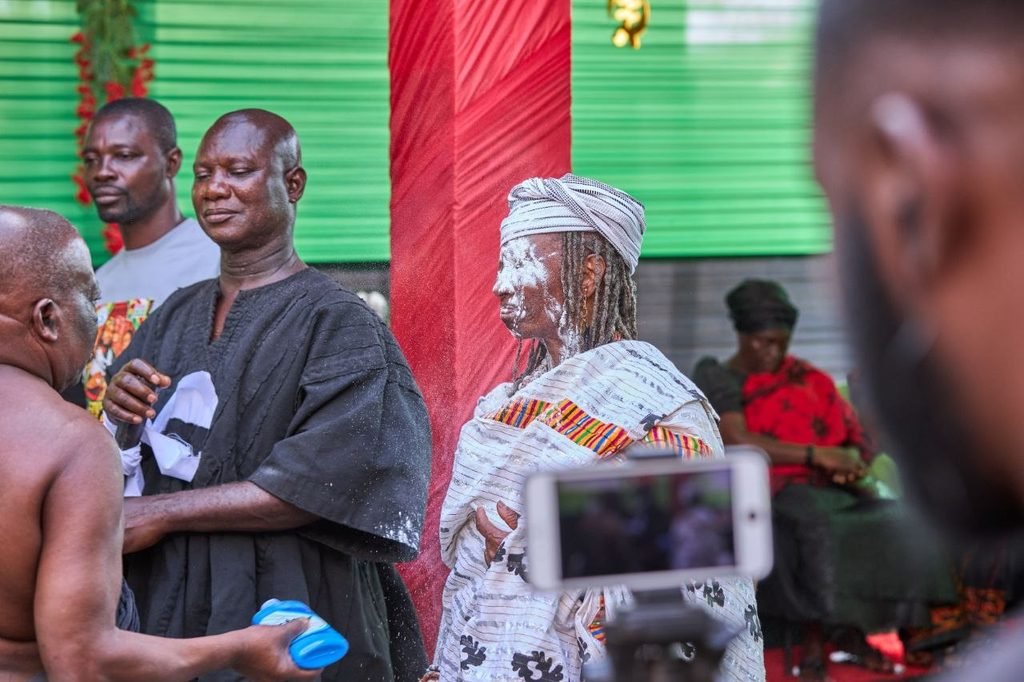
It celebrated professional advancement, the continuation of family aspirations and a connection to cultural heritage.
For a father, seeing a daughter gain admission to the same university where he holds a distinguished academic position offered another reason to celebrate.
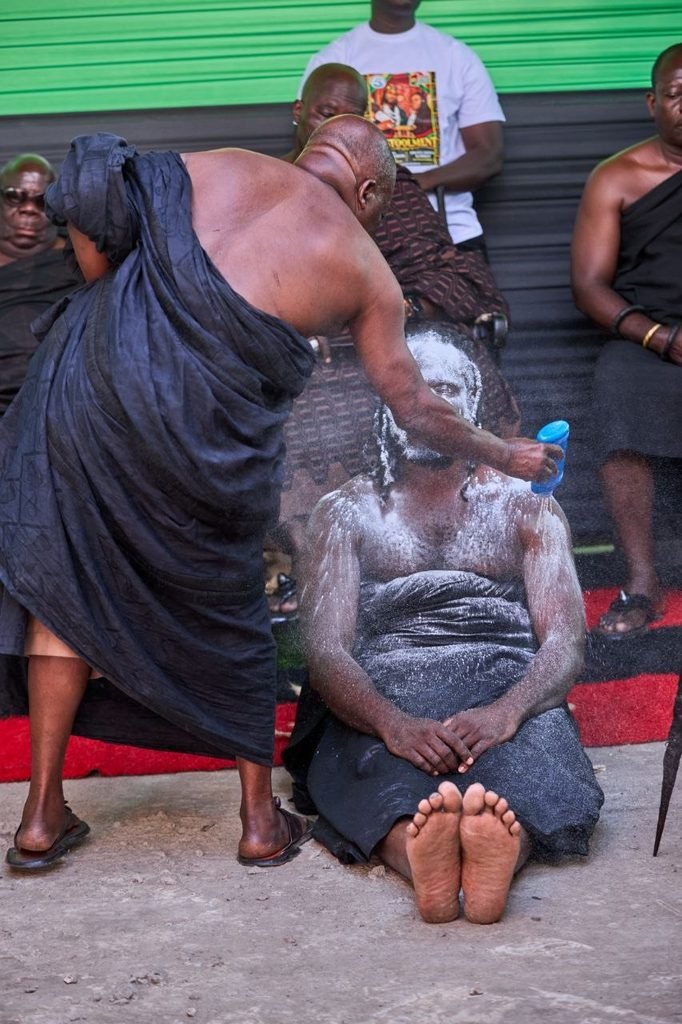
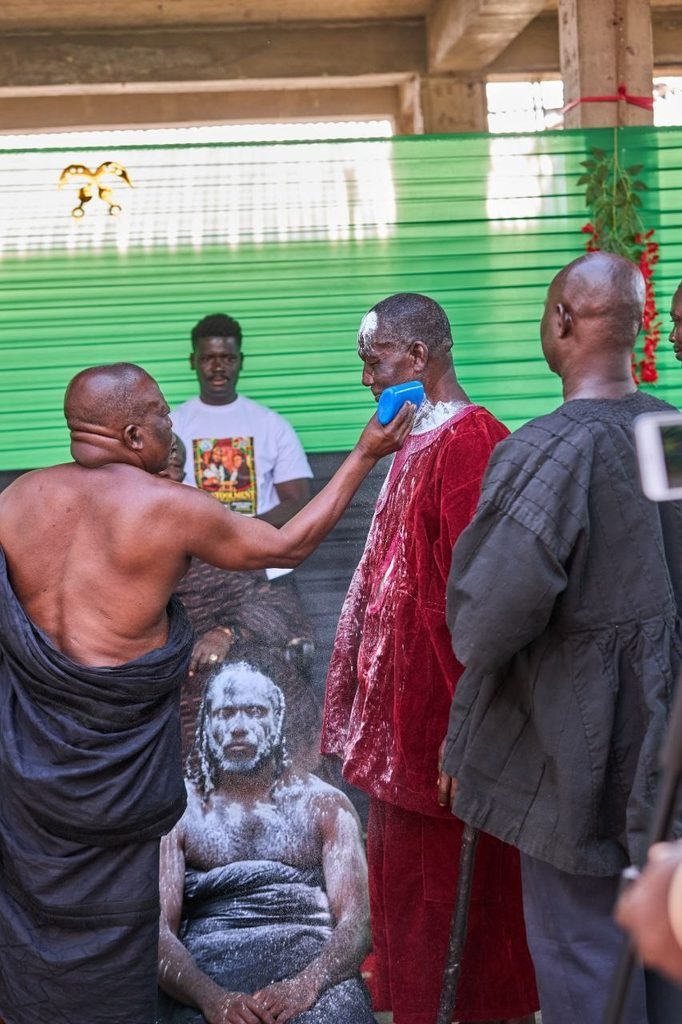
For the professor, the moment placed family achievement alongside his own professional and traditional milestones.
Kambon had already established a place in the traditional life of Akuapem Mampɔn through an earlier installation as Banmuhene Kyidɔmhene, recorded in 2017.
His latest enstoolment adds another chapter to that relationship.
In Akuapem Mampɔn, the day brought together the university, the palace and the family table in one celebration. And for Kambon, the journey from the lecture room to the traditional procession showed how scholarship, cultural responsibility and family achievement could converge in a single memorable occasion.
By Enoch Ntiamoah Siaw
SKIP THE QUEUE, TAP THE NEWS
You can now read the Ghanaian Times and The Spectator newspapers from the comfort of your device via TimesNewsPlus.
Join our WhatsApp Channel: https://whatsapp.com/channel/0029VbBElzjInlqHhl1aTU27