News
French, Arabic and Chinese remain optional subjects-Education Ministry clarifies

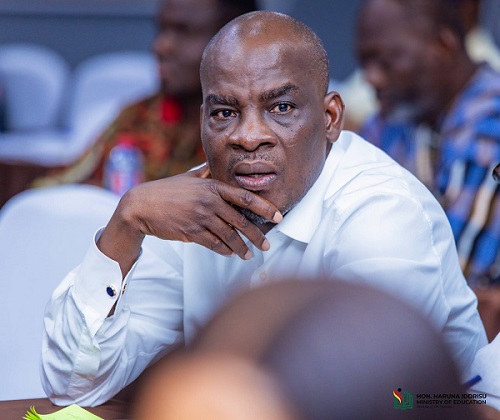
The Ministry of Education has clarified that French, Arabic and Chinese will remain optional subjects under the proposed revised basic school curriculum, rejecting claims that the languages have been made compulsory.
In a statement issued on August 2, 2026, the Ministry said recent public discussions had created misconceptions about the language policy for basic schools.
It explained that Ghanaian languages would be used as the main medium of instruction from Kindergarten to Primary Three.
According to the Ministry, this is intended to help children develop literacy, numeracy, critical thinking and other basic learning skills in a language they understand well.
The statement added that from Primary Four to Primary Six, both Ghanaian languages and English would be used for teaching.
“This bilingual approach is designed to support a smooth transition to higher levels of education, where English assumes a greater role, while preserving learners’ competence in Ghanaian languages,” the Ministry stated.
The Ministry stressed that foreign languages, including French, Arabic and Chinese, would only be offered to pupils who choose to study them.
Their availability, it said, would depend on whether schools have qualified teachers and the necessary learning materials.
The Ministry said the policy is based on internationally accepted educational practices which show that children learn better when they begin their education in a familiar language before gradually learning additional languages.
It noted that the policy supports Ghana’s efforts to improve literacy, promote multilingualism and preserve the country’s linguistic and cultural heritage.
The Ministry urged parents, teachers, school authorities, media organisations and the public to disregard what it described as misinformation suggesting that foreign languages had been made compulsory.
Signed by the Press Secretary to the Minister of Education, Hashmin Mohammed, the statement said the Ministry remained committed to education policies that improve learning outcomes and prepare Ghanaian children for an increasingly interconnected world.
By:Jacob Aggrey








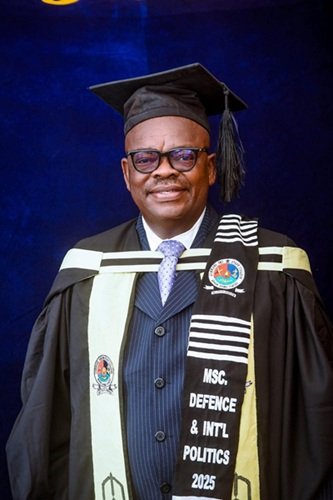
Management and staff of Owass FM have announced the passing of media personality, comedian and politician Seth Kwame Dzokoto following a medical emergency during a live morning show discussion at the station earlier today.
According to the station, Dzokoto was participating in a panel discussion on its morning show “Oman Nkoso” when he suddenly took ill and collapsed.
A statement from the station said its team immediately rushed him to the hospital for medical attention, but he was pronounced dead by the attending medical doctor upon arrival.
“We are deeply saddened by this unfortunate incident, which occurred in the course of our regular programming. Our thoughts and prayers are with his family, loved ones, colleagues, and all those who have been affected by his passing,” the statement said.
Management acknowledged that information about the incident is already circulating in the public domain, but appealed to the public and colleague media houses to respect the privacy of the bereaved family and refrain from circulating unverified information or speculation regarding the circumstances of his death.
Owass FM extended its heartfelt condolences to the family of Seth Kwame Dzokoto.
By Edem Mensah-Tsotorme

The State through the Attorney General (AG) has filed an appeal at the Supreme Court challenging the suspension of the trial in the case of The Republic v Hanan Aludiba and Faiza Seidu.
On Monday, the Court of Appeal suspended the trial in the case. But the prosecution says it has filed an appeal against the suspension order.
According to the update, the law does not allow a criminal trial to be suspended simply because an accused person has complained about some of the charges on the charge sheet, particularly when those complaints were dismissed as meritless.
It argues that if the Court of Appeal’s decision is allowed to stand, no prosecution will ever be possible, since all it would take for a trial to be suspended is an accused person complaining about anything on the charge sheet.
By Edem Mensah-Tsotorme