Faint road markings: Danger to pedestrians, drivers


The rate at which road accident occurs each year in the country is very disheartening. It is of no doubt that some road accidents are caused by faded road markings and inappropriate designation of road symbols.
Road marking is an effective way of communicating information to drivers on the road and to some extent inform pedestrians, hence its implementation is very pertinent. 
Area road in Accra
Aside, it helps road users to navigate the road systems by making them aware of road hazards. Majority of the road markings state across the country have become faint, some of these roads even lack these markings.
Despite its great disadvantage on pedestrians, drivers take advantage of these faded road markings by preventing passengers from crossing when the need arises. Communities in Accra have many single roads, therefore there is need to ensure road markings on these roads.
A glance at Kwame Nkrumah Circle road vividly portrays faded road markings, which is a threat to the life of pedestrians who uses such roads. Since these markings are not visible, road safety cannot be assured. Pedestrians use these roads by risking their life. Other pedestrians also cross any part of the road since the appropriate places have not been marked.
Faint road markings also create a great danger to drivers and motorist who are new on the road. The road markings aid in instructing and directing them to drive with caution. However, what we observe on our roads rather succor road accidents and reckless driving.
The Spectator reporters, toured roads within Accra and observed that some roads at Nkrumah Circle, North Industrial area in front of SSNIT, Adabraka and Asylum Down depicted absence of road marking. Again, some roads that had the road sign indicating that pedestrians can cross lacked the street markings to affirm the road sign.
As a matter of agency, the Ghana Highway Authority should consistently embark on road markings to aid all road users save their lives and curb indiscipline on the aspect of drivers. Road users can be penalised for not obeying road marking instructions when these markings are painted and can be visibly seen.
By Priscilla Efriyie Ankapong


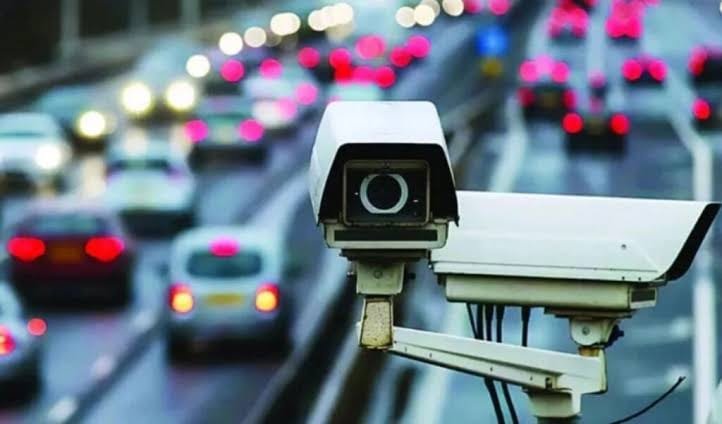
The Ghana Police Service has begun automated enforcement of road traffic laws under a new system dubbed Traffitech-GH.
In a statement signed by the Director-General of Public Affairs, Deputy Commissioner of Police Grace Ansah-Akrofi, the Service said the project officially took effect on November 1, 2026.
The system is being implemented by the Motor Traffic and Transport Department (MTTD).
Under the initiative, motorists who commit traffic offences will receive an Electronic Notice of Violation (ENV).
The Police said motorists must first check that the notification comes from the official Sender ID, GPS-MTTD, adding that genuine notifications will not be sent from an ordinary mobile phone number.
Motorists are to open the ENV to confirm the vehicle’s photograph and number plate, as well as the location, date and time of the offence, and watch the video where available.
According to the police, payments can be made through the NIB Payment Portal.
The Police cautioned motorists and vehicle owners to remain vigilant against fraud and never pay a traffic fine into a personal mobile money number or through any unofficial account.
The Service expressed appreciation to the general public, particularly motorists, vehicle owners and transport operators, for their cooperation in promoting safer roads and ensuring compliance with road traffic laws.
By Edem Mensah-Tsotorme
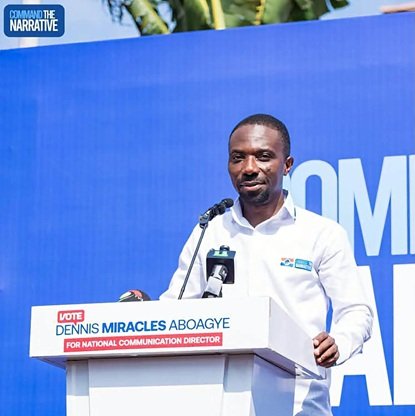
The Director of Communications of the New Patriotic Party (NPP), Miracles Aboagye, has taken a swipe at the government over the worsening cost of living in the country.
In a strongly worded statement, Aboagye said while the cost of living continues to skyrocket, the government keeps pointing Ghanaians to figures on paper.
According to him, the reality on the ground tells a different story:
Cocoa farmers have suffered a haircut, tertiary students are demonstrating over high fees and accommodation, teachers and nurses are striking over unpaid allowances, and judiciary workers are also on strike over unpaid allowances.
He added that transport fares, electricity, water, and fuel prices are all higher than before, making life unbearable for the ordinary Ghanaian.
“The cost of living and the pocket of the Ghanaian citizen keeps worsening but government says, don’t cry about the pocket when the paper looks good,” Aboagye said.
He summed up his criticism with the hashtags #PaperEconomyPocketDry and #PaperEconomyVsPocketEconomy — a direct jab at what he describes as a disconnect between official economic figures and the daily struggles of Ghanaians.
By Edem Mensah-Tsotorme