Hot!
ER DOVSSU Coordinator cites lack of financial support to clamp down on perpetrators of SGBV

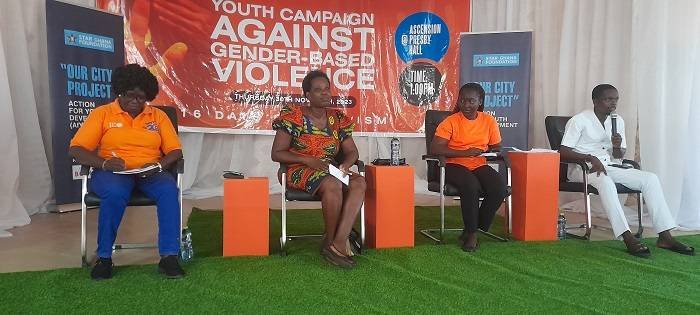
The Eastern Regional DOVSSU Coordinator, Police Chief Superintendent, Mrs Florence Anaman has revealed that the lack of support, especially financial for victims of Sexual and Gender-Based Violence (SGBV) was a big challenge to clamping down on perpetrators through legal action.
According to her, most of the victims were of poor backgrounds and found it difficult to foot the financial burden associated with the legal actions, including payments of medical endorsement fees.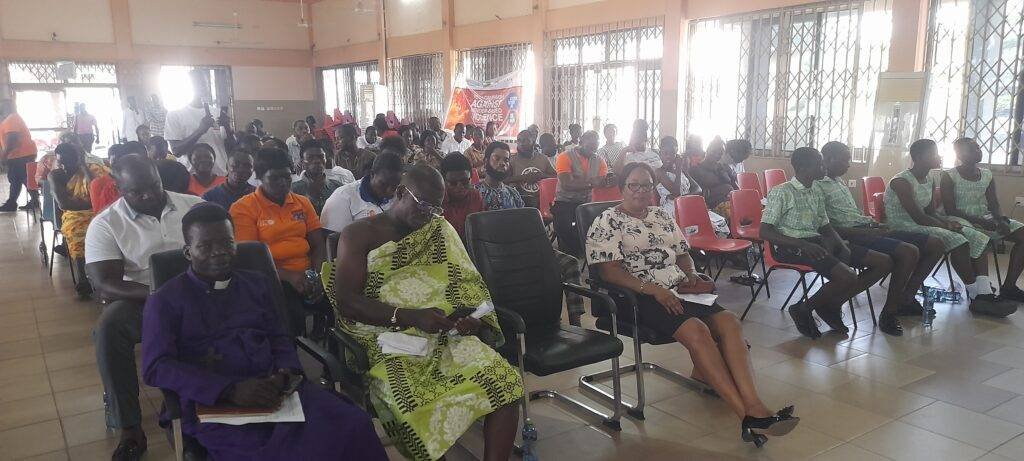
“Unfortunately, these developments and financial constraints have become a huge barrier in making headway in gender-based and sexual violence issues and we need to address it,” she said.
Mrs Anaman made these statements during a town hall meeting on the Gender-Based Violence campaign, as part of the “Our City Project” which formed part of a three-year Action for Youth Development programme (AfYD) implemented by Star-Ghana, four civil society organisations, New Juaben South Municipal Assembly and National Youth Authority in Koforidua.
The project which was funded by the Botnor Foundation was aimed at strengthening and enabling youth inclusion to influence governance and access quality goods and services within the municipality.
Mrs Anaman stated that even though the Domestic Violence Support Fund was set up years ago, it has been difficult accessing the funds to help victims of SGBV.
She said there was a need for the government to operationalize the funds and allocate it to the right authorities for usage to help such victims and educate them on how to access it.
That, she said, would reduce the financial burden they experienced when legal actions on SGBV cases were taken, adding it would also encourage the victims to report SGBV issues to authorities when they experienced it.
For her part, the Project Manager of Star-Ghana Foundation, Dr Ernestina Tetteh urged young ones to report to appropriate authorities when they experience SGBV for redress.
She said most often, victims of such abuses were young due to several factors and stressed the need to encourage them to report perpetrators to be punished to deter others from abusing young ones.
Dr Tetteh indicated that as part of the empowerment of the youth, there was also the need to build youth’s capacity on SGBV issues to create awareness and empower them to stand up for themselves.
“Young people must stand up against any form of wrongdoing or crime, by empowering themselves and their peers to stand for their rights in matters of Gender-Based Violence and all other issues which affect them,” she added and stated that such education should be organised frequently to encourage effective reporting on such issues.
For his part, the Municipal Chief Executive Officer of the New Juaben South Municipal Assembly, Mr Isaac Appau-Gyasi expressed his appreciation to Star-Ghana Foundation and their partners for collaborating with the assembly to organise such education for the youth.
He stated that SGBV was criminal which should not be overlooked and called on the youth not to allow themselves to be intimidated but to report such issues to the appropriate authorities for redress.
From Ama Tekyiwaa Ampadu Agyeman, Koforidua


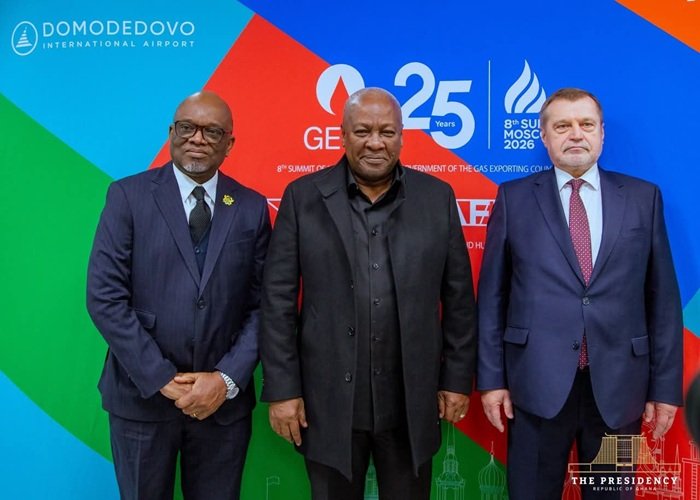
President John Mahama has arrived in Moscow, Russia, from Ethiopia to participate in the 3rd Russia-Africa Summit.
The summit is being hosted by Russian President Vladimir Putin.
During the visit, President Mahama will join fellow African leaders at the Economic and Humanitarian Forum and summit plenary sessions.
He is also scheduled to hold high-level bilateral talks with President Putin and attend a Kente exhibition organised by the Russia-Ghana Parliamentary Forum.
As part of the visit, the President will receive honorary doctorate degrees from the Russian University of Transport and the Peoples’ Friendship University of Russia.
He will also engage Russian businesses and state institutions to advance bilateral cooperation between Ghana and Russia.
By Edem Mensah-Tsotorme
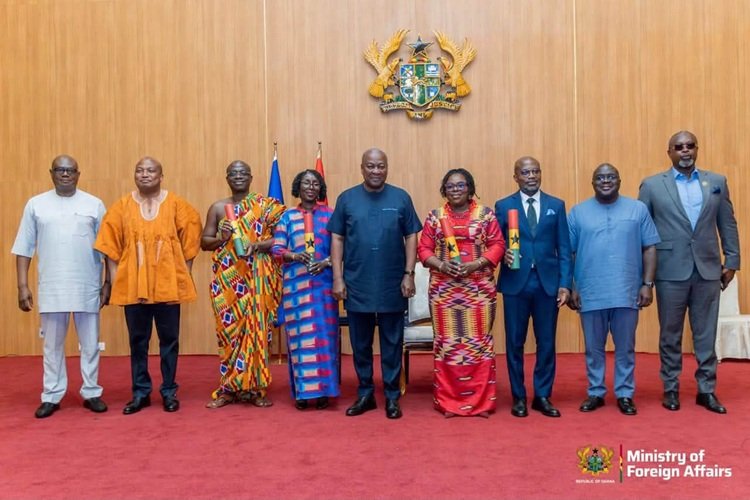
President John Dramani Mahama has commissioned four career diplomats as ambassador-designates to represent Ghana in four countries.
The commissioning ceremony took place on Friday, October 16, 2026.
The new envoys are Her Excellency Nana Antwiwaa Dodoo, Ambassador-Designate to Angola; His Excellency Louis Kwame Obeng, Ambassador-Designate to Qatar; Her Excellency Evelyn Korantemaa Ofosu-Amable, Ambassador-Designate to Israel; and His Excellency Jedidiah Reuben Adogla, Permanent Representative-Designate to Switzerland.
President Mahama charged them to advance Ghana’s national interests through strategic partnerships, economic diplomacy, investment mobilization, and expanded access to international markets.
He said Ghana’s diplomatic engagements must deliver tangible economic benefits, create jobs, and strengthen the country’s standing on the international stage.
The four envoys are career diplomats with over 27 years of experience.
On behalf of her colleagues, Her Excellency Nana Antwiwaa Dodoo thanked the President for the confidence reposed in them and pledged their commitment to emulate his leadership and deliver on the mandate given to them.
By Edem Mensah-Tsotorme