Hot!
Empowering entrepreneurs: The local brands leaving international footprints


Last week, we published the story of a young entrepreneur using his software engineering skills to support players in the fashion industry. This week, we have discovered other young Ghanaian entrepreneurs who are adding value and breaking new grounds in their respective fields.
Two of such persons have developed skincare products while the rest are into shoe manufacturing and agric-tech. Here are excerpts of their stories.

Ms. Tutuwa Ahwoi
This young entrepreneur, born in Accra, is the Founder and CEO of Nokware Skincare. She started the business in 2017 after developing skin problems when she left Ghana to study in Paris for her Masters degree.
According to her, her body was unfamiliar with the climate, and the products she had used were not natural. While studying, she met her Botswana counterpart, Thato, and they quickly bonded as they were the only two black girls in their year group.
Tutuwa inadvertently introduced Thato to her great-black grandmother’s soap and shea butter, which Thato became obsessed with! In 2016, the couple returned to their respective countries, and Thato asked Tutuwa to send black soap to her and her friends.
Tutuwa thought she could take the skincare “recipe” passed down from her great-grandmother, to the rest of the world. She brainstormed about the product, packaging, and strategy before pitching the idea to Thato and in October 2017, the ‘Nokware’ brand was born.
“Our products are made with natural ingredients that are sourced from farms across Africa. We source our ingredients like shea butter and oils, and all our packaging like calabashes, raffia and jutes from local, Ghanaian women with whom we practise fair trade because economic inclusion is our ultimate goal.
“We believe together, we can use commerce as a means to empower females in the communities do business in a more beautiful way – with purpose,” she told Lioness of Africa recently.
The brand is run by a team of 11 Ghanaian women with ages ranging from 20 to 46 who handle marketing, finance, research, product formulation and production.

Ms. Violet Amoabeng
Similarly, Violet is the Founder and Chief Executive Officer of Skin Gourmet Limited. She founded the company after recognising “a demand for pure, high-quality body and skincare that was also safe to consume.”
The company which started in 2014 is currently visible in 17 countries across four continents, with a team of about 17 persons. The products are made using “traditional Ghanaian procedures that retain the product in its natural state while boosting the efficacy of the ingredients.”
As a supporter of Mother Nature, she aims to develop a sustainable product line that will propel Ghana ahead and encourage Africans to preserve their culture.
“Skincare enhances attractiveness, but true beauty goes beyond the surface. Skin Gourmet was established to address the true need for skincare: health and wellness, which can only be reached through a product that meets a person’s desire to be valued,” she says.

Mr. Fred Mawuli Deegbe
Fred, the son of a pastor and a teacher, is the Founder of “Heel The World,” a shoe manufacturing firm which sells leather goods and ‘Empowerment Beads.’
Despite several challenges, he is determined to take Ghanaian and African fashion to an international level. He started the company with his friend Vijay Manu while working at a bank.
He said a friend laughed at his shoes when he went to play video games a few years back and this prompted him to go to a local shoe store to find a new pair of shoes that would help him regain “social acceptance.”
A shoeshine boy went by as he examined the shoes he wanted to buy, so he dashed outside to inquire whether he (the shoeshine) could construct a similar pair of shoes but the response was in the negative.
The country’s overdependence on imported goods, therefore, became clearer to him and he thought of an indigenous innovation. He started the company with his friend who had no experience in shoe making but the brand has since become a high-end shoe firm which aims at encouraging local start-ups.
“Heel the World is more than a shoe firm; it’s a social venture that challenges stereotypes about Ghanaian craftsmanship’s quality and potential,” he says. Heel The World goes by the slogan: “We can if we try.”

Mr. Desmond Koney
Desmond Koney is the Founder and CEO of ‘Complete Farmer,’ a Ghana-based agri-tech firm formed in 2018 to build sustainable solutions to ensure food security in Africa in general, as well as to ensure that users earn money via remote farming.
In order to address challenges of existing farming methods, he and his team decided to create solutions based on technology that will lower the obstacles to farming in Ghana and Africa, help increase yields and maximise return on investment in farming.
Complete Farmer allows customers to “sponsor farm managers, monitor development from the comfort of their own homes and receive rewards upon harvest and completion.” Their goal is to enable agriculture to thrive in certain African locations.
By Spectator Reporter


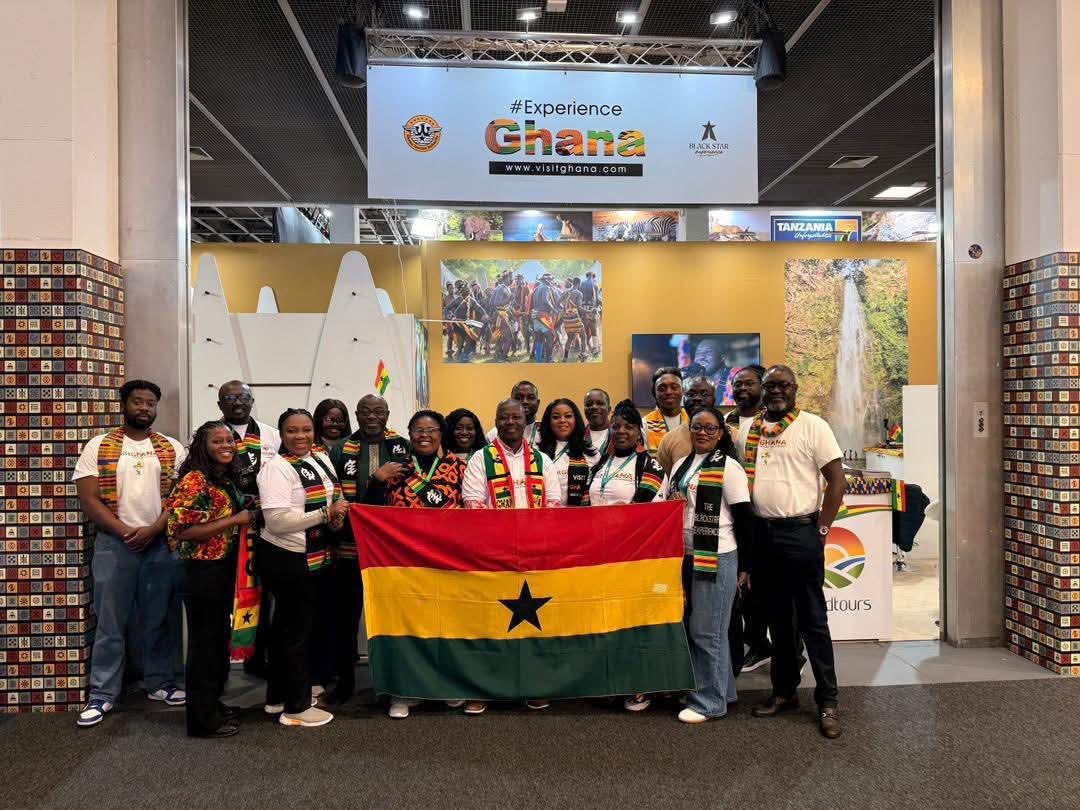
Ghana Tourism Authority is leading Ghana’s participation at ITB Berlin, which opened in Berlin with a vibrant national pavilion highlighting Ghana’s rich cultural heritage, tourism destinations and investment opportunities.
March 5 has been designated as Ghana Day, a special platform to promote Ghana’s languages, cuisine, Kente, festivals and business prospects to the global tourism community. The stand has already drawn strong interest with traditional arts and crafts displays, immersive multimedia presentations and popular Ghanaian snacks.
Seven private-sector players are exhibiting alongside government officials as part of efforts to deepen trade partnerships, expand market access, and attract investment across the hospitality, heritage tourism, ecotourism, and creative arts sectors.
Ahead of the official opening, the Ghana delegation also engaged young Ghanaian investors in Germany in collaboration with V Afrika-Verein and the Ghana Embassy, strengthening diaspora investment linkages and highlighting opportunities within the tourism value chain.
Ghana’s coordinated presence at ITB Berlin 2026 reinforces its strategy to position the country as the Gateway to Africa and a competitive destination for leisure travel and global investment.
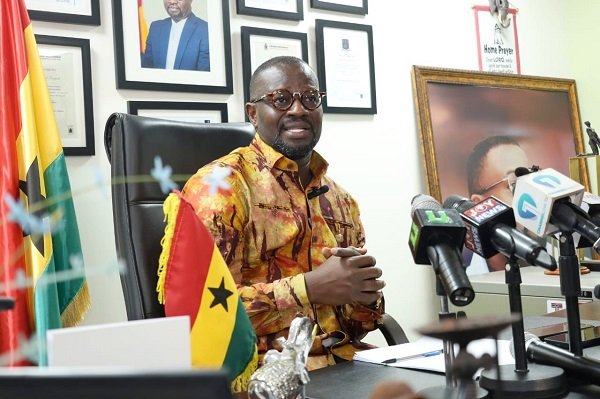
The Member of Parliament for Nsawam Adoagyiri, Frank Annoh Dompreh, has expressed concern over delays in the release of the District Assemblies Common Fund, warning that the situation is stalling development across the country.
On his facebook page, he described as a matter of urgent national importance, the Minority Chief Whip pointed to what he sees as a growing crisis of unpaid contractors, abandoned projects, and halted infrastructure works in many districts.
He noted that several communities are grappling with half completed schools, unfinished health facilities, abandoned markets, deteriorating roads, and stalled sanitation projects.
According to him, many contractors who have executed projects for district assemblies have not been paid, forcing some construction firms to demobilise from sites while workers lose their jobs.
He stressed that the District Assemblies Common Fund is not a discretionary allocation but a constitutional requirement under Article 252 of the 1992 Constitution, intended to support development at the local level.
In his view, years of delayed releases and accumulated arrears have weakened district development financing and disrupted projects meant to improve living conditions in communities.
He further argued that some payments made in recent years were largely the settlement of old debts rather than funding for new or ongoing projects, a situation he believes has affected contractor confidence and local economic activity.
He described the issue as more than a budgetary challenge, characterising it as a development emergency and a governance concern.
He therefore urged the appropriate authorities to pay outstanding DACF arrears, settle contractors who have completed their work, and ensure that transfers to districts are automatic and predictable.
He maintained that decentralisation can only succeed when district assemblies receive adequate and timely funding to carry out development projects.
He emphasised that stalled projects directly affect ordinary citizens, since they rely on such infrastructure for education, healthcare, transportation, sanitation, and economic activities.
He called for renewed attention to grassroots development, insisting that national progress should not be concentrated only in major cities but extended to all communities.
By: Jacob Aggrey