Features
ECG is not a ‘father Christmas’ or charitable institution!

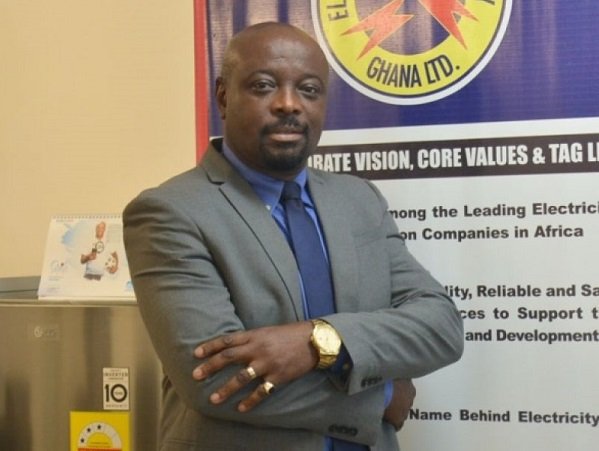
Electricity is one of the major determinants of economic prosperity of any country in the world. It plays a significant role in undertaking daily activities from cooking, lighting, heating to powering machines in the industrial sector. This facility is essential also for quality healthcare delivery, education, transport, effective communication, mineral exploration and many more. In effect, it serves as a building block on which every sector of a nation’s economy thrives. This in essence, emphasises how crucial and indispensable electricity has been in the existence of human in the 21st century.
The Electricity Company of Ghana (ECG) Limited, like other essential service providers in our dear nation, is a very important institution as far as the developmental goal of this country is concerned. Without electric power, everything in this country will grind to a halt and it will affect the general cost of living and well- being of people nationwide. The same applies to water which is the twin brother of electricity. Even to pump water to various homes and public institutions, much will depend on electricity to power the generating machines. The importance of these two essential facilities therefore,cannot be overestimated in the country’s development.
ECG AND ITS MANDATED DUTIES
The ECG by law, is mandated to provide quality, reliable and safe electricity services to support socio-economic growth and development of Ghana. The company has over the years, been able to carry out this laudable mission notwithstanding the occasional challenges it encounters in the execution of its duties.
It is a limited liability company wholly owned by the government and operates under the Ministry of Energy. The company is responsible for the distribution of electric power in the southern part of Ghana, namely, Ashanti, Central, Eastern, Greater Accra, Volta and Western regions. The company has over the years grown and transformed into a more effective distributor largely as a result of foreign technical and financial assistance which has enabled it to invest in various areas to improve the quality of the network. It has focused on building many distribution lines and installation of prepaid metering services both domestically and to various institutions across the country. This company has stood the test of time and on the verge of focusing on becoming a regional power trader to grow itself.
CHALLENGES ECG FACES
Although the company is confronted with major challenges such as high level of distribution losses, lack of revenue due to non-payment of bills, poor tariff structure which makes it difficult for the power utilities to make significant investments to improve the sector due to financial constraints, it has to a very large extent live up to high level of expectation.
Currently, there are quite a sizeable number of public institutions that are indebted to the company of millions of Ghana Cedis, thus depriving it of the needed revenue to meet its operational expenses in terms of modern generating equipment and other logistics as well as providing adequate remunerations and service conditions for the workers. On the list of the debtors are, the Ministry of Education, the Ghana Education Service (GES), Ministry of Finance and Economic Planning, Ministry of Communications and Digitalisation as well as the United Nations Development Programme (UNDP). We are informed by news circulating on social media that the Finance Ministry owes the company to the tune of GH¢421,038.02, the National Stadium, GH¢587,087.37, La Palm Beach Hotel, GH¢196,073.62 and the Ghana Airports Company Limited (GACL), GH¢48,985,505.41. We are told also that recently, the National Taskforce of the ECG Limited, cut power supply to parts of the Kotoka International Airport and the other places as a result of their outstanding debts to the ECG.
UNSCRUPULOUS ECG WORKERS MILKING THE COMPANY
It is, indeed, shameful and regretful that the top management of ECG have relaxed and kept aloof while some state owned and profit making enterprises continue to exploit them to their advantage in huge arrears in electricity bills. Such an unfortunate situation is a total indictment on the leadership of the company and a mark of inefficiency.
It is also a known fact and in the public domain that some unscrupulous workers of the company have turned themselves into contractors and engaging themselves in illegal businesses such as the sale of meters at high prices to prospective applicants and also involved in illegal connections of electricity to interested people, thus depriving the company of the needed revenue. Some of these fraudsters. engage in such illegal businesses with the connivance of some top-level management personnel of the company. Such illegal, unhealthy and fraudulent practices must be checked to enable the company to stand on its feet.
RECENT DEMONSTRATION BY ECG WORKERS
No wonder, there was a recent demonstration by some aggrieved workers of the Accra East branch of the ECG in protest of the continued stay in office of the managing director of the company even though he had attained the retiring age of 60. Clad in red, the workers picketed at the company’s head office in Accra to register their protest and also to demand the removal of Mr. Kwame Agyeman-Budu, the MD from office.
The protesters, led by the divisional leadership under the Trades Union Congress (TUC), noted that the presence of the MD was an illegal invasion of the company’s property, adding that he had to proceed on leave prior to retirement because he had clocked 60 years. They wondered why he was still holding himself as the MD and signing official documents. The aggrieved workers argued that he attained 60 years on February 21, 2021.
ACCUSATION AGAINST THE MD
In a statement, the workers accused the MD of not handling the affairs of the company well since he was appointed. They claimed that his continued stay in office, would collapse the electricity distribution company because to them “he is grossly deficient when it comes to matters relating to administrative and corporate governance”. They further accused him of breaching procurement processes. “A clear example is the award of contract of six substations where the recommendations of the evaluation committee were side-stepped and awarded to other companies,” they alleged in their statement.
It appears that the workers are not comfortable with the continued stay in office of their MD and the appointing authorities need to step in to resolve this thorny issue before they throw this country into total darkness. Their grievances need be studied critically and weighed against the performance of the MD before any extension of his contract is considered.
INVESTIGATION OF WORKERS’ GRIEVANCES
In the midst of huge unpaid debts by some state institutions to ECG while the company needs money to finance its operational costs, one will be convinced to jump to a conclusion that the managing director is either not up to the task or being manipulated from certain quarters not to chase the debtors for what is due the company.
One particular case that most Ghanaians are not happy and uncomfortable with is the case of the Ghana Airports Company Limited which owes the ECG a colossal sum of GH¢48,985,505.41 which necessitated the recent curtailing of power in parts of the Kotoka International Airports in Accra. They wondered why the company had to spend about GH¢128,366 to buy Christmas trees to decorate the airport terminals in the midst of the debt it owes the ECG.
EFFECTIVE PAYMENT OF BILLS NECESSARY
It is a fact that the ECG and other utility service providers in the country rely on the effective payment of bills to provide reliable and continuous services to their clients and customers and, therefore, failure in the payment of bills renders the company impotent in providing that essential services to customers. That will result in frequent power cuts which will be no fault of the ECG. It is important for state owned and private institutions as well as domestic power users to pay their bills promptly to enable the company to serve them better. Let us take note that ECG is not a charitable institution which provides its services free of charge.
Finally, to restore the needed peace and tranquility within the premises of the ECG, the appointing authorities must act with dispatch to resolve the impasse between the workers and the managing director before any unfortunate incident happens.
Contact email/WhatsApp of author:
0277753946/0248933366
By Charles Neequaye


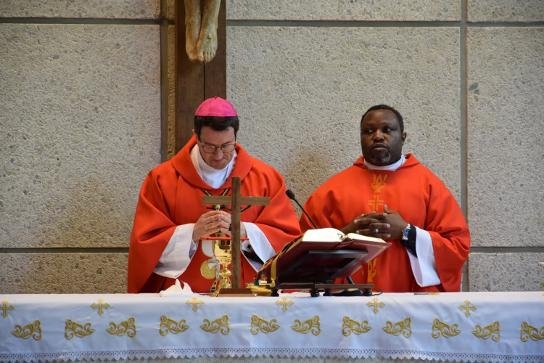
On Sunday, October 11, 2026, it was the turn of Ghanaian Catholics in Finland to lead the singing in the church service of the African Catholic Chaplaincy in Finland (ACCF).
It was indeed a spirit-filled feeling for worshippers present. And for the Ghanaian migrants, the occasion also brought back to them memories of church services in their home country, Ghana.
The ACCF has a roster for each country/community to sing from time to time. Next Sunday will be the turn of the Nigerian community. Other communities that usually sing are the Kenyan/Tanzanian community, the Cameroonian, the Ugandan, group, etc.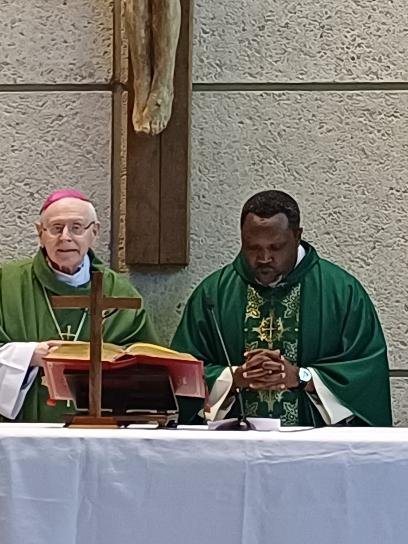
A powerful religious experience
The mass services of the Chaplaincy usually give a powerful religious experience and a display of cultural diversity, especially in occasions such as when the Bishop of Helsinki, Bishop Raimo Goyarrola, celebrated mass with the Chaplaincy on Pentecost Day, May 24, 2026.
There was a similar time of spiritual joy last month (September 27, 2026) when Emeritus Bishop Teemu Sippo, former Bishop of Helsinki, visited the Chaplaincy. Bishop Teemu was the main celebrant, assisted by the Chaplain, Reverend Father Thomas Otieno.
Last Sunday, Reverend Father Bernard Sor, a Ghanaian Catholic priest based in Austria, was the main celebrant in the mass service where he performed a rite of baptism. Fr Bernard had celebrated mass a few months ago when he visited his sister and her husband in Helsinki. 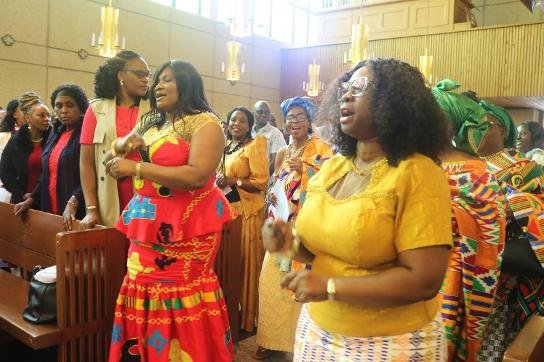
All these well-attended religious occasions indeed leave lasting memories. The homilies (peaching) by the priests usually emphasize religious tenets such as the importance of loving and serving God in truth, existing in peace with our fellow humans to promote unity in diversity, etc.
Unity in diversity and a colourful display of cultures
The African Chaplaincy church services usually produce impressive displays of diverse cultures from different parts of Africa and elsewhere. The events are often spiced by rich cultural displays of dances and colourful attires which are a delight to watch.
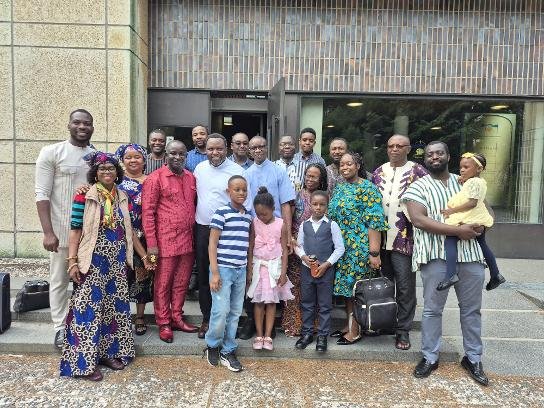
On special occasions, members of the Ghanaian Catholic community, in their gay and colourful kente attire and with adowa dance and music, usually lead the procession into the church. Other communities such as the Cameroonian, Nigerian, Kenyan and Tanzanian as well as Sudanese/South Sudanese groups also put up well-choreographed performances from their cultures.
The African Catholic Chaplaincy in Finland
The African Chaplaincy was founded on June 4, 2017, which was a Pentecost Sunday, in a Pontifical High Mass celebrated by Monsignor Emeritus Sippo S.C.I., the then Bishop of Helsinki, at the St. Mary’s Catholic Parish Church in Helsinki.
The Chaplaincy was created by Bishop Teemu in collaboration with the Diocesan body when they detected a great flocking of African immigrants to Finland, the majority of whom were Catholics. This was to give the immigrants a possibility to integrate into the Finnish society by worshiping as Catholics and in their African cultural identity.
The responsibility of the Chaplaincy was given by Bishop Teemu to Father Dr Leonard Wobilla Shwei, who is thus the first Chaplain and ably led the Chaplaincy. He was succeeded a few years ago by Father Thomas Otieno, who continues to move the Chaplaincy forward. Thank you!
GHANA MATTERS column appears fortnightly. Written in simple, layman’s terms, it concentrates on matters about Ghana and beyond. It focuses on everyday life issues relating to the social, cultural, economic, religious, political, health, sports, youth, gender, etc. It strives to remind us all that Ghana comes first. The column also takes a candid look at the meanings and repercussions of our actions, especially those things we take for granted or even ignore. There are key Ghanaian values we should uphold rather than disregard with impunity. We should not overlook the obvious. We need to search for the hidden or deeply embedded values and try to project them.
With Dr Perpetual Crentsil
SKIP THE QUEUE, TAP THE NEWS

You can now read the Ghanaian Times and The Spectator newspapers from the comfort of your device via TimesNewsPlus.
Join our WhatsApp Channel: https://whatsapp.com/channel/0029VbBElzjInlqHhl1aTU27
She did not find out he was cheating. She found out he was drowning.
It was two weeks after their beautiful wedding. The jollof was still in the fridge. A loan officer called her number-not his-and politely asked, “Madam, please tell your husband to pay his overdue loan. We have been calling him.”
That was how she discovered her new husband had entered their marriage with a hidden debt of over GH¢ 40,000. No cheating. No other woman. Just a financial secret.
And that is how many Ghanaian marriages begin to die. Not with a shout, but with a secret alert on a phone.
We prepare for the wedding. We do not prepare for the wallet.
What is money honesty?
Let me define it simply. Money honesty is not that you both earn the same. It is that you both know the same. It is the ability to sit down and say without fear:
“This is how much I earn.”
“This is how much I owe.”
“This is how I was raised to see money.”
“This is what scares me about money.”
Financial transparency is not about control. It is about clarity. You cannot build trust on top of secrets.
Many couples tell me, “Counsellor, we love each other, love will handle money.” I always answer, “Love is the car, but money honesty is the fuel. Love without honesty cannot move.”
How To Buy Your Marriage Insurance Today – My 5-Step Protocol
If you are engaged, newly married, or even 20 years in marriage, you can still fix this. At Counsellor Prince & Associates Consult—CPAC, this is what I give couples:
Step 1: The 90-Minute Money Naked Session.
No phones, no blame. Each partner writes down on paper: Monthly income, monthly debts, monthly family obligations, savings, and your biggest money fear. Then you exchange papers. Read it. Don’t react for 24 hours. Just absorb.
Step 2: Create OUR Money, YOUR Money, My Money.
You need three pots. OUR money for rent, food, school fees, utilities, properties, and the like— joint contribution. YOUR money and MY money—a small agreed allowance no one questions. This stops the feeling of being controlled.
Step 3: The No-Secret Debt Rule.
Agree from today: No new loan, no new hire purchase, no new family financial commitment above GHS 500 without telling each other first. Not permission, but information.
Step 4: Talk About Your Money Personality.
Are you a Spender or a Saver? Are you Risky or Safe? Most Ghanaian marriages are a Spender married to a Saver. Neither is wrong. But if you don’t understand your partner’s personality, you will call his saving “stinginess” and her spending “wastefulness.”
Step 5: Do a Monthly 30-Minute Money Date
Not an argument date. Light, with tea. “How did we do this month? What worried you? What should we plan for next month?” Couples who do this divorce far less.
My Final Word
Before you say “I Do” at the altar, have pre-marital counselling and also have the money talk on the sofa.
Ask your partner:
“If I lost my job today, how long can we survive?”
“What debt are you bringing into this marriage?”
“How much do you send to your family monthly and will that continue?”
If he or she gets angry that you asked, don’t get married yet. A person who is angry about accountability will be abusive about money.
Marriage insurance is not bought at Star Assurance or Enterprise. It is bought in honest conversations when no one is watching.
The wedding costs one day. The marriage costs a lifetime. Don’t enter a lifetime contract and covenant with hidden costs.
You can still insure your marriage today.
Source:
Counselor Prince Offei, CPAC’s founder, is a leading Mental Health Professional, Marriage Counsellor, Author, ADR Expert/Arbitrator, and Spectator Newspaper Columnist. He writes on relationships, marriage, parenting, special needs support, and their connection to mental health. For therapy, counselling, or enquiries, contact Counselor Prince & Associates Consult (CPAC) in Accra on 0559850604 / 0551428486.
SKIP THE QUEUE, TAP THE NEWS
You can now read the Ghanaian Times and The Spectator newspapers from the comfort of your device via TimesNewsPlus.
Join our WhatsApp Channel: https://whatsapp.com/channel/0029VbBElzjInlqHhl1aTU27