Hot!
E/R Director for National Culture calls for collaborative effort to end child marriage

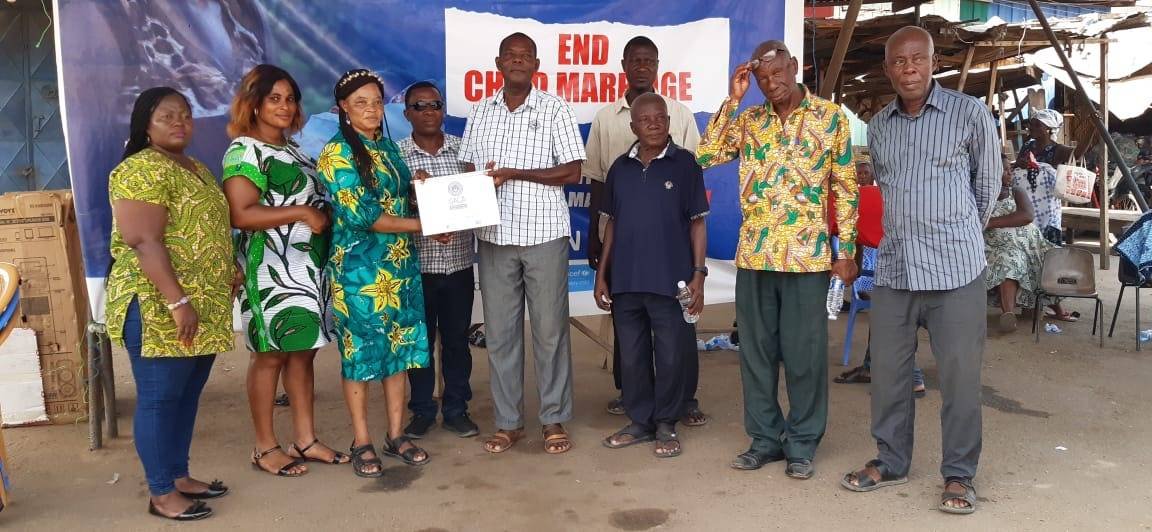
The Eastern Regional Director for the Centre for National Culture (CNC), Madam Dorcas Salamatu Alhassan has called for a collaborative effort among stakeholders, especially with parents to help end child marriages in the country.
According to her, child marriages which involved young children being married off, especially young girls, have been recognised as one of the serious challenges in the country.
She indicated that the situation was a personal, life-changing tragedy which had a devastating and long-lasting negative impact on the child. She added that these issues could be solved through collaborative efforts from all stakeholders, especially parents.
Madam Alhassan was speaking at a community engagement organised at Kpone lorry station and Agomanya Roman Catholic Basic School in the Lower Manya Krobo Municipality of the Eastern region by the CNC in collaboration with Department of Social Welfare and Community Development and funded by UNICEF, on the theme: For Our Bright Future, End Child Marriage Now! ending child marriages.
The community engagement was done to educate community members on the issue as part of activities and interventions to end the menace in five communities in the Lower Manya Municipality including Asitey, Kojo Nya, Kpone, Nuaso, and Agomenya, where child marriages were prevalent.
The education was done through drama and other performances by the CNC to drum home the message of ending child marriages to the community members.
Madam Alhassan stated that the areas which have been selected in the municipality were ones where such issues of child marriages were prevalent, hence, the community engagements were organised to educate parents on the need to collaborate with other stakeholders to end child marriages.
“Early marriages lead to early childbearing, which is associated with significantly higher maternal mortality and morbidity rates, as well as higher infant mortality rates,” she stated.
She said having many pregnancies at an early age was dangerous for both mother and child, as young mothers bodies are not usually mature enough to carry a baby, adding that since the child married off was not given adequate time to learn how to take care of themselves, let alone to take care of another person.
“Also, child marriages have negative effects on girls’ education and life opportunities and often such marriages put an end to a girl’s education. Hence, we need to put in strategies, intervention and activities as well as intensify the education on the issues to prevent parents from giving their children into such marriages,” she said.
For her part, the Municipal Director for Social Welfare and Community Department at Krobo-Odumase, Madam Grace Ama Baiden, said child marriage was as a result of economic hardship on the part of poor families who sell off their children to wealthy ones, and added that the situation passes on cycles of poverty, poor health, and low education from generation to generation.
“Early child marriage is a crime and anyone who is caught to engage in it would be dealt with by law and so we are educating parents and children themselves to rather focus on their education to give their children and themselves a better life.”
From Ama Tekyiwaa Ampadu Agyeman, Kpone


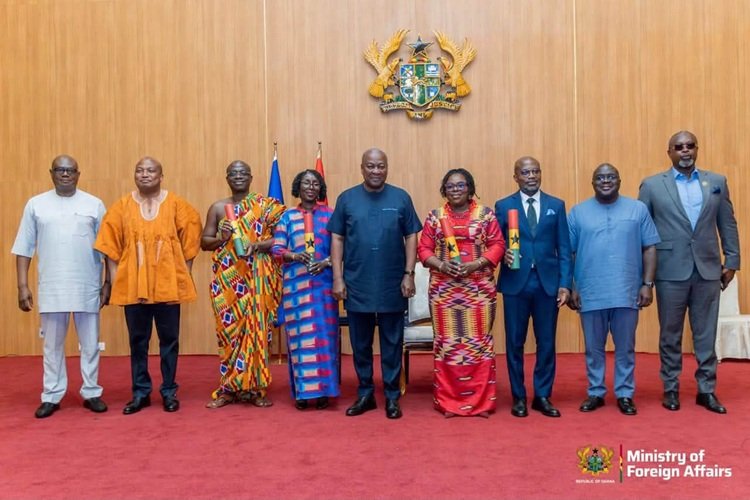
President John Dramani Mahama has commissioned four career diplomats as ambassador-designates to represent Ghana in four countries.
The commissioning ceremony took place on Friday, October 16, 2026.
The new envoys are Her Excellency Nana Antwiwaa Dodoo, Ambassador-Designate to Angola; His Excellency Louis Kwame Obeng, Ambassador-Designate to Qatar; Her Excellency Evelyn Korantemaa Ofosu-Amable, Ambassador-Designate to Israel; and His Excellency Jedidiah Reuben Adogla, Permanent Representative-Designate to Switzerland.
President Mahama charged them to advance Ghana’s national interests through strategic partnerships, economic diplomacy, investment mobilization, and expanded access to international markets.
He said Ghana’s diplomatic engagements must deliver tangible economic benefits, create jobs, and strengthen the country’s standing on the international stage.
The four envoys are career diplomats with over 27 years of experience.
On behalf of her colleagues, Her Excellency Nana Antwiwaa Dodoo thanked the President for the confidence reposed in them and pledged their commitment to emulate his leadership and deliver on the mandate given to them.
By Edem Mensah-Tsotorme
The professor who spends his days exploring the intricacies of African languages found himself at the centre of a different kind of lesson on Friday, October 2, 2026. 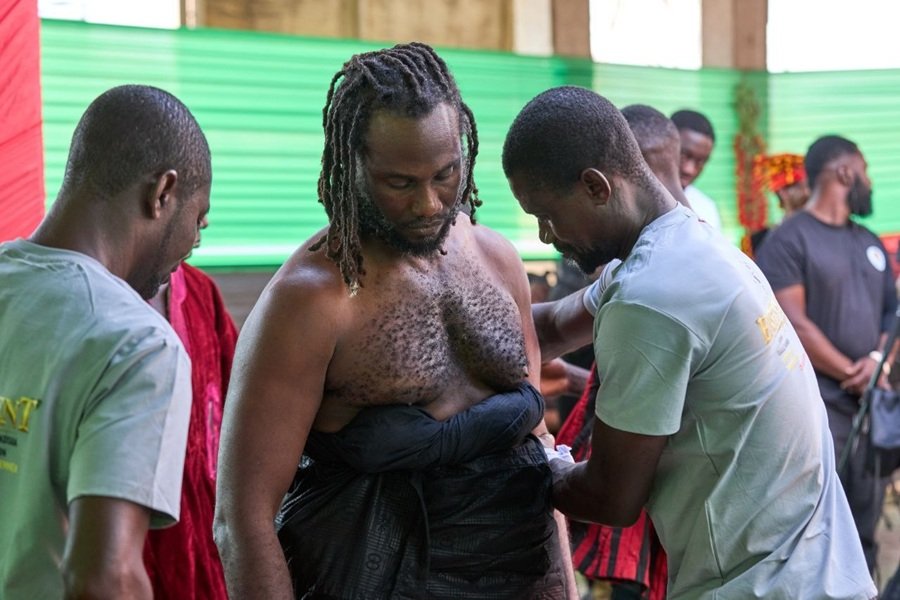
This time, there were no lecture notes, academic arguments or university classrooms. Instead, there was the weight of tradition, the rhythm of a community celebration and the solemnity of an oath at a royal palace.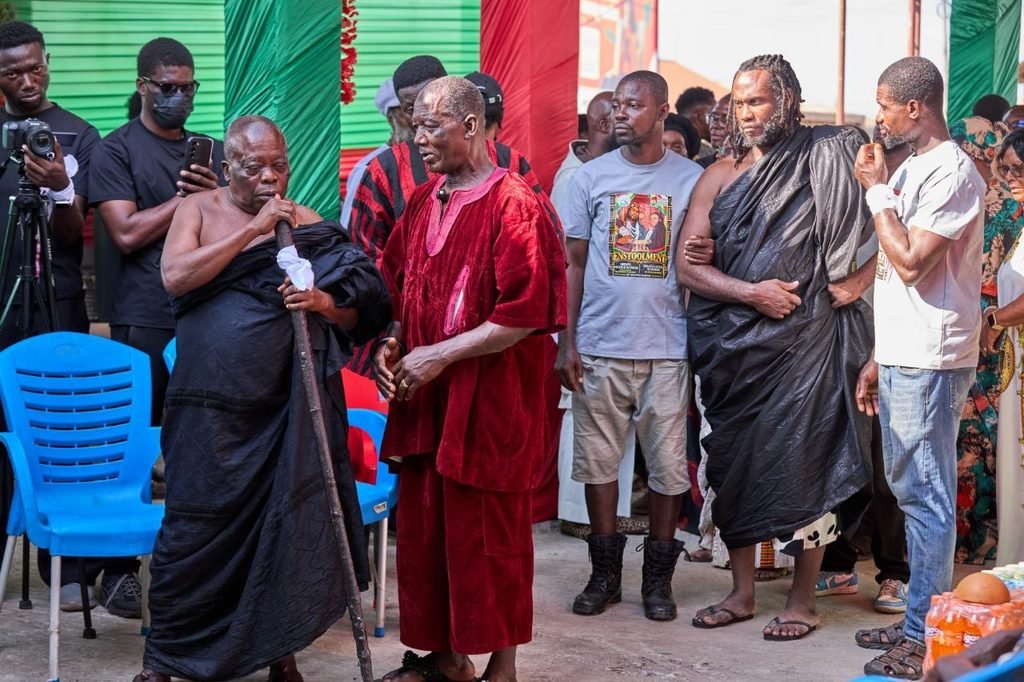
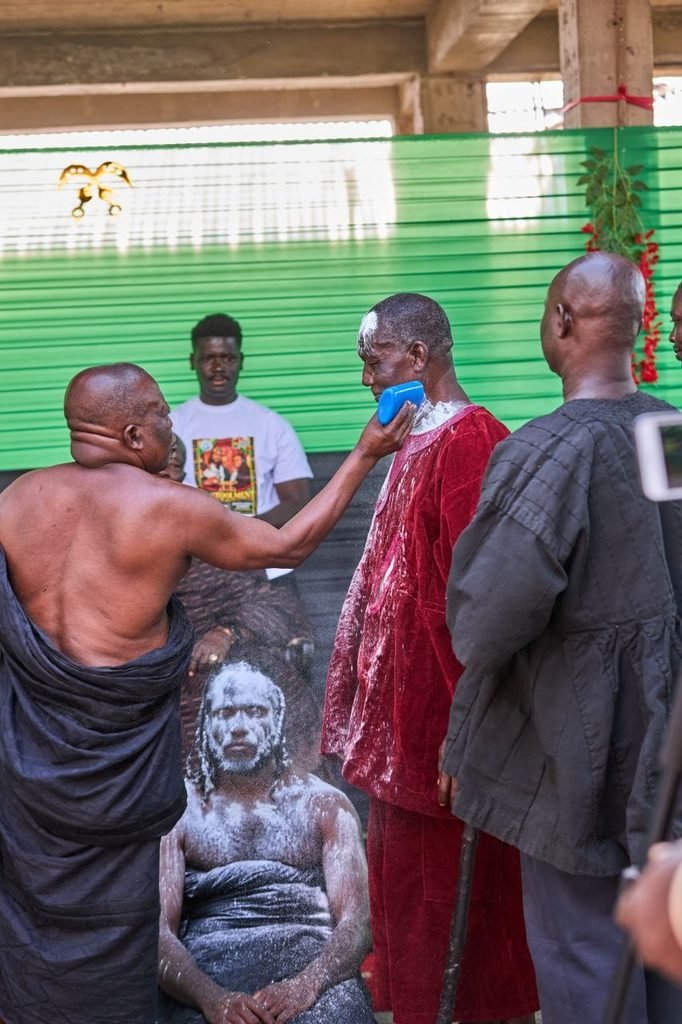
Professor Ọbádélé Kambon, a full Professor of African Linguistics at the University of Ghana, was enstooled as Apagyahene and Sunsum Ɔsahene of Akuapem Mampong in the Eastern Region in a ceremony that brought academia and traditional authority together.
For the professor, the occasion was more than a new title. It was a moment that connected his academic interests in African languages and indigenous knowledge with the living traditions of an Akan community.
The day’s events unfolded through a series of customary observances. Kambon was first taken to the compounds of the Ɔkyeamehene and Gyasehene, where the preparations for his installation continued.
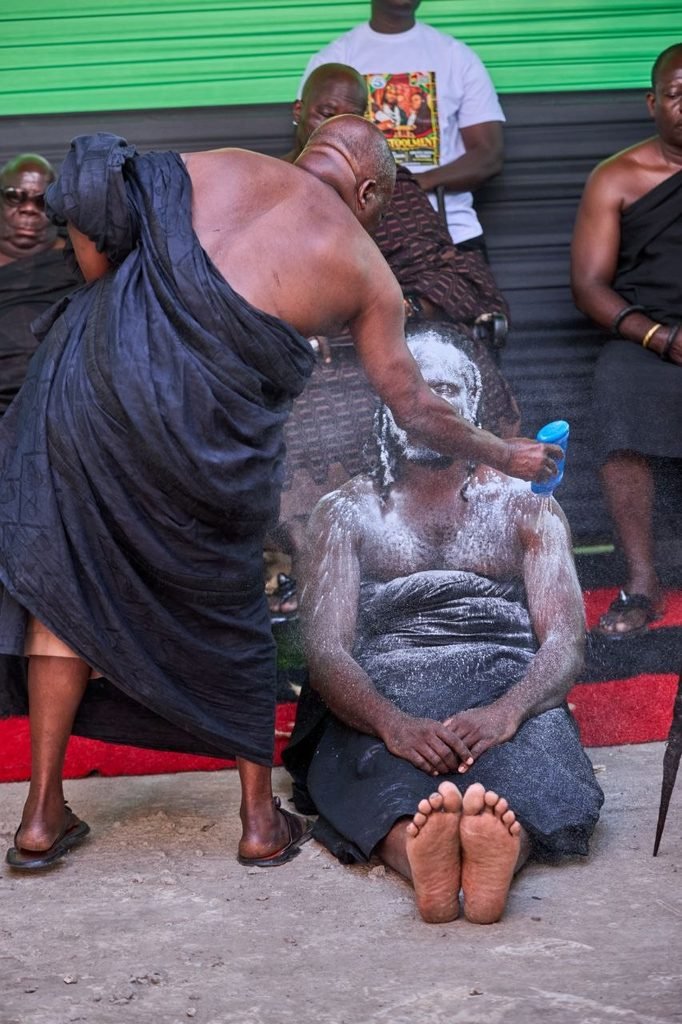
Then came the application of hyire, the white kaolin powder associated with traditional rites.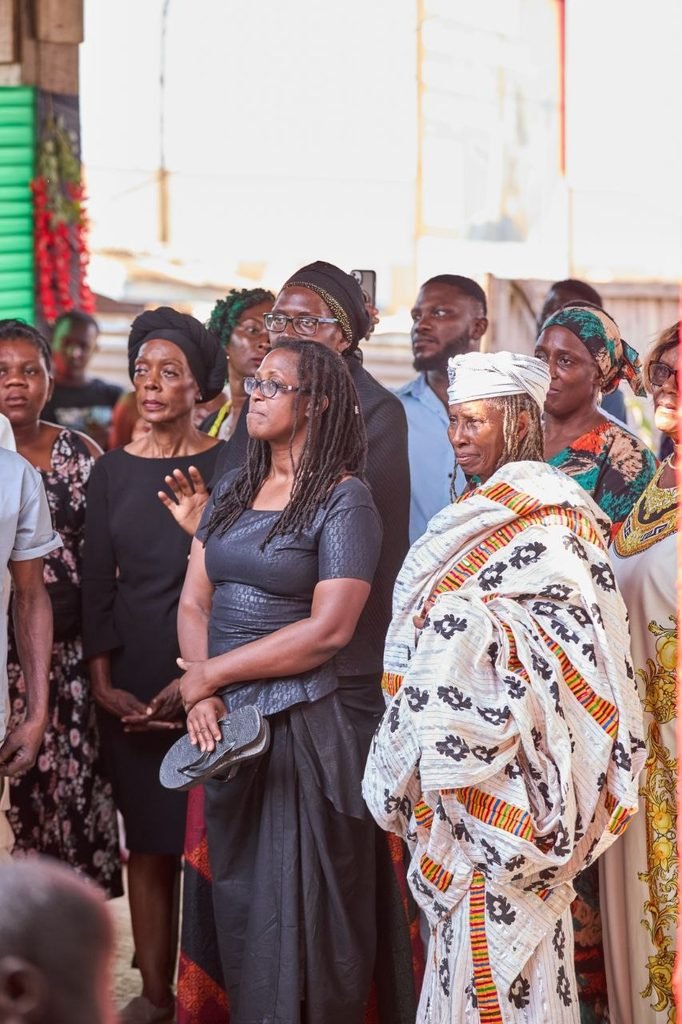
With the customary proceedings underway, the new chief was lifted onto the shoulders of celebrants and carried along the main thoroughfare of Akuapem Mampong.
The procession transformed the streets into a public stage for a ceremony rooted in the community’s traditional institutions.
There was something striking about the image, a university professor, accustomed to the measured language of academic discourse, being carried through the town in a display of traditional recognition.
Yet the celebration was not complete with the procession.
A ram was sacrificed at the Mamponghene’s compound before Kambon was taken to the palace, to swear the oath associated with his new offices.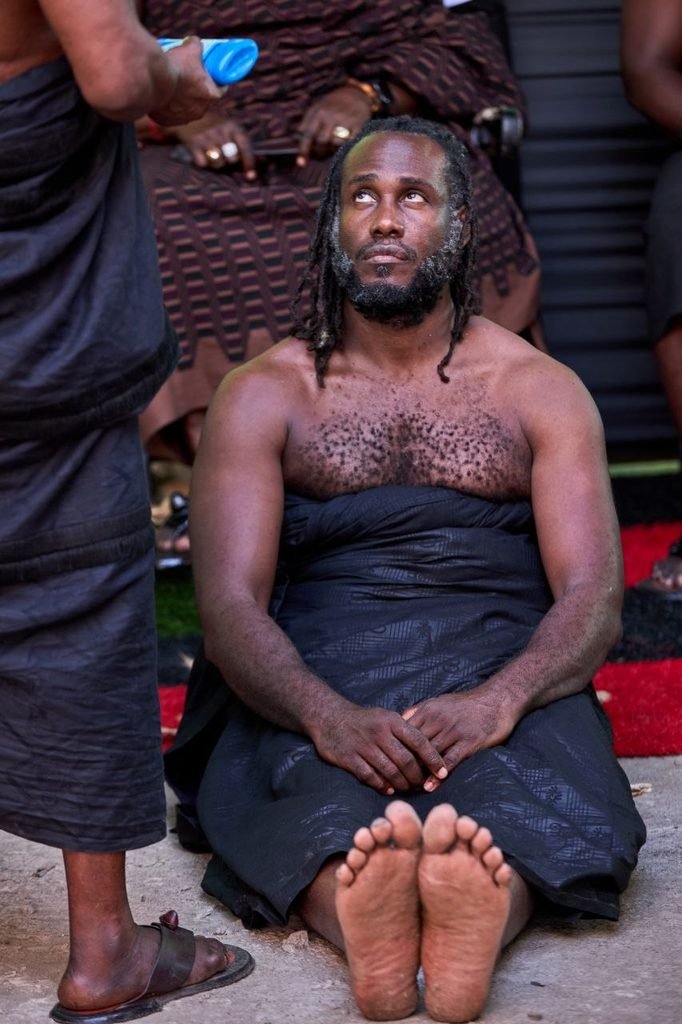

The ceremony brought him formally into his roles as Apagyahene and Sunsum Ɔsahene.
Beyond the colourful proceedings, the titles themselves carry layers of historical meaning.
Kambon in his research explores the historical connections between Apagya and Akan political and military organisation.
Accounts cited in his work linked Apagya to an asafo, or military company, while historical writing traces an Apagya stool in Asante to the reign of Opoku Ware I in the eighteenth century.
These historical associations offer a glimpse into the institutions that have shaped Akan society over generations, although they do not automatically define the precise responsibilities of the office in Akuapem Mampong.
Kambon’s own professional life reflects a similar interest in preserving and examining African knowledge.
His work encompasses Akan language structure, naming practices across the Black world, proverbs and indigenous intellectual traditions.
Through Abibitumi, the platform he founded, he also promotes language learning, scholarship and cultural engagement.
But tradition was only one part of the story that day.
When the formal ceremony gave way to a reception, the occasion expanded into a celebration of three milestones: Kambon’s enstoolment, his promotion to full professor and his daughter Ama’s admission to the University of Ghana.
The gathering therefore carried a personal significance that went beyond the honours bestowed on one man. 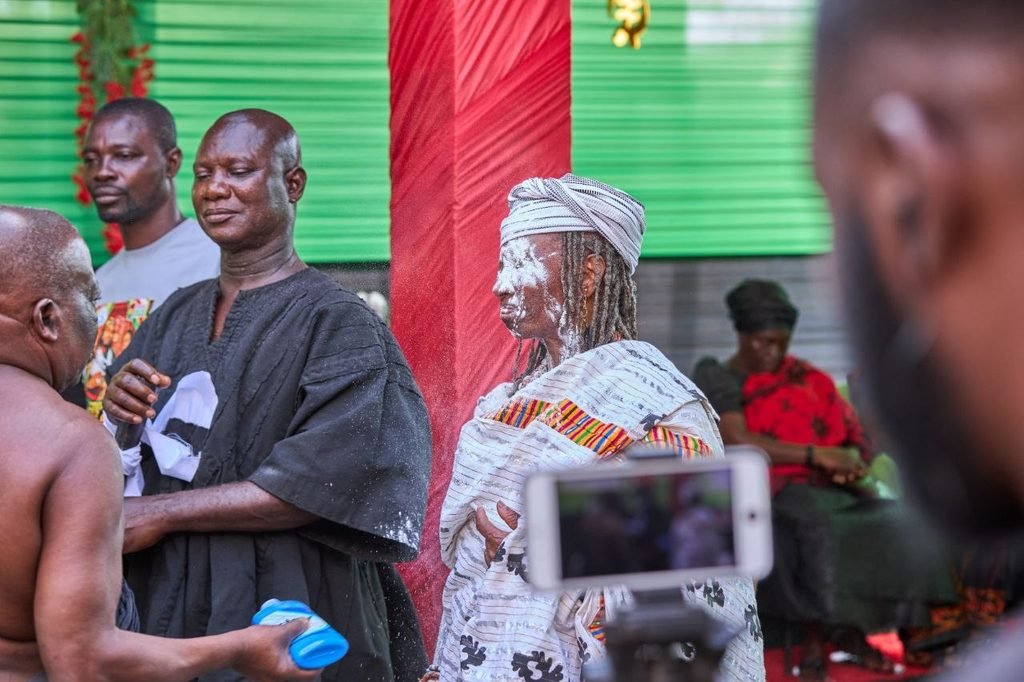
It celebrated professional advancement, the continuation of family aspirations and a connection to cultural heritage.
For a father, seeing a daughter gain admission to the same university where he holds a distinguished academic position offered another reason to celebrate.
For the professor, the moment placed family achievement alongside his own professional and traditional milestones.
Kambon had already established a place in the traditional life of Akuapem Mampɔn through an earlier installation as Banmuhene Kyidɔmhene, recorded in 2017.
His latest enstoolment adds another chapter to that relationship.
In Akuapem Mampɔn, the day brought together the university, the palace and the family table in one celebration. And for Kambon, the journey from the lecture room to the traditional procession showed how scholarship, cultural responsibility and family achievement could converge in a single memorable occasion.
By Enoch Ntiamoah Siaw
SKIP THE QUEUE, TAP THE NEWS
You can now read the Ghanaian Times and The Spectator newspapers from the comfort of your device via TimesNewsPlus.
Join our WhatsApp Channel: https://whatsapp.com/channel/0029VbBElzjInlqHhl1aTU27