News
CSM: another killer disease that must be tackled


- /home/u249204778/domains/spectator.com.gh/public_html/wp-content/plugins/mvp-social-buttons/mvp-social-buttons.php on line 27
https://spectator.com.gh/wp-content/uploads/2020/07/CSM-can-be-treated-through-vaccination.jpg&description=CSM: another killer disease that must be tackled', 'pinterestShare', 'width=750,height=350'); return false;" title="Pin This Post">
- Share
- Tweet /home/u249204778/domains/spectator.com.gh/public_html/wp-content/plugins/mvp-social-buttons/mvp-social-buttons.php on line 72
https://spectator.com.gh/wp-content/uploads/2020/07/CSM-can-be-treated-through-vaccination.jpg&description=CSM: another killer disease that must be tackled', 'pinterestShare', 'width=750,height=350'); return false;" title="Pin This Post">
Ghana reported its first two cases of the novel Corona Virus Disease (COVID-19) on March 12, 2020. The cases relating to this pandemic were confirmed when two people returned from Norway and Turkey respectively.
Since then, the number of COVID-19 cases confirmed by the Ministry of Health, continue to increase by the day.
As of Wednesday, May 20 2020, Ghana’s number of confirmed cases had risen to 7,616 with 34 confirmed deaths with 2,421 recoveries.
According to official report from the Ministry of Health, out of the 7,616 confirmed cases, 60 percent of the number were males and 40 percent of the number being females.
Out of the 16 regions in Ghana, it was only the Ahafo Region which had not recorded any case at the time.
Although the country has been overwhelmed with the number of COVID-19 cases, some parts of the country are battling not only this pandemic but also another serious disease that threatens the very livelihood of the people.
Unfortunately, Ghanaians in the northern part of the country are battling the Cerebrospinal Meningitis (CSM).
The bacteria are transmitted from one person to another through droplets of respiratory or throat secretions, close and prolonged contacts.
Thus sneezing and coughing without covering your mouth or nose spread this disease: Kissing as well spreads this disease.
These modes of contact help to spread the disease very fast. These contacts are known to be a sure way to increase the spread of the disease.
According to the World Health Organisation (WHO), Cerebrospinal Meningitis (CSM) is an infection of meninges, the thin lining surrounding the brain and the spinal cord.
It is proven that the average incubation period of Cerebrospinal Meningitis (CSM) is four days which only infects humans.
Stiff neck, severe headache, high fever, seizures, vomiting, no or less appetite among others are symptoms of the virus as explained suggested by WHO.
The bacteria are hyper endemic in the northern areas of the sub-Saharan Africa where the people get infected during the dry season; due to dusty winds and upper respiratory tract infections as a result of cold nights.
Seven people out of 21 positive cases of Cerebrospinal Meningitis (CSM) in the Upper East Region have died as a result of the disease.
However, the Upper West Region has recorded about 45 deaths out of about 315 confirmed cases of the disease in the region. This is a highly contagious infection that affects young, adults and teenagers..
Even though COVID-19 is a global pandemic which has gained the attention of the government, Cerebrospinal Meningitis as a disease is causing more harm to a section of the citizens but happens to get less attention from the government.
Cerebrospinal Meningitis (CSM ) is killing more people just like COVID-19 in Ghana. It is disturbing that Cerebrospinal Meningitis (CSM) has not been tackled effectively due to financial constraints.
However, this same financial constraint seems not to be an issue for government in dealing with the COVID-19 disease.
According to health experts, an infected person by the Cerebrospinal Meningitis can be treated through vaccination; unlike the COVID-19 where the world, including Ghana, is awaiting a vaccine to treat it.
Cerebrospinal Meningitis (CSM) has been in existence since 1959 in the Northern sector of Ghana till date.
Medical experts have explained that government can help increase immunisation coverage in order to help stop the spread of CSM.
Government needs to pay more attention in tackling this disease by setting up a fund where money will be allocated for the treatment of CSM.
Also, more health practitioners should be trained in the northern parts of Ghana where the disease is endemic.
Loretta Yebowaa Hayford
Student, Ghana Institute of Journalism


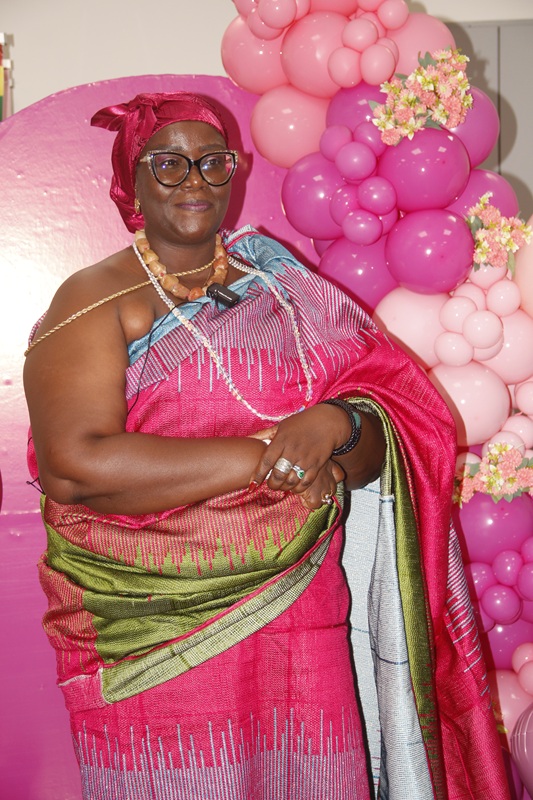
Women have been asked not to dismiss painless lumps in the breast, as the absence of pain does not mean a lump is harmless.
A Specialist Radiation Oncologist at the Korle-Bu Teaching Hospital, Dr Mary Ann Dadzie, said women should seek medical attention promptly whenever they noticed any unusual changes in the breast.
“A painless lump is not a harmless lump. You need to take action and not wait for pain,” she said.![Prof.Dr.Grace Ayensu-Danquah [middle] launching of Breast Cancer Awarencss Mouth with Dr.Caroline Reindorf Amissah[second from right] and other officials Photo Okai Elizabeth.](https://spectator.com.gh/wp-content/uploads/2026/10/Prof.Dr_.Grace-Ayensu-Danquah-middle-launching-of-Breast-Cancer-Awarencss-Mouth-with-Dr.Caroline-Reindorf-Amissahsecond-from-right-and-other-officials-Photo-Okai-Elizabeth.jpg)
Dr Dadzie made the call at the 2026 national launch of Breast Cancer Awareness Month, held on the theme, “early action, better outcomes.”
She expressed concern that about 45 per cent of breast cancer patients seen at Korle-Bu failed to return after starting treatment.
According to her, some patients began treatment but later stopped reporting to the hospital, leaving health professionals uncertain about their wellbeing.
She attributed the situation to several factors, including fear of death, financial difficulties, long distances to health facilities, lack of time and stigma.
Dr Dadzie urged women to know their breasts and seek medical attention within two weeks of noticing any abnormality.
She said warning signs could include a lump or thickening in the breast or armpit, changes in breast size, an inverted nipple, nipple discharge and changes in the skin, including redness, sores or an orange-peel appearance.
She cautioned women not to assume they were safe simply because they had no family history of breast cancer, explaining that only about five to 10 per cent of women with the disease had a familial or genetic mutation.
Dr Dadzie encouraged women to undergo regular clinical breast examinations and discuss appropriate screening options, including mammography and ultrasound, with health professionals.
She also called on families, particularly husbands and partners, to support women who needed breast examinations or treatment.
“Home is where the support begins,” she said, urging families to provide practical assistance such as transportation and childcare.
Dr Dadzie further appealed for breast cancer services to be brought closer to communities through increased access to mammography, ultrasound and biopsy services, as well as the training of more health professionals.
The Deputy Minister of Health, Prof. Dr Grace Ayensu- Danquah, said breast cancer remained a major health concern among women in Ghana, with an estimated 4,650 new cases and about 2,060 deaths recorded annually.
She said Ghana’s breast cancer response focused on prevention, early detection, equitable access to treatment and compassionate care.
Dr Ayensu-Danquah said the country was working to strengthen awareness, clinical breast examinations, referral systems, pathology and diagnostic services to improve breast cancer outcomes.
The World Health Organisation (WHO) representative, Dr Joana Ansong, said too many women continued to present with advanced breast cancer, resulting in avoidable suffering and deaths.
She called for stronger health education, timely diagnosis, rapid referral and equitable access to comprehensive treatment and support.
Dr Ansong said breast cancer awareness should move beyond campaigns to sustained action involving government, communities, health professionals, civil society organisations, the private sector and families.
By Esinam Jemima Kuatsinu
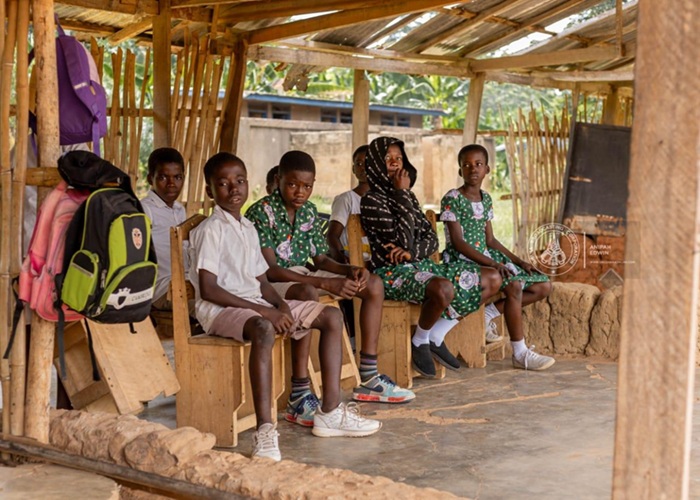
Authorities of Percheyire R/C Basic School in the Yilo Krobo District of the Eastern Region are concerned about the safety of teachers and learners of the school, as reports of the condition of the structure appear to have fallen on deaf ears.
The ramshackle classroom structure looks like one that could cave in in the case of a heavy storm and, according to the teachers, teaching and learning become impossible when the rains set in.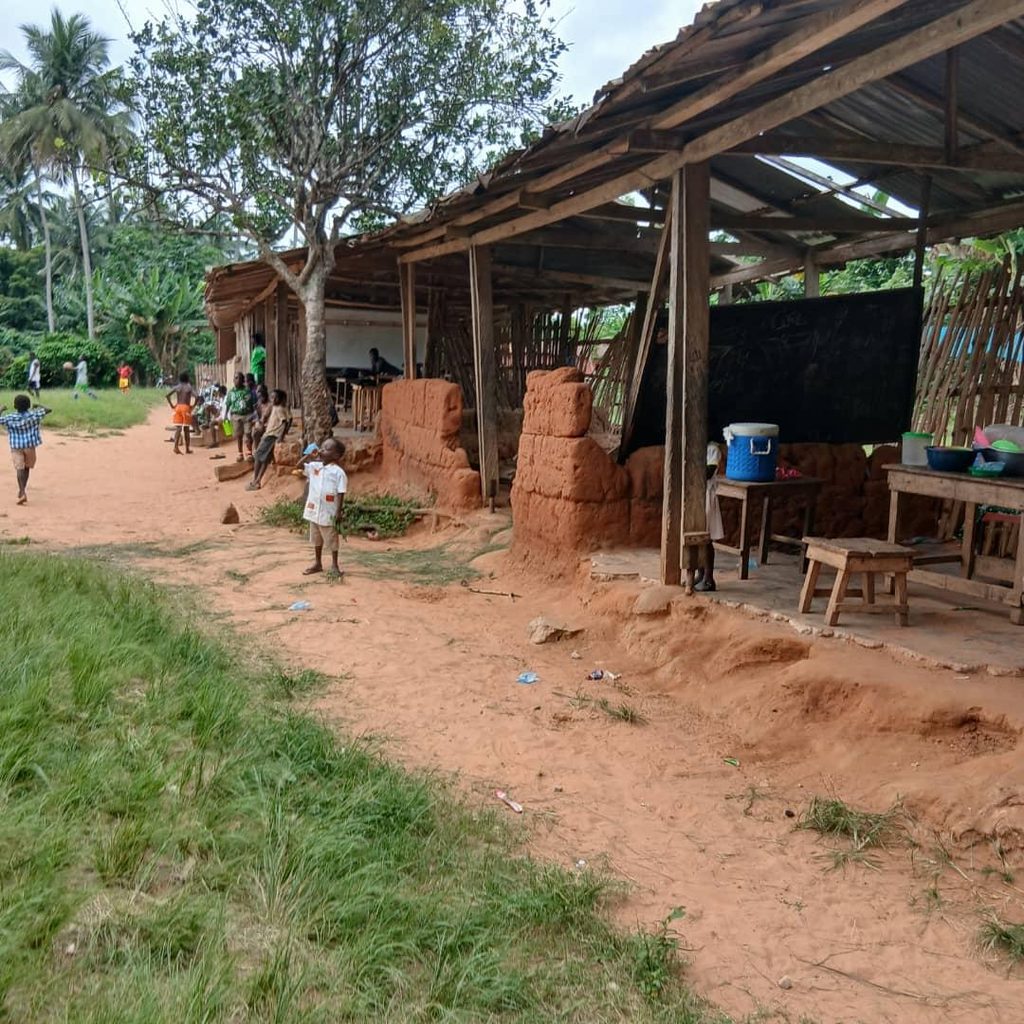
The structure, which accommodates pupils from Primary Four to Six, has worn-out roofing sheets, mud walls and sections supported by wood used as pillars.
A source at the school, who requested anonymity, told The Spectator in an interview that the situation was particularly difficult during the rainy season.
“When it rains, it means teaching and learning would come to an end,” he said.
The source explained that the challenge affected only the upper primary section, as pupils from Kindergarten to Primary Three were housed in a relatively better block.
According to the source, about 30 pupils from Primary Four to Six currently use the dilapidated structure, but expressed grave concern about its condition.
The source, however, said that the safety of the pupils, their furniture and books remained a concern, particularly during heavy rains.
The source said the situation had been reported to the relevant authorities and was hopeful that the structure would eventually be reconstructed.
Some pupils sitting in one of the classrooms
Despite the visit to the school, authorities indicated that work would be undertaken, but the school was yet to receive further information on when the project would begin.
The source also identified the poor road network to the school as another challenge affecting enrolment, saying the school serves pupils from Percheyire and three neighbouring communities.
It also emerged that an enrolment drive embarked upon in one of the communities, Togodo, showed that more than 60 school-going children lived in the community, but were unable to attend the school regularly because of the distance and poor road.
The school currently has about 110 pupils from Kindergarten through Junior High School, according to the source.
The source said improving both the classroom infrastructure and the road network would help create a more conducive learning environment and potentially improve enrolment.
A former teacher of the school, Rev. Elizabeth Korasare, said she was surprised to find the structure still in use after 38 years.
“I was surprised to see that the classroom I sat in 38 years ago is in the same state. Even though there are some new blocks, the upper primary is still housed in that same dilapidated structure,” she told The Spectator.
She therefore appealed to the relevant stakeholders to support the school by building a modern structure and improving the road network.
By Esinam Jemima Kuatsinu
SKIP THE QUEUE, TAP THE NEWS
You can now read the Ghanaian Times and The Spectator newspapers from the comfort of your device via TimesNewsPlus.
Join our WhatsApp Channel: https://whatsapp.com/channel/0029VbBElzjInlqHhl1aTU27