News
COVID-19: Government reviews discharge policy

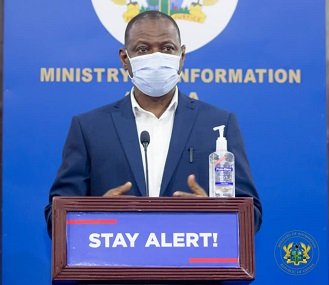
The government has reviewed its discharge policy on patients of the coronavirus disease (COVID-19).
With the policy, asymptomatic patients would be discharged in 10 days after showing no signs of the disease.
“For asymptomatic patients, 10 days after symptoms of onset, plus at least three days without symptoms, you are discharged without a test,” the Director General of the Ghana Health Service (GHS), Dr Patrick Kuma-Aboagye has announced at a press briefing in Accra yesterday.
The days for discharge of symptomatic patients would however remain 14 after two negative tests.
He indicated that, the review was done in accordance with the World Health Organisation (WHO) and Ghana’s clinical management guidelines on the disease.
In addition, Dr Kuma-Aboagye said, the revised policy was to allow the management of the country’s COVID-19 cases focus on newly infected patients and to decongest its holding centres.
“This is to allow us more time to give attention to those who are newly positive, and also create place in our facilities to be able to take care of more cases,” he said.
Dr Kuma-Aboagye used the platform to explain discharges, saying, discharged persons are those who are healthy, with no traces of virus in their blood and poses no risk to others.
During his turn, the Director of Public Health at the GHS, Dr Badu Sarkodie also provided details of the country’s cases of COVID-19, which showed that the cases had almost reached 13, 000.
He said that, as of June 16, the number of COVID-19 cases in Ghana was 12,929, resulting from 339 new cases from 36 districts in nine out of the 16 regions.
The 12,929 was a combination of 8,395 active cases and 4,468 recoveries and 66 deaths.
Meanwhile, 14 patients of the COVID-19 are critically ill, with four others on ventilators.
The regional breakdown comprised of 154 cases from 17 districts in the country’s regional capital, Accra, with 58 cases from two districts in the Western Region.
The Ashanti Region has recorded 41 new cases from two districts, while the Central Region’s new cases were 38, all from one district.
Meanwhile, the Eastern and Volta regions have 15 and 13 newly confirmed COVID-19 cases respectively, from a total of three districts in the two regions.
The remaining 21 cases are from five districts in three regions namely Bono East nine, Northern nine and the Savannah two.
Source: Ghanaian Times


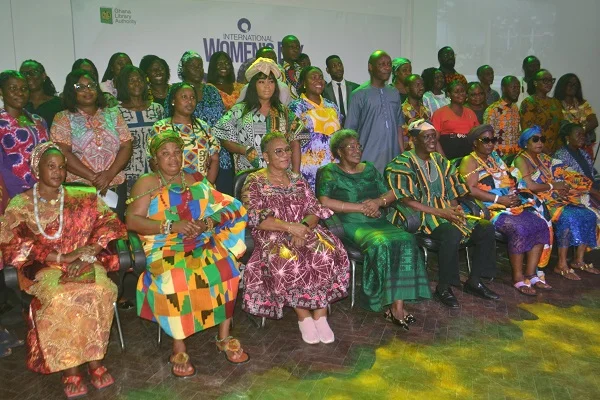
A former Sec ond Lady, Mrs Matilda Amis sah-Arthur, has called for urgent action to bridge literacy gaps among young girls in the country to advance gender equality.
She stressed that improving lit eracy among girls was essential not only for women’s empowerment but also for national development.
“Addressing the literacy gap is not a woman’s issue. It is a nation al necessity and, with the passing of the Affirmative Action (Gender Equality) Act, 2024, Ghana is signalling that women belong in leadership, but leadership begins with a book,” she said.
Mrs Amissah-Arthur made the call at an event organised by the Ghana Library Authority (GLA) in Accra yesterday to mark Interna tional Women’s Day (IWD) on the theme: “Her Voice in Libraries: Women Transforming Literacy in Ghana.”
According to her, many girls in Ghana still drop out of school due to poverty, lack of mentorship and limited support systems, warning that without deliberate interven tions some risk becoming part of worrying national statistics.
The former Second Lady encouraged students, particularly girls, to see education not only as a tool for personal advancement but also as a means of empowering future generations.
“Don’t shy away from STEM and ICT subjects. Break into the male-dominated areas and bridge the digital divide,” she added.
Mrs Amissah-Arthur also called for stronger partnerships between men and women in advancing gen der equality, stressing that the issue should be viewed as a national development priority rather than solely a women’s concern.
“Gender equality is not a woman’s issue. It is a development issue. It requires partnership, respect and shared responsibility,” she said.
She further expressed opti mism that with the right support systems, every child, regardless of gender, could achieve their full potential.
In a remark, the Chief Director of the Ministry of Education, Lydia Essuah, said that despite progress made in promoting gender equality in the education sector, challenges remained in ensuring progression, completion and quality learning outcomes for all learners.
She highlighted the important role of libraries in advancing liter acy and lifelong learning skills, and called for increased investment in library infrastructure and services to help build a knowledge-driven society.
The Executive Director of the Ghana Library Authority, Alhassan Ziblim Bentintiche, also under scored the importance of libraries in empowering young people, par ticularly girls, with access to books, digital resources and mentorship opportunities.
He disclosed plans to expand Ghana’s library infrastructure and services to particularly attract the youth and promote literacy.
BY ABIGAIL ANNOH

Management of the Metro Mass Transit Limited has accused the government of former President Nana Addo Dankwa Akufo-Addo of pursuing what it describes as a “create, loot and share” agenda in the sale of portions of the Opera Square Bus Terminal to a private developer.
The Deputy Managing Director of the company, Haroun Apaw-Wiredu, raised the concerns while speaking to journalists at the Opera Square Bus Terminal in Accra on Thursday, March 12, 2026.
He indicated that the management of Metro Mass Transit would not tolerate any further unauthorized development at the terminal and would take steps to protect the property.
According to him, it would be wrong for a private developer to take control of state property for personal economic gain while the company and the public remain silent.
“How can we sit down and allow a private developer, just for his selfish economic gains, to capture state property for himself? No, we cannot sit down,” he stressed.
Mr Apaw Wiredu called on the public to resist what he described as attempts to take over state assets, adding that such actions would disadvantage ordinary citizens.
“Ladies and gentlemen, we must all stand up. We must all wake up. We must fight this level of brazen looting and attempts to milk the system at the expense of ordinary Ghanaians,” he indicated.
He explained that some individuals had been operating around the terminal for many years and alleged that the developer gained access to the land during the previous administration.
Mr Apaw Wiredu stressed that under the leadership of President John Dramani Mahama, the company would pursue all legitimate means to protect the terminal from what he described as unlawful takeover.
He added that management would use every legal avenue available to defend the property and prevent any attempt to take control of the land without proper authorization.
By: Jacob Aggrey