Fruitful Living
Conceptual framework: Human trafficking (AMP Model) Part 2

- /home/u249204778/domains/spectator.com.gh/public_html/wp-content/plugins/mvp-social-buttons/mvp-social-buttons.php on line 27
Warning: Trying to access array offset on false in /home/u249204778/domains/spectator.com.gh/public_html/wp-content/plugins/mvp-social-buttons/mvp-social-buttons.php on line 27
&description=Conceptual framework: Human trafficking (AMP Model) Part 2', 'pinterestShare', 'width=750,height=350'); return false;" title="Pin This Post">
- Share
- Tweet /home/u249204778/domains/spectator.com.gh/public_html/wp-content/plugins/mvp-social-buttons/mvp-social-buttons.php on line 72
Warning: Trying to access array offset on false in /home/u249204778/domains/spectator.com.gh/public_html/wp-content/plugins/mvp-social-buttons/mvp-social-buttons.php on line 72
&description=Conceptual framework: Human trafficking (AMP Model) Part 2', 'pinterestShare', 'width=750,height=350'); return false;" title="Pin This Post">
The internationally accepted definition (from the UN Palermo Protocol, 2000) identifies three elements:
ACT (What is done), which includes:
• Recruitment, transportation, transfer harbouring, or receipt of persons. How it is Applied:
In Ghana, traffickers recruit children from rural areas under false promises of education or employment.
MEANS (How it is done), which includes:
• Threats
• Coercion
• Deception
• Abuse of vulnerability
How it is applied:
Parents may be deceived into releasing children, or victims may be threatened into silence.
PURPOSE (Why it is done), which includes:
• Sexual exploitation
• Forced labour
• Slavery
• Organ harvesting
Key Insight:
Even if a victim appears to “consent,” such consent is legally irrelevant if coercion or deception is involved.
Islamic legal principles align with this framework by prohibiting exploitation (ẓulm) and unjust enrichment, rendering trafficking morally and legally impermissible (Bawono & Huda, 2025).
Forms and impacts of human trafficking
Human trafficking manifests in several forms:
• Child trafficking → educational deprivation, psychological trauma
• Forced labour → economic exploitation, health risks
• Sexual exploitation → severe physical and emotional harm
• Organ trafficking → life-threatening and ethically egregious
Human trafficking manifests in diverse and interconnected forms. Child trafficking leads to loss of education, long-term psychological trauma, and entrenched poverty.
Forced labour subjects victims to severe economic exploitation and hazardous working conditions, often resulting in deteriorating health. Sexual exploitation inflicts profound physical abuse and emotional damage, alongside social stigma.
Organ trafficking poses life-threatening risks and represents a grave ethical violation. Collectively, these practices undermine human capital, weaken social structures, and hinder sustainable development. These forms collectively erode human capital and social stability.
Legal and Institutional Frameworks
International Legal Instruments
Universal Declaration of Human Rights (UDHR, 1948)
The UDHR provides the normative foundation for global human rights law:
• Article 1: Affirms equality and freedom of all humans
• Article 4: Explicitly prohibits slavery and servitude
• Article 5: Prohibits torture and degrading treatment
Analytical Insight:
Human trafficking violates all three provisions simultaneously. Victims are deprived of freedom (Article 1), subjected to forced labour (Article 4), and exposed to degrading conditions (Article 5).
These align closely with Islamic prohibitions against oppression and injustice.
Palermo Protocol (2000)
This is the primary international legal instrument addressing trafficking:
• Provides the AMP definition (Act–Means–Purpose)
• Emphasises the 3Ps framework: Prevention, protection, prosecution
• Recognises victim rights and state obligations
Analytical insight:
The Protocol’s emphasis on protection and dignity parallels Islamic legal objectives, particularly the preservation of life and honour. Comparative studies show strong convergence between Islamic law and international anti-trafficking norms (Jamal, 2025).
Regional framework
African charter on human and peoples’ rights
• Article 5: Protects human dignity and prohibits exploitation
• Article 15: Guarantees equitable working conditions
Analytical insight:
The Charter contextualises human rights within African socio-cultural realities, reinforcing communal responsibility an idea that resonates with Islamic communal ethics (ummah).
National framework: Ghana 1992 Constitution of Ghana
• Article 15: Guarantees the dignity of all persons and prohibits torture or degrading treatment
• Article 16: Explicitly prohibits slavery, servitude, and forced labour
• Article 21: Guarantees fundamental human rights and freedoms, including personal liberty, freedom of movement, and constitutional safeguard against human trafficking. In particular, Article 21 affirms the right of individuals to move freely, make autonomous decisions, and live without coercion.
Human trafficking directly contravenes these rights by restricting victims’ movement, subjecting them to confinement, and denying their personal liberty through deception and force. Victims are often transported against their will and held in exploitative conditions, thereby violating their constitutional freedoms.
Consequently, trafficking not only breaches specific prohibitions under Articles 15 and 16 but also fundamentally undermines the broader human rights guarantees freedom from arbitrary restraint.
Human Trafficking Act (Act 694, as amended)
• Criminalises all forms of human trafficking, including recruitment, transportation, harbouring, and exploitation
• Provides for victim protection, rehabilitation, and reintegration through state-supported mechanisms
• Establishes institutional frameworks for investigation, prosecution, and inter-agency collaboration
Critical and normative insight:
The Act reflects Ghana’s commitment to safeguarding human dignity and aligns with international standards. However, enforcement challenges persist due to limited funding, weak institutional coordination, and low public awareness, which hinder effective implementation.
From an Islamic perspective, the provisions of Act 694 resonate strongly with core Sharīʿah principles. Islam unequivocally prohibits all forms of exploitation (ẓulm), coercion, and the commodification of human beings. Human trafficking violates the divinely ordained dignity (karāmah) of individuals, undermines justice (‘adl), and disrupts social balance. By criminalising trafficking and promoting victim protection, the Act indirectly advances the higher objectives of
Islamic law (Maqāṣid al-Sharīʿah), particularly the preservation of life, dignity, and wealth. Thus, both Islamic teachings and Ghanaian law converge in condemning trafficking as a grave moral and legal injustice.
Page | 8
Children’s Act (Act 560)
• Protects children from exploitative labour and harmful practices
• Promotes access to education, welfare, and holistic development
Domestic Violence Act (Act 732)
• Addresses physical, emotional, and psychological abuse often associated with trafficking
• Provides legal remedies, protection orders, and support systems for victims
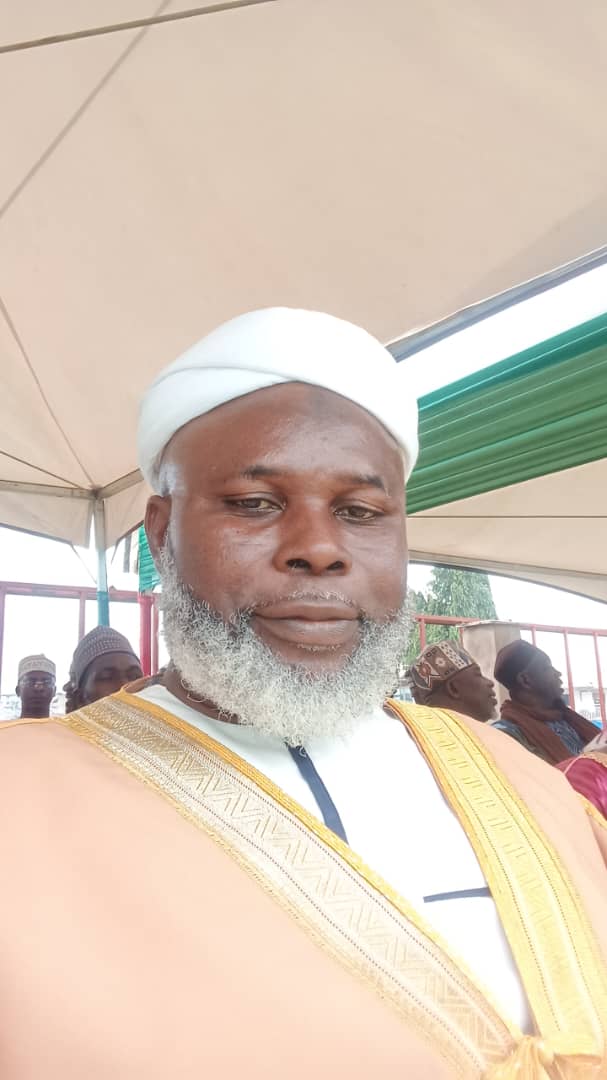
By Imam Alhaji Saeed Abdulai, Kpone Katamanso Municipal Chief Imam, Certified
Counsellor and Governance Expert

Fruitful Living
Environmental Stewardship Is an Act of Worship: The Islamic Response to Climate Change and Environmental Degradation
Introduction
In the name of Allah, the Most Gracious, the Most Merciful. May His peace and blessings be upon the Holy Prophet Mohammed (pbuh), his household companions and all those who follow andsupport him till the last day.
Environmental degradation has emerged as one of the greatest threats to human existence in the twenty-first century. Across the globe, climate change, deforestation, biodiversity loss, pollution, and unsustainable exploitation of natural resources continue to undermine livelihoods, public health, and economic development. Ghana is no exception. The devastating effects of illegal mining (galamsey), indiscriminate waste disposal, pollution of rivers and streams, deforestation, and changing climatic conditions are increasingly affecting agriculture, food security, access to clean water, and the wellbeing of present and future generations (Intergovernmental Panel on Climate Change [IPCC], 2023; United Nations Environment Programme [UNEP], 2024).
Public discourse often presents environmental protection as the exclusive responsibility of governments, environmental scientists, and development agencies. While these stakeholders play indispensable roles, faith communities also possess a profound moral responsibility to protect the natural world. For Muslims, caring for the environment is not merely a civic obligation or a matter of public policy; it is an act of worship rooted in obedience to Allah and guided by the teachings of the Qur’an and the Sunnah of Prophet Muhammad (peace be upon him).
The Qur’an consistently reminds humanity that the heavens, the earth, and everything within them belong to Allah. Human beings have not been granted unrestricted ownership over creation but have been entrusted with its care as Khalifah (stewards or vicegerents). Allah declares, “It is He who has made you successors upon the earth…” (Qur’an 6:165, Sahih International). This divine
appointment confers both privilege and accountability, requiring humanity to use natural resources responsibly, preserve ecological balance, and avoid actions that lead to destruction and injustice.
The Prophetic tradition further reinforces this responsibility by linking environmental care to acts of charity and righteousness. The Prophet Muhammad (peace be upon him) said, “If a Muslim plants a tree or sows seeds, and then a bird, or a person, or an animal eats from it, it is regarded as a charitable gift (Sadaqah) for him” (Sahih al-Bukhari, Hadith 2320). This remarkable teaching transforms environmental conservation from a secular concern into a continuous act of worship that benefits both humanity and all living creatures.
This article argues that Islam offers a comprehensive ethical framework for addressing contemporary environmental challenges. Drawing upon the Qur’an, authentic Hadith, principles of Islamic jurisprudence, and Ghana’s environmental realities, it demonstrates that environmental stewardship is an expression of faith, a fulfilment of humanity’s divine trust, and a practical pathway toward sustainable development. In an era marked by climate change and ecological
degradation, Muslims have both a spiritual and civic duty to safeguard Allah’s creation for the benefit of present and future generations.
Humanity as Khalifah: The Islamic Concept of Stewardship and Divine Trust
The Islamic worldview begins with the recognition that the universe is neither ownerless nor a product of chance. Everything in existence belongs to Allah, the Creator and Sustainer of the heavens and the earth. Human beings therefore do not possess absolute ownership over the environment; rather, they are entrusted with its care and responsible use. This trusteeship is encapsulated in the Qur’anic concept of Khalifah (vicegerency or stewardship), which defines humanity’s relationship with creation.
Allah announced this divine appointment when He said to the angels: “Indeed, I will make upon the earth a successive authority (Khalifah)” (Qur’an 2:30, Sahih International). This declaration established humanity as Allah’s representatives on earth, entrusted with managing natural resources in accordance with His guidance. The role of a Khalifah is therefore one of responsibility rather than domination, stewardship rather than exploitation, and service rather than selfish gain.
The Qur’an reinforces this responsibility by reminding humanity that its authority over the earth is temporary and subject to divine accountability. Allah says, “It is He who has made you successors upon the earth and has raised some of you above others in degrees [of rank] that He may try you through what He has given you” (Qur’an 6:165, Sahih International). Environmental resources— land, forests, rivers, minerals, wildlife, and the atmosphere—are thus part of a divine trust through which humanity is tested. The measure of success lies not in how much people extract from nature but in how faithfully they preserve and utilise it for the common good.
This concept is further strengthened in the Qur’an where Allah commands: “He has produced you from the earth and settled you in it” (Qur’an 11:61, Sahih International). Classical Muslim scholars have interpreted this verse as an instruction to cultivate, develop, and improve the earth rather than destroy it (Ibn Kathir, 2003). Productive agriculture, sustainable commerce, responsible urban
development, and environmental conservation are therefore consistent with Islamic teachings because they contribute to the flourishing of society while preserving the integrity of creation.
Closely linked to Khalifah is the concept of Amanah (trust). Allah entrusted humanity with responsibilities that carry profound moral consequences. Although the Qur’an discusses Amanah broadly, its principles extend to every responsibility placed upon humankind, including the protection of the natural environment. Since Allah is the ultimate Owner of creation, every river polluted, every forest destroyed, and every ecosystem degraded represents not merely environmental damage but a breach of a sacred trust.
The Prophet Muhammad (peace be upon him) emphasized that accountability is a defining characteristic of leadership. He said, “Every one of you is a shepherd and every one of you is
responsible for his flock” (Sahih al-Bukhari, Hadith 7138; Sahih Muslim, Hadith 1829). While this Hadith primarily addresses social responsibility, its underlying principle extends to all forms of stewardship. Governments are responsible for environmental governance, traditional authorities for protecting communal lands, corporate institutions for sustainable business practices, religious leaders for cultivating environmental ethics, and individual citizens for preserving their immediate surroundings.
Islam also teaches that the natural world possesses intrinsic value because it reflects the signs (Ayat) of Allah. The Qur’an repeatedly invites believers to observe the alternation of day and night, the diversity of plants and animals, the mountains, the rivers, and the rain as evidence of Allah’s wisdom and power (Qur’an 3:190–191). Nature is therefore not merely a collection of economic
resources but a manifestation of divine artistry deserving of respect and protection. Destroying creation without just cause diminishes humanity’s appreciation of these signs and undermines its spiritual relationship with the Creator.
The concept of stewardship is further illuminated through the objectives of Islamic law (Maqāṣid al-Sharī’ah). Classical scholars, particularly Al-Ghazali and later Al-Shatibi, identified five overarching objectives: the preservation of religion, life, intellect, lineage, and wealth (Auda, 2008). Environmental stewardship directly advances each of these objectives. Clean air and safe water protect human life; fertile land supports livelihoods and wealth; a healthy environment
safeguards future generations; and responsible use of natural resources enables communities to fulfil their religious obligations without unnecessary hardship. Conversely, environmental degradation threatens all five objectives by exposing populations to disease, undermining food security, destroying economic opportunities, and jeopardizing the welfare of future generations.
This understanding transforms environmental stewardship from an optional charitable activity into a religious obligation. Caring for creation is an expression of gratitude to Allah, fulfilment of the trust of Khalifah, and practical implementation of the higher objectives of Islamic law. Muslims are therefore called not only to avoid harming the environment but also to actively restore and protect it. Every tree preserved, every river protected, every piece of land rehabilitated, and every effort to promote sustainable development becomes part of fulfilling humanity’s covenant with Allah.
Recognising ourselves as Khalifah fundamentally changes how we view the environment. Rather than seeing nature as a limitless resource for exploitation, Islam teaches believers to regard it as a sacred trust to be preserved with wisdom, justice, moderation, and compassion. This theological foundation provides the basis for understanding why environmental destruction is condemned in
Islam as a form of corruption on earth.
By Imam Alhaji Saeed Abdulai ,Kpone Katamanso Municipal Chief Imam
Certified Counsellor & Governance Expert

Ghana’s National Health Insurance Scheme (NHIS) provides affordable healthcare. By law (Act 852, 2012), every Ghanaian resident must belong to the NHIS by registering. Once registered, a family gains access to a wide range of medical services. From an Islamic perspective, having health coverage is part of fulfilling one’s social responsibility: the Prophet Mohammad (pbuh) taught that
one who provides for a sick or needy person is like one who worships in solitude (in reward). An Imam might cite the hadith “Whoever relieves a believer’s distress of the distressful aspects of this world, Allah will rescue him from a difficulty of the difficulties of the Hereafter” (Muslim).
Encouraging congregants to obtain NHIS cards ensures children can get vaccines and families can afford clinic visits, fulfilling the Quranic ideal of community care. Imams can organise special registration drives after Jumu‘ah, so the poor and elderly receive help signing up, noting that Act 852 even allows community agents to assist citizens.