News
Commitment to God; A higher and nobler sacrifice

As I think of the blessings God has given us and the many beauties of the gospel of Jesus Christ, I am aware that along the way we are asked to make certain contributions in return, contributions of time or of money or of other resources. These are all valued and all necessary, but they do not constitute our full offering to God. Ultimately, what our Father in Heaven will require of us is more than a contribution; it is a total commitment, a complete devotion, all that we are and all that we can be.
Please understand that I’m not talking only of a commitment to our religion and its activities, although that always needs to be strengthened. No, I speak more specifically of a commitment that is shown in our individual behaviour, in our personal integrity, in our loyalty to home and family and community, as well as our faith.
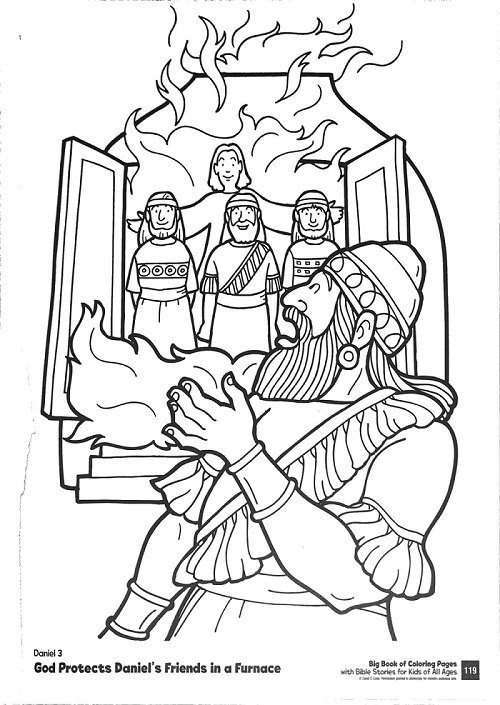
Let me recall briefly just one of those magnificent examples from the bible where three relatively young people stood by their principles and held to their integrity even though it seemed apparent that to do so would cost them their lives.
Approximately 586 years before Christ, Nebuchadnezzar, king of Babylon, marched against the city of Jerusalem and conquered it. So impressed was he with the qualities and learning of the children of Israel that he had several of them brought to the king’s court in Babylon.
Trouble came to the Israelites the day Nebuchadnezzar made a golden idol and commanded all in the province of Babylon to worship it, a command that the three young Israelites; Shadrach, Meshach and Abednego quietly refused. The king was full of “rage and fury” and demanded that they be brought before him. (Dan. 3:13.) He informed them that if they did not fall before the golden image at the appointed moment, “ye shall be cast the same hour into the midst of a burning fiery furnace.” Then with some self-satisfaction he asked, “And who is that God that shall deliver you out of my hands?” [Dan. 3:15.]
The three young men responded courteously but without hesitation:
“If it be so,” they said, “that you threaten us with death, our God whom we serve is able to deliver us from the burning fiery furnace, and he will deliver us out of thine hand, O king.
“But if not, if for whatever reason he chooses not to save us from the fire, be it known unto thee, O king, that we will not serve thy gods, nor worship the golden image which thou hast set up.” [Dan. 3:17–18.]
Nebuchadnezzar was more furious than ever and ordered that one of the furnaces be heated to seven times its normal temperature. Then he commanded that these three valiant young men be thrown fully clothed into the midst of the fire. Indeed, the king was so insistent and the flame so hot that the soldiers who carried Shadrach, Meshach, and Abednego fell dead from the heat of the furnace as they cast their captives forward.
Then transpired one of those great miracles to which the faithful are entitled according to the will of God. These three young men stood and walked about calmly in the midst of the furnace and were not burned. Indeed, when they were later called out of the furnace by the astonished king himself, their clothing was untarnished, their skin was free from any burn, not a hair of their head was singed. Not even the smell of smoke had come upon these courageous, committed young men.
“Blessed be the God of Shadrach, Meshach and Abednego,” the king said, “who hath … delivered his servants that trusted in him, … who yielded their bodies, that they might not serve nor worship any god, except their own God.
“… Then the king promoted Shadrach, Meshach, and Abednego, in the province of Babylon.” (Dan. 3:28, 30.)
The ability to stand by one’s principles, to live with integrity and faith according to one’s belief; that is what matters, that is the difference between a contribution and a commitment. That devotion to true principle in our individual lives, in our homes and families, and in all places that we meet and influence other people that devotion is what God is ultimately requesting of us. …
A successful life, the good life, the righteous life requires something more than a contribution, though every contribution is valuable. Ultimately it requires commitment, whole-souled, deeply held, eternally cherished commitment to the principles we know to be true in the commandments God has given.
When Joshua was directed to destroy the city of Jericho that lay before the tribes of Israel, the great walls of the city stood as an imposing and physically impossible barrier to Israel’s successor at least so it seemed. Not knowing the means, but assured as to the end, Joshua carried out the instructions he had been given by a messenger of the Lord. His commitment was to complete obedience. His concern was to do precisely as he was instructed, that the promise of the Lord would be fulfilled. The instructions no doubt seemed strange, but his faith in the outcome urged him on. The result, of course, was another in a long series of miracles experienced by the Israelites as they were led over many years by Moses, by Joshua, and by many other prophets who were committed to follow the commandments and the directives of the Lord.
As Joshua and his people approached Jericho, the instructions of the Lord were followed precisely, and according to the scriptural account, “the wall fell down flat, so that the people went up into the city, every man straight before him, and they took the city.” (Josh. 6:20.)
The record states that after Israel had rested from the wars with their enemies, Joshua, who was now very old, called all Israel together. In his farewell address he reminded them they had been victorious because God had fought for them, but if they now ceased to serve the Lord and keep his law they would be destroyed.
This great military and spiritual leader then urged a commitment, and made one himself and for his family: “Choose you this day whom ye will serve; … but as for me and my house, we will serve the Lord.” (Josh. 24:15.)
Here was a great statement of full commitment of a man to God; of a prophet to the desires of the Lord; of Joshua the man to his God, who had many times previously blessed his obedience. He was telling the Israelites that regardless of how they decided, he would do what he knew was right. He was saying that his decision to serve the Lord was independent of whatever they decided; that their actions would not affect his; that his commitment to do the Lord’s will would not be altered by anything they or anyone else would do. Joshua was firmly in control of his actions and had his eyes fixed on the commandments of the Lord. He was committed to obedience.
Surely the Lord loves, more than anything else, an unwavering determination to obey His counsel. May we stand firm and committed to the course of truth and to our God we worship.
By Samuel Enos Eghan



Dr Zakarea Al-Hassan Balure, an Optometrist, has urged parents to take active responsibility for the eye health of their children instead of leaving it solely in the hands of health professionals.
He said good eyesight was essential for effective learning and overall child development, emphasising the need for parents to seek regular eye screening services for their children.
“Parents are always concerned about their children’s academic performance, but without good eyesight, learning becomes difficult.
“It is important that parents seek regular eye screening services for their children at the health facility, and not to wait for free screening services, though they are also good,” he stated.
Dr Balure, the Manager of Bliss Eye Care, a private eye clinic in Wa, made the call after a free eye screening exercise organised at Tanina in the Wa West District under the Blissful Sight for Kids (BS4Ks) Programme.
The programme, implemented by the Bliss Eye Care in partnership with Ghana Vision, a Swiss-based charity organisation, has, since its inception about a decade ago, impacted thousands of children in the Upper West region and beyond through free eye screening and treatment services.
The exercise in Tanina recorded improved attendance compared to patronage in the district in previous years, an indication of growing awareness among parents about the importance of child eye care.
A total of 684 children were screened during the exercise, out of which 42 were found to have normal eye conditions.
However, 623 children were diagnosed with pathological eye conditions requiring medication, eleven had refractive errors requiring eyeglasses, while eight cases of cataract and glaucoma were also detected.
Dr Balure commended parents and guardians within the Tanina circuit for travelling far distances to access the service for their children.
He called for sustained awareness creation and community participation in eye health programmes to improve their children’s vision, which is necessary for improving educational outcomes and the well-being of children.
Speaking to the Ghana News Agency (GNA), Mr Mahama Abdul Fatawu Mwinibang, the Assembly Member for the Tanina Electoral Area, expressed gratitude to Bliss Eye Care and Ghana Vision for the intervention, as it helped bridge a critical healthcare access gap in the area.
He, however, appealed to the organisers to consider including older persons in subsequent screening exercises.
He encouraged parents and guardians to maintain close relationships with their children to enable them detect eye-related problems early for treatment. –GNA
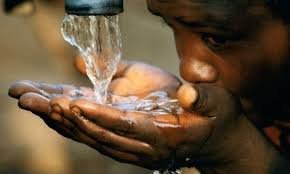
The Ghana Water Justice Network (GWJN), a civil society organization, has called on the government to make water affordable and accessible to Ghanaians in the country.
The organization said making water affordable, particularly for low-income and vulnerable households, included an end to water disconnections due to inability to pay.
This was in a communiqué issued at the launch of the GWJN in Accra on the theme “Water for People, Not for Profit.”
The launch of the event was to mobilize citizens and advocate sustainable long-term solutions to Ghana’s escalating water crisis.
The statement said such disconnections violated the human right to water and disproportionately affected women and children.
“We advocate for inclusive, humane service delivery that prioritizes dignity and access to all citizens,” the statement said.
The statement urged the government to address significant investment shortfalls by fully honouring budget commitments, especially by extending services to underserved communities.
The statement urged authorities to actively include women as leaders and decision-makers in water management at all levels and address the disproportionate impacts of water scarcity on women and girls.
It also called for the establishment and enforcement of water protection zones and the integration of catchment protection plans into spatial planning schemes.
“To combat the menace of galamsey, we urge the government to seize assets and prosecute financiers and equipment owners, support community-based river guards, and deploy satellite and drone surveillance systems to combat illegal mining,” it said.
The communiqué also called on the authorities to introduce a national borehole drilling permit system, create a central groundwater database, and promote shared community borehole systems.
The statement said for countless communities across the country, access to affordable and reliable water remained out of reach.
In rural areas, peri-urban settlements, and low-income urban neighbourhoods, daily realities are marked by long queues, inconsistent supply, and rising costs.
It said at the heart of this crisis were women and children, who bear the heaviest burden when water systems fail.
This situation, the statement said, leaves far too many people behind and threatened to derail progress toward the Sustainable Development Goal six—universal and equitable access to safe and affordable water for all by 2030. -GNA

 News4 days ago
Ghana’s Chris Koney participates in high-level dialogue at Africa Forward Summit 2026
- News1 week ago
Isaac Adongo defends BOG Governor, says Ghana “in safe hands”
- Features4 days ago
Fix It Fast or Lose Them Forever: The Ever-Rising Importance of Service Recovery in Competitive Industries