Bussiness
Cedi now worst African currency; depreciates 7.6% to dollar


- /home/u249204778/domains/spectator.com.gh/public_html/wp-content/plugins/mvp-social-buttons/mvp-social-buttons.php on line 27
https://spectator.com.gh/wp-content/uploads/2022/02/s.jpeg&description=Cedi now worst African currency; depreciates 7.6% to dollar', 'pinterestShare', 'width=750,height=350'); return false;" title="Pin This Post">
- Share
- Tweet /home/u249204778/domains/spectator.com.gh/public_html/wp-content/plugins/mvp-social-buttons/mvp-social-buttons.php on line 72
https://spectator.com.gh/wp-content/uploads/2022/02/s.jpeg&description=Cedi now worst African currency; depreciates 7.6% to dollar', 'pinterestShare', 'width=750,height=350'); return false;" title="Pin This Post">
The Ghana cedi is now the worst-performing currency on the African continent just two months into 2022.
This is because it has depreciated by about 7.6% to the dollar from January 1, 2022 to February, 25, 2022.
The local currency has therefore overtaken the Zambian kwacha, which was the worst-performing currency on the continent two weeks ago.
Both Ghana and Zambia have challenges in addressing their escalating debts as well as struggling with revenue mobilisation and expenditure management.
This conundrum is impacting negatively on the country’s exchange rate, interest rate and inflation. Additionally, the recent downgrade of the country’s ability to borrow is also a major worry as investors are still unsure about the outlook of the Ghanaian economy.
This affirms some economists and analysts’ assertion that all concerns regarding the Electronic Transaction Levy must be addressed and passed immediately by Parliament.
If not the depreciating cedi will affect the budget of most corporate institutions as well as reduce the disposable income of consumers.
But there could be some hope going forward as the World Bank Group has approved a five-year Country Partnership Framework for Ghana from this year till 2026.
This will see the injection of $4.5 billion into the economy, in the next five years.CURRENCY YEAR-TO-DATE PERFORMANCE RANKING Namibian dollar 4.49% 1st South African rand 3.68% 2nd Botswana pula 1.17% 3rd Tunisia dinar 0.75% 4th Uganda shilling 0.46% 5th Egypt Pound 0.02% 6th Malawi kwacha 0.00% 7th Tanzania shilling -0.02% 8th Kenya shilling -0.06% 9th Nigerian naira -0.70% 10th Mauritius rupee -0.75% 11th Coted’lviore CFA -0.90 12th Morocco dirham -2.56% 13th Zambia kwacha -5.98% 14th Ghana cedi -7.60 15th
Source: www.myjoyonline.com


Ghanaian dancehall artiste Charles Nii Armah Mensah, known as Shatta Wale, has won two awards at the 43rd International Reggae and World Music Awards (IRAWMA) held in Florida over the weekend.
He picked up the Best African Dancehall Entertainer award as well as Concert of the Year for ShattaFest.
In a statement, Shatta Wale’s management expressed appreciation to the organisers and supporters of the awards.
“Management would like to sincerely appreciate the organisers of the IRAWMA awards for the recognition and continuous support for African music on the global stage.
“We also extend our deepest gratitude to fans across the world, especially the Shatta Movement fraternity, for their unwavering support, votes, and dedication throughout the years,” the statement said.
The statement added that the latest wins reaffirm the artiste’s position as one of Africa’s leading musical exports and a prominent figure in global dancehall culture.
The awards bring Shatta Wale’s total haul at the IRAWMA to 11, highlighting his continued presence on the international reggae and dancehall scene.
At last year’s edition, he won three awards: Best African Dancehall Entertainer, Best Music Video for “Killa Ji Mi”, and Best Crossover Song for “Commando” featuring Bounty Killer. -GNA
Bussiness
Global Market Volatility: Gov’t absorb GH¢2.00 per litre on diesel and GH¢0.36 per litre on petrol

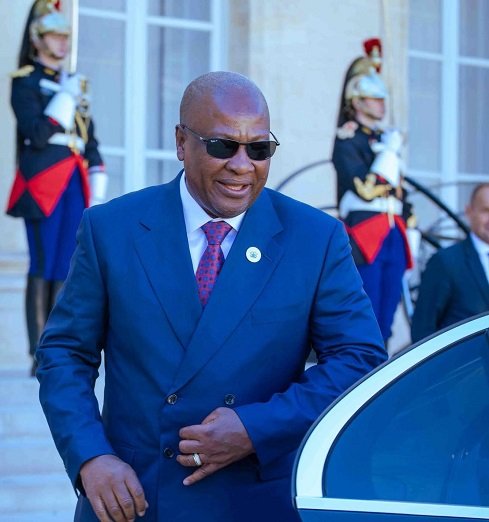
Effective Thursday, April 16, 2026, which is the next pricing window, the Government will absorb GH¢2.00 per litre on diesel and GH¢ 0.36 per litre on petrol.
This intervention is intended to cushion customers and ease the cost burden on households, transport operators, and businesses.
The measure, approved by Cabinet, is in response to rising prices of petroleum products on the international market, which have significantly impacted ex-pump prices in Ghana.
This temporary intervention will remain in force for a period of one (1) month.
During this period government will continue to closely monitor developments in the global oil market and assess the need for further policy adjustments.
A statement signed by Minister of Government Communications, Felix Ofosu Kwakye noted that they remain commited to maintaining price stability, protecting livelihoods, and supporting Ghana’s economic recovery in the face of external shocks.