News
Bush meat traders pledge to halt Pangolins


- /home/u249204778/domains/spectator.com.gh/public_html/wp-content/plugins/mvp-social-buttons/mvp-social-buttons.php on line 27
https://spectator.com.gh/wp-content/uploads/2025/02/bush-meat.jpg&description=Bush meat traders pledge to halt Pangolins', 'pinterestShare', 'width=750,height=350'); return false;" title="Pin This Post">
- Share
- Tweet /home/u249204778/domains/spectator.com.gh/public_html/wp-content/plugins/mvp-social-buttons/mvp-social-buttons.php on line 72
https://spectator.com.gh/wp-content/uploads/2025/02/bush-meat.jpg&description=Bush meat traders pledge to halt Pangolins', 'pinterestShare', 'width=750,height=350'); return false;" title="Pin This Post">
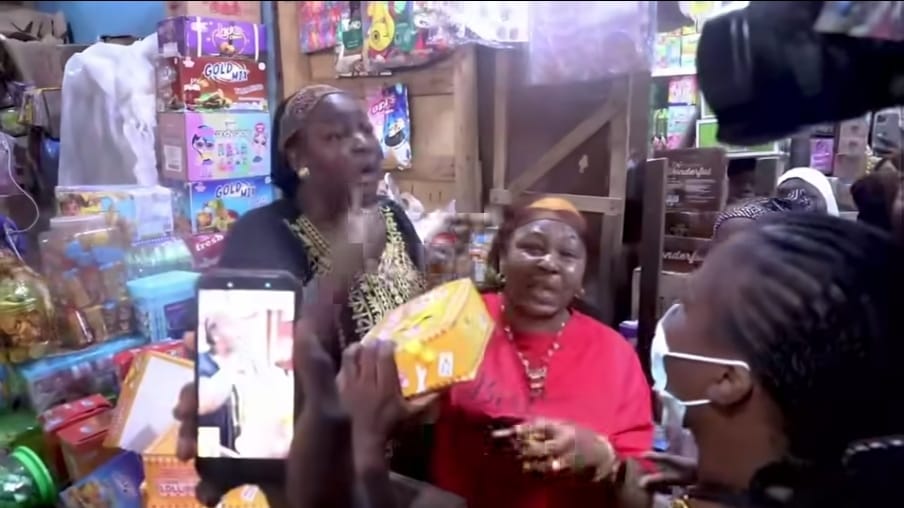
Bush meat sellers at Atwemonom, a local market centre for bush meat sales in Kumasi, have pledged to rally behind the government and stakeholders to halt the illegal trade and exploitation of pangolins, a critically endangered species.
The traders pointed out that, after learning about the enormous contributions of pangolins to ecosystem protection, it was time they ceased all forms of trade of the animal, which is one of the local delicacies among bush meat lovers in Kumasi and allow them to exist and multiply for the conservation chain to continue.
Madam Comfort Badu, Queen mother of Atwemonom Bush Meat Sellers, indicated that the traders were going to engage with the hunters to halt bringing in pangolins to the market for sale.
“We will talk to our hunters not to kill or bring the meat of pangolins to us again. It is serious to protect them, and again, the government has laws guiding the trading, poaching, and handling of pangolins. Any hunter who does not heed our advice and gets caught by the law does so at his own risk,” she buttressed.
Madam Badu was contributing to the discussions at the 2025 World Pangolin Day, organised by the Institute of Nature and Environmental Conservation (INEC) Ghana, in Kumasi.
The 2025 celebration was under the theme: ‘Youth Legacy for Pangolin Conservation.’
It brought together students from the Kwame Nkrumah University of Science and Technology (KNUST), Toase Senior High School, Officers from the Wildlife Division of the Forestry Commission, Custom Officials and Bush meat Traders from Atwemonom.
Madam Badu assured that the market women would scrutinise the meat hunters’ supplies before making purchases.
Mr David Kwarteng, Executive Director, INEC Ghana, commended the market women for pledging support for the fight against poaching and trading of pangolin meat and scales.
He reiterated that pangolins were the most trafficked animals in the world and in Ghana the scaled animals faced a lot of challenges.
What was more worrying according to Mr Kwarteng, was the inability of conservationists to have data on how many pangolins left the wild each year.
It is heartwarming to hear from our mothers assuring us to report, confiscate, and educate hunters on the need to stop harvesting pangolins, the feedback from the traders has been refreshing.
The expectation is also that law enforcement agencies will administer the laws on pangolin trade and the justice system give appropriate sentencing to people who flout the law”, he observed.
Dr Meyir Zeikah, Manager of the Kumasi Zoological Gardens, called on the public to continuously bring rescued animals, including pangolins, to the Zoo for treatment and rehabilitation.
All eight pangolin species in the world are protected under national and international laws, and two are listed as critically endangered on the International Union for Conservation of Nature (IUCN) Red List of Threatened Species. –GNA










The Supreme Court has dismissed an application by former Ghana Infrastructure Investment Fund (GIIF) Chief Executive Officer, Solomon Asamoah, seeking to stop the ongoing Skytrain trial.
Asamoah, the first accused in the case, had filed a certiorari application at the Supreme Court seeking to quash the High Court’s decision rejecting his submission of no case after the prosecution had closed its case.
He subsequently applied for an interlocutory injunction to prevent the High Court from continuing with the trial until the Supreme Court determined his certiorari application.
Justice Senyo Dzamefe, sitting as a single Justice of the Supreme Court, dismissed the injunction application on Monday after hearing arguments from the parties last Friday.
In his ruling, Justice Dzamefe held that, based on Asamoah’s own affidavit evidence, he had not demonstrated a serious case to be tried.
The court also held that the issues raised by the applicant were matters that could properly be addressed through an appeal.
It further found that the trial judge’s decision to rule on the submission of no case was not an act done without jurisdiction or beyond the court’s jurisdiction.
The Supreme Court also concluded that Asamoah had not demonstrated what irreparable harm he would suffer if the injunction was not granted.
The ruling means the High Court can continue with the Skytrain trial while Asamoah’s certiorari application remains pending.
The High Court has set September 23 as the final extended deadline for the accused persons to file their defence, should they decide to do so.
Meanwhile, the second accused person, former GIIF Board Chairman, Professor Christopher Ameyaw Ekumfi, has filed a fresh application for a stay of proceedings.
The application is scheduled to be heard by the Court of Appeal on September 1.
Asamoah and Prof. Ameyaw Ekumfi are standing trial over allegations that $2 million was paid towards the Skytrain project without the approval of the GIIF board.
By: Jacob Aggrey
The Food and Drugs Authority (FDA), in collaboration with the National Security, has seized quantities of unregistered cigarette-shaped candy being sold in the Central Business District (CBD) of Accra.
The product, branded as Cigarette Rod Lollipop, was seized during a crackdown on its sale over the weekend.
The FDA reports that the key suspect involved in the sale has been arrested and is in police custody pending investigations into the importation, distribution and sale of the product.
The Authority cautioned that the Cigarette Rod Lollipop is not registered with the FDA, meaning its composition is unknown and could pose a public health risk to consumers.
It further warned that the cigarette-shaped design of the candy could encourage children who use it to develop an interest in smoking.
According to the FDA, this could undermine efforts to discourage smoking, particularly among young people.
The Authority has therefore advised the public not to purchase or use the product under any circumstances.
The FDA reminded the public that under Section 97(1) of the Public Health Act, 2012 (Act 851), it is an offence to manufacture, import, export, distribute, sell or supply food unless it has been registered by the Authority.
It noted that the Cigarette Rod Lollipop falls under the category of food products.
The FDA has urged anyone who has information about individuals selling the product or other suspected unregistered products to report them to the Authority.
It appealed to persons who have the product in stock to immediately contact the FDA or submit it to the nearest FDA office.
Information leading to the arrest of the importer or other persons behind the importation and distribution of the product, the FDA added, will be treated confidentially and rewarded.
By: Jacob Aggrey