News
‘Bridge ICT gap between urban, rural youth’

- /home/u249204778/domains/spectator.com.gh/public_html/wp-content/plugins/mvp-social-buttons/mvp-social-buttons.php on line 27
Warning: Trying to access array offset on false in /home/u249204778/domains/spectator.com.gh/public_html/wp-content/plugins/mvp-social-buttons/mvp-social-buttons.php on line 27
&description=‘Bridge ICT gap between urban, rural youth’', 'pinterestShare', 'width=750,height=350'); return false;" title="Pin This Post">
- Share
- Tweet /home/u249204778/domains/spectator.com.gh/public_html/wp-content/plugins/mvp-social-buttons/mvp-social-buttons.php on line 72
Warning: Trying to access array offset on false in /home/u249204778/domains/spectator.com.gh/public_html/wp-content/plugins/mvp-social-buttons/mvp-social-buttons.php on line 72
&description=‘Bridge ICT gap between urban, rural youth’', 'pinterestShare', 'width=750,height=350'); return false;" title="Pin This Post">
Even though Ghana has advanced in terms of Information Communication Technology (ICT), there still exist a gap between rural and urban folks when it comes to access to and usage of ICT facilities and the internet, Ms Mercy Dakogri, a Girl-Child Coordinator with the Community Development Alliance, has said.
She made this observation in an interview with The Spectator recently.
According to Ms Dakogri, in the Upper West Region, issues such as poor mobile network connectivity, unavailability of mobile network, inability to afford smart phones and other gadgets that enable internet connectivity, among others have contributed to widening the gap between the rural and the urban folks.
She said the inequalities are believed to worsen when girls are involved because many of the rural girls are unable to access and use the internet in rural areas as most of them do not own smart phones and other internet gadgets.
Ms Dakogri, has therefore called on government and stakeholders to bridge the digital gap between the rural and urban folks in this regard.
She said particular effort should be made to bridge the gap between the two areas to ensure that internet and ICT facilities were made available to indigenes, particularly girls.
According to her, most of the rural communities did not have network connectivity and said those that did, were still faced with network challenges and poor internet connectivity.
She explained that aside the network connectivity, access to basic computers even at the school level in most rural communities in the region was a challenge and prevented children from having access to ICT facilities early enough.
“In this day and era, many schools in rural communities do not have computers or ICT labs so pupils go through the entire basic education and have no idea how a computer even looks like and these are people who are going to compete on the job market with others from bigger towns and cities”, she lamented.
She expressed the belief that deliberate effort to make ICT facilities available at least will be a starting point for bridging the gap as it will ensure that rural folks have access to ICT equipment.
This according to her will help the country meet the goal 10 of the sustainable development goals which focused on reducing inequalities in all spheres of life and called for efforts to bridge the wide ICT gaps between the country’s rural and urban folks.
She was of the opinion that if government and other development agents invested in ICT and internet in rural areas, it would lead to innovative ways of thinking and doing things so that people did not depend on government for employment.
From Lydia Darlington
Fordjour, Wa


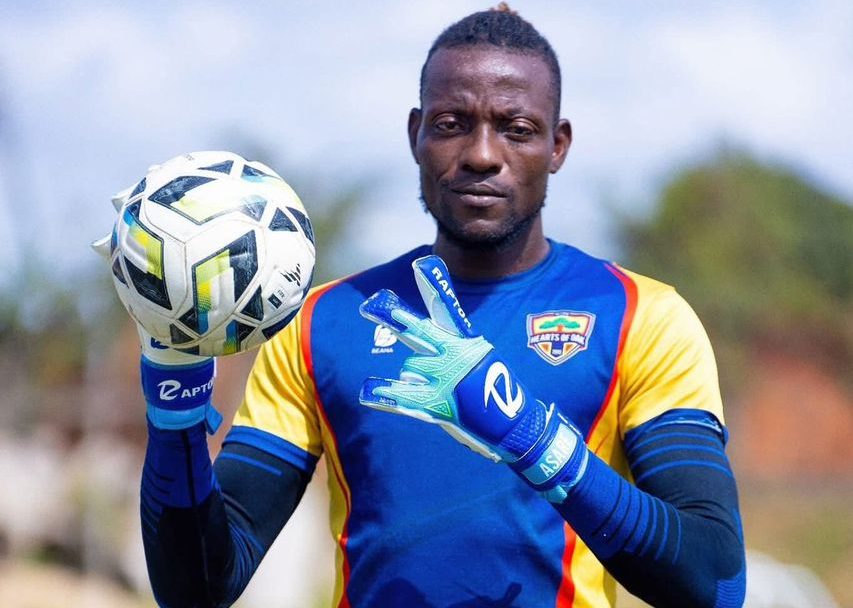
In other jurisdictions, the commencement of a new football season was one soccer fans would party about.
Having endured about a three-month period without action, fans become anxious about what the new season brings and how their respective teams would perform.
But that is not the case in Ghana, especially where the current Ghana Premier League (GPL) football season is expected to get underway today.
Unlike other places where fans would be fantasising and visualising about the new players and what they bring on board, Ghanaian fans have been occupied with discussions about the present state of infrastructure.
Obviously, the game thrives when stadia appear in good condition. When the pitches are in perfect shapes, it enhances play and brings out the best from the players.
Sadly, the state of the pitches in the country have left many questioning the preparedness for the season that also coincides with the start of AFCON qualifiers.
Currently, the pitch at the Accra Sports Stadium is closed for Premier League matches in readiness for the qualifiers.
Alternative ones like the University of Ghana Stadium is also not in the best of shape.
The Baba Yara Stadium in Kumasi is also a concern despite hosting the Democracy Cup. As a result, teams to be affected in the southern and northern sectors would turn their attention to the Abramkese and UG stadia, a situation that would take a toll on the surfaces.
The situation, therefore, raises questions over the country’s direction regarding the provision of sports infrastructure.
Apart from the Borteyman Sports Complex, which was constructed for the Africa Games, none of the facilities scattered across the country can be said to be in good shape to host local games; not to talk about high profile competitions.
This should be a wakeup call on the government to start initiating processes to ensure modern infrastructure were erected to put Ghana in a good position to host games without the unwarranted scrutiny of CAF.
This would come at a huge cost to the taxpayer but when the business aspect of that expenditure in considered, it should be a worthy outlay.
But the infrastructure challenges notwithstanding, the competition will kick start at Tema where Vision FC engages Young Apostles FC.
The Hearts of Oak versus Berekum Chelsea clash will lead tomorrow’s games pack that also sees debutants Debibi United and Port City FC engaged in battles against Asante Kotoko and FC Ashantigold, respectively.
In other games, Basake Holy Stars will welcome Swedru All Blacks; FC Samartex against Karela United; Heart of Lions versus Aduana FC and Bechem United against Goldstars.
Dreams FC will face Medeama SC at the Tuba astro turf on Monday.
By Andrew Nortey
SKIP THE QUEUE, TAP THE NEWS
You can now read the Ghanaian Times and The Spectator newspapers from the comfort of your device via TimesNewsPlus.
Join our WhatsApp Channel: https://whatsapp.com/channel/0029VbBElzjInlqHhl1aTU27

The 2026 Idea Challenge Pitch and media launch was held last Saturday at the Pentecost University in Accra.
It brought together innovators, entrepreneurs and stakeholders to promote creative ideas and solutions aimed at addressing societal challenges.
The initiative, organised by the Visionary Organisation Development and Entrepreneurial Club (VODEC) and National Emerging Leaders Economic Forum (NELEF) provided a platform for participants to showcase their ideas and highlight how innovation and creativity could be transformed into practical solutions.
The programme also sought to encourage young people to develop ideas that could contribute to national development and create opportunities for entrepreneurship.
Held on the theme: ‘building Africa’s future, emerging leaders driving inclusive growth and regional transformation,’ the event sought to serve as a strategic platform to transition youth talent from mere concepts into investable enterprises.
During the pitch session, shortlisted entrepreneurs presented viable business ideas which spanned critical sectors, including climate-smart agribusiness, sustainable waste management, digital technology, and assistive tech for persons with disabilities.
A member of the judging panel, Mr Blessed Amonoo, an Investment Analyst at the Ghana Amalgamated Trust Plc., praised the technical depth of the presentations.
“We are looking for scalability, market readiness, and projects that directly answer local problems,“ Mr Amonoo noted during the evaluation.
“The level of innovation displayed here proves that African youth possesses the answers to the continent’s economic riddles, provided they receive the right structural refinement.”
Finalists selected from this rigorous process will be officially announced and paired with corporate mentors at the flagship forum in September.
Speaking at the event, the Founder and Chief Executive of VODEC Africa, Mr. Daniel Asomani, urged African governments and financial institutions to systematically secure capital for youth-led startups.
Mr Asomani emphasised that Africa’s persistent brain drain can only be reversed if young minds find fertile ground to scale their enterprises locally.
“Our brilliant minds are leaving the shores of Africa not because they want to, but because the local ecosystem suffocates their dreams.”
“The Idea Challenge is our contribution to keeping this talent home but VODEC cannot do it alone. We need policy interventions, tax incentives for startups, and deliberate venture funding to turn these ideas into multi-million-dollarcorporations,” Mr Asomani stated.
By Desmond Aidoo
SKIP THE QUEUE, TAP THE NEWS
You can now read the Ghanaian Times and The Spectator newspapers from the comfort of your device via TimesNewsPlus.
Join our WhatsApp Channel: https://whatsapp.com/channel/0029VbBElzjInlqHhl1aTU27