News
Bolt Marks World Earth Day


- /home/u249204778/domains/spectator.com.gh/public_html/wp-content/plugins/mvp-social-buttons/mvp-social-buttons.php on line 27
https://spectator.com.gh/wp-content/uploads/2022/04/WhatsApp-Image-2022-04-22-at-10.09.50-AM.jpeg&description=Bolt Marks World Earth Day', 'pinterestShare', 'width=750,height=350'); return false;" title="Pin This Post">
- Share
- Tweet /home/u249204778/domains/spectator.com.gh/public_html/wp-content/plugins/mvp-social-buttons/mvp-social-buttons.php on line 72
https://spectator.com.gh/wp-content/uploads/2022/04/WhatsApp-Image-2022-04-22-at-10.09.50-AM.jpeg&description=Bolt Marks World Earth Day', 'pinterestShare', 'width=750,height=350'); return false;" title="Pin This Post">
Let’s get something straight: Bolt is a huge fan of Earth Day!
And since 22nd April every year is dedicated to environmental courses and dubbed Earth Day, we at Bolt are excited to mark this day!
It is as part of this love for mother earth that SeedBolts, a partnership between Bolt and Seedballs Kenya plans to plant over 11 million tree seeds in different areas across Kenya where natural afforestation is low to avert the emissions from Bolt rides and Bolt Food deliveries.
Whether it’s encouraging people to plant more trees or use less plastic, anything to increase global warming awareness and reduce carbon emissions is a hit in our books. The truth, however, is that at Bolt, every day is Earth Day!
For us, it starts with our drivers. You’ll notice that most of them use fuel-efficient cars averaging in the region of 35 miles per gallon for city and highway driving. That’s kinder on the environment than the average car owner’s fuel efficiency.
Secondly, Bolt drivers generally don’t idle their engines. Why would they, seeing as they just need to park and wait for their next rider to call them through the app? In fact, idling has been proven to be a major source of pollution. Even though the car is still, the fact that the engine is still running means that harmful carbon is being emitted into the air. That’s the difference that technology makes.
Third, we can’t speak highly enough about the benefits of ride sharing apps like Bolt. Hailing a Bolt means that the number of cars on the road potentially reduces by one. So, where we have a whole city that’s accepted Bolt as part of the public transport system, riders are able to move from point of pick-up to destination without the need to have their own vehicles. This collectively reduces the carbon footprint of the city, leading to cleaner air, a healthier population, and a more protected environment.
And what about traffic? The fewer the number of cars on the road, the quicker we’ll all get to our destinations. And that’s great for the environment as well. It means that there are lower carbon emissions while cars jam up in traffic. And frankly, it leaves us all with fewer stressed drivers and passengers.
Finally, with Bolt’s push globally to move to more electric car models, the future is indeed green. It’s only a matter of time before Ghana begins to catch up with the electric car revolution, and Bolt will be right there leading the push.
We must admit that as Bolt, we are proud of our green credentials, but we know that more needs to be done to save the planet. As Earth Day approaches, we’re doing our bit – not just one day in the year, but every day.
By David Nikoi Kotei
The writer is the Country Manager of Bolt in Ghana


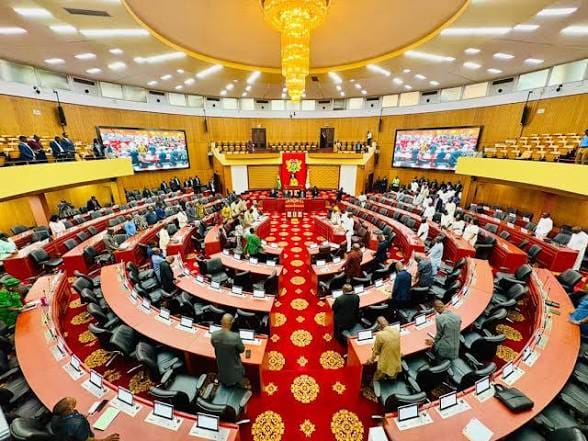
Parliament has clarified public commentary on social media regarding a notice on its notice board that read “No Vacancy for National Service Personnel 2026/2027. Kindly go for reposting.”
In a statement, signed by the Director of Media Relations, David Sebastian Damoah, Parliament said the notice has been misconstrued and was not a policy statement, a freeze on national service placements, or a change in its support for the National Service Scheme.
According to Parliament, the notice was a routine administrative message to prospective personnel who reported to the House, informing them that it has received more personnel than it can accommodate for the 2026/2027 service year and that they should seek reposting to other institutions.
It said it remains committed to the National Service Scheme and values the contribution of service personnel to its work, and regrets any confusion or inconvenience the wording may have caused.
By Edem Mensah-Tsotorme
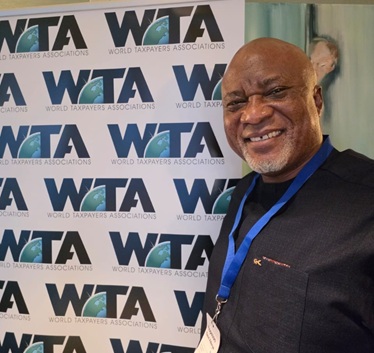
Ghanaian public advocate Hopeson Yaovi Adorye has been elected to the Board of Directors of the World Taxpayers Association (WTA).
The election took place on Sunday, October 5, 2026, during the Association’s conference in Kraków, Poland.
His election marks a significant addition to his international leadership portfolio and provides a platform for Ghanaian and African perspectives to contribute to global discussions on taxpayer rights, responsible taxation, transparency and prudent management of public resources.
Reacting to his election, Mr. Adorye expressed appreciation to the leadership and members of the WTA for the confidence reposed in him.
“I am deeply honoured by this confidence and conscious of the responsibility that comes with it. Taxpayers are at the heart of every economy, and they deserve fairness, transparency, accountability and value for the taxes they pay. I look forward to working with colleagues from across the world to strengthen the voice of taxpayers and promote responsible fiscal governance,” he said.
According to him, taxation should not be viewed solely as a mechanism for raising government revenue, but also as an important component of the social contract between citizens and the state.
Mr. Adorye said governments have a responsibility to ensure taxes are collected fairly and public resources are utilised efficiently to deliver quality infrastructure, healthcare, education, security and other essential services.
His election also creates an opportunity to bring African experiences into international conversations on taxation and public expenditure.
Mr. Adorye, who is Executive Director of Taxpayers League Ghana, has previously served as Global Board Chairman of the International Youth Network for UN Security Council Resolution 2250, an NGO associated with the United Nations Economic and Social Council (ECOSOC).
He is expected to use his new role to champion fiscal accountability, taxpayer education, good governance and stronger citizen participation in public financial management.