News
Bill to remove 15% sanitary pad tax introduced


- /home/u249204778/domains/spectator.com.gh/public_html/wp-content/plugins/mvp-social-buttons/mvp-social-buttons.php on line 27
https://spectator.com.gh/wp-content/uploads/2023/09/c69ad0c9-2a78-4a60-9782-37e3802b8dc4.jpeg&description=Bill to remove 15% sanitary pad tax introduced', 'pinterestShare', 'width=750,height=350'); return false;" title="Pin This Post">
- Share
- Tweet /home/u249204778/domains/spectator.com.gh/public_html/wp-content/plugins/mvp-social-buttons/mvp-social-buttons.php on line 72
https://spectator.com.gh/wp-content/uploads/2023/09/c69ad0c9-2a78-4a60-9782-37e3802b8dc4.jpeg&description=Bill to remove 15% sanitary pad tax introduced', 'pinterestShare', 'width=750,height=350'); return false;" title="Pin This Post">
A private member’s bill proposing an amendment to remove the 15 per cent Value Added Tax (VAT) on menstrual hygiene products has been introduced to Parliament.
The proposed bill seeks to amend the VAT (Amendment) Act, 2022 (Act 1082) to remove the VAT on sanitary pads and tampons.
It will also push for the reclassification of the 20 per cent import tax on final consumer goods to zero-rated essential social goods and proscribe future taxation of such essential social goods.
The National Democratic Congress (NDC) Member of Parliament (MP) for Madina, Francis-Xavier Sosu, presented the proposed bill to the Clerk to Parliament last Thursday.
Justification
Providing the justification for introducing the bill in a memorandum accompanying the bill, the human rights lawyer said globally many women and girls faced challenges in managing their menstruation.
Mr Sosu explained that menstrual hygiene management (MHM) was defined as the practice of using clean materials to absorb menstrual blood that can be changed privately, safely, hygienically and as often as needed for the duration of the menstrual cycle.
In his view, often, the failure to address the menstrual hygiene needs of women and girls could have far-reaching consequences for basic hygiene, sanitation and reproductive health, ultimately affecting the country’s progress towards the Sustainable Development Goals one, three, four, five, six and 10.
Goal one covers no poverty, three on good health and wellbeing; four on quality education; five on gender equality, six on clean water and sanitation, and 10 on reduced inequalities.
“Despite the fact that about a quarter of the world’s population menstruates, 500 million people have been left without access to menstrual hygiene products, leading to period poverty”.
“Period poverty, thus refers to the struggle to afford menstrual products, and the increased economic vulnerability menstruating people face due to the financial burden posed by menstrual supplies,” the MP, who is also one of the legislators who sponsored the Criminal Offences (Amendment) Bill, 2022 which was passed to scrap the death penalty and criminalised accusation of anyone as witchcraft.
Discriminatory tax
Quoting authoritative sources globally, Mr Sosu said inadequate knowledge of menstrual issues among schoolgirls, unsuitable water, sanitation and hygiene (WASH) facilities; limited access to sanitary kits and cultural barriers were some of the major factors hindering proper menstrual management among schoolgirls in low-and middle-income nations.
He added that globally, women were twice as likely as men to report any discrimination they suffered based on their sex.
With women making up the majority of Ghana’s population — 15.6 million representing 50.7 per cent of the population per the 2021 Population and Housing Census, and 85 per cent of women reported to be using sanitary pads as their main MHM material, he said the imposition of taxes on sanitation did not serve their interest.
“Imposing taxes on sanitation pads which is as a result of their menstrual cycle which is a natural phenomenon is unfair, discriminatory and violates both national law (Article 17 of the 1992 Constitution) and various international laws and treaties such as Article 2 of the African Charter on Human and Peoples’ Rights, Articles 24(1) and 26 of the International Covenant on Civil and Political Rights (ICCPR), the Convention on Rights of Children, and the Convention on the Elimination of All forms of Discrimination against Women, among others,” Mr Sosu said.
It is possible to remove tax
The MP cited how some countries had taken the lead and shown that it was possible to take the tax off menstrual products.
Mr Sosu said in 2020, Scotland became the first country in the world to offer free sanitary products to all women.
Also, Kenya became the first country in the world to remove the tax on imports of sanitary products in 2004, the Madina MP pointed out.
He also mentioned Canada, Australia, India, Jamaica, Nicaragua, Nigeria, Lebanon, Malaysia, Colombia, South Africa, Namibia and Rwanda as other countries that had all put in measures to remove taxes on “period products”.
Unconscionable tax
On June 23, this year, the Speaker of Parliament, Alban Sumana Kingsford Bagbin, expressed strong abhorrence at the imposition of taxes on sanitary pads in Ghana.
He described the passage of laws by Parliament to impose the tax on sanitary pads as “unconscionable and a cardinal sin.”
“This House should not have allowed it at all.
You know the impact of that law on human resource development and the development of this country is immeasurable.
“Why should we pass a law imposing tax on sanitary pads?
We have to take immediate action to prevent whoever is the minister and is proposing it to take it off,” Mr Bagbin said.
The Speaker expressed those sentiments to members of the House when he informed the House of a petition he had received from civil society groups and non-profit organisations that called themselves the Socialist Movement of Ghana who had picketed the premises of Parliament on June 23, 2023.
The group members, clad in red attire and armbands, carried placards emphasising the need to suspend taxes on sanitary pads.
Some of the placards read: “You cannot tax my period”, “We are already bleeding. Don’t tax our period”, “Don’t consider sanitary pads as luxury products,” and “It is unfair and discriminatory to tax bleeding young girls.”
Goal one covers no poverty, three on good health and wellbeing; four on quality education; five on gender equality, six on clean water and sanitation, and 10 on reduced inequalities.
“Despite the fact that about a quarter of the world’s population menstruates, 500 million people have been left without access to menstrual hygiene products, leading to period poverty”.
“Period poverty, thus refers to the struggle to afford menstrual products, and the increased economic vulnerability menstruating people face due to the financial burden posed by menstrual supplies,” the MP, who is also one of the legislators who sponsored the Criminal Offences (Amendment) Bill, 2022 which was passed to scrap the death penalty and criminalised accusation of anyone as witchcraft.
Discriminatory tax
Quoting authoritative sources globally, Mr Sosu said inadequate knowledge of menstrual issues among schoolgirls, unsuitable water, sanitation and hygiene (WASH) facilities; limited access to sanitary kits and cultural barriers were some of the major factors hindering proper menstrual management among schoolgirls in low-and middle-income nations.
He added that globally, women were twice as likely as men to report any discrimination they suffered based on their sex.
With women making up the majority of Ghana’s population — 15.6 million representing 50.7 per cent of the population per the 2021 Population and Housing Census, and 85 per cent of women reported to be using sanitary pads as their main MHM material, he said the imposition of taxes on sanitation did not serve their interest.
“Imposing taxes on sanitation pads which is as a result of their menstrual cycle which is a natural phenomenon is unfair, discriminatory and violates both national law (Article 17 of the 1992 Constitution) and various international laws and treaties such as Article 2 of the African Charter on Human and Peoples’ Rights, Articles 24(1) and 26 of the International Covenant on Civil and Political Rights (ICCPR), the Convention on Rights of Children, and the Convention on the Elimination of All forms of Discrimination against Women, among others,” Mr Sosu said.
It is possible to remove tax
The MP cited how some countries had taken the lead and shown that it was possible to take the tax off menstrual products.
Mr Sosu said in 2020, Scotland became the first country in the world to offer free sanitary products to all women.
Also, Kenya became the first country in the world to remove the tax on imports of sanitary products in 2004, the Madina MP pointed out.
He also mentioned Canada, Australia, India, Jamaica, Nicaragua, Nigeria, Lebanon, Malaysia, Colombia, South Africa, Namibia and Rwanda as other countries that had all put in measures to remove taxes on “period products”.
Unconscionable tax
On June 23, this year, the Speaker of Parliament, Alban Sumana Kingsford Bagbin, expressed strong abhorrence at the imposition of taxes on sanitary pads in Ghana.
He described the passage of laws by Parliament to impose the tax on sanitary pads as “unconscionable and a cardinal sin.”
“This House should not have allowed it at all.
You know the impact of that law on human resource development and the development of this country is immeasurable.
“Why should we pass a law imposing tax on sanitary pads?
We have to take immediate action to prevent whoever is the minister and is proposing it to take it off,” Mr Bagbin said.
The Speaker expressed those sentiments to members of the House when he informed the House of a petition he had received from civil society groups and non-profit organisations that called themselves the Socialist Movement of Ghana who had picketed the premises of Parliament on June 23, 2023.
The group members, clad in red attire and armbands, carried placards emphasising the need to suspend taxes on sanitary pads.
Some of the placards read: “You cannot tax my period”, “We are already bleeding. Don’t tax our period”, “Don’t consider sanitary pads as luxury products,” and “It is unfair and discriminatory to tax bleeding young girls.”
Credit: Graphic.com.gh


Over 20 structures built within the 50-metre buffer zone of the Kpeshie Lagoon at the Laboma Beach Resort in the La Dade-Kotopon Municipality were on Sunday demolished by the Greater Accra Regional Coordinating Council (GARCC).
Buildings such as single-unit semi-detached under construction and completed chalets at the resort were pulled down while portions of a newly constructed perimeter wall were also demolished. Read More
SKIP THE QUEUE, TAP THE NEWS
You can now read the Ghanaian Times and The Spectator newspapers from the comfort of your device via TimesNewsPlus.
Join our WhatsApp Channel: https://whatsapp.com/channel/0029VbBElzjInlqHhl1aTU27

About 120 golfers from clubs across Ghana participated in an 18-hole competition, dubbed ‘MTN 30th Anniversary CEO Invitational Golf Tournament’ held at the Achimota Golf Club on Saturday.
At the end of the hectic day, Frederick Semenu Duvor won the Men’s Group A event with 39 points, while Julienne Afi claimed the Ladies’ Group A title with the same score.
Yaw Mireku Jnr. won the Men’s Group B with an impressive 45 points, while Kous Louanges Mang took the Ladies’ Group B title with 38 points.
Kofi Mangesi won Men’s Group C with 40 points while Elorm R. Akuash Bonney claimed the Ladies’ version with 42 points.
In the Seniors Division, Jan Vogel emerged winner of the men’s category with 39 gross, while Helen Appah topped the ladies’ category with 44 gross.
Addressing participants, the company’s Board Chairman, Mr Ishmael Yamson, urged the company to approach its next phase with the same resilience, discipline and determination that have defined its success over the past three decades.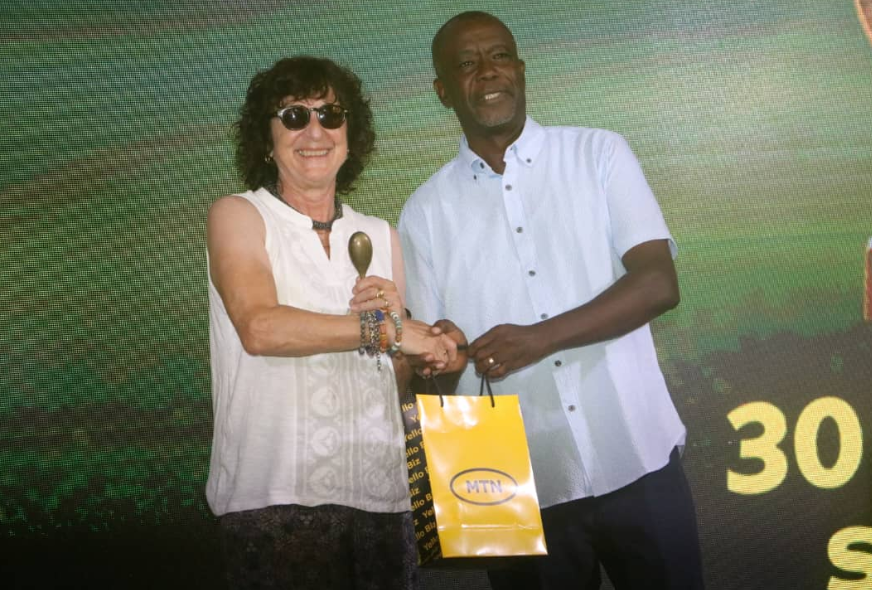
He drew a striking parallel between the game of golf and MTN Ghana’s three-decade journey, describing both as long games in which success depends less on one spectacular moment than on consistency, patience, judgment and the ability to recover from setbacks.
He said, golf had taught him a lesson that extended far beyond the fairways, thus, a round cannot be won on the first hole.

In golfing terms, he said, MTN Ghana had encountered its share of regulatory bunkers, competitive hazards and unexpected storms that had forced the company to pause, reassess and change its approach.
But those challenges, he suggested, were part of the journey rather than reasons to abandon it.
By Andrew Nortey
SKIP THE QUEUE, TAP THE NEWS
You can now read the Ghanaian Times and The Spectator newspapers from the comfort of your device via TimesNewsPlus.
Join our WhatsApp Channel: https://whatsapp.com/channel/0029VbBElzjInlqHhl1aTU27

 Entertainment1 week ago
Fiifi Coleman Productions adapt ‘I Told You So’ stage play into feature film
- News1 week ago
48 Engineer Regiment to be major sub-contractor on Accra-Kumasi Expressway, $2bn ready- Prez Mahama
- Entertainment6 days ago
Rhythms On Da Runway returns November 28 with 16th edition themed ‘Unbound’