News
BH-Fertagro donates fertiliser, items worth over GH₵70,000 to Nsawam Prison

- /home/u249204778/domains/spectator.com.gh/public_html/wp-content/plugins/mvp-social-buttons/mvp-social-buttons.php on line 27
https://spectator.com.gh/wp-content/uploads/2024/09/IMG-20240831-WA0039-1000x600.jpg&description=BH-Fertagro donates fertiliser, items worth over GH₵70,000 to Nsawam Prison', 'pinterestShare', 'width=750,height=350'); return false;" title="Pin This Post">
- Share
- Tweet /home/u249204778/domains/spectator.com.gh/public_html/wp-content/plugins/mvp-social-buttons/mvp-social-buttons.php on line 72
https://spectator.com.gh/wp-content/uploads/2024/09/IMG-20240831-WA0039-1000x600.jpg&description=BH-Fertagro donates fertiliser, items worth over GH₵70,000 to Nsawam Prison', 'pinterestShare', 'width=750,height=350'); return false;" title="Pin This Post">
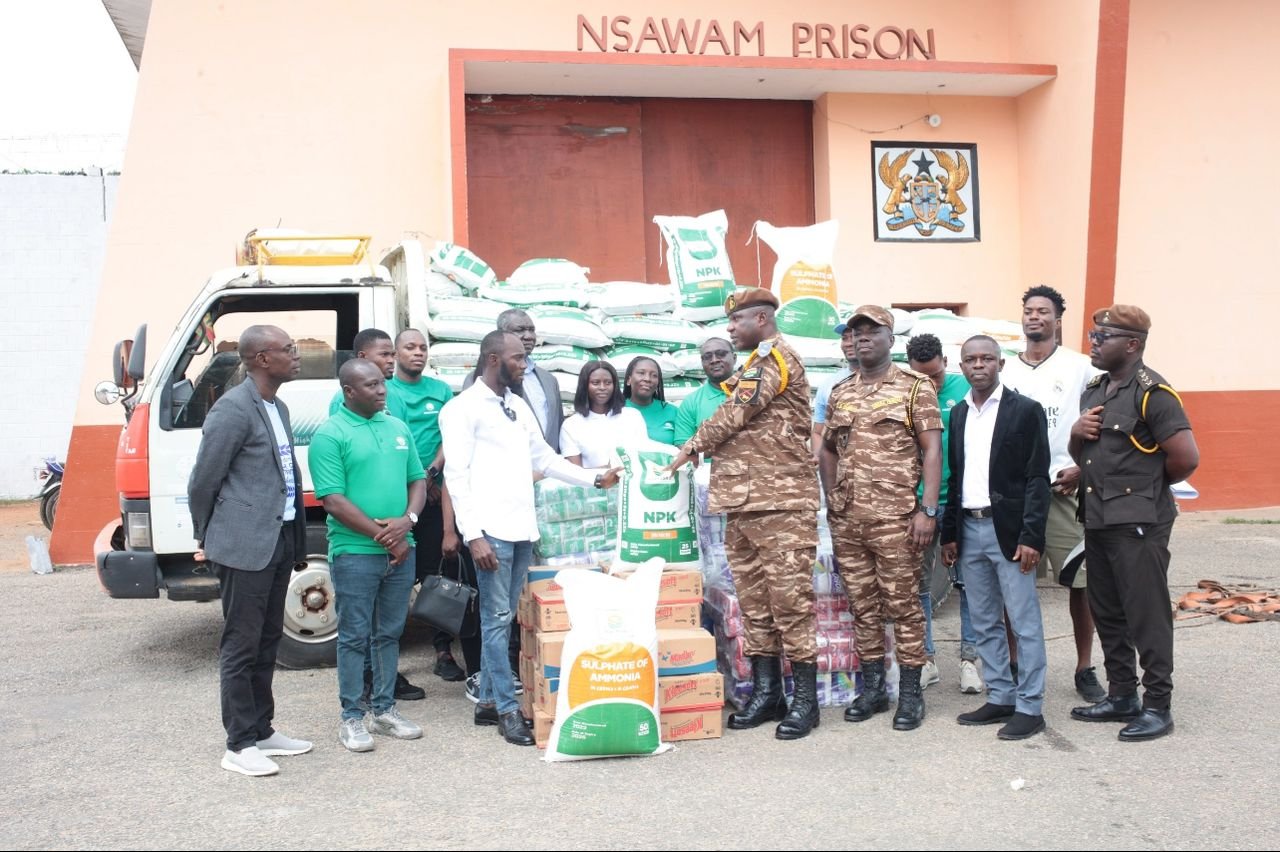
Ghana’s leading import and supplier of fertilizers, affiliated to some global leading producers of Agric-input -based in North Africa, Eastern Europe, Asia, and the Americas, BH-FERTAGRO has made donations to the Nsawam Prison.
The company today donated items worth over GH₵ 70, 000 which included over 150 bags of NPK fertilizers for their current 47-acre land project, toiletries for staff, over 600 bags of sachet water, 25 boxes of soap,Receiving the items on behalf of the commander and the Nsawam prisons, the Assistant Director of Prisons, Andrews Osei thanked the company for the kind gesture stating that the facility really needs support especially in the area of agriculture to support the government in feeding. 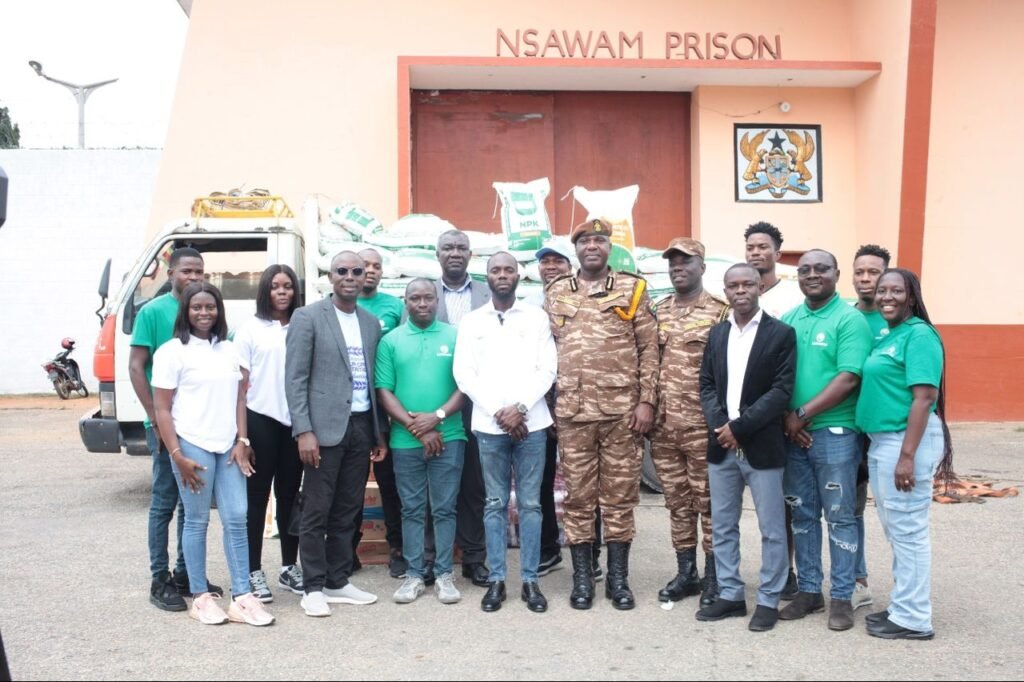
He also mentioned that the donation has come in time especially with the current farming project they are about to embark on. Adding that the gesture will also encourage others to come to their aid.
The Managing Director of fertiliser company, BH-Fertagro Limited, Robert Ayittey who presented the donation expressed the joy of the company in doing such gesture in appreciation of the good work the prison service is doing for the country.
The gesture is part of the Corporate Social Responsibility of BH-Fertago to support agriculture sector of the Ghana prisons.
The General Manager of the company, Alex Kwame Donyinah, in his speech, emphasized on the company’s commitment in giving back to society. He stated that the company is quite impressed with the work the Ghana Prisons is doing towards human development and also appreciate the challenge the facility is facing in feeding the inmates.
“We are hopeful that the fertilizer will help them increase their yield and expand their cultivation to be able to have enough food to feed the inmates and alleviate the challenges that they have in managing them,” he added.
Last year during the Akosombo spillage, the fertilizer company presented over GH₵100,000 worth of relief items to the people of Mepe, Bator, Sogakope and its environs.
BH-FERTAGRO imports and supplies fertilizers – with great respect for quality standards, safety, speed and innovation.







The Office of the Special Prosecutor (OSP) has taken note of public allegations of extortion and related conduct made against the Minority Leader of Parliament, Alexander Afenyo-Markin.
The allegations were made by the Chief Executive of the Ghana Gold Board (GoldBod), Sammy Gyamfi.
In a brief statement, the OSP said it has also received a joint petition submitted by two persons, as well as two separate petitions from other persons, in relation to the same allegations.
“Given the nature of the allegations, the OSP will assess the case and determine whether it falls within its statutory mandate and whether further investigative action is warranted,” the statement said.
The development comes amid a heated public feud between the Minority in Parliament and the leadership of GoldBod over the operations of the Domestic Gold Purchase Programme.
The Minority, led by Afenyo-Markin, has accused GoldBod and the Bank of Ghana of causing a loss of over $1.7 billion, citing the International Monetary Fund’s August 2026 report. The Minority has vowed to pursue the matter as Parliament has reconvened for an emergency sitting.
GoldBod, on the other hand, has rejected claims by some NPP MPs, including Tano South MP Dr Gideon Boako, that it owes the Bank of Ghana GH¢1 billion in overdrafts, describing the claim as “false and malicious.”
In the latest twist, GoldBod CEO Sammy Gyamfi has accused the Minority Leader of extortion and related conduct, an allegation that has triggered petitions to the OSP.
The OSP is mandated under Act 959 to investigate and prosecute specific cases of alleged or suspected corruption and corruption-related offences involving public officers and politically exposed persons.
By Edem Mensah-Tsotorme

General Secretary of the New Patriotic Party (NPP), Justin Kodua Frimpong, has filed his nomination to contest the position of General Secretary again as the party begins its rebuilding efforts ahead of the 2028 general elections.
He was accompanied by party stalwarts and supporters who were in high spirits, expressing confidence that he is the right person to hold the position.
Speaking after filing his nomination, Mr Kodua Frimpong assured the rank and file of the party that he would not disappoint them.
“I can assure you that the faith the rank and file of the party have had in me, I will never disappoint them,” he said.
He also pledged to run a clean campaign devoid of personal attacks.
“I can assure you that our internal campaign will be devoid of personal attacks,” he told his fellow contestants and the rank and file of the party as he seeks to retain his position.
His tenure has seen the party through the 2024 general elections, where the NPP lost power to the National Democratic Congress (NDC) after eight years in government.
The party is currently in a rebuilding phase, with internal elections scheduled to elect new national executives to lead its reorganization towards the 2028 polls.
The General Secretary position is considered one of the most influential in the party’s administrative structure, responsible for the day-to-day running of the party secretariat and implementation of party decisions.
By Edem Mensah-Tsotorme