Features
Are we serious as a nation?

Infrastructure is a high priority for government, citizens and donors alike on account of its crucial role in achieving socio-economic development for the country. Unfinished infrastructural projects are a common sight in most part of the country and the situation is, indeed, disturbing.
It is highly frustrating and puzzling to see much needed infrastructure development projects abandoned mid-construction. In this country, research indicates that about one-third of projects started in previous regimes where never completed and that consumed about 20 per cent of all local government expenditure. Some of these abandoned projects which include, school buildings, hospitals and clinics, silos, warehouses, community centres, roads, pipe borne water among others, have been left at the mercy of the weather to rot.
This unfavourable situation can be attributed to local political actors not being able to agree on where projects should be sited and the inability to maintain consistent expenditure priorities which lead projects to be abandoned mid- construction.
PROPOSED DEMOLITION OF KATH MATERNITY BLOCK:
The unpalatable news about the proposed demolition of the 45-year-old maternity and baby unit building project at the Komfo Anokye Teaching Hospital (KATH) in Kumasi which was started in 1976 and was stalled in 1979 but later reactivated by the late former President Jerry John Rawlings is a good topic for discussion.
The structure, meant to accommodate 750-bed including lecture halls, restaurant, operation theatres among others, has been found to be too weak to accommodate all the equipment and the number of people expected to use the facility. Following a number of structural analysis conducted on the building, it has been recommended that it should be demolished for a new one to be built in its stead.
The project was handed over to the current contractors, Contracta UK Limited on May 15, 2020, by President Nana Addo Dankwa Akufo-Addo after he had cut the sod for the project to commence. The 155 million- euro project is to be financed from a Deutche Bank facility through the UK Export Finance. It was expected to be executed within 36 months. After a number of tests on the structural integrity of the building, it came out that the building had become too weak to accommodate the equipment and the anticipated human traffic and ,therefore, might not survive the test of time. The contractors proposed that the building should be pulled down for work to start afresh on the facility. Similar test conducted by the Ministry of Health also confirmed that the columns of the structure had become too old and weak while the concrete too had become brittle and the iron rods getting rusted.
SOCIAL COST OF PROJECT:
The social cost of the non- completion of the project is very high as money spent on this project alone would be enough to tackle other projects such as school buildings to accommodate a large number of students across the country. This fiscal waste may have long-term developmental consequences.
It is disheartening and mind-boggling when projects started with the hard-earned foreign exchange and meant to serve the interest of the larger society are abandoned midway due to negative and unforeseen circumstances. It is a fact that negative and incoherent politics practised by successive governments have contributed in no small way to some of these project failures and abandonment.
AWARD OF CONTRACT ON POLITICAL LINES:
Studies have also proved that contracts can be awarded to a contactor not because of a proven competence but on political lines. This normally leads to a shoddy work or inability to complete project due to ineptitude on the part of the contractor. The trend of a political party assuming incumbency only to focus on its own campaign promises, contributes to project failure and abandonment. It is also a fact that the nation lacks law enforcement and policies that check the government in power to continue and complete those uncompleted projects started by its predecessors. It is also a fact that the local people who happen to be the beneficiaries of these projects are not allowed to participate and develop interest in some of these projects.
This leads to alienation of the projects from the local beneficiaries since they are not allowed to partake and contribute their quota to the project and ,therefore, cannot monitor the stakeholders and the contactors working on the projects.
Most people assume that some of these unfinished projects are driven by corruption and are not finished because contractors give kickbacks to politicians or bureaucrats and then do not complete the work.
NATIONAL DEVELOPMENT PLAN:
As being suggested in certain quarters, this country needs a national development plan devoid of partisan influence just like what persists in other developed nations to ensure that projects are not truncated when there is a change of government and leadership.
Countries that are making significant progress in their infrastructural developments are conscious of their developmental agenda by relying on continuity in projects started by previous administrations. This beautiful country called Ghana would have been paradise by now if our leaders approached development projects on the basis of continuity devoid of partisan interest and colorisation.
FINANCIAL LOSS TO THE STATE:
Indeed, the proposed demolition of the KATH maternity project will amount to a huge financial loss to the state which should have been avoided in the past.
Already, this country is saddled with a lot of financial problems which have greater effect on our economic progress, therefore, we do not want to burden ourselves with some of these financial losses which will deepen our woes.
By Charles Neequaye


Walk into any supermarket in Accra, Kumasi, or Tamale today, and you will see the modern Ghanaian diet packaged as ‘progress.’ You will see breakfast cereals with cartoon mascots, fruit drinks that are mostly sugar and colour, and snacks promising energy and happiness in bright fonts.
Even products loaded with salt and unhealthy fats often wear a health halo labeled as fortified or natural, while the real nutritional risk is hidden in tiny print on the back. This is not just a consumer inconvenience; it is a public health blind spot. Ghana is living through a silent surge of non-communicable diseases (NCDs) like hypertension, diabetes, and stroke.
These conditions quietly drain household income and steal productive years. According to the Ghana Health Service (GHS) and World Health Organisation (WHO) estimates, NCDs are now responsible for nearly 45 per cent of all deaths in Ghana.
We cannot build a healthy nation on a food environment designed to confuse people at the point of purchase. Ghana must mandate simple front-of-pack warning labels (FOPWL) on high-sugar, high-salt, and high-fat packaged foods because consumers deserve truth at a glance, and industry must be pushed to reformulate.
Why Back-of-Pack Labels Are Not Enough
In theory, consumers can read nutrition panels. In reality, most Ghanaians shop under pressure, limited time, rising prices, and children tugging at their sleeves. The back label is a relic that requires a high cognitive load to interpret—essentially, the seller knows what is inside, but the buyer cannot easily tell.
This ‘information asymmetry’ is not fair. It is not consumer choice when the information needed to choose well is deliberately difficult to find.
Simple warning labels like the black octagons used in the Chilean Model act as a ‘stop-and-think’ nudge. They do not ban products but they simply tell the truth so people can decide.
Reshaping Our Food Environment
A generation ago, Ghana’s meals were mostly home-prepared, like kenkey and banku with soups and stews. Today, ultra-processed foods have become the norm, especially in urban areas. Children are growing up with sugary drinks and salty snacks as everyday items, not occasional treats.
If Ghana is serious about prevention, we must act where decisions are made—thus, the shelf. Warning labels protect parents from sugar traps and pressure the market to improve. When warning labels are mandatory, manufacturers start to compete to make healthier recipes to avoid the stigma of the label.
Addressing the Pushback
Industry will argue that labels create fear or that education alone is enough. However, health education is slow; labels work immediately. While the informal street food sector is a challenge, regulating pre-packaged goods is the practical starting point because the supply chain is traceable. We cannot wait until the whole system is perfect; we must start where action is feasible.
A 2026 Implementation Roadmap for Ghana
To move from talk to action, Ghana needs this 5-step plan:
- Issue mandatory regulation: The Ministry of Health, Food and Drug Authority (FDA), and Ghana Standards Authority (GSA) must define the label format and nutrient thresholds for all pre-packaged foods.
- Simple, bold symbols: Use plain language and clear symbols, such as “HIGH IN SUGAR,” designed for busy families, not experts.
- Transparent thresholds: Adopt technically defensible standards adapted to the Ghanaian diet.
- Transition and enforce: Provide a 12–18 month period for manufacturers to reformulate, followed by firm enforcement at ports and retail centers.
- National literacy campaign: The Ghana Health Service must pair labels with public messages explaining why high salt or sugar increases disease risk.
Conclusion: Truth Is Not a Luxury
Prevention is cheaper than treatment. A warning label costs little compared to the price of dialysis, stroke rehabilitation, or lifelong diabetes complications. A black octagon on a box of biscuits is more than a label; it is a shield for the health of all Ghanaians. It is time to put the truth where we can see it, right on the front.
By Abigail Amoah Sarfo
Join our WhatsApp Channel now!
https://whatsapp.com/channel/0029VbBElzjInlqHhl1aTU27

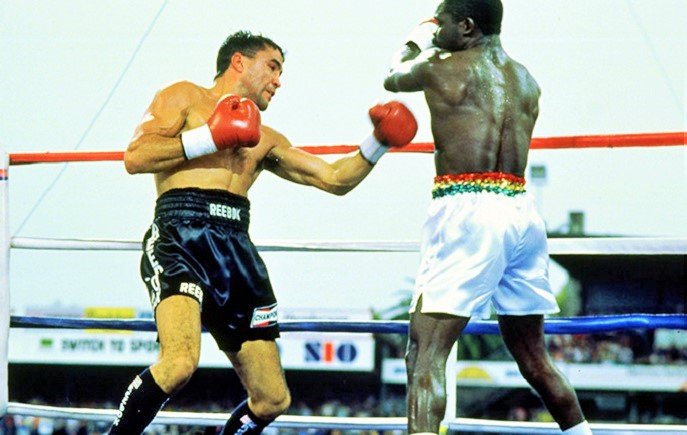
Natives of the Kenkey Kingdom were mad with joy. They were still recovering from the hangover of the kingdom’s loss of the African Cup when their spirits were rekindled. Their great warrior, Zoom Zoom, stormed Melbourne and made sure that every Australian refused food. And that was after he had drawn contour lines on the face of their idol, Jeff Fenech.
Not only did the terrible warrior transform Old Boy Jeff’s face into a contour map useful for geography lessons, but he also accomplished the feat of retaining the much-envied super-kenkeyweight title against all odds. The warrior had not been eating hot kenkey for nothing.
The Fight Against Fenech
When Jeff Fenech bit the dust in the eighth round, I was tempted to consider if Adanko Deka could not have faced him in any twelve-rounder, title or non-title bout. Adanko has improved tremendously, and soon he would be facing Pernell Whitaker.
Sincerely, I was pessimistic about Azumah’s man, who the last time took him through twelve grueling rounds of rough boxing. I expressed my fears to my colleague Christian Abbew, alias Gbonyo, who surprisingly had total confidence that the Australian brawler would fall, predictably in Round Five.
Gbonyo gave reasons for his contention, all of which I counteracted using the age factor. Fact is, I didn’t know that contrary to the laws of nature, Azumah was all the time growing younger.
When Fenech fell briefly in round one, I asked my brother whether it was the same Fenech that fought Azumah in Las Vegas. Sure, it was the same Fenech, all out to beat Azumah before his countrymen.
But the African Professor had no intention of making the Australian a hero. As he spun round the desperate Aussie, dancing and stinging out his jabs, it was not too long before I realized that the end was near.
The Eighth Round Showdown
Two minutes into the eighth round, the African ring-master proved to the whole world that he was a true son of Bukom. He himself was cornered, but like the tough nut he is, he managed to break free before overwhelming the panting Australian with several blows that made him crash headlong.
Moments after, the referee, expressing fatherly sympathy, stopped the fight to prevent an obituary. After the ordeal, Fenech’s fairly handsome face was full of newly constructed hills, valleys, ox-bow lakes—whatever. I noticed that his nose was very tired and had a miniature volcano sitting restlessly on it. Obviously, Jeff’s wife will have to nurse that nose back to its normal shape—but I’d advise her not to use iodine, otherwise her dear husband will wail like a banshee.
Reflections on Boxing
Because Mohammed Ali was the kind of boxer kids liked, many school-going kids often entertained the wish of becoming like him. I remember one day when I told my father I wanted to become a boxer, and he advised me to first complete my education to the highest level. Then, if I decided to become a boxer and was knocked out a couple of times, I’d fall back on my degrees and make a living.
Boxing used to be interesting when bouts were fought more with the mouth and tongue than with gloves. You had to brag well, psychologically belittling your opponent before beating him up physically. Mohammed Ali became a very successful pugilist because he also managed to become a poet. He often blew his horn across America, calling himself the “pretty boxer” and opponents like Joe Frazier “the gorilla.”
Ali made a living fighting hard fists like Joe Frazier, Ken Norton, Jerry Quarry, George Foreman, Leon Spinks, and Trevor Berbick. Twice he came back from retirement to fight just for money. It was Larry Holmes who finally pensioned him, and since then the great Ali has never been himself.
The Path Ahead for Azumah
When Azumah nailed Jeff Fenech on the cross and barked almost immediately that he was after the head of Pernell Whitaker, I was happy but concerned. I would have been happier if he had announced his resignation there and then—he would have been more of a hero. Beating Fenech in Australia is more newsworthy than facing Whitaker in the States.
With Whitaker, it might be a little difficult. The “Sweet Pea” is agile, has a crooked body like a snake with diarrhea, and stands awkwardly as a southpaw. He is known for having the fastest pair of fists and the rare ability to dodge punches no matter how close they may be.
Much as I do not doubt that Azumah can take his title, I also don’t want him to retire beaten. I want him to retire as a hero and live a fuller, healthy life.
As Azumah himself said after dishing Fenech, he is now a professor and has something to show for it. Like a true professor, I think it is time he resigned and took up training young talents who could draw inspiration from him and become like him in the future.
Closing Thoughts
I must say that although ageing boxers like Larry Holmes and George Foreman are making a name for themselves, boxing is not like the Civil Service, where you can even change your age and retire at 74. Zoom Zoom has delighted the hearts of the natives, and Sikaman will forever hold him in high esteem—but only when he retires as a hero.
This article was first published on Saturday, March 7, 1992.