News
Appiatse dead to be buried

- /home/u249204778/domains/spectator.com.gh/public_html/wp-content/plugins/mvp-social-buttons/mvp-social-buttons.php on line 27
https://spectator.com.gh/wp-content/uploads/2022/03/The-explosion-claimed-lives-and-property.jpg&description=Appiatse dead to be buried', 'pinterestShare', 'width=750,height=350'); return false;" title="Pin This Post">
- Share
- Tweet /home/u249204778/domains/spectator.com.gh/public_html/wp-content/plugins/mvp-social-buttons/mvp-social-buttons.php on line 72
https://spectator.com.gh/wp-content/uploads/2022/03/The-explosion-claimed-lives-and-property.jpg&description=Appiatse dead to be buried', 'pinterestShare', 'width=750,height=350'); return false;" title="Pin This Post">
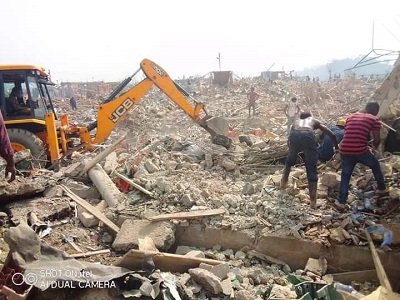
All is set for the burial of those who died tragically at Appiatse on Thursday, January 20, 2022, at about 1:35 pm, when a vehicle carting explosives to a mining site had an accident killing a number of persons in the process.
About 13 people were said to have died on that fateful day along the Tarkwa-Bogoso Highway.
Nine out of the 13 dead bodies would be buried on Saturday, March 11, 2022, which three bodies were being prepared for burial this Friday, March 4, 2022, as announced by the Appiatse Disaster Relief Committee.
In an interview with The Spectator, the PRO of the Committee, Mr Thywill Quarshie said, each family would be given GHc6,000 to cover the cost of the funeral including coffins which would be borne by the Prestea -Huni Valley Assembly with support from the Ministry of Lands and Natural Resources.
“Families of the four persons have explained that funerals are held in every three months in their hometowns and the next will be in June, so if they don’t bury their bodies now, it means June and that would mean an extra cost. But, we don’t want that. So, the committee has agreed and approved that they will take their bodies away for burial.” he added.
Mr Quarshie mentioned that burial services for nine other persons would be held at the park( the explosion site) at Appiatse on March 11.
He told The Spectator “We have finally agreed that the funerals would have to be done this month across board, so that there will be no excuses.”
Meanwhile, autopsy on 13 dead bodies affected by the explosion at Appiatse, near Bogoso, has been completed, the Municipal Chief Executive of Prestea -Huni Valley, Dr Isaac Dasmani, has said.
Dr Dasmani gave the names of the deceased as Ekow Jackson, 40, Akua Nyame,80, Michael Afriyie, 19, Justice Kwesi Takwa, 21, Emmanuel Quainoo, 29, Enock Obeng, 40, Ella Baidoo, 15 months and Isaac Benny, 45.
The rest were Emmanuel Awinguda, 24, Daniel Armah, 35, Martin Quaicoe, 40, Eric Gyimah, 24, and Isaac Anane, 35.
Dr. Dasmani, who is the Chairman of the Appiatse Disaster Relief Committee, indicated that a Consultant Pathologist at the Komfo Anokye Teaching Hospital (KATH) in Kumasi,Dr. Paul Ossei Sampene, completed autopsy on Saturday, February 12, at the VIP Mortuary at Ayensukrom No.1, near Bogoso in the Western Region.
“Already, the deceased were identified by their families on February 4.” he added.
The Spectator recalls that, at about 1.35pm, on Thursday, January 20, Detective Corporal Isaac Kamanim of Firearms Unit/Tarkwa, was escorting explosives from MAXAM Company, Tarkwa, in a DAF van with registration number WR 2252-18, driven by Alfred Pappoe to Chirano Gold Mines in the Western North Region.
On reaching a section of the road between Bogoso and Bawdie, a motor cycle rider from the opposite direction ran under the van carrying the explosives.
“The motor cycle caught fire, ignited the van which burst into flames and exploded. Driver sustained deep cut on the head and was rushed to Government Hospital, Tarkwa. The Police escort escaped unhurt. A number of people including the motor bike rider are feared dead.” a police report added.
It said, the extensive damage affected a nearby ECG transformer, with a number of nearby buildings razed down while a portion of the road was also damaged.
“Some vehicles plying that road were also damaged with the passengers and inhabitants sustaining various degrees of injury.” it said.
From Clement Adzei Boye, Takoradi


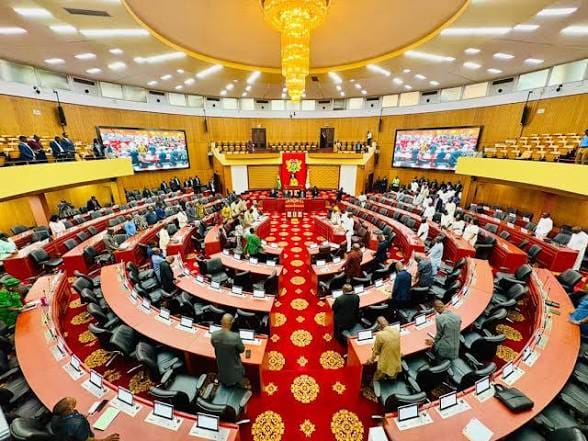
Parliament has clarified public commentary on social media regarding a notice on its notice board that read “No Vacancy for National Service Personnel 2026/2027. Kindly go for reposting.”
In a statement, signed by the Director of Media Relations, David Sebastian Damoah, Parliament said the notice has been misconstrued and was not a policy statement, a freeze on national service placements, or a change in its support for the National Service Scheme.
According to Parliament, the notice was a routine administrative message to prospective personnel who reported to the House, informing them that it has received more personnel than it can accommodate for the 2026/2027 service year and that they should seek reposting to other institutions.
It said it remains committed to the National Service Scheme and values the contribution of service personnel to its work, and regrets any confusion or inconvenience the wording may have caused.
By Edem Mensah-Tsotorme
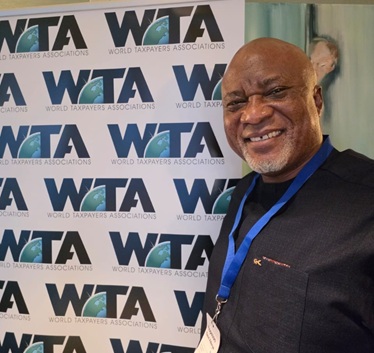
Ghanaian public advocate Hopeson Yaovi Adorye has been elected to the Board of Directors of the World Taxpayers Association (WTA).
The election took place on Sunday, October 5, 2026, during the Association’s conference in Kraków, Poland.
His election marks a significant addition to his international leadership portfolio and provides a platform for Ghanaian and African perspectives to contribute to global discussions on taxpayer rights, responsible taxation, transparency and prudent management of public resources.
Reacting to his election, Mr. Adorye expressed appreciation to the leadership and members of the WTA for the confidence reposed in him.
“I am deeply honoured by this confidence and conscious of the responsibility that comes with it. Taxpayers are at the heart of every economy, and they deserve fairness, transparency, accountability and value for the taxes they pay. I look forward to working with colleagues from across the world to strengthen the voice of taxpayers and promote responsible fiscal governance,” he said.
According to him, taxation should not be viewed solely as a mechanism for raising government revenue, but also as an important component of the social contract between citizens and the state.
Mr. Adorye said governments have a responsibility to ensure taxes are collected fairly and public resources are utilised efficiently to deliver quality infrastructure, healthcare, education, security and other essential services.
His election also creates an opportunity to bring African experiences into international conversations on taxation and public expenditure.
Mr. Adorye, who is Executive Director of Taxpayers League Ghana, has previously served as Global Board Chairman of the International Youth Network for UN Security Council Resolution 2250, an NGO associated with the United Nations Economic and Social Council (ECOSOC).
He is expected to use his new role to champion fiscal accountability, taxpayer education, good governance and stronger citizen participation in public financial management.