News
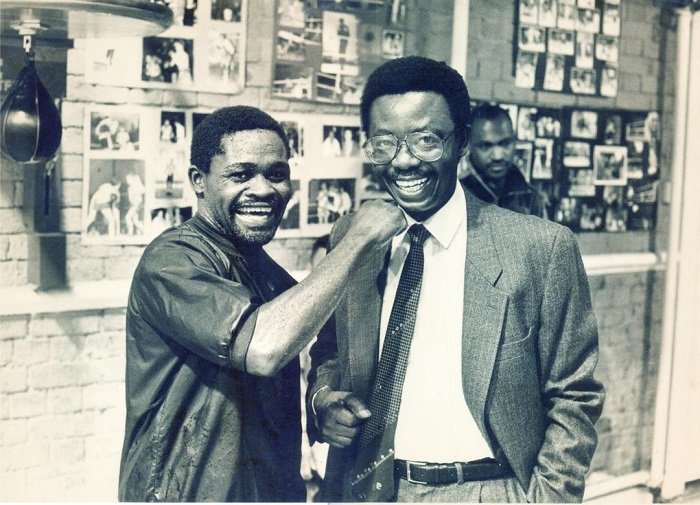
Ambassador Ray Quarcoo, the boxer’s pillar

- /home/u249204778/domains/spectator.com.gh/public_html/wp-content/plugins/mvp-social-buttons/mvp-social-buttons.php on line 27
https://spectator.com.gh/wp-content/uploads/2026/06/Ambassador-Quarcoo-with-Azumah-Nelson.jpg&description=Ambassador Ray Quarcoo, the boxer’s pillar', 'pinterestShare', 'width=750,height=350'); return false;" title="Pin This Post">
- Share
- Tweet /home/u249204778/domains/spectator.com.gh/public_html/wp-content/plugins/mvp-social-buttons/mvp-social-buttons.php on line 72
https://spectator.com.gh/wp-content/uploads/2026/06/Ambassador-Quarcoo-with-Azumah-Nelson.jpg&description=Ambassador Ray Quarcoo, the boxer’s pillar', 'pinterestShare', 'width=750,height=350'); return false;" title="Pin This Post">
When discussions arise about people who have shaped Ghana boxing, the names of world champions like Azumah Nelson, Ike Quartey, Joshua Clottey, Joseph Agbeko and Isaac Dogbe often dominate the conservation,
Yet behind these celebrated boxers, stands a man whose contribution to the sport has been profound, enduring and largely selfless. This man is Ambassador Ray Quarcoo.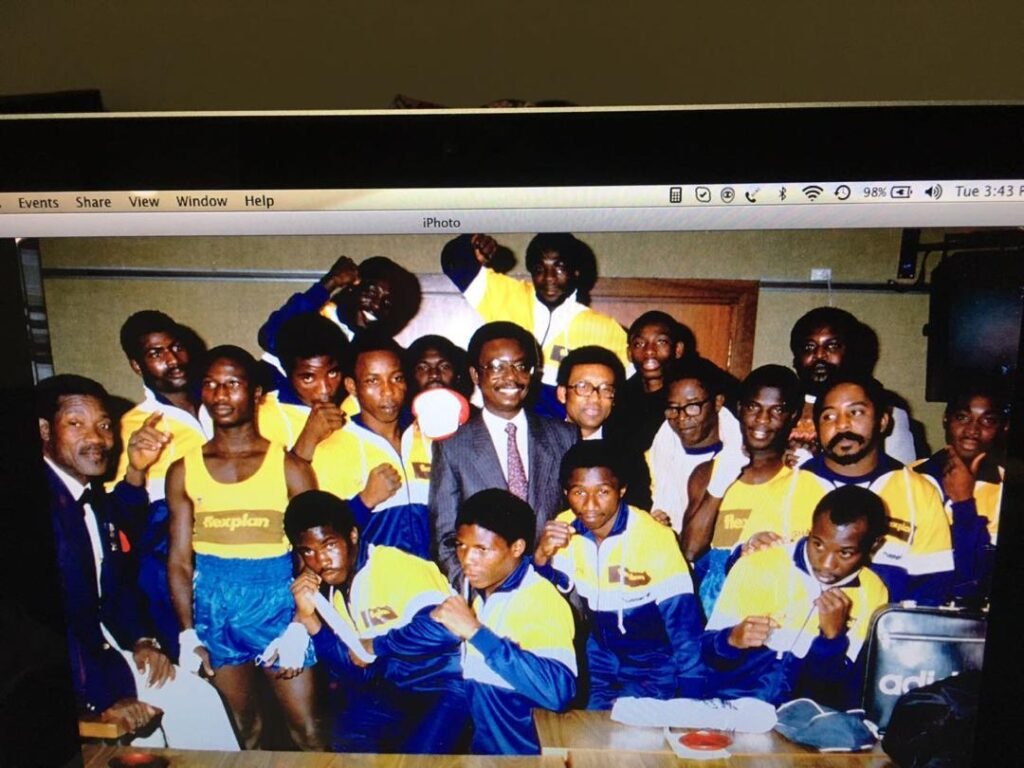
A businessman, sports administrator, philanthropist and mentor, Ambassador Quarcoo has dedicated much of his life to the development of sports in Ghana, particularly boxing.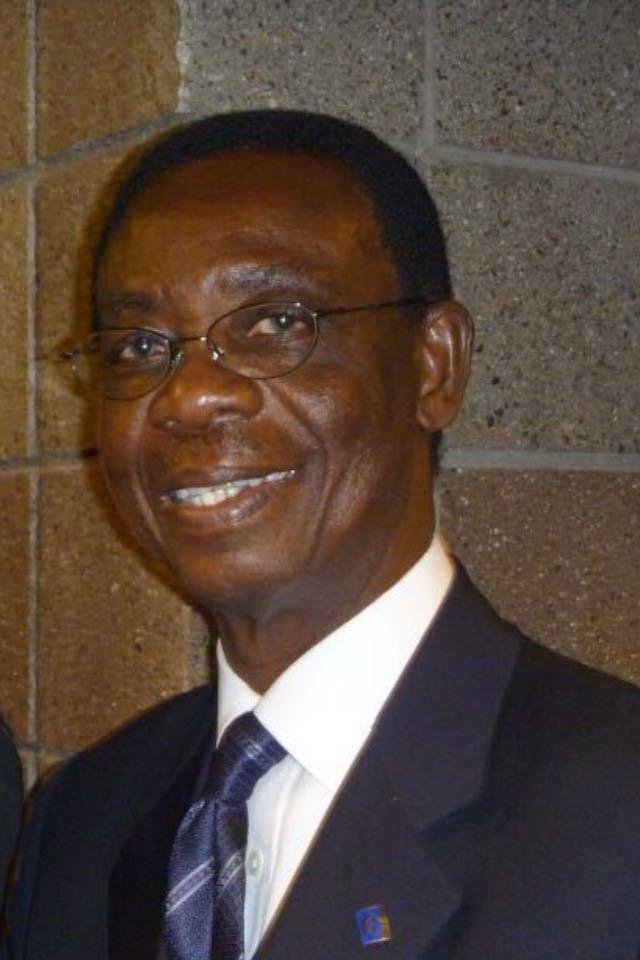
His contribution spans several decades and cuts across athlete development, administration, infrastructure, international relations and sports journalism.
He has spent decades working quietly behind the scenes, identifying talent, mentoring young athletes, building institutions and investing his personal resources to ensure that Ghana’s rich boxing tradition remains alive
Today, his legacy remains firmly woven into the fabric of Ghana sports, particularly boxing, where his influence has helped shape generations of champions and inspired countless young athletes.
Though he has stepped away from active sports administration, Ambassador Quarcoo remains deeply interested in the progress of Ghana sports.
His passion for sports is rooted in a lifetime of service and sacrifice. As President of the Ghana Amateur Boxing Federation (GABF) on two separate occasions and later Vice-President of the Ghana Boxing Authority (GBA), he played a central role in strengthening the structures of boxing administration in the country.
Under his leadership, the GABF introduced international exchange programmes with countries such as Britain, the United States and Azerbaijan, giving Ghanaian boxers valuable international exposure.
His influence extended beyond Ghana as an executive member of the International Boxing Association (IBA), formerly AIBA, while he also served as a management member of the Black Stars.
However, it is his role as a mentor and benefactor that has earned him the admiration of generations of athletes.
Former WBA welterweight world champion Ike “Bazooka” Quartey describes him as one of the most influential figures in the lives of many Ghanaian boxers.
According to Quartey, Ambassador Quarcoo paid the school fees of Joshua and Emmanuel Clottey and provided them with accommodation because he believed they possessed the qualities required to become world champions.
His conviction was that young athletes needed both education and discipline to succeed on the world stage.
The investment paid off as Joshua Clottey eventually rose to become an IBF Welterweight World Champion and one of Ghana’s most respected boxing figures.
Veteran sports broadcaster Nathaniel Attoh recalls witnessing Joshua Clottey’s deep appreciation for Ambassador Quarcoo.
Following his world title triumph, Clottey personally visited Ambassador Quarcoo to thank him for the support, guidance and opportunities he had received during his formative years.
The Clottey brothers were only part of a long list of athletes whose careers were positively impacted by Ambassador Quarcoo.
His keen eye for talent led him to identify and support several promising boxers long before they became stars.
Among them were former WBO world champion Isaac Dogboe, Olympian Norris Thompson and British-Ghanaian boxing sensation Joshua Buatsi.
Attoh recalls a memorable telephone conversation in which Ambassador Quarcoo confidently predicted that two young boxers he had discovered would one day become world beaters. Those young athletes were Isaac Dogboe and Joshua Buatsi.
Today, Dogboe has established himself as a former world champion, while Buatsi has become one of the most accomplished boxers of his generation.
One of the defining moments of Ambassador Quarcoo’s administrative career came ahead of the London 2012 Olympic Games.
Despite facing criticism and opposition, he stood firmly behind Isaac Dogboe because he recognised the young boxer’s exceptional potential.
According to Attoh, his decision came at considerable personal cost, yet he remained unwavering in his conviction that Dogboe would justify his faith.
His willingness to place principle above personal interest remains one of the many examples of his commitment to athlete development.
Former Black Bombers captain and assistant national coach Kwame Asante recalls how Ambassador Quarcoo sponsored Ghanaian boxing contingents to international competitions and helped facilitate opportunities for coaches and athletes to further their training abroad.
Asante himself benefited from Ambassador Quarcoo’s intervention when he pursued advanced coaching education in Germany. According to him, Ambassador Quarcoo’s passion for boxing was unmatched.
“He was always present wherever boxing was taking place, whether locally or internationally, he supported the sport wholeheartedly,” Asante stated.
His love for grassroots boxing became legendary. Many remember how he regularly travelled across Accra on weekends simply to watch juvenile boxing contests, particularly at the famous Wato Club. Young boxers eagerly anticipated his visits because they came not only with encouragement but often practical assistance and mentorship.
His contribution to boxing infrastructure is equally significant. Ambassador Quarcoo facilitated and financed the establishment of several boxing clubs and gyms in Bukom, including the Black Panther and Panix gyms. These facilities became important breeding grounds for young talents and contributed significantly to Ghana’s boxing success story.
Beyond boxing, Ambassador Quarcoo has also been a steadfast supporter of sports journalism. As a Lifetime Patron of the Sports Writers Association of Ghana (SWAG), he has supported journalists and contributed immensely to preserving Ghana’s sporting history.
His efforts have earned him numerous honours, including recognition from the Ghana Olympic Committee for supporting Ghana’s participation in the Olympic Games and various awards from sporting bodies in appreciation of his service.
Yet those who know him best insist that his greatest achievement lies not in the awards he has received but in the lives he has transformed.
Until his appointment as Goodwill Sports, Ambassador in 2011, he has held several sports administrative positions in the country including the following, President Ghana Boxing Federation 2010-2014, First Vice Chairman Ghana Boxing Authority, Vice Chairman Ghana Black Stars Welfare Committee 1991-1993, Life Patron, Ghana Olympic Committee, Life patron sports writers association of Ghana, Executive Committee Member African Boxing confederation and Patron-African Confederation of Handball.
Ambassador Emmanuel Ray Quarcoo was also in 2013 was appointed as Honorary Consul General of Haiti to Ghana with Exequatur on 25th October 2013.
By Esinam Jemima Kuatsinui

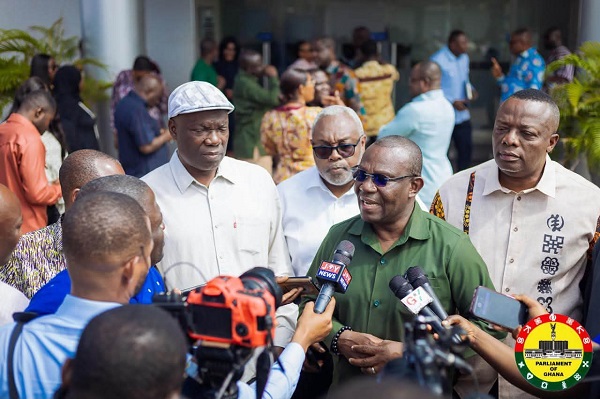
The Parliamentary Select Committee on Energy has appealed to the Ministry of Finance to release GH¢5.6 million to the Petroleum Commission to enable it to establish and operate a world-class data centre.
According to the Committee, access to the funds will strengthen the Commission’s capacity to manage critical upstream petroleum data and improve its operations.
Speaking during the appeal, Chairman of the Committee, Emmanuel Kwasi Bedzrah, said the move was crucial to efforts to revitalise Ghana’s upstream petroleum industry and increase oil production.
He noted that although investment and hydrocarbon production had declined in recent years, Parliament’s approval of an extension of the petroleum agreement to 2030 had attracted additional funding and contributed to an increase in production from about 80,000 to 120,000 barrels per day.
Meanwhile, concerns have been raised over repeated budget allocations for oil exploration in the Voltaian Basin.
Mr. Bedzrah stressed that funds approved for exploration must produce tangible results, adding that the Committee would require clear evidence of progress before supporting future budget allocations for the programme.
The appeal was made during a working visit to the Petroleum Commission as part of the Committee’s oversight activities to assess its operations and management procedures.
During the engagement, the Chief Executive Officer of the Petroleum Commission, Emeafa Hardcastle, took the Committee through the Commission’s working procedures and mandate, which includes regulating, managing and coordinating upstream petroleum activities.
She disclosed that since assuming office in 2025, government had pursued measures to reverse the decline in crude oil production, sustain output and reposition Ghana as an attractive destination for investment in Africa’s increasingly competitive petroleum sector.
In addition, she said government had secured fresh commitments of about US$35 billion to help revitalise the sector.
As part of the oversight exercise, the Committee is expected to conclude its monitoring visit with engagements at the National Petroleum Authority (NPA) and the Ghana Oil Company Limited (GOIL).
By Edem Mensah-Tsotorme
News
“No civilisation deserves to be annihilated” – Mahama calls for dialogue on global conflicts at UNGA 81
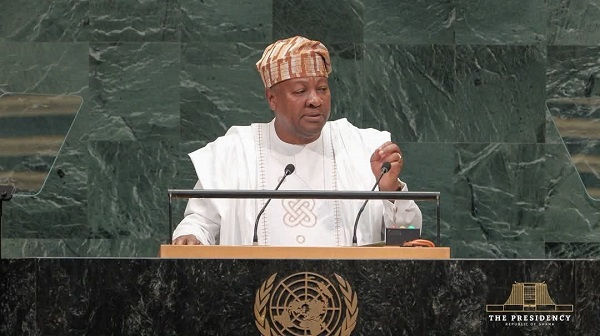
President John Dramani Mahama has called for solidarity and dialogue in resolving global conflicts, insisting that no civilisation deserves to be wiped out.
“No human civilisation deserves to be annihilated, certainly not a member state of the United Nations,” President Mahama stated in his address at the 81st United Nations General Assembly in New York.
He called for solidarity with nations facing terrorism, especially the Alliance of Sahel States (AES), and for a uniform approach to conflicts in Europe, the Middle East and Africa.
On the Middle East, the President called for a return to negotiations, saying “The current Middle East crisis is having a deleterious effect on the world economy.”
“I believe that dialogue can resolve even the most intractable of problems,” he added.
By Edem Mensah-Tsotorme

 Entertainment1 week ago
Rhythms On Da Runway returns November 28 with 16th edition themed ‘Unbound’
- Entertainment1 week ago
Ohemaa Mercy’s Tehillah Experience outfit was priestly regalia, not costume – Management clarifies
 News1 week ago
Janet Asana Nabla criticises Mahama over China curriculum controversy involving Haruna Iddrisu