Hot!
AMA arrests over 21 traders for selling on open drains at Agbogbloshie Market


- /home/u249204778/domains/spectator.com.gh/public_html/wp-content/plugins/mvp-social-buttons/mvp-social-buttons.php on line 27
https://spectator.com.gh/wp-content/uploads/2025/10/WhatsApp-Image-2025-10-14-at-18.04.29-1000x600.jpeg&description=AMA arrests over 21 traders for selling on open drains at Agbogbloshie Market', 'pinterestShare', 'width=750,height=350'); return false;" title="Pin This Post">
- Share
- Tweet /home/u249204778/domains/spectator.com.gh/public_html/wp-content/plugins/mvp-social-buttons/mvp-social-buttons.php on line 72
https://spectator.com.gh/wp-content/uploads/2025/10/WhatsApp-Image-2025-10-14-at-18.04.29-1000x600.jpeg&description=AMA arrests over 21 traders for selling on open drains at Agbogbloshie Market', 'pinterestShare', 'width=750,height=350'); return false;" title="Pin This Post">
The Accra Metropolitan Assembly (AMA) has arrested twenty-one (21) traders for displaying and selling their wares on open drains at the Agbogbloshie Market in violation of the city’s sanitation and public health regulations.
The operation, which took place on Tuesday, was led by Public Health Officers from the Assembly as part of ongoing efforts to sustain cleanliness in the Agbogbloshie enclave following the National Sanitation Day exercise held a fortnight ago and the reintroduction of the Clean Ghana Campaign Train, a sustained citywide initiative to enforce hygiene and environmental health standards.
Prior to the enforcement exercise, the Mayor of Accra, Michael Kpakpo Allotey, had visited the market and announced a two-week intensive clean-up and desilting operation to restore hygiene and free the drains ahead of stricter enforcement.
Speaking after the exercise, the Metro Director of Public Health, Madam Florence Kuukyi, described Agbogbloshie Market as one of the largest and most critical food supply centres in Accra, noting that nearly 80 percent of food vendors and handlers across the city source their goods from the market.
She expressed concern that some traders had taken advantage of the market’s importance to engage in practices contrary to public health and sanitation regulations adding that the Assembly’s bye-laws strictly prohibit trading on streets and along drains.
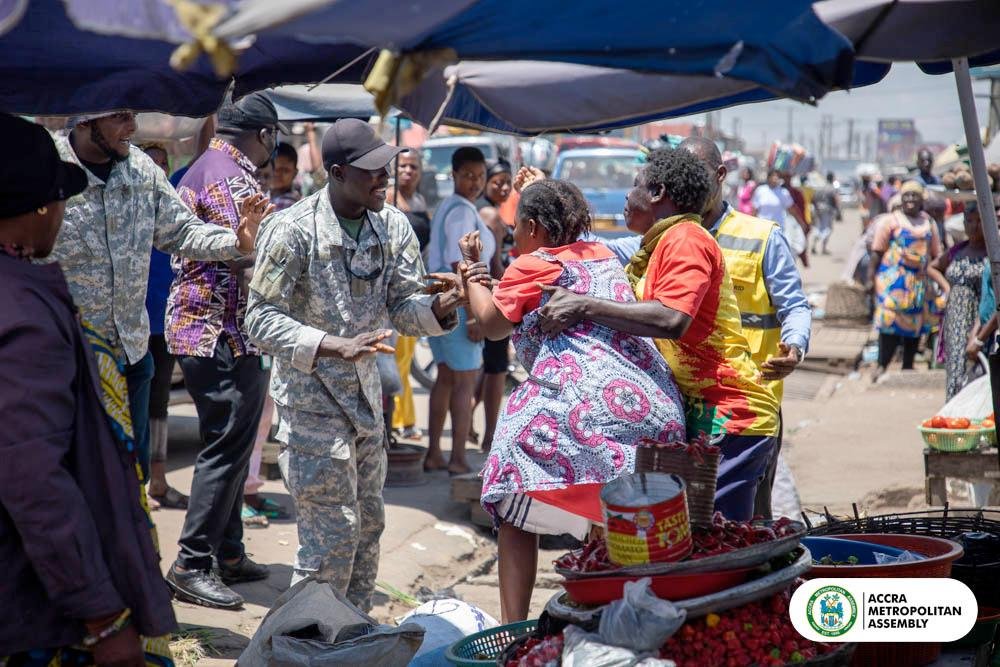
“What we continue to observe is worrying, people have abandoned their stalls and locked their shops, only to display goods along the streets, this behaviour causes traffic congestion, creates unsanitary conditions, and exposes food items to contamination,” she said.
The Public Health Director cautioned that dust from moving vehicles often carries microorganisms that settle on exposed food items, leading to potential foodborne diseases and decried the habit of some traders who dispose of waste indiscriminately or push refuse into drains, saying such acts contribute to flooding when the rains come.
“Sanitation is a shared responsibility. It cannot be achieved by one person or one institution alone,” she stressed.
She announced that the Clean Ghana Campaign Train would continue across all sub-metros in the metropolis, describing it as an unannounced and continuous exercise until full compliance with sanitation laws is achieved.
“You will never know when the campaign train will arrive, so it’s best to always keep your surroundings clean and operate according to the rules,” she warned.
She emphasised that traders have been duly informed and sensitized by the Information Service Department (ISD) of the Assembly over the past weeks on this exercise and the essence of moving off the drains and streets.
The Director also revealed that future enforcement would extend to those who patronise roadside traders.
“If there are no buyers on the streets, the sellers will have no choice but to return to their stalls,” he said, explaining that this measure would help restore order and protect public health.
She reminded traders that the Assembly’s enforcement actions were not meant to punish but to protect lives, noting that illegal trading along roads and drains could result in accidents and injuries.
Madam Kuukyi announced that all food items confiscated during the operation would not be returned to offenders but donated to children’s homes within the city and called on traders as well as residents to support the Assembly’s efforts to make Accra a cleaner, safer and healthier city for everyone.
A palm nut seller at the market recounted how she once accidentally stepped on a tuber yam, which led to confrontation and applauded the ongoing exercise by the Assembly urging officials to keep coming around to ensure people moved back from the roads and drains.
She later expressed gratitude for the way the team was handling its duties and commended the team for their approach, adding that their regular presence would greatly improve orderliness at the market.
By: Gilbert Ankrah


The Tema Regional Police Command has arrested a 32-year-old man for allegedly posing as a soldier and extorting money from unsuspecting members of the public at Ashaiman.
The suspect, identified as Bright Atsu Kudiabor, was arrested by the Ashaiman Police on Wednesday, September 16, 2026, at about 7:00 a.m.
According to the Police, he was arrested at an area known as “I Shall Return”, where he was allegedly parading himself as a soldier and demanding money from people.
The Police said Kudiabor, who is an ex-convict, was initially arrested by personnel of the Ghana National Fire Service in Ashaiman with assistance from other members of the public.
A search conducted on him after he was handed over to the Police reportedly led to the recovery of a set of military camouflage uniform.
The suspect is currently in Police custody and assisting with investigations.
The Tema Regional Police Command said he would be processed for court after investigations are completed.
The Police urged the public to remain vigilant and report anyone who falsely presents themselves as a soldier or a member of another security agency to deceive or extort money from the public.
By: Jacob Aggrey
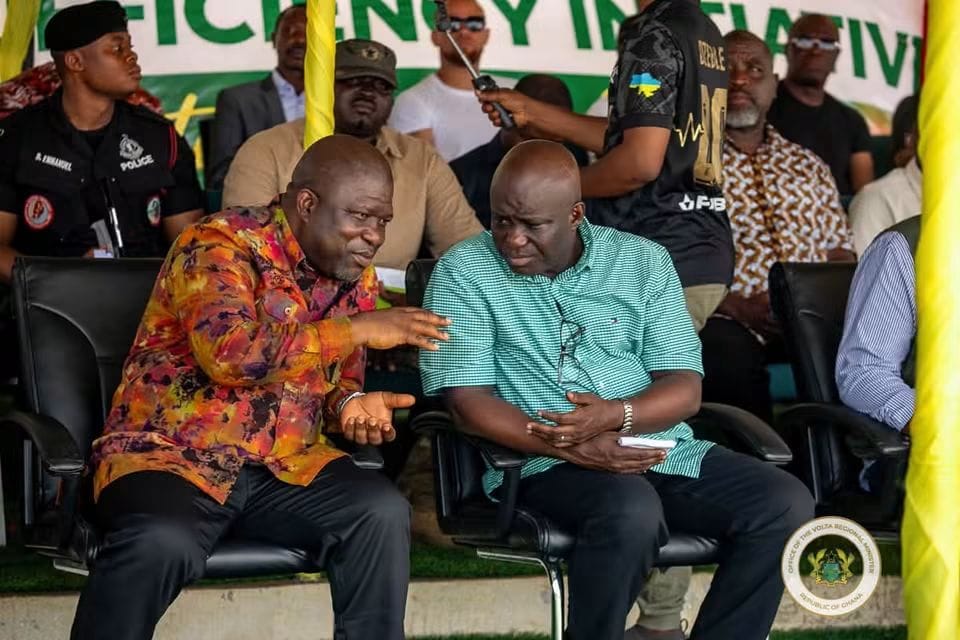
Volta Regional Minister, James Gunu, says the Volta Region holds enormous agricultural potential and efforts must be geared towards connecting farmers to the needed resources to unlock that potential.
He said focus must be on linking farmers to resources, technology, financing and markets to increase production, create jobs and build sustainable livelihoods.
Hon. Gunu made the remarks at the national launch of the Ghana Tomato Self-Sufficiency Initiative (GHATSI) held at Anloga in the Volta Region on Tuesday, September 15.
The initiative, under the theme “Produce at Home. Feed the Nation. Export the Surplus,” seeks to boost local tomato production, processing and marketing while reducing Ghana’s heavy reliance on imported tomatoes.
The launch was attended by the Minister for Food and Agriculture, Eric Opoku, his Deputy, John Setor Dumelo, Feed Ghana Coordinator, Bright Demordzi, Members of Parliament, traditional leaders, MMDCEs, farmers and other stakeholders.
Mr.Gunu expressed appreciation to the Minister for Food and Agriculture for the support announced for the region, including two excavators, 200 cartons of organic fertiliser, and GH¢200,000 for Ms. Kuatudzo Esther Dela, a tomato farmer and processor from Ziope.
He described the initiative as an important step towards making agriculture a stronger driver of food security, job creation and economic growth in the Volta Region.
By Edem Mensah-Tsotorme