News
African Travel Commission set for relaunch In Ghana


- /home/u249204778/domains/spectator.com.gh/public_html/wp-content/plugins/mvp-social-buttons/mvp-social-buttons.php on line 27
https://spectator.com.gh/wp-content/uploads/2023/07/355c97a9-b3fe-4731-ac34-d58fdb1df767.jpeg&description=African Travel Commission set for relaunch In Ghana', 'pinterestShare', 'width=750,height=350'); return false;" title="Pin This Post">
- Share
- Tweet /home/u249204778/domains/spectator.com.gh/public_html/wp-content/plugins/mvp-social-buttons/mvp-social-buttons.php on line 72
https://spectator.com.gh/wp-content/uploads/2023/07/355c97a9-b3fe-4731-ac34-d58fdb1df767.jpeg&description=African Travel Commission set for relaunch In Ghana', 'pinterestShare', 'width=750,height=350'); return false;" title="Pin This Post">
Forty-Eight [48] years after it was abandoned in 1975, the African Travel Commission [ATC], a body that was set up in 1965 by some African countries national tourism agencies to promote and collaborate amongst themselves, is billed for a relaunch in Ghana to serve the same purpose.
The relaunch, according to Lucky George, Executive Director of the commission, is scheduled for Thursday September 14, 2023, at a venue to be announced.
According to Mr.Lucky, the date was chosen because of its closeness to September 27th, a day that was set aside as World Tourism Day [WTD] globally that was initiated in 1970 by the leadership of the African Travel Commission [ATC].
He noted that the body was for all serving chief executive officers of national tourism agencies on the continent and played a significant role in the reformation and transformation of the then International Union of Official Travel Organisation [IUOTO] to World Tourism Organisation [WTO], now United Nations World Tourism Organisation [UNWTO], a specialised agency of the United Nations in the field of travel and tourism.
The origin of UNWTO dates back to 1925 when the first international congress of official tourist organisations was held at The Hague. The congress continued to meet annually, and in 1930, it decided to form a formal union, which in 1934 became the International Union of Official Tourist Publicity Organisations [IUOTPO].
Though the history of organised tourism did not start until 1925, when the International Corporation in tourism development had its beginning, and later when a conference took place in London in October 1946 and in 1947, that IUOTO was founded.
This organisation represented over 100 National tourist offices of various countries as full members, and 88 National & International members as associates. IUOTO was the only organisation which grouped together the governmental/private tourist organisations all over the world then.
Following the end of the Second World War and with international travel numbers increasing, the IUOTPO restructured itself into the International Union of Official Travel Organisations [IUOTO].
A technical, non-governmental organisation, the IUOTO was made up of a combination of national tourist organisations, industry, and consumer groups. The goals and objectives of the IUOTO were to not only promote tourism in general, but also to extract the best out of tourism as an international trade component and as an economic development strategy for developing nations.
Towards the end of the 1960s, the IUOTO realised the need for further transformation to enhance its role on an international level. The 20th IUOTO General Assembly in Tokyo, 1967, declared the need for the creation of an intergovernmental body with the necessary abilities to function on an international level in cooperation with other international agencies, in particular the United Nations.
Throughout the existence of the IUOTO, close ties had been established between the organisation and the United Nations [UN] and initial suggestions had the IUOTO becoming part of the UN.
However, following the circulation of a draft convention, consensus held that any resultant intergovernmental organisation should be closely linked to the UN, but preserve its “complete administrative and financial autonomy”.
It was on the recommendations of the UN that the formation of the new intergovernmental tourism organisation was based. Resolution 2529 of the XXIVth UN general assembly stated:
In 1970, the IUOTO General Assembly voted in favour of forming the World Tourism Organisation [WTO]. Based on statutes of the IUOTO, and after ratification by the prescribed 51 states, the WTO came into operation on November 1, 1974.
Significantly, a Nigerian Lawyer, late Odubayo with the ministry of Trade at that time, who was part of the Nigerian delegation, chaired the transformation session before the new body was agreed.
Most recently, at the 15th General Assembly in 2003, the WTO General Council and the UN agreed to establish the WTO as a specialised agency of the UN. The significance of this collaboration, “the increased visibility it gives the WTO and the recognition that will be accorded to it and for tourism to also be considered on an equal footing with other major activities of human society”.
Later , the ATC under the chairmanship of Ignatius Amaduwa Atigbi and Secretary General, Nigeria Tourist Association [NTA], now the Nigerian Tourism Development Authority [NTDA], proposed in 1971 at the body’s 22nd General Assembly of IUOTO in Ankara, Turkey be the day IUOTO was successfully transformed into WTO in Acapulco, Mexico on September 27th of that year, be set aside and commemorated as World Tourism Day [WTD].
“So, it’s sad that even with little know knowledge of tourism among African nations in the 60s and 70s, our administrators played a leading role; and it saddens many to see today that people and groups, who knew little or nothing about our industry/products, are now dictating/speaking for us at the United Nations and other international fora hence the move to revive ATC,” Mr.Lucky added.
Meanwhile, ATC has now been expanded to include all serving chief executive officers of national tourism agencies and tourism federations heads/chairs. This move is to provide a platform for proper articulations and collaborations amongst African countries.
Also, ATC has now been formally registered as a non-profit organization in Ghana for the first time anywhere on the continent to carry out the following responsibilities:
Research is critical to all marketing strategies and services. Therefore, one of the ATC primary goals is aggressive research activities with partners [institutions and organisations] to uncover new opportunities that would equip members with suitable promotional strategies; Marketing Africa as a destination of choice in key overseas markets on behalf of its members through partnerships that are being established now and to carry out Advocacy that is necessary because much is left undone because of the gap created due to the lack of a body like the African Travel Commission [ATC], since 1975.
‘’There is a need to lobby governments across the continent for them to see reasons in making issues of visas and its attendant cost easier for Africans to facilitate travel experiences among African countries that are flexible and affordable’’ George noted.
He said those with concerns or need more information can visit their website:www.africantravelcommission.org


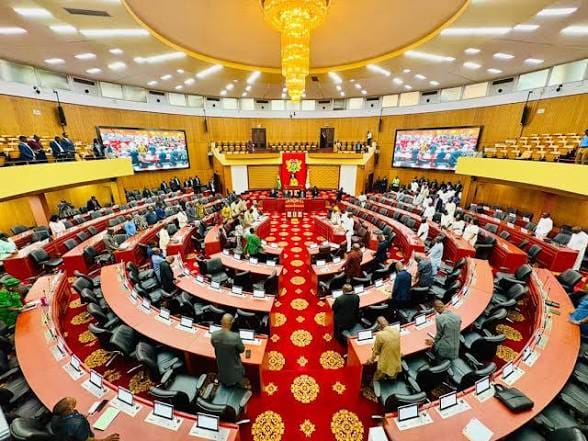
Parliament has clarified public commentary on social media regarding a notice on its notice board that read “No Vacancy for National Service Personnel 2026/2027. Kindly go for reposting.”
In a statement, signed by the Director of Media Relations, David Sebastian Damoah, Parliament said the notice has been misconstrued and was not a policy statement, a freeze on national service placements, or a change in its support for the National Service Scheme.
According to Parliament, the notice was a routine administrative message to prospective personnel who reported to the House, informing them that it has received more personnel than it can accommodate for the 2026/2027 service year and that they should seek reposting to other institutions.
It said it remains committed to the National Service Scheme and values the contribution of service personnel to its work, and regrets any confusion or inconvenience the wording may have caused.
By Edem Mensah-Tsotorme
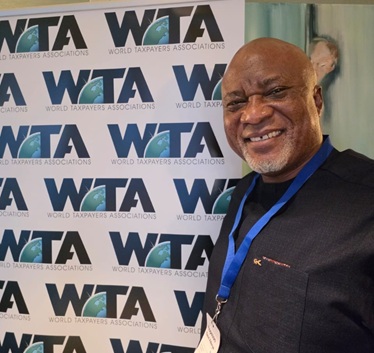
Ghanaian public advocate Hopeson Yaovi Adorye has been elected to the Board of Directors of the World Taxpayers Association (WTA).
The election took place on Sunday, October 5, 2026, during the Association’s conference in Kraków, Poland.
His election marks a significant addition to his international leadership portfolio and provides a platform for Ghanaian and African perspectives to contribute to global discussions on taxpayer rights, responsible taxation, transparency and prudent management of public resources.
Reacting to his election, Mr. Adorye expressed appreciation to the leadership and members of the WTA for the confidence reposed in him.
“I am deeply honoured by this confidence and conscious of the responsibility that comes with it. Taxpayers are at the heart of every economy, and they deserve fairness, transparency, accountability and value for the taxes they pay. I look forward to working with colleagues from across the world to strengthen the voice of taxpayers and promote responsible fiscal governance,” he said.
According to him, taxation should not be viewed solely as a mechanism for raising government revenue, but also as an important component of the social contract between citizens and the state.
Mr. Adorye said governments have a responsibility to ensure taxes are collected fairly and public resources are utilised efficiently to deliver quality infrastructure, healthcare, education, security and other essential services.
His election also creates an opportunity to bring African experiences into international conversations on taxation and public expenditure.
Mr. Adorye, who is Executive Director of Taxpayers League Ghana, has previously served as Global Board Chairman of the International Youth Network for UN Security Council Resolution 2250, an NGO associated with the United Nations Economic and Social Council (ECOSOC).
He is expected to use his new role to champion fiscal accountability, taxpayer education, good governance and stronger citizen participation in public financial management.