Editorial
Address worries of teenage girls to avoid unintended pregnancies

Peer pressure, social or familial pressures, and restricted access to and understanding about contraception are some of the issues that teenage girls deal with which can lead to unwanted pregnancies.
Additionally important are socioeconomic issues like poverty and a lack of educational opportunity. Some girls may also be subjected to sexual violence or coercion, which can result in pregnancy.
Despite the fact that teenage girls are vulnerable and lack correct information on these topics some parents are not prepared to teach their teenagers about sexual health, contraception, and the dangers of getting pregnant too young.
Teenage pregnancy is more likely when there is a lack of parental direction and social pressure to be married.
Additionally, some cultures may have conventions that glamorise adolescent motherhood or prohibit candid conversations about sex and contraception. Even in cases where information is available these teenage girls may encounter obstacles in obtaining and affording contraception.
Unfortunately, some youth have low self-esteem, which can lead to risky behaviours or a failure to prioritise their future academic or professional aspirations, increasing their risk of unplanned pregnancies.
The Spectator therefore agrees with Ms. Helen Korkor Quarcoo, the Chief Superintendent of Prisons (CSP) and Head of the Commercial Unit at the Senior Correctional Centre in Accra, that for teenage girls to feel safe, their parents must love and care for them without conditions.
She made the call in an interview at a recent conference on “Access to Agency: Empowering women through digital inclusion” in Accra,
The Senior Officer said that the majority of adolescent pregnancies are typically caused by emotional difficulties that lead to teenage girls seeking out affection and love outside of their homes. Teenage pregnancy may be a traumatizing reaction to emotional deprivation, with severe physical and psychological effects on the girl child.
“Some of these teenage children living in the villages and remote areas who are not loved at home usually get brainwashed by false love from some irresponsible area boys/men who later impregnate them and run away,” she said.
Since teenage girls may seek affection, attention, or validation through relationships that could result in teenage pregnancies, parents must make sure they pay attention to their emotional needs.
It is worthy to note that every adolescent girl has different obstacles to overcome so parents, especially fathers must help them develop a sense of self-worth in order to boost their emotions of worthlessness.
Teenage girls require committed resources, education, and supportive services to help them deal with these difficult situations.

Dear Editor,
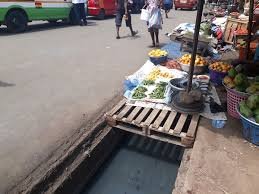
It is often said that a healthy nation is a wealthy nation. However, this saying becomes worrying when the health of citizens is threatened by the conditions under which the food they consume daily is sold.
In Ghana, the conditions under which food is sold is quite disturbing. Over the years, I have observed that the environments where food is prepared and sold are often unhygienic.
In many cases, containers holding food such as rice and waakye are left uncovered or not properly covered, exposing them to contamination.
While many Ghanaians paid little attention in the past to the conditions under which food was sold, the narrative seems to be changing in recent years.
I recall an incident during my days in Senior High School (S.H.S.) when my friends and I went out to buy food. At one location, some of us chose not to buy because we assumed the food would be expensive due to how neat the place looked.
Unfortunately, we ended up purchasing food from a different place that was somewhat unhygienic. We overlooked the poor conditions because we believed the quantity offered was better than at the cleaner location.
However, I am certain that my friends and I would not repeat such a mistake today, as we now understand the health implications of that decision.
While public education is important in addressing this issue, I believe it is time for regulatory and law enforcement agencies, such as the Food and Drug Authority (FDA), to crack the whip on food sellers and vendors who operate in unhygienic environments and conditions.
As citizens, we must also be mindful of where we buy our food to protect ourselves and our families from diseases and illnesses. We should choose ‘quality’ over ‘quantity’ and prioritize our health.
From Syram
Oyarifa
Dear Editor,
I write to express concern and call for improved security measures before and after every football match.
The recent robbery attack that led to the tragic death of a player, on their return from a Match day 29 game against Samartex, is both shocking and heartbreaking.
The incident, which reportedly occurred around 10:30 p.m., highlights the growing risks faced by players and team officials while traveling.
Football is meant to unite and entertain, not to expose lives to danger. It is therefore imperative that authorities, the Ghana Football Association, and security agencies put in place adequate protection for teams, especially during late-night travels.
I strongly urge all stakeholders to treat this matter with urgency to prevent such unfortunate incidents from recurring.
From Eugene Ampiaw
Accra