Hot!
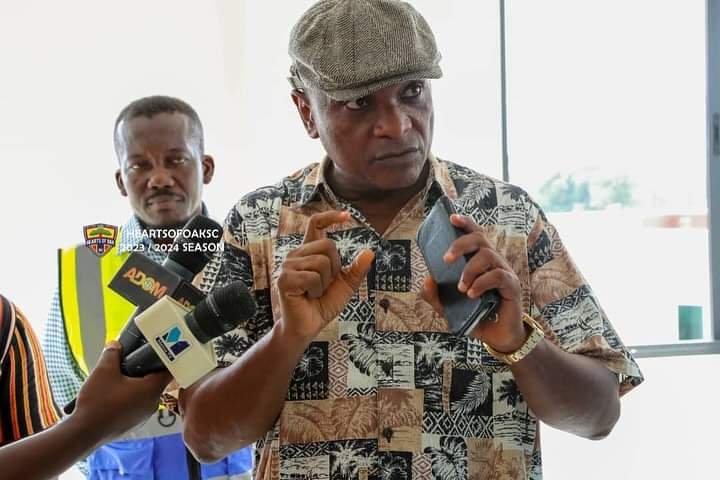
Accra Hearts of Oak board dissolved

- /home/u249204778/domains/spectator.com.gh/public_html/wp-content/plugins/mvp-social-buttons/mvp-social-buttons.php on line 27
https://spectator.com.gh/wp-content/uploads/2024/02/PHOTO-2024-02-28-14-39-00.jpg&description=Accra Hearts of Oak board dissolved', 'pinterestShare', 'width=750,height=350'); return false;" title="Pin This Post">
- Share
- Tweet /home/u249204778/domains/spectator.com.gh/public_html/wp-content/plugins/mvp-social-buttons/mvp-social-buttons.php on line 72
https://spectator.com.gh/wp-content/uploads/2024/02/PHOTO-2024-02-28-14-39-00.jpg&description=Accra Hearts of Oak board dissolved', 'pinterestShare', 'width=750,height=350'); return false;" title="Pin This Post">
The board of Accra Hearts of Oak Sporting Club PLC has been dissolved.
The board was made up of the majority shareholder, Togbe Afede XIV, Vincent Sowah Odotei, Alhaji Moro Adamu, Dr. Nyaho-Nyaho Tamakloe, Frank Nelson, Nwokolo, Ivy Heward Mill, Alhaji Alhasan Adani, Thomas Kwesi Esso and Professor Kofi Kumado.
This crucial decision was taken during the board’s last sitting on Tuesday, February 27, 2024.
The dissolution of the board is in line with the majority shareholder’s pledge to reconstitute the board during its next Annual General Meeting (AGM), which will be held before the end of March 2024.
The newly reconstituted board would be approved at the next AGM to be held in March this year.
In a statement, the management expressed its gratitude to the ex-board for the excellent leadership and supervisory role in steering the affairs of the club for the past 12 years.
“During this period, many successes on and off the pitch were
achieved.
The enviable and unparalleled infrastructural enhancement, a key component of modern trends in football development, were undertaken during the period under review,” the statement added.
According to them, this feat will propel their objectives of achieving pre-eminence on the African continent and beyond.
They used the opportunity to urge all stakeholders to continue to offer their unwavering support to the management.
By Edem Mensah-Tsotorme



The Tema Regional Police Command has arrested a 32-year-old man for allegedly posing as a soldier and extorting money from unsuspecting members of the public at Ashaiman.
The suspect, identified as Bright Atsu Kudiabor, was arrested by the Ashaiman Police on Wednesday, September 16, 2026, at about 7:00 a.m.
According to the Police, he was arrested at an area known as “I Shall Return”, where he was allegedly parading himself as a soldier and demanding money from people.
The Police said Kudiabor, who is an ex-convict, was initially arrested by personnel of the Ghana National Fire Service in Ashaiman with assistance from other members of the public.
A search conducted on him after he was handed over to the Police reportedly led to the recovery of a set of military camouflage uniform.
The suspect is currently in Police custody and assisting with investigations.
The Tema Regional Police Command said he would be processed for court after investigations are completed.
The Police urged the public to remain vigilant and report anyone who falsely presents themselves as a soldier or a member of another security agency to deceive or extort money from the public.
By: Jacob Aggrey
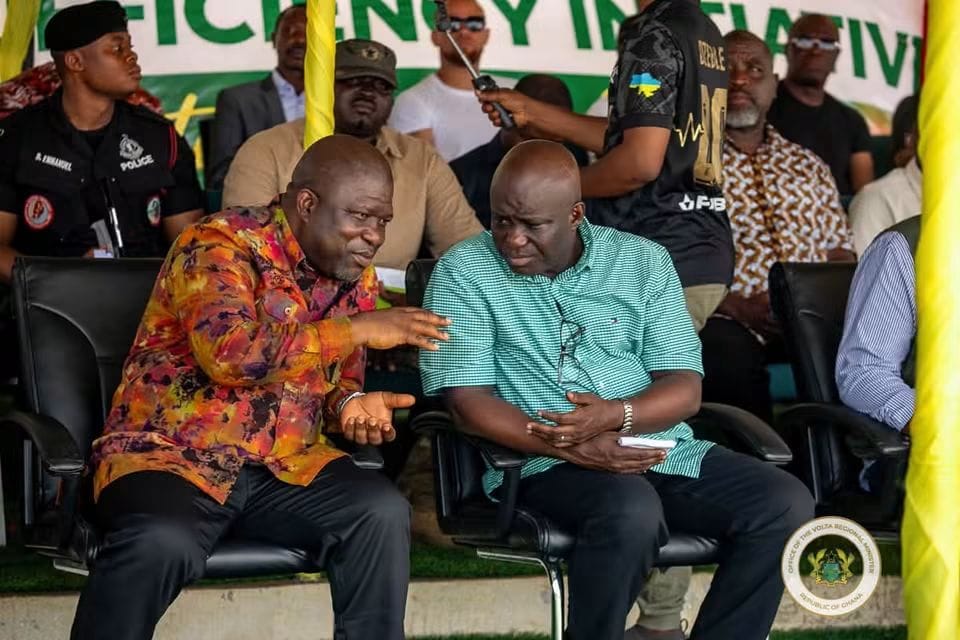
Volta Regional Minister, James Gunu, says the Volta Region holds enormous agricultural potential and efforts must be geared towards connecting farmers to the needed resources to unlock that potential.
He said focus must be on linking farmers to resources, technology, financing and markets to increase production, create jobs and build sustainable livelihoods.
Hon. Gunu made the remarks at the national launch of the Ghana Tomato Self-Sufficiency Initiative (GHATSI) held at Anloga in the Volta Region on Tuesday, September 15.
The initiative, under the theme “Produce at Home. Feed the Nation. Export the Surplus,” seeks to boost local tomato production, processing and marketing while reducing Ghana’s heavy reliance on imported tomatoes.
The launch was attended by the Minister for Food and Agriculture, Eric Opoku, his Deputy, John Setor Dumelo, Feed Ghana Coordinator, Bright Demordzi, Members of Parliament, traditional leaders, MMDCEs, farmers and other stakeholders.
Mr.Gunu expressed appreciation to the Minister for Food and Agriculture for the support announced for the region, including two excavators, 200 cartons of organic fertiliser, and GH¢200,000 for Ms. Kuatudzo Esther Dela, a tomato farmer and processor from Ziope.
He described the initiative as an important step towards making agriculture a stronger driver of food security, job creation and economic growth in the Volta Region.
By Edem Mensah-Tsotorme