Hot!
Abantu urges journalists to promote gender equity


- /home/u249204778/domains/spectator.com.gh/public_html/wp-content/plugins/mvp-social-buttons/mvp-social-buttons.php on line 27
https://spectator.com.gh/wp-content/uploads/2023/08/ab5dc318-a9a7-4316-82e4-b6b72a239886.jpeg&description=Abantu urges journalists to promote gender equity', 'pinterestShare', 'width=750,height=350'); return false;" title="Pin This Post">
- Share
- Tweet /home/u249204778/domains/spectator.com.gh/public_html/wp-content/plugins/mvp-social-buttons/mvp-social-buttons.php on line 72
https://spectator.com.gh/wp-content/uploads/2023/08/ab5dc318-a9a7-4316-82e4-b6b72a239886.jpeg&description=Abantu urges journalists to promote gender equity', 'pinterestShare', 'width=750,height=350'); return false;" title="Pin This Post">
Abantu for Development, a women centered NGO has underscored the need for aspiring journalists to familiarize themselves with gender-sensitive reporting from the onset of their career.
According to the group, the training of journalists must also focus more on raising awareness on gender issues because of its relevance in the society, especially in developing countries where women are often the driving change agents on the ground.
This call was made during a day’s workshop for female media practitioners held at the Yiri Lodge, Legon, Accra last week.
It was organised by Abantu for Development with support from the University of Bristol.
As a main component of the training, a historic film to challenge misrepresentation of women centered issues and gender activism in Ghana was screened for participants and learn and share their views.
The non-fictional film, titled “When Women Speak” directed by prominent film director, Ms Aseye Tamakloe featured powerful Ghanaian women including wife of the late former president of Ghana, Jerry John Rawlings, Nana Konadu Agyemang Rawlings, former editor of the Daily Graphic, member, Network for Women’s Rights in Ghana (NETRIGHT) Madam Ekua Ansah-Eshon, Executive Director Salt and Light Ministries, Ms Joyce Rosalind Aryee and Professor Dzodzi Tsikata, founding member, NETRIGHT.
The documentary challenges perceptions that Ghanaian women’s activism around existential and political issues was of more recent or originated from the western world.
It traces 16 women who came of age in the 1960s and 1970s and follows their experiences narrated in their own words, as Ghana passed through periods of military, single-party and multi-party rule.
Director, Abantu for Development, West Africa Region, Dr Rose Mensah-Kutin said women’s contribution towards development could not be underrated, adding that all women must join forces “so that our voices can be heard in every part of the world.”
She also called on men to join the fight for gender equity.
She also revealed that “When Women Speak” was available online for free on https/whenwomenspeakfilm.com.
On her part, a representative of the University of Bristol, Professor Kate Skinner commended participants for their input to the workshop, which she described as mind opening and hoped that the film would change negative perceptions about women empowerment in Ghana and the world at large.
Meanwhile journalists who benefitted from the workshop expressed gratitude to organisers for the training and assured that they would focus more on gender sensitive issues in their various news coverages.
BY RAISSA SAMBOU



The Tema Regional Police Command has arrested a 32-year-old man for allegedly posing as a soldier and extorting money from unsuspecting members of the public at Ashaiman.
The suspect, identified as Bright Atsu Kudiabor, was arrested by the Ashaiman Police on Wednesday, September 16, 2026, at about 7:00 a.m.
According to the Police, he was arrested at an area known as “I Shall Return”, where he was allegedly parading himself as a soldier and demanding money from people.
The Police said Kudiabor, who is an ex-convict, was initially arrested by personnel of the Ghana National Fire Service in Ashaiman with assistance from other members of the public.
A search conducted on him after he was handed over to the Police reportedly led to the recovery of a set of military camouflage uniform.
The suspect is currently in Police custody and assisting with investigations.
The Tema Regional Police Command said he would be processed for court after investigations are completed.
The Police urged the public to remain vigilant and report anyone who falsely presents themselves as a soldier or a member of another security agency to deceive or extort money from the public.
By: Jacob Aggrey
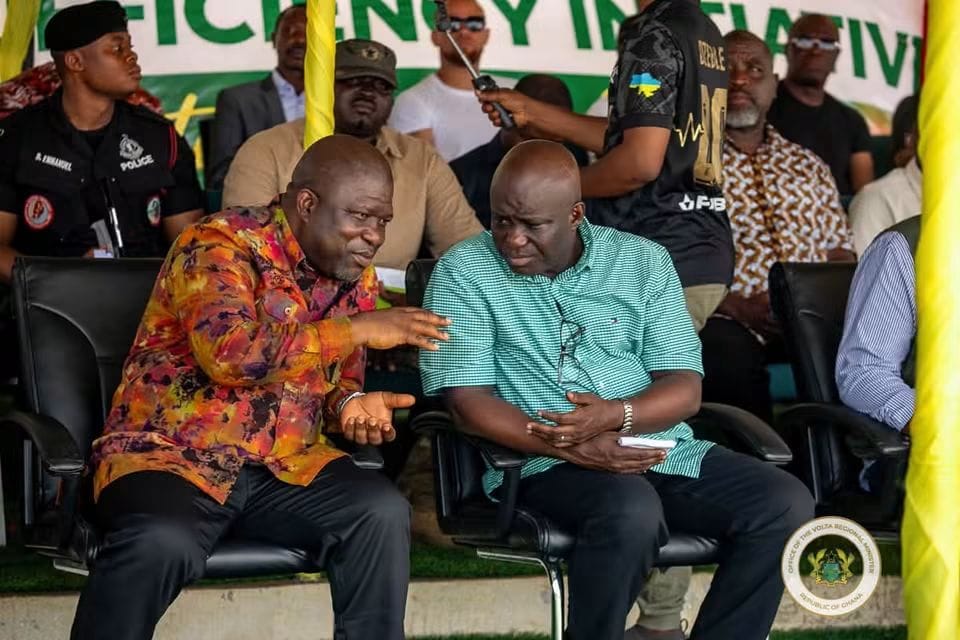
Volta Regional Minister, James Gunu, says the Volta Region holds enormous agricultural potential and efforts must be geared towards connecting farmers to the needed resources to unlock that potential.
He said focus must be on linking farmers to resources, technology, financing and markets to increase production, create jobs and build sustainable livelihoods.
Hon. Gunu made the remarks at the national launch of the Ghana Tomato Self-Sufficiency Initiative (GHATSI) held at Anloga in the Volta Region on Tuesday, September 15.
The initiative, under the theme “Produce at Home. Feed the Nation. Export the Surplus,” seeks to boost local tomato production, processing and marketing while reducing Ghana’s heavy reliance on imported tomatoes.
The launch was attended by the Minister for Food and Agriculture, Eric Opoku, his Deputy, John Setor Dumelo, Feed Ghana Coordinator, Bright Demordzi, Members of Parliament, traditional leaders, MMDCEs, farmers and other stakeholders.
Mr.Gunu expressed appreciation to the Minister for Food and Agriculture for the support announced for the region, including two excavators, 200 cartons of organic fertiliser, and GH¢200,000 for Ms. Kuatudzo Esther Dela, a tomato farmer and processor from Ziope.
He described the initiative as an important step towards making agriculture a stronger driver of food security, job creation and economic growth in the Volta Region.
By Edem Mensah-Tsotorme

 Entertainment1 week ago
Fiifi Coleman Productions adapt ‘I Told You So’ stage play into feature film
- News6 days ago
48 Engineer Regiment to be major sub-contractor on Accra-Kumasi Expressway, $2bn ready- Prez Mahama
- Entertainment5 days ago
Rhythms On Da Runway returns November 28 with 16th edition themed ‘Unbound’