News
A new dawn for Ghana’s Agribusiness sector and export value chain


- /home/u249204778/domains/spectator.com.gh/public_html/wp-content/plugins/mvp-social-buttons/mvp-social-buttons.php on line 27
https://spectator.com.gh/wp-content/uploads/2025/02/Silver-720x600.png&description=A new dawn for Ghana’s Agribusiness sector and export value chain', 'pinterestShare', 'width=750,height=350'); return false;" title="Pin This Post">
- Share
- Tweet /home/u249204778/domains/spectator.com.gh/public_html/wp-content/plugins/mvp-social-buttons/mvp-social-buttons.php on line 72
https://spectator.com.gh/wp-content/uploads/2025/02/Silver-720x600.png&description=A new dawn for Ghana’s Agribusiness sector and export value chain', 'pinterestShare', 'width=750,height=350'); return false;" title="Pin This Post">
Players within the agricultural sector and export value chain have a lot to cheer about following President John Dramani Mahama’s appointment of Hon. Sylvester Adinam Mensah as Acting Chief Executive of the country’s leading policy and development bank, the Ghana Export – Import Bank (GEXIM).
News of the appointment of the consummate finance professional and former senior banker, prominent for his expertise in public sector banking, fund management, strategic financial management, and governance with a proven record of accomplishment of delivering innovative financial solutions was received with excitement across various sectors.
The Ghana Export-Import Bank Act 2016 (Act 911) was promulgated to establish the Ghana Export – Import Bank with a mandate to facilitate international trade, improve export competitiveness, enhance foreign exchange earnings and improve balance of trade. In addition, the Bank is to play a pivotal role in Ghana’s quest for a feasible and sustainable export led economy.
Under Hon. Mensah’s leadership, the Bank’s core strategic direction, is expected to focus on prioritizing agribusiness and introducing carefully designed initiatives to bridge the export gap to foster Ghana’s greater participation in global export value chains, from small and medium-sized enterprises to larger corporations.
Over the years, agriculture has remained the major driver of Ghana’s economy and the primary way the majority of Ghanaians earn their living. As an agrarian economy, it has become important to focus on agribusiness in order to enhance the development of the value chain, and build the ecosystem to our advantage.
Agribusiness, as we are aware, examines the structure and organization of the agricultural food sector as well as the entire value chain extending from farm inputs, through on-farm businesses, to processing, transportation, credit and marketing.
In addition, Agribusiness plays a crucial role in the world economy, responsible for producing, packaging, preserving and distributing food and other agricultural products to consumers and industries worldwide. For this reason, we cannot afford to neglect agribusiness as a priority for the country.
Low and medium income countries always battle with currency depreciation due to unfavourable balance of trade (BoT) which also serves as a major indicator of economic growth potential and an important part of the Gross Domestic Product (GDP). To reduce our trade deficit will require a bold step to increase exports to earn more foreign currency from the goods and services exported.
In realizing this, Ghanaian businesses are to be aided to leverage on innovation and technology to improve their processes to be able to compete favourably in the global marketplace.
This will ultimately lead to the building of local capacity, enormously contribute to Ghana’s industrialisation, and export drive agenda. Without a doubt, these will certainly culminate into job creation and the introduction of special purpose initiatives targeting the youth and women to benefit from jobs to bae created.









The Accra Regional Police Command has arrested former professional boxer Michael Ayitey Okai, popularly known as “Ayitey Powers,” over an alleged threat of death against the Director-General of the National Sports Authority, Yaw Ampofo.
According to the Police, the 46-year-old former boxer was arrested on Monday, August 24, 2026, in connection with the alleged threat.
The Police said the arrest followed a video circulating on social media in which Ayitey Powers is alleged to have issued the threat against Mr Ampofo.
He is currently in Police custody and is assisting with investigations.
The Accra Regional Police Command said investigations are ongoing to establish the circumstances surrounding the alleged threat and determine the appropriate action to be taken in accordance with the law.
The Command has urged the public to refrain from sharing unverified information about the matter while the investigation continues.
By: Jacob Aggrey
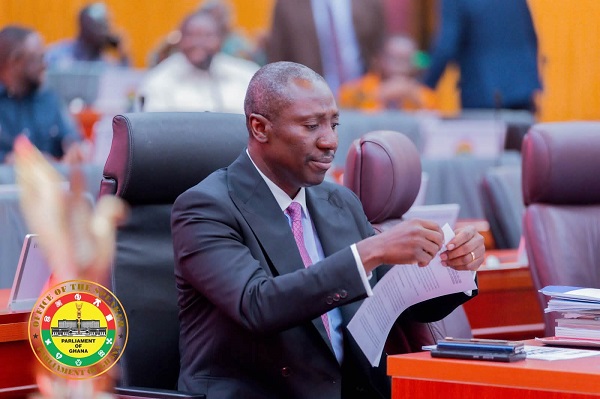
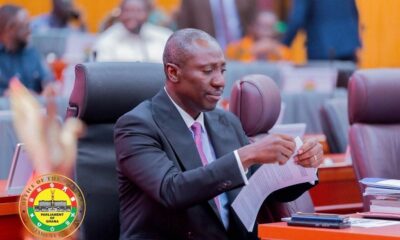
Minority Leader in Parliament Alexander Afenyo Markin has sued the Chief Executive Officer of the Ghana Gold Board (GoldBod), Sammy Gyamfi, and Multimedia Group Limited over alleged defamatory comments made against him on the Newsfile programme.
In a writ filed at the High Court in Accra, Mr Afenyo Markin is seeking GH¢15 million in damages, an apology and retraction of the statements, among other reliefs.
The suit follows comments allegedly made by Mr Gyamfi during the Saturday, August 22, 2026 edition of Newsfile, hosted by Samson Lardy Anyenini.
According to the statement of claim, Mr Gyamfi described Mr Afenyo Markin as an “extortionist” while responding to a question about GoldBod’s reported profits and its position on losses arising from its operations.
The plaintiff claims that Mr Gyamfi repeated the allegation when the host sought clarification on whether he stood by the description.
Mr Afenyo Markin further claims that Mr Gyamfi challenged him to sue him and insisted that the allegation was true.
The plaintiff argues that the statements created the impression that he engages in extortion, uses his political influence to put improper pressure on public institutions and officials, and conducts himself in a manner inconsistent with the standards expected of a lawyer and public office holder.
He denies the allegations and maintains that he is not an extortionist and has never engaged in the conduct alleged by Mr Gyamfi.
The Minority Leader also argues that the comments were made maliciously and were presented as facts without evidence being disclosed.
He claims the statements have damaged his reputation, professional standing and public image, particularly because of his position as a senior political figure and legal practitioner.
The suit also names Multimedia Group Limited as a defendant because, according to the plaintiff, the alleged defamatory comments were broadcast through JoyNews and subsequently circulated on social media platforms, including X, Facebook and YouTube.
Mr Afenyo Markin claims Multimedia failed to stop the comments or deactivate Mr Gyamfi’s microphone after the allegations were made.
He is therefore asking the court to award him general, aggravated and exemplary damages, as well as GH¢15 million in compensation and legal costs.
He is also seeking an order compelling the defendants to issue a full, unconditional and unequivocal retraction and public apology.
The plaintiff wants the apology and retraction to be given similar prominence and reach as the original publication, including through JoyNews and the social media platforms where the comments were disseminated.
He is further seeking a permanent injunction preventing the defendants from repeating the alleged defamatory statements or words with a similar meaning.
The writ requires the defendants to enter an appearance within eight days after being served.
It warns that failure to do so could result in judgment being entered in their absence.
The case was filed by lawyer Paa Kwesi Abaidoo of Dehyena Chambers on behalf of Mr Afenyo Markin.
By: Jacob Aggrey