Bussiness
Solution for Ghana’s low domestic revenue mobilisation

- /home/u249204778/domains/spectator.com.gh/public_html/wp-content/plugins/mvp-social-buttons/mvp-social-buttons.php on line 27
https://spectator.com.gh/wp-content/uploads/2021/09/Revenue-mobilisation-Pix.jpg&description=Solution for Ghana’s low domestic revenue mobilisation', 'pinterestShare', 'width=750,height=350'); return false;" title="Pin This Post">
- Share
- Tweet /home/u249204778/domains/spectator.com.gh/public_html/wp-content/plugins/mvp-social-buttons/mvp-social-buttons.php on line 72
https://spectator.com.gh/wp-content/uploads/2021/09/Revenue-mobilisation-Pix.jpg&description=Solution for Ghana’s low domestic revenue mobilisation', 'pinterestShare', 'width=750,height=350'); return false;" title="Pin This Post">
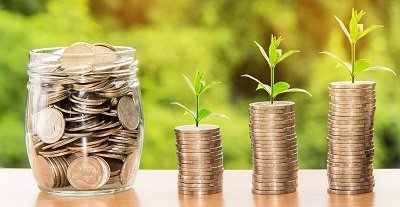
Reeling from the effects of the COVID-19 pandemic, this country is confronted with low domestic revenue mobilisation, putting it (Ghana) in a difficult financial situation.
The need to invest to prop up the economy, pay salaries and meet statutory obligations, procure vaccines to save the citizens from the coronavirus disease is pushing government expenditure to the roof.
Between 2017 and 2019, the fiscal consolidation programme being pursued by the government pushed the budget deficit to 4.4 per cent of Gross Domestic Product (GDP), before COVID-19 spending has pushed to 11.7 per cent of GDP in 2020.
But, at a time when the government needs to invest to mitigate the impact of the COVID-19 pandemic on households and businesses, its revenue is plummeting.
The collapse of some businesses as a result of the COVID-19 and the ravages of the disease have compounded the country’s low tax revenue collection and affected the country’s growth.
Worryingly, the country’s growth rate which stood around 6.5 per cent before the coronavirus pandemic, fell to 1.1 per cent in 2020.
Generally, the country’s domestic tax revenue mobilisation appears to be low and trail behind its peers in the sub-region.
The First Deputy Governor of the Bank of Ghana, Dr Maxwell Opoku-Afari, at a recent lecture at the University of Ghana Business School, stated that Ghana’s tax revenue to Gross Domestic Product (GDP), ratio was lower than Africa’s average, which was also lower compared with other regions of the world.
He said the tax to GDP ratio for Ghana had averaged 12 per cent over the past two decades, and was lower than Africa’s average of about 17 per cent in 2017, adding that “This also falls short of the 25 per cent of GDP needed to give fiscal comfort and to finance development projects under the SDGs. This clearly highlights the inadequacy in our tax effort, calling for new measures, in particular, targeting broadening the tax base, upgrading tax policies, and revenue administration systems to mobilise more domestic revenue.”
In view of the inability of the country to raise enough domestic tax revenue, the government has to resort to borrowing to meet the country’s financial needs.
As it stands now, the country’s debt stands at more than GH¢300 billion, representing 76.4 per cent of GDP.
From a debt position of GH¢9 billion around 2008, after the country enjoyed the Highly Indebted Poor Country (HIPC) initiative when the country’s debt was forgiven by its creditors, Ghana’s debt has ballooned over the years to the current level.
Think tanks, Civil Society Groups, and, indeed, the country’s development partners have raised concern about the low domestic revenue mobilisation posing a threat to the Ghana’s public finances.
One of the think tanks that has raised concerns about the country’s low revenue mobilisation is the Institute for Fiscal Studies (IFS), an Accra-based think tank.
IFS’s in its latest studies titled “The state of Ghana’s public finances,” and the “The Role of the Extractive Sector in Ghana’s Comparatively Low Public Sector Revenue Mobilisation,” said the “developments in the officially declared fiscal balance shows that Ghana’s public finances are in a very difficult state.”
The studies, conducted by Research Fellow, Mr Leslie Dwight Mensah and Senior Research Fellow, Dr Said Boakye, said government’s inability to mobilise adequate revenue, serious expenditure management issues and extra-budgetary fiscal activities, accounted for the poor state of the country’s finances.
IFS observed that government revenue had performed poorly for the past eight years, as average growth rate of total government revenue and grants had fallen sharply, both in nominal and real terms.
Mr Mensah said difficulty in taxing the informal sector, weak real property, taxation in Ghana, and the country’s generous tax exemption systems, were some of the causes of the lower domestic revenue mobilisation.
But, Dr Boakye posited that the main challenge to the Ghana’s poor domestic revenue mobilisation was the low tax revenues being raised from the extractive sector.
He explained that the extractive sector agreements had been crafted to favour multinational companies and Ghana was not making much from its extractive resources.
“The main causes of government of Ghana’s comparatively low revenue generation from the country’s oil and mining subsectors are that the government of Ghana over-relies on the use of fiscal instruments (royalties and corporate income tax) under concessionary arrangements, with very limited direct involvement in terms of participating interests, and production sharing agreements, which are able to help overcome many of the practical problems associated with concessionary arrangements,” Dr Boakye said.
The Senior Research Fellow observed that Norway, Chile, the United Arab Emirates, Qatar, Saudi Arabia, Botswana, Trinidad and Tobago, and many others have achieved high income levels through extractive resource extraction.
“In fact, studies have found that even the industrialisation route to economic prosperity of many nations (such as Germany, United Kingdom, United States, etc.) was itself based on extractive resources, because extractive resources are characterised by exceptional profits and substantial economic rents,” he said.
Dr Boakye said the abundance of extractive resources in a country did not guarantee that the country would be able to achieve rapid economic growth and prosperity, arguing that “This depends on the country’s ability to capture sizable proportions of the revenues from the sector after avoiding resource management pitfalls such as over-borrowing, neglect of the other sectors.”
The Senior Research Fellow suggested that government must establish state-owned firms operating in the oil and gas and mining sectors and purchase controlling interests in the large-scale mining companies and increase the paid and participation interest in all the Ghanaian operations of the oil and gas companies in order to increase its interest to at least 55 per cent.
“Government must renegotiate with the oil and mining companies and should treat the renegotiation with the urgency and seriousness it deserves,” Dr Boakye said.
That, he said, would enable the government to raise more revenue locally to reduce the growing borrowing, putting the public finances in a poor state.
By Kingsley Asare
Writer’s email/whatsApp number:
(0246943864)


Ghanaian dancehall artiste Charles Nii Armah Mensah, known as Shatta Wale, has won two awards at the 43rd International Reggae and World Music Awards (IRAWMA) held in Florida over the weekend.
He picked up the Best African Dancehall Entertainer award as well as Concert of the Year for ShattaFest.
In a statement, Shatta Wale’s management expressed appreciation to the organisers and supporters of the awards.
“Management would like to sincerely appreciate the organisers of the IRAWMA awards for the recognition and continuous support for African music on the global stage.
“We also extend our deepest gratitude to fans across the world, especially the Shatta Movement fraternity, for their unwavering support, votes, and dedication throughout the years,” the statement said.
The statement added that the latest wins reaffirm the artiste’s position as one of Africa’s leading musical exports and a prominent figure in global dancehall culture.
The awards bring Shatta Wale’s total haul at the IRAWMA to 11, highlighting his continued presence on the international reggae and dancehall scene.
At last year’s edition, he won three awards: Best African Dancehall Entertainer, Best Music Video for “Killa Ji Mi”, and Best Crossover Song for “Commando” featuring Bounty Killer. -GNA
Bussiness
Global Market Volatility: Gov’t absorb GH¢2.00 per litre on diesel and GH¢0.36 per litre on petrol

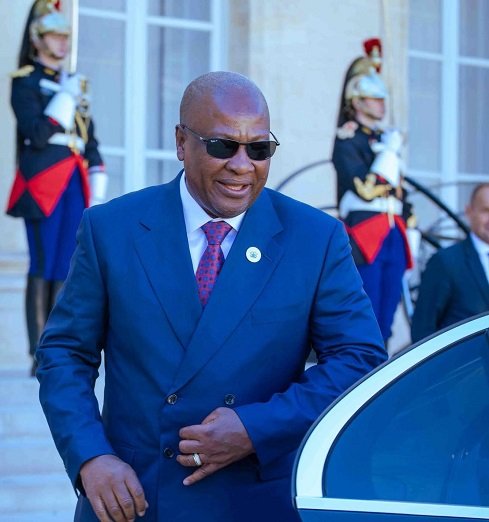
Effective Thursday, April 16, 2026, which is the next pricing window, the Government will absorb GH¢2.00 per litre on diesel and GH¢ 0.36 per litre on petrol.
This intervention is intended to cushion customers and ease the cost burden on households, transport operators, and businesses.
The measure, approved by Cabinet, is in response to rising prices of petroleum products on the international market, which have significantly impacted ex-pump prices in Ghana.
This temporary intervention will remain in force for a period of one (1) month.
During this period government will continue to closely monitor developments in the global oil market and assess the need for further policy adjustments.
A statement signed by Minister of Government Communications, Felix Ofosu Kwakye noted that they remain commited to maintaining price stability, protecting livelihoods, and supporting Ghana’s economic recovery in the face of external shocks.