News
Confusion in Tema (Final part)


- /home/u249204778/domains/spectator.com.gh/public_html/wp-content/plugins/mvp-social-buttons/mvp-social-buttons.php on line 27
https://spectator.com.gh/wp-content/uploads/2026/06/A-taxi-station-1000x600.jpg&description=Confusion in Tema (Final part)', 'pinterestShare', 'width=750,height=350'); return false;" title="Pin This Post">
- Share
- Tweet /home/u249204778/domains/spectator.com.gh/public_html/wp-content/plugins/mvp-social-buttons/mvp-social-buttons.php on line 72
https://spectator.com.gh/wp-content/uploads/2026/06/A-taxi-station-1000x600.jpg&description=Confusion in Tema (Final part)', 'pinterestShare', 'width=750,height=350'); return false;" title="Pin This Post">
Tema is a city that has something truly mysterious about it. Check Site 21 and ask to see Lama and he’d brief you all about the genesis, exodus and revelations of the harbour city.
Crash into Kwame Korkorti and he’d analyse the chemistry underlying the behaviour of Tema residents. And I invite you to meet honourable Kofi Owuo alias Death-By-Poverty who is happiest when cost of living is high.
It started as an industrial city, a workers’ paradise, born of Kwame Nkrumah, suffered under Busia (he sold TDC houses), was crucified on the cross of scanty rainfall and high cost of cocoyam. Today, Tema is like Hong Kong, a very expensive city. You even have to pay for rubbish you dispose yourself.
Even Ashaiman otherwise known as Hanoi is better, enjoying a very low cost of living. The only difference is that in Hanoi, you sometimes have to live with pigs, and pigs are not gentlemen at all. They don’t have character!
Yes, talk about Tema and you’re talking about a place like Bronx or Manhattan, a boiling pot of all ethnicities and races.
People come from the deepest jungle of Brong Ahafo where monkeys are next-door neighbours. You’ll find a confused teenager fresh from Jamasi shoe-shining and addicted to kokonte. You won’t fail to notice a retired seaman who has forgotten he is from Elmina and needs to go back home and die. And you’d find an array of East Asians but you’ll never know which is the Chinese, Japanese, Korean or Filipino. They sneeze the same way!
Home life in Tema is serene except that when a housewife is peeling cassava for fufu, a stubborn goat may approach her and ask for a bite. If she refuses, the goat may decide to take a chunk by force. You can’t drive it away using a kitchen-fan, so you have to use blows. But if the animal is a southpaw, it becomes a challenge for the angry housewife.
The cosmopolitan nature of the city makes night life interesting. You’ll meet people of all kinds, shapes, haircuts and mentality and you learn a lot from each other. It is even more enjoyable when you can blow beer and kebab regularly without developing financial constipation.
Tema used to be a very peaceful, orderly place until recent times when the Black Cat incident caused a big stir. Instead of the Tema Metropolitan Assembly (TMA) taking time to review the method used in dealing with the floating drivers, they discharged Black Cat and replaced him with a more formidable gun-wielding task force. The move was seen largely as a sure recipe for imminent clash, because the LTs and minibuses were still being chased around in the metropolis, this time with warning shots.
At least, Black Cat wasn’t using firearms for the operation. He used muscle and ferociousness. Compared to the new task force, Black Cat was a more benevolent enforcer. And with the new task force, even taxi drivers were not permitted to stop and pick passengers. What a regulation!
It didn’t take a prophet of the calibre of Elijah to predict that another nasty incident was in the pipeline. What beat the imagination of everybody was why the Metropolitan Chief Executive still endorsed the use of the task force following the turbulent Black Cat incident.
Well it happened again that a taxi driver was arrested by task force men and during the confrontation, the man was allegedly brutalised and killed. News spread city-wide about the death and angry drivers, allegedly supported by other residents, charged on the premises of the TMA.
On the occasion, the Chief Executive, Nii Armah Ashittey, was reported to have been smarter than a rat. With incredible speed, he dashed downstairs, dived into his car, and his experienced driver changed gears and fired the accelerator and wheeled him to safety. God bless his soul!
There was wanton destruction of property and looting. By the following day, it turned out that the dead man whose obituary notice caused the commotion was alive, after all, hale and hearty. Another miraculous resurrection was registered in the annals of the harbour city. The dead man was said to have only been treated and discharged.
The next day, suspects were rounded-up- 239 of them including a few women. They were brought to the Community One Police Station, screened and 18 put before court. The courts will decide their innocence or guilt and punishment thereof.
Meanwhile, certain issues must be resolved once and for all. First, much as the offending drivers are misconducting themselves and defying metropolitan rules and regulations, the mode of arresting them is crude and uncivilised.
You don’t forcibly arrest a taxi driver and start dragging him for stopping to pick a passenger. If anything, he must be given a ticket or summoned.
In any case, Tema is the only city taxis are mandated to operate from a rank and must not pick passengers in town. So if you’re three miles from the taxi rank, you must walk there to pick a taxi. I don’t think this is fair to anybody!
Secondly, the GPRTU must find a solution to the problem of floating drivers without causing pandemonium because using a task force is proving dangerous for everybody and it has caused a major disquiet twice already, aside many minor ones.
When President Rawlings visited Tema a day after the disturbances that is on May Day he stressed on the need to maintain peace and order in the city. It goes without saying that violence and disturbances must be prevented at all cost. And if the task force which is currently still operating is not disbanded, another, even nastier incident, is bound to happen.
If Nii Armah Ashittey is still unable to comprehend the intricacies of the problem and foresee that with the task force still in place, trouble is again inevitable, then it is very unfortunate. It has happened twice already and we have still not learnt a lesson!
I urge him to sit down with the GPRTU executives and do some brainstorming about how best to solve the problem without using a task force.
Residents of Tema want to live peacefully and deserve that right!
This article was first published on Saturday May 18, 1996








Women have been asked not to dismiss painless lumps in the breast, as the absence of pain does not mean a lump is harmless.
A Specialist Radiation Oncologist at the Korle-Bu Teaching Hospital, Dr Mary Ann Dadzie, said women should seek medical attention promptly whenever they noticed any unusual changes in the breast.
“A painless lump is not a harmless lump. You need to take action and not wait for pain,” she said.![Prof.Dr.Grace Ayensu-Danquah [middle] launching of Breast Cancer Awarencss Mouth with Dr.Caroline Reindorf Amissah[second from right] and other officials Photo Okai Elizabeth.](https://spectator.com.gh/wp-content/uploads/2026/10/Prof.Dr_.Grace-Ayensu-Danquah-middle-launching-of-Breast-Cancer-Awarencss-Mouth-with-Dr.Caroline-Reindorf-Amissahsecond-from-right-and-other-officials-Photo-Okai-Elizabeth.jpg)
Dr Dadzie made the call at the 2026 national launch of Breast Cancer Awareness Month, held on the theme, “early action, better outcomes.”
She expressed concern that about 45 per cent of breast cancer patients seen at Korle-Bu failed to return after starting treatment.
According to her, some patients began treatment but later stopped reporting to the hospital, leaving health professionals uncertain about their wellbeing.
She attributed the situation to several factors, including fear of death, financial difficulties, long distances to health facilities, lack of time and stigma.
Dr Dadzie urged women to know their breasts and seek medical attention within two weeks of noticing any abnormality.
She said warning signs could include a lump or thickening in the breast or armpit, changes in breast size, an inverted nipple, nipple discharge and changes in the skin, including redness, sores or an orange-peel appearance.
She cautioned women not to assume they were safe simply because they had no family history of breast cancer, explaining that only about five to 10 per cent of women with the disease had a familial or genetic mutation.
Dr Dadzie encouraged women to undergo regular clinical breast examinations and discuss appropriate screening options, including mammography and ultrasound, with health professionals.
She also called on families, particularly husbands and partners, to support women who needed breast examinations or treatment.
“Home is where the support begins,” she said, urging families to provide practical assistance such as transportation and childcare.
Dr Dadzie further appealed for breast cancer services to be brought closer to communities through increased access to mammography, ultrasound and biopsy services, as well as the training of more health professionals.
The Deputy Minister of Health, Prof. Dr Grace Ayensu- Danquah, said breast cancer remained a major health concern among women in Ghana, with an estimated 4,650 new cases and about 2,060 deaths recorded annually.
She said Ghana’s breast cancer response focused on prevention, early detection, equitable access to treatment and compassionate care.
Dr Ayensu-Danquah said the country was working to strengthen awareness, clinical breast examinations, referral systems, pathology and diagnostic services to improve breast cancer outcomes.
The World Health Organisation (WHO) representative, Dr Joana Ansong, said too many women continued to present with advanced breast cancer, resulting in avoidable suffering and deaths.
She called for stronger health education, timely diagnosis, rapid referral and equitable access to comprehensive treatment and support.
Dr Ansong said breast cancer awareness should move beyond campaigns to sustained action involving government, communities, health professionals, civil society organisations, the private sector and families.
By Esinam Jemima Kuatsinu

Authorities of Percheyire R/C Basic School in the Yilo Krobo District of the Eastern Region are concerned about the safety of teachers and learners of the school, as reports of the condition of the structure appear to have fallen on deaf ears.
The ramshackle classroom structure looks like one that could cave in in the case of a heavy storm and, according to the teachers, teaching and learning become impossible when the rains set in.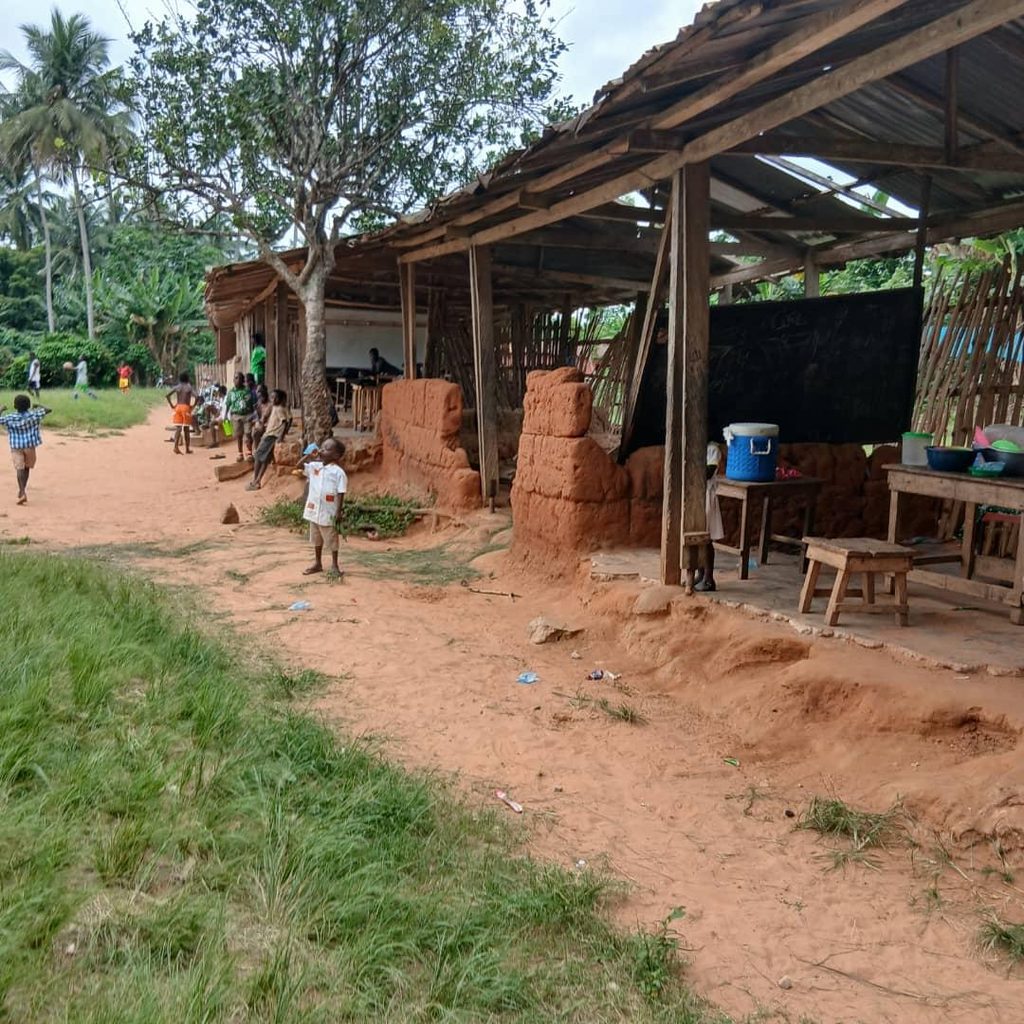
The structure, which accommodates pupils from Primary Four to Six, has worn-out roofing sheets, mud walls and sections supported by wood used as pillars.
A source at the school, who requested anonymity, told The Spectator in an interview that the situation was particularly difficult during the rainy season.
“When it rains, it means teaching and learning would come to an end,” he said.
The source explained that the challenge affected only the upper primary section, as pupils from Kindergarten to Primary Three were housed in a relatively better block.
According to the source, about 30 pupils from Primary Four to Six currently use the dilapidated structure, but expressed grave concern about its condition.
The source, however, said that the safety of the pupils, their furniture and books remained a concern, particularly during heavy rains.
The source said the situation had been reported to the relevant authorities and was hopeful that the structure would eventually be reconstructed.
Some pupils sitting in one of the classrooms
Despite the visit to the school, authorities indicated that work would be undertaken, but the school was yet to receive further information on when the project would begin.
The source also identified the poor road network to the school as another challenge affecting enrolment, saying the school serves pupils from Percheyire and three neighbouring communities.
It also emerged that an enrolment drive embarked upon in one of the communities, Togodo, showed that more than 60 school-going children lived in the community, but were unable to attend the school regularly because of the distance and poor road.
The school currently has about 110 pupils from Kindergarten through Junior High School, according to the source.
The source said improving both the classroom infrastructure and the road network would help create a more conducive learning environment and potentially improve enrolment.
A former teacher of the school, Rev. Elizabeth Korasare, said she was surprised to find the structure still in use after 38 years.
“I was surprised to see that the classroom I sat in 38 years ago is in the same state. Even though there are some new blocks, the upper primary is still housed in that same dilapidated structure,” she told The Spectator.
She therefore appealed to the relevant stakeholders to support the school by building a modern structure and improving the road network.
By Esinam Jemima Kuatsinu
SKIP THE QUEUE, TAP THE NEWS
You can now read the Ghanaian Times and The Spectator newspapers from the comfort of your device via TimesNewsPlus.
Join our WhatsApp Channel: https://whatsapp.com/channel/0029VbBElzjInlqHhl1aTU27