News
U.S. Ambassador urges protection of shea parklands in northern belt


- /home/u249204778/domains/spectator.com.gh/public_html/wp-content/plugins/mvp-social-buttons/mvp-social-buttons.php on line 27
https://spectator.com.gh/wp-content/uploads/2021/07/Ambassador-Stephanie-S.-Sullivan-waters-her-newly-transplanted-seedling-as-the-Buipewura-Jinapor-II-Archbishop-Philip-Naameh-and-Most-Reverend-Peter-Paul-Yelezuomeng-Angkyier-look-on.jpeg&description=U.S. Ambassador urges protection of shea parklands in northern belt', 'pinterestShare', 'width=750,height=350'); return false;" title="Pin This Post">
- Share
- Tweet /home/u249204778/domains/spectator.com.gh/public_html/wp-content/plugins/mvp-social-buttons/mvp-social-buttons.php on line 72
https://spectator.com.gh/wp-content/uploads/2021/07/Ambassador-Stephanie-S.-Sullivan-waters-her-newly-transplanted-seedling-as-the-Buipewura-Jinapor-II-Archbishop-Philip-Naameh-and-Most-Reverend-Peter-Paul-Yelezuomeng-Angkyier-look-on.jpeg&description=U.S. Ambassador urges protection of shea parklands in northern belt', 'pinterestShare', 'width=750,height=350'); return false;" title="Pin This Post">
The United States Ambassador to Ghana, Mrs. Stephanie S. Sullivan, recently joined His Majesty Buipewura Abdoulai Jinapor II and members of the Global Shea Alliance (GSA) to commemorate Shea Day with a tree planting event within the grounds of the Yagbonwura Jakpa’s Palace at Damongo.
The event was part of the Action for Shea Parklands initiative, which was launched in 2020 to preserve and protect the shea parklands across West Africa.
The U.S. Government, through the U.S. Agency for International Development (USAID), has supported women’s cooperatives across northern Ghana to plant 15,000 shea trees during the month of July, recognised as “shea month.”
Ambassador Sullivan, who launched the Action for Shea Parklands initiative in 2020, emphasised the critical need to protect shea parklands and take progressive action to reverse the effects of degradation.
“It is imperative that communities lead action at the local level – restoration begins with a clear understanding of your landscape and your needs. Each one of us here must then take action to promote climate resilience, and tree planting is a positive first step.
“The task is more complex than simply planting trees. The restorative process requires our long-term investment in the management and growth of the trees we plant today and into the future,” she stated.
She further expressed the U.S. government’s commitment to contribute to global climate solutions, highlighting the U.S. return to the Paris Climate Agreement. The United States supports the global one trillion tree initiative, which seeks to conserve, restore, and grow one trillion trees by 2030.
Throughout the month of July, USAID is partnering with the GSA to mobilise stakeholders across the globe to act now and preserve the shea parklands.
USAID is supporting GSA members to undertake cross-regional activities such as tree planting, parkland management training, advocacy, and social media campaigns in Benin, Burkina Faso, Côte d’Ivoire, Ghana, Mali, Nigeria, and Togo under the Sustainable Shea Initiative (SSI).
The Sustainable Shea Initiative is an $18 million, five-year programme that promotes the sustainable expansion of the shea industry in Ghana, Benin, Côte d’Ivoire, Togo, Mali, Nigeria, and Burkina Faso, as well as increases the incomes of hundreds of thousands of rural women.
In Ghana, 20,000 trees will be planted across five northern regions this year alone.
About Global Shea Alliance:The Global Shea Alliance is a non-profit industry association with 560 members from 35 countries including women’s groups, brands and retailers, suppliers and NGOs.
Through public-private partnership, the GSA promotes industry sustainability, quality practices and standards, and demand for shea in food and cosmetics.
The USAID/West Africa mission is to promote social and economic well-being in the region.
Spanning 21 countries, USAID/West Africa designs and implements programmes with West African partners to strengthen systems of non-violent conflict management, support economic growth, and expand quality health services.



The Accra Regional Police Command has arrested former professional boxer Michael Ayitey Okai, popularly known as “Ayitey Powers,” over an alleged threat of death against the Director-General of the National Sports Authority, Yaw Ampofo.
According to the Police, the 46-year-old former boxer was arrested on Monday, August 24, 2026, in connection with the alleged threat.
The Police said the arrest followed a video circulating on social media in which Ayitey Powers is alleged to have issued the threat against Mr Ampofo.
He is currently in Police custody and is assisting with investigations.
The Accra Regional Police Command said investigations are ongoing to establish the circumstances surrounding the alleged threat and determine the appropriate action to be taken in accordance with the law.
The Command has urged the public to refrain from sharing unverified information about the matter while the investigation continues.
By: Jacob Aggrey
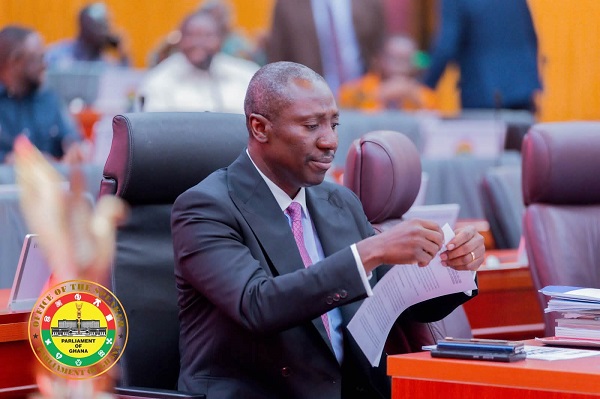
Minority Leader in Parliament Alexander Afenyo Markin has sued the Chief Executive Officer of the Ghana Gold Board (GoldBod), Sammy Gyamfi, and Multimedia Group Limited over alleged defamatory comments made against him on the Newsfile programme.
In a writ filed at the High Court in Accra, Mr Afenyo Markin is seeking GH¢15 million in damages, an apology and retraction of the statements, among other reliefs.
The suit follows comments allegedly made by Mr Gyamfi during the Saturday, August 22, 2026 edition of Newsfile, hosted by Samson Lardy Anyenini.
According to the statement of claim, Mr Gyamfi described Mr Afenyo Markin as an “extortionist” while responding to a question about GoldBod’s reported profits and its position on losses arising from its operations.
The plaintiff claims that Mr Gyamfi repeated the allegation when the host sought clarification on whether he stood by the description.
Mr Afenyo Markin further claims that Mr Gyamfi challenged him to sue him and insisted that the allegation was true.
The plaintiff argues that the statements created the impression that he engages in extortion, uses his political influence to put improper pressure on public institutions and officials, and conducts himself in a manner inconsistent with the standards expected of a lawyer and public office holder.
He denies the allegations and maintains that he is not an extortionist and has never engaged in the conduct alleged by Mr Gyamfi.
The Minority Leader also argues that the comments were made maliciously and were presented as facts without evidence being disclosed.
He claims the statements have damaged his reputation, professional standing and public image, particularly because of his position as a senior political figure and legal practitioner.
The suit also names Multimedia Group Limited as a defendant because, according to the plaintiff, the alleged defamatory comments were broadcast through JoyNews and subsequently circulated on social media platforms, including X, Facebook and YouTube.
Mr Afenyo Markin claims Multimedia failed to stop the comments or deactivate Mr Gyamfi’s microphone after the allegations were made.
He is therefore asking the court to award him general, aggravated and exemplary damages, as well as GH¢15 million in compensation and legal costs.
He is also seeking an order compelling the defendants to issue a full, unconditional and unequivocal retraction and public apology.
The plaintiff wants the apology and retraction to be given similar prominence and reach as the original publication, including through JoyNews and the social media platforms where the comments were disseminated.
He is further seeking a permanent injunction preventing the defendants from repeating the alleged defamatory statements or words with a similar meaning.
The writ requires the defendants to enter an appearance within eight days after being served.
It warns that failure to do so could result in judgment being entered in their absence.
The case was filed by lawyer Paa Kwesi Abaidoo of Dehyena Chambers on behalf of Mr Afenyo Markin.
By: Jacob Aggrey