Profile
From dormancy to dominance: Rev. Emmanuel D. Niikoi’s inspiring netball journey

- /home/u249204778/domains/spectator.com.gh/public_html/wp-content/plugins/mvp-social-buttons/mvp-social-buttons.php on line 27
https://spectator.com.gh/wp-content/uploads/2026/02/Rev-NiiKoi-and-the-General-Secretary-of-the-Netball-Federation-Ernest-Dankyi-600x600.jpg&description=From dormancy to dominance: Rev. Emmanuel D. Niikoi’s inspiring netball journey', 'pinterestShare', 'width=750,height=350'); return false;" title="Pin This Post">
- Share
- Tweet /home/u249204778/domains/spectator.com.gh/public_html/wp-content/plugins/mvp-social-buttons/mvp-social-buttons.php on line 72
https://spectator.com.gh/wp-content/uploads/2026/02/Rev-NiiKoi-and-the-General-Secretary-of-the-Netball-Federation-Ernest-Dankyi-600x600.jpg&description=From dormancy to dominance: Rev. Emmanuel D. Niikoi’s inspiring netball journey', 'pinterestShare', 'width=750,height=350'); return false;" title="Pin This Post">
IN the annals of Ghana’s sporting history, certain individuals stand out not merely for participating in sport, but for transforming it.
Rev. Emmanuel D. Niikoi is one such figures. Revered as the father of modern netball in Ghana, is widely credited with rescuing the game from near extinction and transforming it into a vibrant, structured and nationally recognised sports discipline.
His journey reflects vision, resilience and an unwavering commitment to youth and sports development.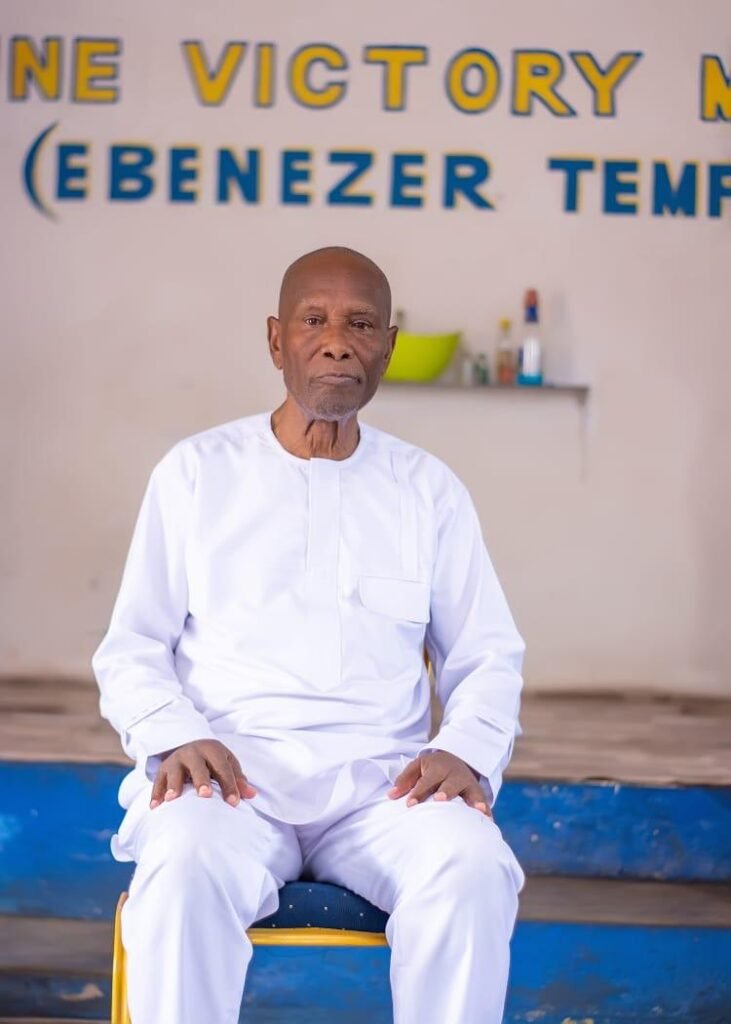
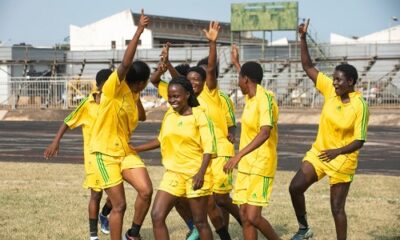
Netball was introduced to the then Gold Coast by Christian missionaries alongside formal education. By the 1960s and early 1970s, the sport had gained remarkable popularity in schools and colleges, ranking second only to football and, in some institutions, rivaling it in appeal.
However, during the 1974/75 academic year, the Ghana Education Service (GES) took a policy decision to step down netball in favour of basketball development. The decision dealt a severe blow to the sport.
Between 1975 and 1985, competitive netball virtually disappeared from Ghana’s sporting calendar.
That decision of the GES can be blamed for the current state of the sports that is producing heroines across the globe.
The revival of the game can be traced to 1985 during the Golden Jubilee celebration of the Ghana Broadcasting Corporation (GBC).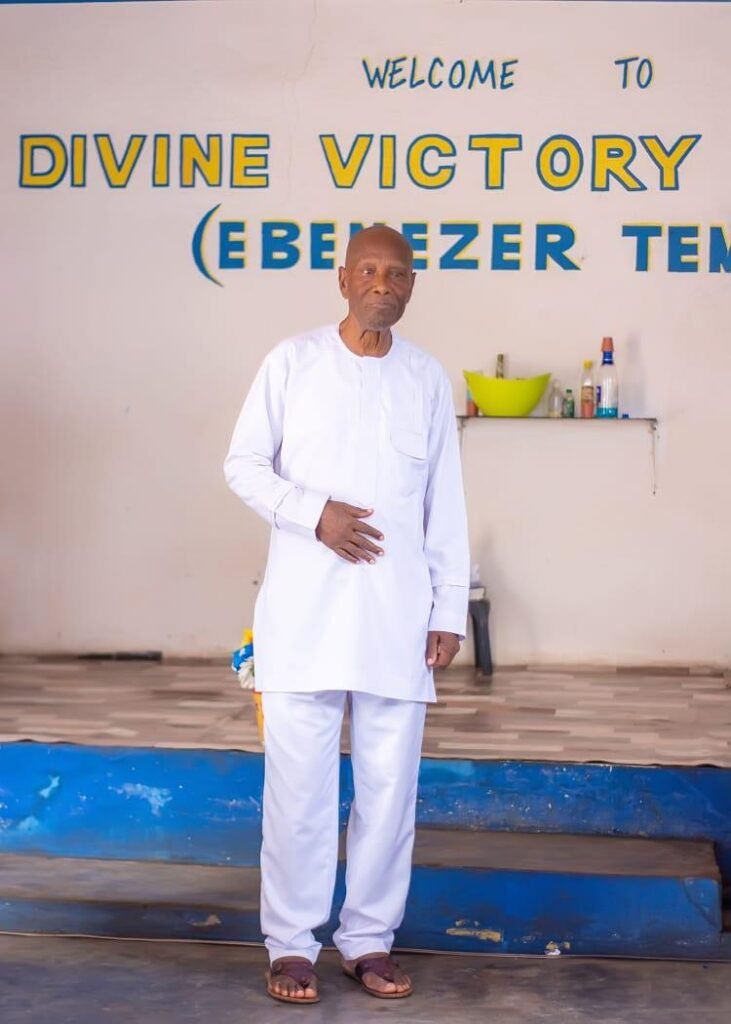
At the time, Rev. Niikoi was serving as Chief Editor (News) in the Radio Newsroom. Understanding both the historical importance and untapped potential of netball, he championed the inclusion of a netball tournament as part of the anniversary celebrations. The event reignited public interest and reminded many of the sport’s former glory.
Crucially, Rev. Niikoi did not allow the momentum to fade after the festivities. The GBC netball team formed for the tournament, aptly named “Golden Hands,” became the cornerstone of a national revival campaign.
With determination and personal sacrifice, he led tours across the country, using the team as a practical training platform.
He personally taught sports teachers under the GES the official rules of netball, reintroduced structured competition, and restored confidence in the sport’s viability.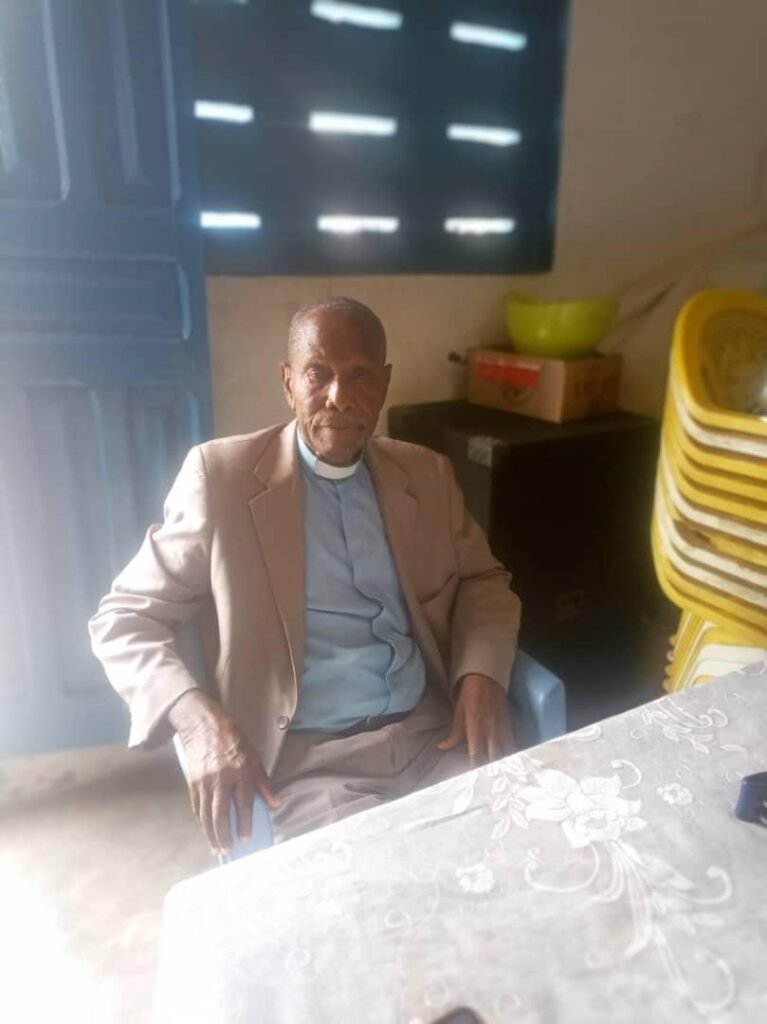
These efforts culminated with the formation of the Netball Association of Ghana in 1988, now known as the Netball Federation of Ghana.
In 1990, the association gained formal recognition from the National Sports Authorities, previously known as the National Sports Council (NSC), restoring netball’s status as an official sporting discipline.
This milestone marked the rebirth of organised netball in Ghana and cemented Rev. Niikoi’s place as founder of the national governing body.
Revival soon transitioned into consolidation. Over the years, Rev. Niikoi consistently lobbied educational and sports authorities to reintegrate netball into major school competitions.
His advocacy led to the sport’s reintroduction into the National Basic Schools Sports Festival, the Senior High and Technical Schools Sports Festival, the Colleges of Education games, and competitions under the Ghana University Sports Association (GUSA).
Today, netball is played across the entire educational structure in Ghana, from basic schools to public universities, a testament to his sustained and strategic efforts.
On the continental and global front, Ghana is a full member of World Netball and was a founding member of the Confederation of Africa Netball Associations (CANA), now Africa Netball.
In 2004, Ghana hosted the inaugural Africa Netball Cup of Nations in Accra and emerged champions after defeating Namibia in the final. The victory not only boosted Ghana’s sporting image but also validated years of groundwork.
In 2007, Rev. Niikoi was elected Director of Marketing and Media for CANA, serving a four-year term and contributing to the sport’s development across the continent.
In 2019, following governance reforms required by the International Olympic Committee to lift sanctions related to state interference in sports administration, national federations were mandated to adopt independent constitutions. Under this new framework, the Netball Federation of Ghana successfully drafted its constitution and conducted elections.
On June 19, 2019, Rev. Niikoi was elected the federation’s first President under the independent constitutional order which is symbolic and deserved recognition of decades of service.
Beyond netball administration, Rev. Niikoi also served two terms spanning eight years from March 2018 to March 2025 as an Executive Board Member of the Ghana Olympic Committee.
His presence on the board ensured that netball maintained visibility within Ghana’s broader Olympic movement.
A Bachelor of Arts graduate in Combined Honours (History and Law), Rev. Emmanuel D. Niikoi has trained numerous coaches and umpires nationwide, strengthening the sport’s technical foundation and ensuring sustainability.
His leadership style combines administrative discipline with grassroots engagement, making him both a strategist and a mentor.
From dormancy to dynamism, the resurgence of netball in Ghana bears his unmistakable imprint. Through advocacy, institution-building and capacity development, Rev. Niikoi has secured a lasting legacy.
Today, every netball match played in Ghana, whether at a basic school court or a university festival stands as living testimony to his vision and perseverance.
By Esinam Jemima Kuatsinu





Profile
Stitching Technical, Vocational skills to greatness …The inspiring story of Mrs Joyce Neenekwor Pechi-Anim

For many years, Technical and Vocational Education and Training (TVET) was perceived as an option for people who were not academically inclined.
However, as society evolves, vocational skills have become an important driver of economic growth, creating jobs and empowering people to build successful enterprises.
One woman demonstrating the power of vocational skills is Mrs Joyce Neenekwor Pechi-Anim, Founder and Chief Executive Officer of Joycelyn Fit Fashion, Cake and Décor, popularly known as JFit, in Koforidua.
With more than 26 years’ experience in fashion design, cake artistry, catering, event decoration, planning and vocational training, Mrs Pechi-Anim has built a thriving enterprise serving government institutions, corporate organisations and individuals across the Eastern Region and beyond.

Her journey began at age 18 after she completed her training at St Annie’s Vocational Institute at Nuaso.
Encouraged by Mr Alfred Yaw Kissi, then Eastern Regional Secretary of the Ghana National Tailors and Dressmakers Association (GNTDA), she moved to Koforidua at age 21 to pursue her dream.
But success did not come wrapped in a ribbon.
She first operated from the porch of her rented apartment at Koforidua-Ada. As customers increased, she began searching for a shop. A grateful client promised to provide one but Joyce had to wait and repeatedly follow up for seven months before the promise was fulfilled.
The shop she eventually received was small, but her ambition was not.
She continued sewing, took on apprentices and built a reputation for creativity, discipline and, above all, keeping her word.
“If I tell you to come for your dress at 7 a.m. on Thursday, I mean it. By the time clients come, it is ready,” she told The Spectator in an interview.
That simple principle of punctuality became one of the hallmarks of her business.
Her passion for empowering others also grew.
Through her vocational school, Mrs Pechi-Anim has trained more than 300 apprentices, about 100 of whom are now established in fashion, hospitality and the creative industries in Koforidua, Accra, Nkawkaw, Krobo Odumase and beyond.
Never content to remain in one lane, she ventured into cake artistry in 2016, enrolling at Flora Cakes and Décor for nine months. She later expanded into event decoration, planning and catering.
She later pursued other vocational courses in Ghana and Lagos.
Her portfolio included major assignments such as the decoration of the late Dr Omane Boamah’s one-week celebration in Koforidua, Eastern Expo 2026 and the Eastern Regional Hospital’s centenary celebration.
Her work has earned her more than 30 awards and certificates of honour, including Outstanding Woman CEO of the Year, 2025, presented to her by the Ghana Art Choice and Business Industry in June 2026,
Beyond business, Mrs Pechi-Anim has held leadership positions, including National Vocational Training Institute (NVTI) Examiner, Secretary for the Ghana National Tailors and Dressmakers Association (GNTDA) from 2000 to 2010, and currently, Treasurer. She is also a Council Member of the Ghana National Chamber of Commerce and Industry.
She attributed her success to discipline, hard work, creativity and excellent customer service, while encouraging young people to acquire skills and use social media to market their talents.
Yet, behind the accolades was a woman who knows the difficult side of entrepreneurship.
She recalled apprentices stealing work materials, customers refusing to pay outstanding balances after events and others attempting to damage her reputation by portraying her services as too expensive.
Through all these challenges, she said discipline, hard work, integrity and excellent customer service have kept her moving.
For Mrs Pechi-Anim, vocational education is no longer a second choice.
“I have nurses and other salaried workers coming to learn skills to build careers and support themselves financially,” she said.
She revealed that she has a dream to build a much bigger vocational school, where she would train young children from age three upwards to enable them acquire vocational skills at a tender age.
She believes that would help them to use the skill to support themselves financially throughout their lives to supplement their academic goals.
She, therefore urged parents to support children who show interest in vocational training rather than forcing them into careers they do not enjoy.
She also advised young people to acquire a skill and use technology to their advantage.
In an era dominated by social media, she encouraged the youth to showcase their work online instead of using the platforms solely for entertainment.
She revealed that she used social media to market JFit and has embraced Artificial Intelligence (AI) tools to improve her work.
Married to Mr Richard Pechi-Anim since 2009 and a mother of three, Mrs Pechi-Anim believed her story demonstrated that success can be stitched together, one skill, one client and one determined step at a time.
She called on the government to create platforms for successful people in the TVET sector to share their stories and inspire others.
For her, the sewing machine that once sat on a humble porch has become more than a tool. It has been an instrument of enterprise, empowerment and hope.
From Ama Tekyiwaa Ampadu Agyeman, Koforidua
SKIP THE QUEUE, TAP THE NEWS

You can now read the Ghanaian Times and The Spectator newspapers from the comfort of your device via TimesNewsPlus.
Join our WhatsApp Channel: https://whatsapp.com/channel/0029VbBElzjInlqHhl1aTU27

For years, Georgina Naa Odarkaa Lamptey has quietly invested in the lives of children whose dreams could easily have been cut short by financial hardship.
She has paid school fees, supported medical expenses, provided health insurance and transportation, and helped children remain in school.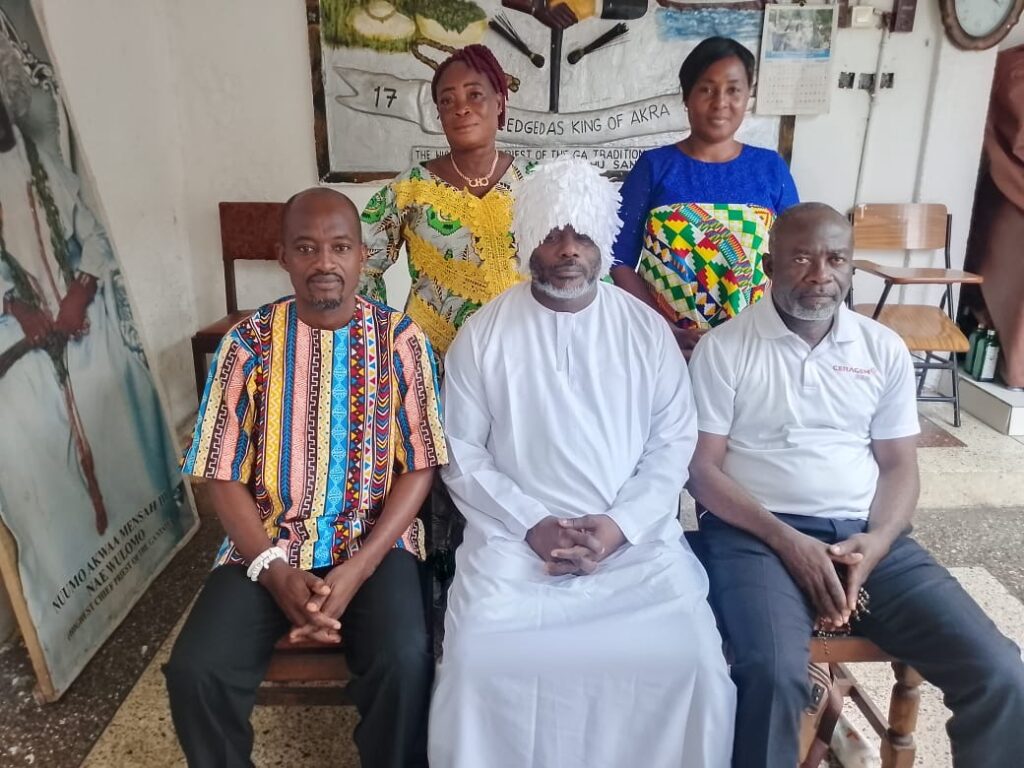
Through the Eastbourne Foundation, she has supported more than 10 children over the years and currently assists about five.
But behind her commitment to helping others is a deeply personal story of a woman who once received a helping hand herself and made a decision never to forget it.
“If somebody has done that for me, I need to do it for somebody,” she says.
That belief has become the driving force behind her philanthropic work.
The Eastbourne Foundation was established five years ago to support children in need, particularly those facing financial difficulties that could prevent them from continuing their education.
For Georgina, the work is not about a child’s tribe, background or social status. What matters is genuine need.
When cases are brought to the attention of those who assist with the foundation’s work in Ghana, the welfare committee of the foundation assess the circumstances and inform her. She then provides financial support where necessary.
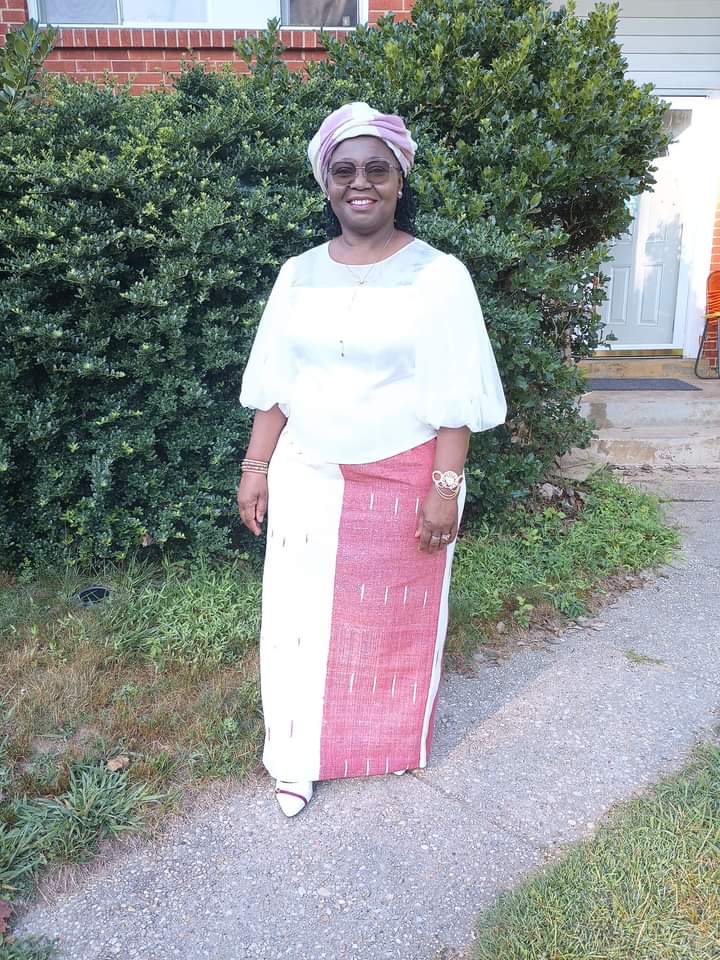
Her support has gone beyond paying school fees. For some beneficiaries, she has taken responsibility for health insurance, transportation to and from school, medical expenses and other educational needs.
Her motivation, she says, comes from her own background and life experiences.
“If you have help, you can get somewhere,” she says. “There are people who can do things, but without help, they may not get the opportunity to become what they can be.”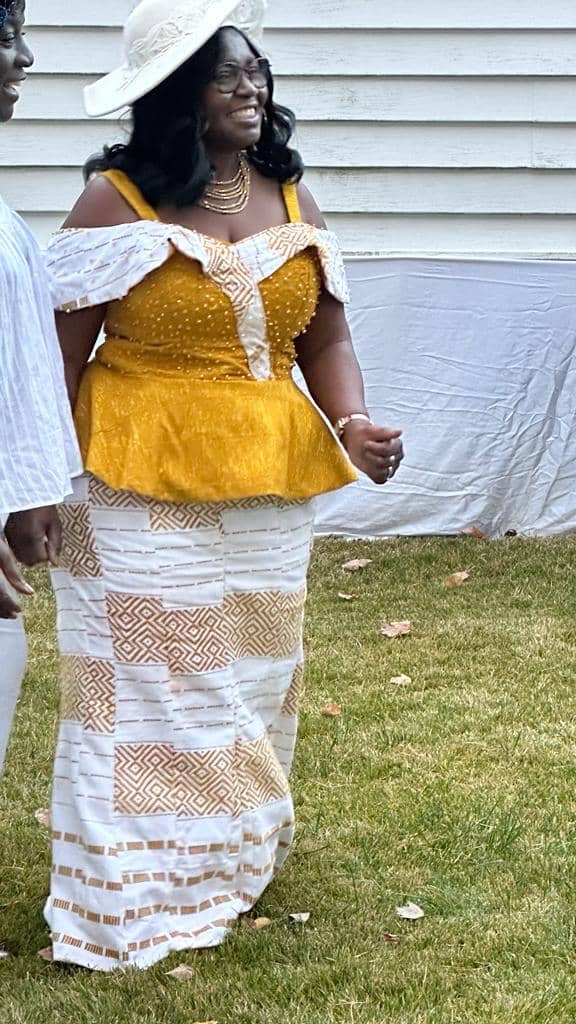

For Georgina, helping a child is therefore not merely an act of charity; it is an investment in human potential.
Her journey of supporting others has not always produced the outcomes she hoped for. One girl she supported was exceptionally brilliant. Georgina followed her educational journey closely and provided support for her schooling and other needs.
But as the girl approached graduation, family circumstances changed and she eventually disappeared from Georgina’s life. The experience was deeply painful.
In another case, Georgina supported a girl from primary school through senior high school. After the girl completed school, a misunderstanding arose between Georgina and the beneficiary’s family concerning the assistance she had received.
The relationship broke down and the support could no longer continue.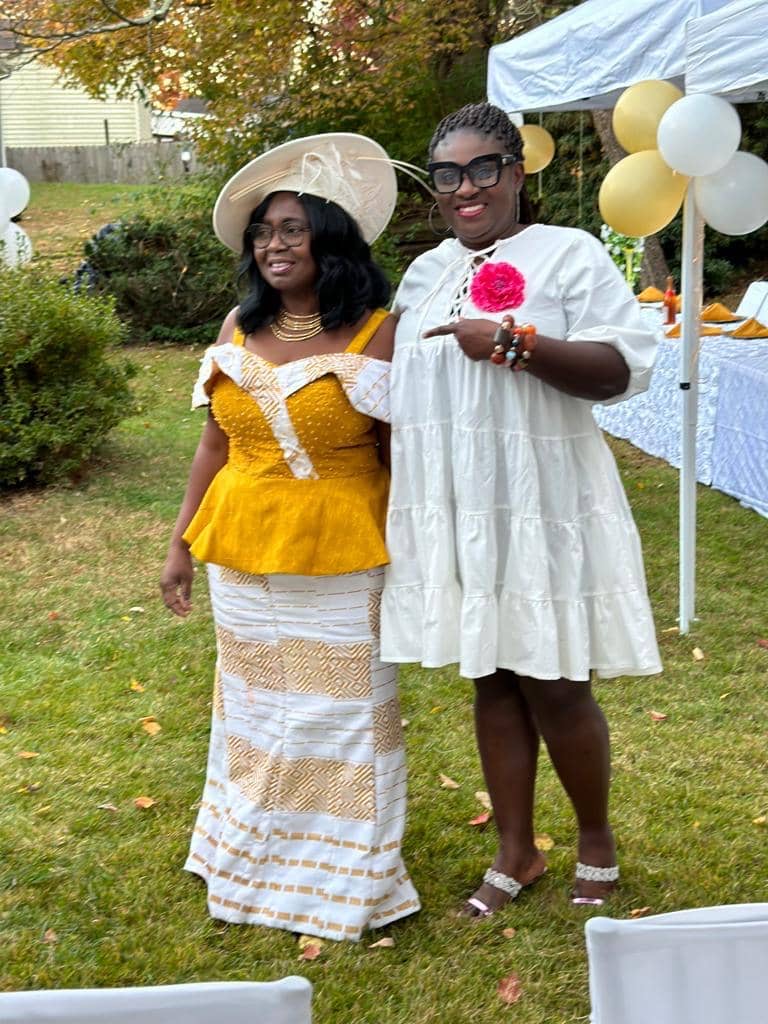
Such experiences have taught her about disappointment and human nature. Yet, they have not stopped her from helping.
“I don’t think that is a deterrent to helping somebody,” she says. “You can’t have everything right. So I still do it.”
For Georgina, disappointment should not destroy the desire to do good.
Her passion for helping children is rooted in her own experience.
When she was preparing to train as a community health nurse, one of her pastors, Emmanuel Aladira, came to her aid.
The course was a three-year programme, and the pastor helped her obtain the items she needed for school, purchasing enough to support her throughout the training. The gesture made a lasting impression on her.
Years later, as she became professionally established, she remembered that someone had once looked at her potential and decided that she was worth supporting.
She came to believe that she, too, had a responsibility to do the same for others.
Born and bred in Adedeinkpo, a suburb of Jamestown, Accra, Georgina began her education at Ayalolo Cluster of School and completed her middle school education with distinction and was among only two pupils in her class to achieve that feat.
Yet, her journey was not always straightforward.
After completing school, she stayed home for some time and briefly tried her hand at catering. She did not enjoy it.
Then one day, a friend told her she had applied to nursing school and encouraged Georgina to do the same.
She took the chance and that decision changed her life.
She performed exceptionally well in the national entrance examination, placing second in the country, and in 1982 began training as a community health nurse.
After graduating, she returned to Accra and began working at Princess Marie Louise Hospital, popularly known as the Children’s Hospital. Her ambition, however, did not end there.
When she heard that a former classmate had written the General Certificate examination and passed, she challenged herself to do the same.
“If she can do it, then so can I,” she reasoned.
She studied for seven months, wrote the examination and performed well enough to continue her education.
Her determination produced remarkable results. During her nursing training, she emerged as the highest-performing student in the country in her first year. When she graduated in 1992, she again excelled in practical nursing.
She later trained as a midwife and practiced for about 25 years before travelling to the United States.
Even as she approaches retirement, Georgina is thinking about how she can continue giving back.
She currently supports about five children through the Eastbourne Foundation and hopes to expand her community work after retirement.
She plans to establish a reading club where children can come after school for help with their homework and improve their reading skills.
She is also considering starting a non-denominational Sunday school to reach children in the community who may need spiritual, educational and social support.
Her vision is to create a space where children can be welcomed, fed, guided and encouraged to become the best version of themselves.
For Georgina, retirement will therefore not mark the end of service, but rather offer an opportunity to do even more.
By Esinam Jemima Kuatsinu
SKIP THE QUEUE, TAP THE NEWS
You can now read the Ghanaian Times and The Spectator newspapers from the comfort of your device via TimesNewsPlus.
Join our WhatsApp Channel: https://whatsapp.com/channel/0029VbBElzjInlqHhl1aTU27