News
Ghana To Host 2026 Africa Real Estate Festival, bridging investment, policy, and culture

- /home/u249204778/domains/spectator.com.gh/public_html/wp-content/plugins/mvp-social-buttons/mvp-social-buttons.php on line 27
https://spectator.com.gh/wp-content/uploads/2026/01/WhatsApp-Image-2026-01-19-at-13.59.12.jpeg&description=Ghana To Host 2026 Africa Real Estate Festival, bridging investment, policy, and culture', 'pinterestShare', 'width=750,height=350'); return false;" title="Pin This Post">
- Share
- Tweet /home/u249204778/domains/spectator.com.gh/public_html/wp-content/plugins/mvp-social-buttons/mvp-social-buttons.php on line 72
https://spectator.com.gh/wp-content/uploads/2026/01/WhatsApp-Image-2026-01-19-at-13.59.12.jpeg&description=Ghana To Host 2026 Africa Real Estate Festival, bridging investment, policy, and culture', 'pinterestShare', 'width=750,height=350'); return false;" title="Pin This Post">
The Africa Real Estate Festival (AREF) is set to return in 2026 with an ambitious vision to redefine urban living across the continent.
Scheduled for April 18-19, 2026, in Accra, the festival will convene under the theme: “Innovation Meets Identity: Designing Africa’s Next Living Experience – Positioning Real Estate as More Than Just Property.”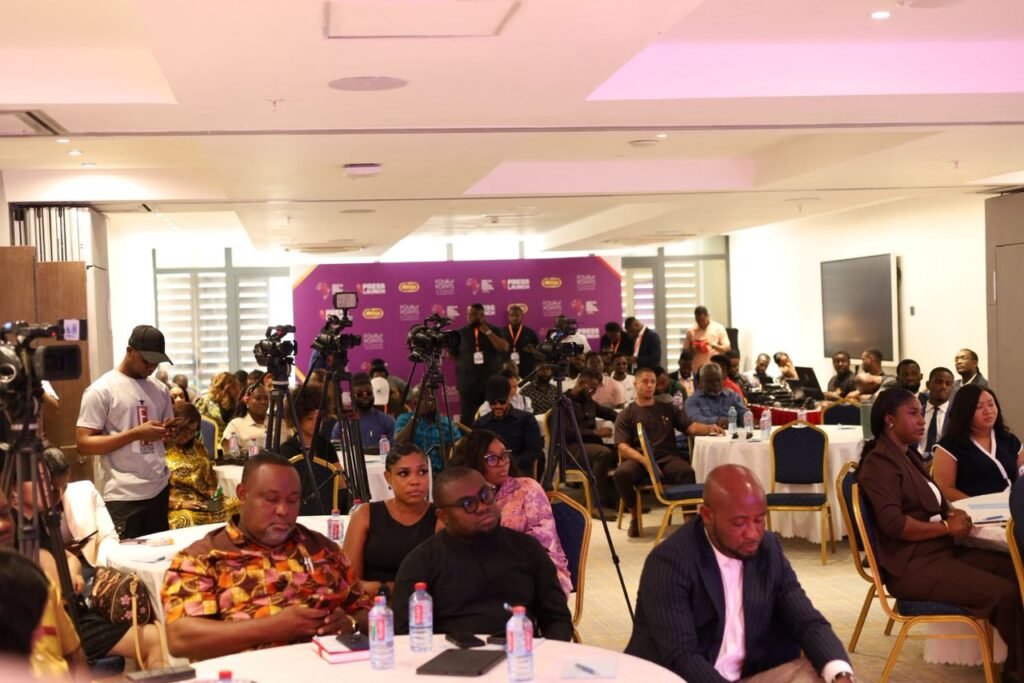
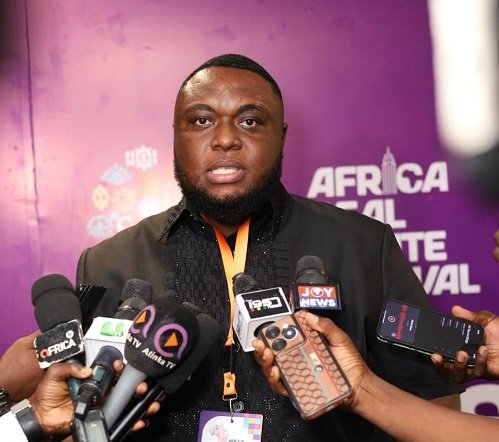
Speaking at the press launch in Accra on Friday, January 16, 2026, the Founder and Chief Executive Officer (CEO) of AREF, Desmond Oteng, described the festival as a movement rather than a one-off event, driven by the urgency of Africa’s rapid urbanisation.
“Africa is urbanising faster than any other continent. By 2050, over 1.4 billion Africans will live in cities, yet our real estate conversations still focus on buildings and prices instead of people, quality of life, and sustainability,” he said.
According to him, AREF seeks to reposition real estate as a catalyst for economic transformation, climate responsibility, cultural identity, youth empowerment, diaspora engagement, and inclusive urban growth.

The maiden festival will be held in Accra on April 18 and 19, 2026, and will convene policymakers, developers, investors, architects, planners, financial institutions, prop-tech innovators, and diaspora stakeholders from across Africa and the global African community.
Although hosted in Ghana, he stressed that AREF is a continental platform with plans to expand into other African countries.
“Our focus is intentional city building. Africa does not need more unplanned cities or gated silos. We need connected communities and functional urban ecosystems that work for people,” he noted.
The festival seeks to position real estate as a catalyst for cultural expression, technological innovation, and sustainable economic growth.
He went on to disclose that the event will bring together over 1,500 delegates, over 100 exhibitors from more than 30 countries, and over 50 renowned speakers, alongside significant government and diaspora representation.
International interest in AREF was underscored by the presence of Juliette Bynoe-Sutherland, High Commissioner of Barbados to Ghana, who announced Barbados’ participation in the festival. She described AREF as a practical bridge between diplomacy, investment, and sustainable development.
“Real estate today is no longer just about property ownership. It is about the full ecosystem, capital flows, lifestyle assets, and long-term value creation,” she said.
She highlighted Barbados’ experience, where real estate contributes about 18 percent of national GDP, supported by political stability, clear legal frameworks, progressive tax policies, and strong community education.
According to her, the Barbadian model offers valuable lessons for Ghana and other African coastal states, particularly in tourism-linked real estate, coastal conservation, health tourism, retirement living, and sustainable community planning.
The High Commissioner also revealed growing interest among Barbadians and Caribbean investors in Ghana, noting a sharp increase in travel and enquiries about property ownership following visits to the country.
From the government perspective, the Deputy Director of Diaspora Affairs Office of the President, Nana Kyere Agyemang, outlined Ghana’s evolving strategy to deepen diaspora participation in the real estate sector. He explained that the focus is shifting from informal remittances to structured investment and asset creation.
“Our objective is to move beyond remittances for consumption and toward remittances for asset building,” he said.
He identified three key priority areas: capital market integration through real estate investment trusts and diaspora bonds, improved regulatory transparency through digital land governance, and sustainability under the African Continental Free Trade Area framework.
He also noted plans to incentivise commercial real estate developments that serve as logistics hubs for intra-African trade.
Mr. Agyemang commended the AREF team for the speed and commitment with which the initiative has been executed, reaffirming government openness to partnerships that strengthen Ghana’s real estate ecosystem.
AREF’s unique model bridges real estate with sectors such as technology, finance, tourism, logistics, media, and culture, creating a shared platform for investment and partnership.
The festival will offer a curated, multi-faceted programme designed to inform, connect, and inspire.
Core pillars include the strategic Investment & Policy Conference; the transactional hub of the Real Estate Exhibition and Diaspora Investment Pavilion; the aspirational Luxury Experience & Lifestyle Showcase; and the forward-looking Cultural Festival & Innovation Matchmaking segment.
This will be complemented by a series of interactive workshops, demonstrations, and structured networking forums, ensuring a comprehensive and actionable experience for all participants.
With a target of generating over $200 million in investment leads, AREF aims to boost investor confidence and foster cross-sector deals. The event will also produce The AREF Report 2026, a data-driven publication on real estate trends and opportunities across Africa.
Beyond 2026, AREF plans to expand into a continent-wide circuit, hosting regional editions to promote sustainable urban innovation, economic collaboration, and cultural celebration.
Organised by the pan-African organisation Africa Real Estate Festival, the event is supported by year-round initiatives in research, PropTech acceleration, policy advocacy, and networking.
About Africa Real Estate Festival (AREF)
AREF is a pan-African platform dedicated to empowering the real estate ecosystem through events, research, innovation programs, and partnerships.
It connects all stakeholders across the value chain to drive sustainable growth, investment, and culturally grounded development in Africa’s built environment.
High level speakers at the forum include; H. E. Juliette Bynoe-Sutherland Barbados, High Commissioner to Ghana,






News
Two petition police to investigate Nitiwul over alleged inflammatory comments on Agbogbloshie redevelopment

Two Ghanaian citizens, Solomon Owusu and lawyer Andrew Appiah-Danquah, have petitioned the Criminal Investigation Department (CID) of the Ghana Police Service to investigate the Member of Parliament for Bimbilla, Dominic Nitiwul, over comments he allegedly made about the redevelopment of the Konkomba Yam Market at Agbogbloshie in Accra.
In the petition dated September 16, 2026, the two accused Mr Nitiwul of making public statements that they believe could provoke ethnic tensions, cause fear and alarm, and disturb the public peace.
They are asking the police to invite the former Defence Minister to assist with investigations into a video of his remarks that has been circulating on social media and other electronic platforms.
According to the petitioners, their concern is not that Mr Nitiwul criticised the government or the proposed redevelopment of the market.
Rather, they object to what they describe as his repeated presentation of the redevelopment exercise as an action deliberately targeting members of the Konkomba ethnic group.
They cited comments in which he questioned why the area occupied by Konkombas had been marked for the proposed 24-hour market while other areas had allegedly been left untouched.
They quoted him as asking what the Konkombas had done to the government and whether they were not Ghanaians.
The petitioners further cited his call on President John Dramani Mahama to stop the Accra Mayor from “targeting the Konkomba tribe”.
They pointed to his comments that the affected traders were “not moving tomorrow” and should “continue to bring their yams”.
According to the petition, Mr Nitiwul warned that it would be “politically suicidal” for President Mahama to allow the Mayor to proceed with the proposed action.
The two petitioners argued that the statements could create the impression that the government and the Accra Metropolitan Assembly (AMA) were deliberately seeking to discriminate against or remove Konkombas from Accra.
They said such a perception could heighten tensions between traders and public officials, particularly if authorities proceed with enforcement or demolition activities at the affected location.
The petitioners identified possible risks including confrontation, resistance to lawful administrative measures, damage to property, injuries, mobilisation along ethnic lines and a disturbance of public peace.
Call for investigation under Criminal Offences Act
Owusu and Appiah-Danquah are asking the CID to investigate whether Mr Nitiwul’s statements could amount to offences under sections 207 and 208 of the Criminal Offences Act, 1960 (Act 29).
They cited Section 207, which deals with the use of threatening, abusive or insulting words or behaviour in circumstances where a breach of the peace is intended or likely to occur.
They referred to Section 208, which concerns the publication of statements, rumours or reports that are likely to cause fear and alarm or disturb the public peace where the person publishing them knows or has reason to believe they are false.
The petitioners stressed that they were not asking the police to presume Mr Nitiwul’s guilt.
They said the purpose of the investigation should be to establish the facts, including whether the claims he made about the redevelopment were accurate.
Petitioners want site plans and documents examined
They have asked the CID to obtain and examine the official redevelopment plans, site plans, affected-property schedules, demolition or relocation notices and relevant maps.
They want the police to inspect the affected area independently to determine which structures and adjoining areas have been marked for the project.
The petitioners further want the CID to speak with officials of the AMA, including the Mayor and officers responsible for the redevelopment, as well as leaders and members of the Konkomba Yam Market and people operating in adjoining areas.
They are also asking investigators to determine whether the redevelopment exercise affects only members of the Konkomba community or whether people and structures belonging to other groups are also affected.
Call for examination of Nitiwul’s sources
The petitioners want Mr Nitiwul to provide the information and documents on which he relied before making the allegations.
They are asking the police to establish whether he personally inspected the entire proposed project area, whether he sought clarification from the AMA and whether he knew that people outside the Konkomba community were also affected.
They want investigators to determine what steps he took to verify the accuracy of his claims before making them public.
The petitioners have asked the police to assess the circulation and impact of the video, including whether it generated fear, hostility, mobilisation or threats of resistance.
They further urged the police to take preventive measures if necessary to avert confrontation, ethnic tension or a breach of the peace at the affected location.
Constitutional rights
The two petitioners acknowledged Mr Nitiwul’s constitutional right to freedom of speech and expression.
They stressed that their petition was not intended to suppress political criticism or dissent, adding that a police investigation would allow the facts surrounding his statements to be established.
They also argued that his position as a sitting MP and former Defence Minister meant that his public comments could have a significant impact on his constituents and members of the affected community.
They noted, however, that the statements were made outside Parliament and should therefore be assessed as public communication rather than statements made during parliamentary proceedings.
The petitioners have asked the CID to register their complaint, provide them with a reference number, preserve and authenticate the full video recording and transcript, and take any further lawful action based on the outcome of the investigation.
They have indicated their readiness to provide the video, transcript, screenshots, links and other relevant documents to assist the investigation.
By: Jacob Aggrey
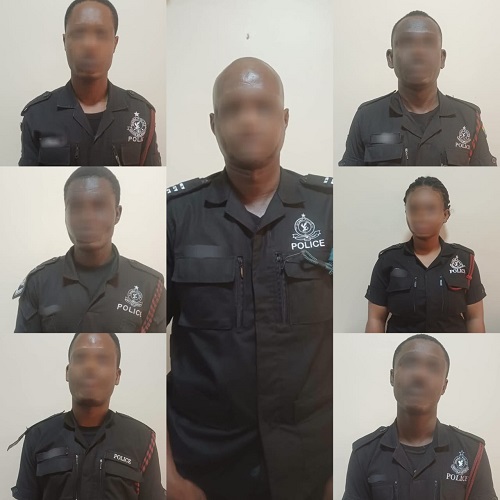
The Ghana Police Service has interdicted seven police personnel in connection with an alleged extortion incident in Accra.
The officers, who were members of a patrol team, are alleged to have demanded money from a victim and compelled him to withdraw the money from an ATM for them.
The interdicted officers are Inspector Courage Boateng, General Sergeant Stephen Addo, General Corporal Moses Anyravi, General Corporal Prosper Adiabo, General Lance Corporal Samuel Anokye, General Constable Henrietta Coleman and General Constable Bernard Amoako.
According to the Police, the interdiction is to make way for an ongoing investigation by the Police Professional Standards Bureau (PPSB).
The Ghana Police Service has assured the public that the matter will be thoroughly investigated and appropriate action taken based on the outcome of the investigations.
By Edem Mensah-Tsotorme

 Entertainment1 week ago
Sarkodie to SarkNation: You don’t have to tear someone down to prove your loyalty
- Entertainment1 week ago
“Without principle, advice is just an opinion” – Stonebwoy replies Sarkodie
- Entertainment5 days ago
Fiifi Coleman Productions adapt ‘I Told You So’ stage play into feature film