News
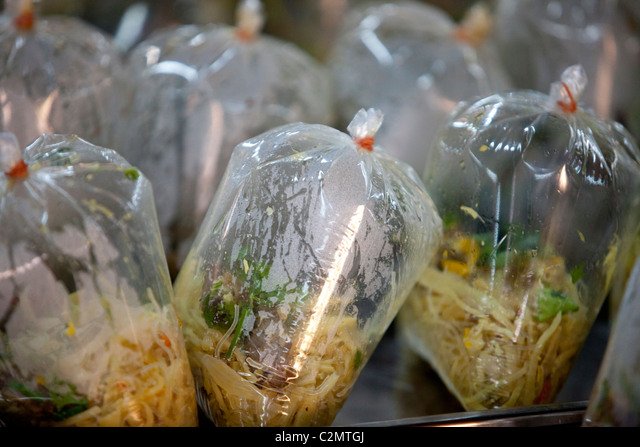
Health alert: Stop packing hot, oily foods in plastic bags

- /home/u249204778/domains/spectator.com.gh/public_html/wp-content/plugins/mvp-social-buttons/mvp-social-buttons.php on line 27
https://spectator.com.gh/wp-content/uploads/2025/07/Foods-in-polythen-bags-are-harmful.jpg&description=Health alert: Stop packing hot, oily foods in plastic bags', 'pinterestShare', 'width=750,height=350'); return false;" title="Pin This Post">
- Share
- Tweet /home/u249204778/domains/spectator.com.gh/public_html/wp-content/plugins/mvp-social-buttons/mvp-social-buttons.php on line 72
https://spectator.com.gh/wp-content/uploads/2025/07/Foods-in-polythen-bags-are-harmful.jpg&description=Health alert: Stop packing hot, oily foods in plastic bags', 'pinterestShare', 'width=750,height=350'); return false;" title="Pin This Post">
Ghanaians have been advised to desist from packaging hot or oily foods with plastic bags as it posed serious health implications.
Speaking at an event to mark World Food Safety Day in Accra last Tuesday, Professor Esther Sakyi-Dawson, Associate Professor of Food Science, University of Ghana, cautioned that transfer of harmful substances from the plastics into food could be linked to many chronic illnesses that was fast increasing in the country.
“The ingestion of these chemicals can affect the endocrine, hormonal, and immune systems of the human body. It is, therefore, dangerous to consume an oily or hot meal like banku, wrapped in these plastics,” she warned.
Prof. Sakyi-Dawson said not every plastic bag are to be used for foods due to the chemicals used in processing it.
“For example, the black ones generally are used to carry things. You should not put your food into it because they are non-food grade and it must not have direct contact with your food; same with the white polythenes,” she explained.
“While proposing a ban on such low-grade, non-food grade plastics, the Food Scientist encouraged Ghanaians to lookout for food-grade plastics which are often thick to use for food packaging and storage when necessary.
“The onus is on the consumer to make the right decision on the use of these plastics for their own health and life. Take your life into your hands and make the right decisions concerning what goes into your body,” she advised.
This year’s World Food Safety Day was on the theme: ‘Food Safety: Science in Action,’ emphasising the vital role that scientific knowledge plays in ensuring food safety and building trust in the food supply.
The World Health Organisation (WHO) estimates that 600 million people suffer from foodborne illnesses and more than 400,000 deaths occur in a year from food contamination.
In Africa, at least 91 million people suffer from foodborne diseases annually, accounting for a third of the global deaths, with 40 per cent occurring in children below five.
BY ABIGAIL ANNOH





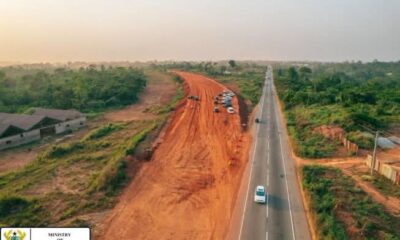




President John Dramani Mahama today cut the sod for the construction of a 24-Hour Economy Model Market in Juapong, North Tongu District, marking the commencement of a transformative project aimed at boosting local commerce, creating sustainable jobs, and driving economic growth in the Volta Region.
The sod-cutting ceremony formed part of the President’s two-day ‘Resetting Ghana Tour’ of the Volta Region.
Addressing residents and stakeholders, President Mahama described the proposed facility as a modern economic centre designed to empower farmers, traders, entrepreneurs, and small businesses.
He noted that beyond serving as a marketplace, the project will provide critical infrastructure for storage, processing, packaging, distribution, digital commerce, and access to financial services.
The President reaffirmed Government’s commitment to accelerating development across the Volta Region through strategic investments in roads, healthcare, education, agriculture, transport, markets, and agro-industrial initiatives.
He highlighted Juapong’s strategic location and economic potential, indicating that the town is well-positioned to emerge as a key commercial and industrial destination within the region.
As part of the flagship 24-Hour Economy programme, the Juapong Model Market will be among the largest facilities under the initiative.
The project has been designated as a Category Four Market, the highest classification within the programme, reflecting its significance to the region’s economic transformation.

Broadcast journalist and aspiring National Democratic Congress (NDC) parliamentary candidate for Gomoa West, Blessed Godsbrain Smart, popularly known as Captain Smart, has pledged to embark on major infrastructure development if elected to represent the constituency in Parliament.
Speaking on Onua TV platform, Captain Smart said his priority would be to transform Gomoa West through extensive development projects.
“I will turn the constituency into a construction site,” he declared, stressing his commitment to improving infrastructure across the area.
Although much of his remarks focused on rallying supporters in local languages, he repeatedly assured residents that they would witness significant development under his leadership.
Captain Smart also urged party supporters to remain united and actively participate in the party’s internal activities ahead of the parliamentary primaries.
He expressed confidence in his bid and promised to work hard to improve the lives of people in Gomoa West if given the opportunity to serve as their parliamentary candidate.
By: Jacob Aggrey