Profile
ROFAC creating safer communities within Ada, Madina-Adenta enclave


The infectious smiles and beaming grin on the faces of children is one of life’s greatest joys. It also has a way of brightening even the darkest days.
Most children have their smiles dimmed because their parents have no means of providing them with their basic needs and rights.
While some have lost their childhood to struggles of life, others have lost it to the cruelty of abuse, neglect and harsh realities of poverty.
Helping bridge the gap by putting smiles on faces of less privileged children, Reach out for a Child (ROFAC) is gradually becoming a household name in the Greater Accra Region, especially within the Ada and the Madina- Adenta enclave.
With the aim to improve education, healthcare, and facilities for the underprivileged group in Ghana, ROFAC believes that by improving school infrastructures, learning will be attractive to children, thus increasing attendance and providing a pleasant and safe learning environment.
Yvonne Mawufemor Pedersen is an Acute & Emergency Care Nurse (RN, BSN), working in one of the first and largest super-hospitals in Denmark.
How it started
Life in Denmark is far from life in Ghana, where Yvonne grew up.
In 2008 while living in Denmark, Yvonne watched a “United Danish Appeal For Funds” program on television, raise funds to support third world countries, targeting all countries that appear on “The Organization For Economic Cooperation and Development” (OECD), list of third world countries, Ghana was on the list. The television program lit a fire of curiosity in me, but also a level of rage of helplessness.
Growing up in Ghana I knew of some of the challenges some children were subjected to, having to skip school to sell on the streets and in markets to help support the rest of the family. Some, runaways due to domestic violence and abuse. Inadequate infrastructure in most schools didn’t make school attractive either.
I have always had the drive of “Florence Nightingale” I wanted to do something. I wanted to contribute to shifting the narratives of the less privileged. These, and the television program I saw in 2008, contributed to a visit to Ghana, earlier than planned.
The Charity
Reach Out For A Child- (ROFAC) is a small Danish registered charity, started in 2009 by Yvonne Mawufemor Pedersen, a Ghanaian/Togolese resident in Denmark.
The charity was initially formed to raise funds for street children and head potters, after being inspired by a trip while visiting family in Ghana, and sourcing out how to shift the narratives of the above-mentioned group of people. As a result, ROFAC, Ghana was established in the same year, now our partner in Ghana.
Astonishingly, the original target funds were exceeded, and we decided to expand our support to single mothers. We started to raise funds to support the target group, meeting them in the rural areas before their migration to the capital.
As our understanding of rural communities in Ghana grew, so did the scope of our projects, because we understand, there are many factors that contribute to getting a child off the streets and into a classroom, therefore we expanded further to supporting hospitals and schools in rural Accra with teaching aids, hospital equipment’s and giving health education.
As well as lessons in first aid and CPR. This not only includes knowledge to our direct beneficiaries alone, but also that of their families and wider community.
We also, in partnership with our local partners, tailor internship programs for nursing students from Denmark to Ghana.
Our project and since 2009, ROFAC has helped many families in various communities through our numerous projects, and we are determined to ensure that this continues despite challenging circumstances we sometimes encounter.
Through her initiative, ROFAC has over the years, donated school furniture and writing boards for teachers and pupils at the Nuhalenya D/A Primary School in the Ada district, explaining that the organisation has been part of the growing process of the school since the year 2018 for which the head teacher, Mr Narh, together with teachers and some opinion leaders had always expressed their gratitude to the team.
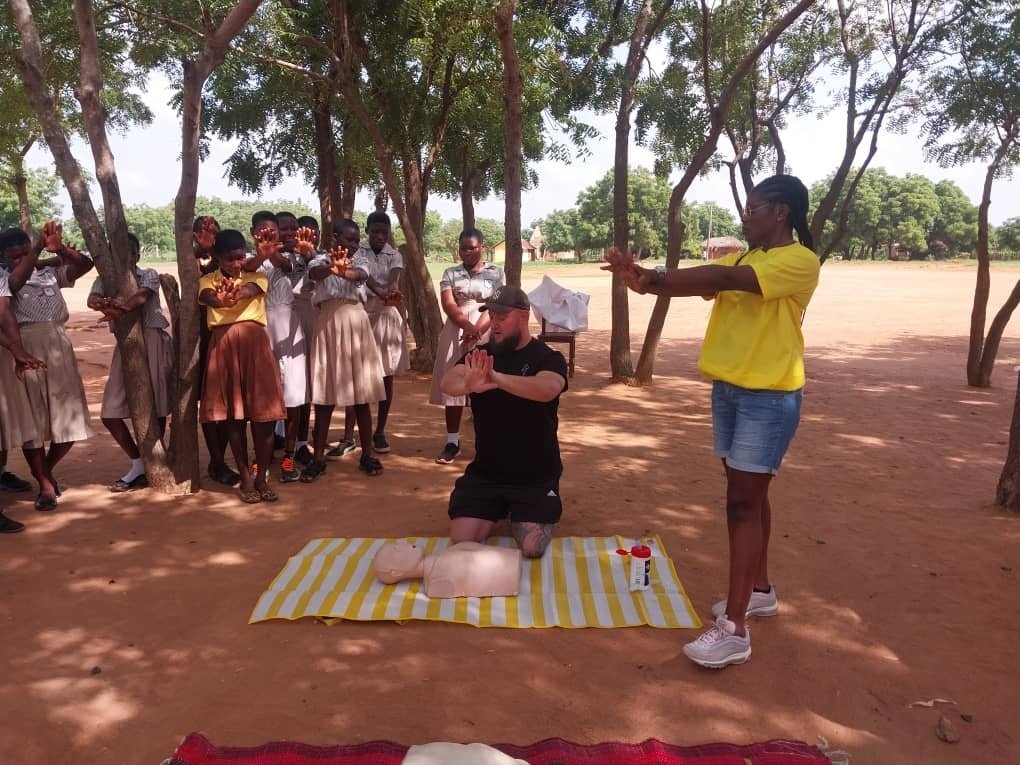
School practicing how to resuscitate
Speaking to The Spectator in Accra last Thursday, Ms Pedersen said the organisation has also begun teaching Cardiopulmonary Resuscitation (CPR) in some basic schools, including Nuhanenya in Ada District and Pauline Queensland schools at Agbogbloshie in the Greater Accra Region to equip young learners with essential skills that can help save lives during cardiac emergencies.
CPR is a lifesaving emergency procedure performed when the heart stops beating.
Introducing the CPR programme in the basic schools, she indicated would not only empower the children with practical knowledge but also promote a culture of safety and responsibility.
In this cause, ROFAC has been advocating the subject matter to teach students the basic steps of CPR, including chest compressions and rescue breaths.
She mentioned that to educate children on recognising emergencies and the importance of seeking adult help will increase awareness of heart health.
As part of the safety measures, ROFAC has also introduce the idea of using child friendly mannequins for the learners to practice chest compressions and breathing techniques under the guidance of medical trainers.
The programme, she said, emphasises on safety, including how to avoid panic and handle emergency situations calmly. The schedule for subsequent teaching children CPR will potentially assist in saving lives within their families and communities.
“Implementing a CPR programme in basic schools is a valuable investment in public health and safety. It empowers students with essential life-saving skills and fosters a sense of responsibility and confidence. By integrating CPR education into the curriculum, schools contribute to building safer communities,” she explained.

Ms Pedersen further indicated that the programme not only prepares children to respond to emergencies but also cultivates a generation of informed and proactive individuals.
ROFAC also embarked on another project by donating a laboratory incubator to the Duala Medical Clinic based at Burma Camp in Accra.
This follows a request made by the medical doctor in charge, Dr Awura Adjoa Nunoo, for the equipment for services at the facility.
By Lawrence Vomafa-Akpalu



In a music landscape often defined by trends and tempo, George Nii Odai Oliver widely known as DJ Rev stands out as a man on a mission.
More than just a DJ, he is a minister, mentor, and youth advocate who has found a unique calling at the intersection of sound and spirituality.
Beyond the decks, DJ Rev is a devoted husband and a committed servant of God.
His life is anchored in purpose, with a deep passion for youth development. As the Technical Director at Christ for Youth International (CYI), a global youth ministry, he plays a significant role in shaping young lives, not only through words but also through music.
His journey in ministry began early, including his role as a founding member of the Ambassadors Christian Rap Group, where he first explored the power of music as a tool for transformation.
The name ‘DJ Rev’ derived from ‘Reverend,’ reflects both his spiritual identity and his mission to ignite atmospheres much like revving an engine with high-energy gospel music.
For him, every performance goes beyond entertainment; it becomes a moment of worship, revival, and connection with God.
His journey into DJing started from a fascination with music and technology during his younger years in Ghana.
Drawn to the ability of DJs to influence mood and unite people, he identified a gap in the Christian music space, which was someone who could seamlessly blend urban sounds with gospel messages. Starting from small church events and youth programmes, DJ Rev gradually honed his craft into what he now describes as a full-fledged calling.
Like many success stories, his path was not without challenges; he had limited access to equipment, skepticism about gospel DJing, and the difficulty of balancing ministry with performance all tested his resolve.
Yet, through persistence, faith, and support from mentors and the Christian community, he rose above these obstacles. Borrowing equipment, learning on the job, and staying grounded in prayer became part of his journey.
A defining moment in his career came when he realised that DJing was more than a passion; it was ministry.
Witnessing lives being transformed during his sets, seeing people move from dancing into deep worship, and watching young talents he mentored flourish affirmed his purpose.
DJ Rev’s style is best described as high-energy, spirit-led, and versatile. He effortlessly blends hip-hop, Afrobeats, dancehall, reggae, and urban gospel into seamless mixes that resonate with diverse audiences.
His signature approach is what he enthusiastically calls ‘Energyyyy! saying it is not just about hype, but about creating moments that touch both body and soul.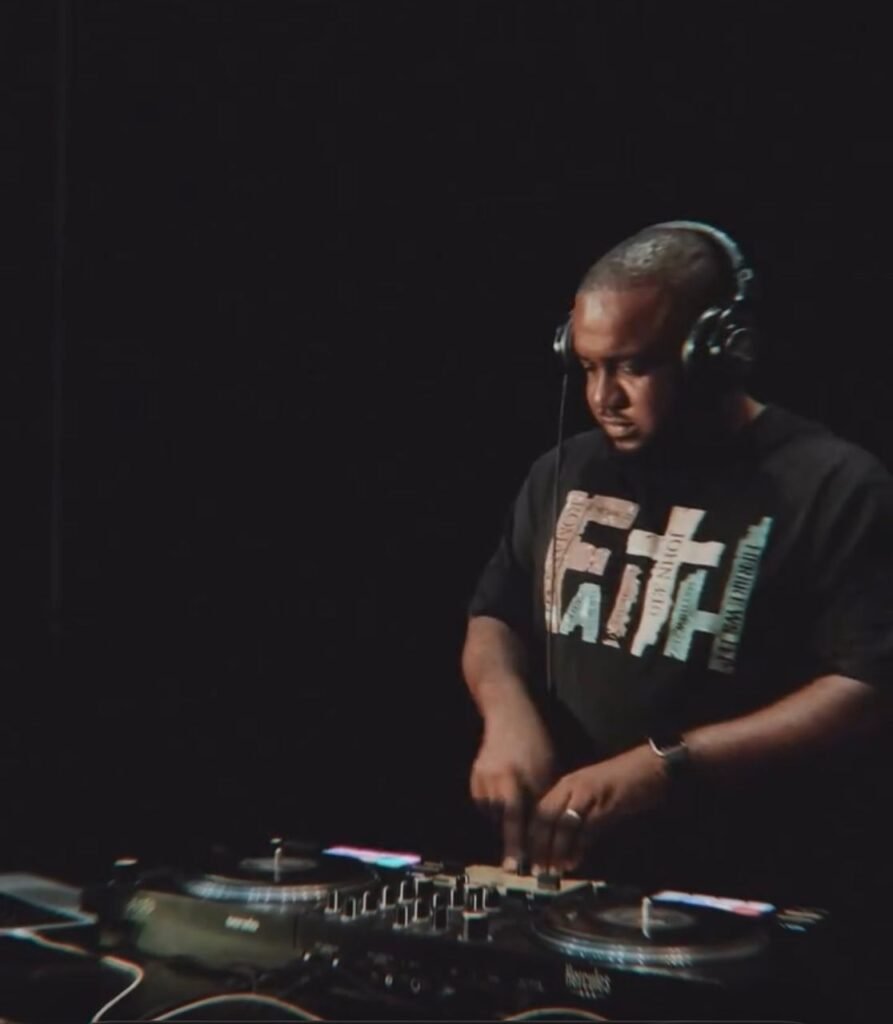
What sets him apart in Ghana’s DJ industry is his unwavering commitment to ministry-first performances. While many DJs focus solely on entertainment, DJ Rev uses his platform to create spaces where faith and music coexist powerfully. His technical expertise, drawn from his role in ministry, combined with his passion for mentorship, gives him a distinctive edge.
Over the years, he has witnessed significant growth in Ghana’s DJ industry, with increased recognition, technological advancement, and global influences such as Amapiano shaping the soundscape.
Notably, he has contributed to pushing gospel music into mainstream spaces, particularly through his popular Amapiano Gospel mixes.
Among his most memorable performances are events like Oasis Gathering, Sound Fest, and Saved to Serve platforms where music transcended performance into powerful spiritual encounters.
“These are moments that define success, lives touched, hearts uplifted, and faith renewed,” DJ Rev stated
Away from the spotlight, he embraces a quieter, more reflective life. He enjoys spending time with family, mentoring young people, engaging in ministry work, and pursuing simple hobbies like gardening and DIY projects.
For him, a perfect day off includes moments of prayer, meaningful conversations, and peaceful retreats, often in serene locations like Cape Coast or the Volta Region.
Despite his achievements, DJ Rev remains grounded. He acknowledges the challenges he has faced, ranging from limited resources to balancing ministry and career, but credits his resilience to faith, community support, and a clear sense of purpose.
These experiences have taught him invaluable lessons about perseverance, humility, and authenticity.
Looking ahead, DJ Rev aims to expand his ministry through music both locally and internationally, release more projects, mentor emerging talents, and further establish gospel DJ culture in Ghana. His ultimate desire is to be remembered as a pioneer who brought revival through music, blending excellence with unashamed faith.
To young aspiring DJs, his message is clear: master your craft, stay consistent, build character, and never lose sight of your purpose.
By Esinam Jemima Kuatsinu
Entertainment
Amb. Prince Kojo-Hilton’s international mission signals new era for creative industry development

Between October 2025 and April 2026, a significant creative industry mission unfolded across Brazil, led by Ghanaian visual artist, production designer, and Pan-African Art Ambassador, Prince Kojo-Hilton.
What began as an invitation to contribute to creative education quickly evolved into a far-reaching engagement spanning academic institutions, government bodies, global platforms, and community initiatives.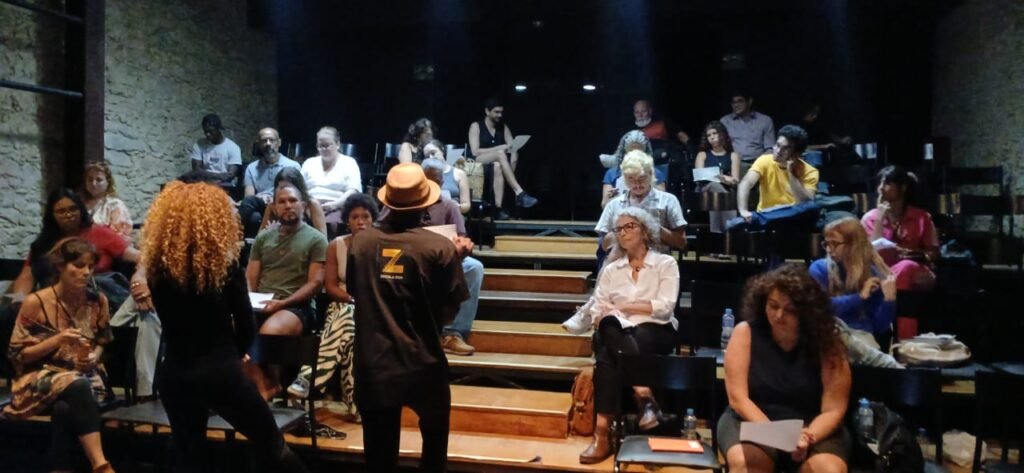
More than a professional visit, the mission positioned itself as a structured intervention aimed at addressing one of the most pressing gaps within the global creative sector, the disconnect between education and industry practice.
At the centre of this engagement was a clear focus on capacity building. Working with the Zion School of Entertainment in Rio de Janeiro, Kojo-Hilton delivered a masterclass in Art Direction and Scenic Design during Zion Creative Week.
The immediate impact of the session prompted an expansion of the masterclass programme into a broader, multi-campus engagement, extending its reach to a wide network of students and emerging professionals.

His approach departed from traditional classroom instruction. Instead of theory-driven lectures, participants were introduced to practical, industry-based processes, including visual storytelling systems, production design methodologies, and the professional discipline required to operate within global creative industries.
The result was a shift in how students engaged with their craft, moving from passive learning to active, experience-driven development.
Beyond academic institutions, the mission extended into diplomatic and governmental spaces. At the Ghana Embassy in Brazil in Brasília, Kojo-Hilton engaged in strategic discussions with Ghana’s Ambassador to Brazil, Nii Amasah Namoale.
The discussions centered on long-term collaboration between Ghana and Brazil within the creative arts sector, with a focus on education, exchange programmess, and institutional partnerships.
This engagement progressed further at the National Congress of Brazil, where he was introduced to policymakers and cultural leaders, including Brazil’s Minister of Culture, Margareth Menezes.
His presence and work were formally acknowledged, reflecting growing recognition of the role creative professionals can play in national development and cultural diplomacy.
On the global stage, Kojo-Hilton represented Ghana at the World Forum of Favelas 2025, where his contributions to creative community development were recognised with an international award.
The forum provided a platform to present models that integrate art, education, and social impact, reinforcing the value of structured creative initiatives in community transformation.
A key outcome of the mission was the international expansion of the Film Craft Expo, an initiative founded by Kojo-Hilton to explore the art, science, and business of film-making and theatre.
Interest from multiple countries has positioned the platform as a potential global model for creative industry engagement, bridging the gap between emerging talent and professional practice.
Academic collaborations also formed a critical component of the mission.
At the University of Brasília, discussions explored interdisciplinary opportunities connecting art, science, and environmental innovation. Additional engagements with institutions such as Casa das Artes de Laranjeiras focused on curriculum development, artist residencies, and production-based training systems designed to better prepare students for industry demands.
While institutional engagement remained central, the mission maintained a strong connection to community impact. Workshops conducted in local communities, including Maricá, emphasised the role of art as a tool for empowerment, identity formation, and social transformation.
A significant part of his engagement in Maricá included a cultural and social contribution through the donation of a painting to the House of Immigrants.
The artwork serves as a permanent symbolic gesture of identity, resilience, and shared human experience, reflecting his commitment to using art as a tool for cultural connection and community memory within the city.
Participation in cultural events such as Rio Carnival further highlighted the importance of preserving cultural heritage while positioning it within a global context.
One of the most forward-looking outcomes of the mission is the development of the Global Visual Arts for Screen and Stage initiative.
The platform is designed to integrate visual arts, film, theatre, fashion, and technology into a unified system that supports training, collaboration, and industry growth.
By addressing fragmentation within the creative sector, the initiative aims to create sustainable pathways for employment, innovation, and institutional development.
Across all engagements, a consistent message emerged, the global creative industry is evolving, and there is an increasing demand for structured, experience-driven education.
Institutions are no longer seeking inspiration alone; they are seeking systems that can translate creativity into measurable economic and social impact.
Following six months of sustained engagement across Brazil, the results are evident. New partnerships are being explored, institutions are opening pathways for collaboration, and there is growing recognition of the role creative industries can play in national and international development.
The mission has not only strengthened cultural and creative ties between Ghana and Brazil, but has also positioned Kojo-Hilton within a broader global conversation on the future of creative industry development.
As he continues to expand his work across continents, he remains open to collaboration with universities, film schools, theatre institutions, visual arts institutions, cultural organizations, and governments seeking to invest in structured creative growth.
He also facilitated a focused workshop on Talent Discovery and Nurturing with immigrants, centered on identifying hidden creative potential and providing practical guidance for personal and professional development.
The session emphasised empowerment through creativity, encouraging participants to recognise their abilities and explore new pathways within the creative industries.
Together, these contributions reinforced his broader mission of using art not only as a professional practice but as a meaningful instrument for inclusion, transformation, and social impact.
In reflection, he expresses profound gratitude to God for the opportunity to undertake this journey and for the grace that made every step possible. From Ghana to Brazil and back, he acknowledges the divine protection, guidance, and favour that ensured safe travels and the mission’s successful execution.
The experience stands not only as a professional milestone but also as a testament to the power of faith, dedication, and purpose.
His guiding philosophy remains clear and unwavering, saying “The only thing that I am a slave to is my passion.”
By Edem Mensah-Tsotorme