Hot!
Akosombo Dam spillage: Vome residents fear potential famine

- /home/u249204778/domains/spectator.com.gh/public_html/wp-content/plugins/mvp-social-buttons/mvp-social-buttons.php on line 27
https://spectator.com.gh/wp-content/uploads/2023/11/A-flooded-portion-of-the-communtiy.jpe&description=Akosombo Dam spillage: Vome residents fear potential famine', 'pinterestShare', 'width=750,height=350'); return false;" title="Pin This Post">
- Share
- Tweet /home/u249204778/domains/spectator.com.gh/public_html/wp-content/plugins/mvp-social-buttons/mvp-social-buttons.php on line 72
https://spectator.com.gh/wp-content/uploads/2023/11/A-flooded-portion-of-the-communtiy.jpe&description=Akosombo Dam spillage: Vome residents fear potential famine', 'pinterestShare', 'width=750,height=350'); return false;" title="Pin This Post">
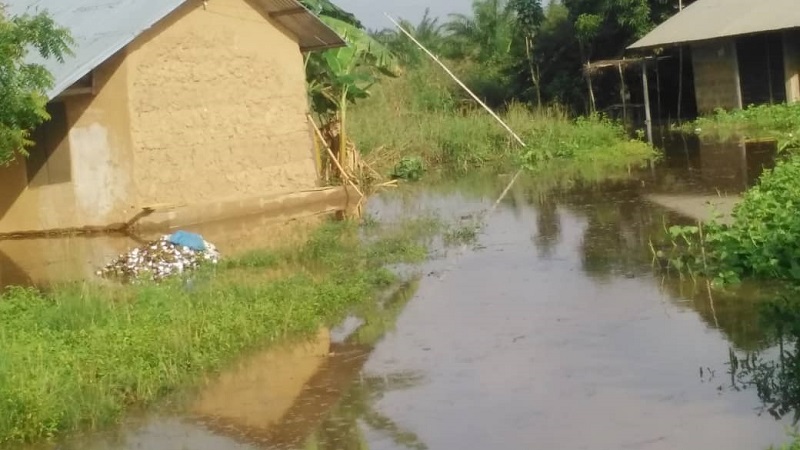
A flooded portion of the communtiy
Residents of Vome, a farming community in the North Tongu District of the Volta Region and surrounding communities fear the devastating effect of the Akosombo Dam spillage could lead to famine in the area that could spread across other parts of the country.
The area is home to the cultivation of important crops such as cassava, maize, pepper, groundnuts and other staple crops.
And, a large quantity of these crops were destroyed as a result of the spillage that caused similar or even greaterwreckage to other communities along the banks of the river.
Over a month after the exercise to save the Akosombo Dam, Ghana’s largest hydro power generating plant, residents of Vome and its neighbouring communities have been rendered jobless.
They have been robbed of their daily farming activities and are currently surviving on the benevolence of individual donors and organisations.
But of greater concern to the inhabitants of the area, mostly farmers, is a fore seen food shortage to hit the area and its impact on Ghana’s food basket,with cassava and maize especially being one of Ghana’s agricultural mainstay.
Speaking to The Spectator on their behalf by the Assembly Member for the VomeElectoral Area, Mr Gabriel Kwame Wetsi confirmed, that a lot of farm produce like cassava, maize, pepper groundnuts and other staples were destroyed by the flood waters.
To him, the danger lies with the period it might take for the water to recede for farming activities to resume.
“This might lead to famine in some few months because even if the water recedes, it will take about six months to a year for the land to regain its fertility before we can start growing crops,” he said.
“This would obviously create a food shortage in the country because what it means is that the maize, cassava and other staples from this region will not come and would put pressure on those from the other regions,” he said.
Until the water recedes for the farmers to return to their farms, MrWetsi urged the government to support the people in the Vome area and its surrounding towns, since they have all lost their livelihood.
One of the community elders, Dzikpuitor Daniel Kuleke who engaged The Spectator on its tour of the area, said thewater they use for their daily activities was no longer safe for use, explaining that the spillage had washedaway theirplaces of convenience and other properties.
He said the stagnant water in the area were breeding a lot of mosquitoes,pointing out that it was no longer safe to stay outside after 5pm.
He therefore appealed to corporate bodies, individuals and government to come to their aid with drinking water, food items and clothing to help them survive, until they are able to return to their normal lives.
One of the affected victims, Georgina Wetsisaid “I am currently sleeping in someone’s house together with my children. I have lost my home which has six rooms as well as my farm.”
From Jemima Esinam Kuatsinu, Vome


General Secretary of the New Patriotic Party (NPP), Justin Kodua Frimpong, has filed his nomination to contest the position of General Secretary again as the party begins its rebuilding efforts ahead of the 2028 general elections.
He was accompanied by party stalwarts and supporters who were in high spirits, expressing confidence that he is the right person to hold the position.
Speaking after filing his nomination, Mr Kodua Frimpong assured the rank and file of the party that he would not disappoint them.
“I can assure you that the faith the rank and file of the party have had in me, I will never disappoint them,” he said.
He also pledged to run a clean campaign devoid of personal attacks.
“I can assure you that our internal campaign will be devoid of personal attacks,” he told his fellow contestants and the rank and file of the party as he seeks to retain his position.
His tenure has seen the party through the 2024 general elections, where the NPP lost power to the National Democratic Congress (NDC) after eight years in government.
The party is currently in a rebuilding phase, with internal elections scheduled to elect new national executives to lead its reorganization towards the 2028 polls.
The General Secretary position is considered one of the most influential in the party’s administrative structure, responsible for the day-to-day running of the party secretariat and implementation of party decisions.
By Edem Mensah-Tsotorme

The University of Ghana Medical Centre (UGMC) has disputed claims made on social media by comedian Michael Blackson concerning the treatment given to his late mother, saying a review found that the allegations did not accurately reflect what happened during her stay at the hospital.
In a statement issued in Accra on August 5, 2026, the management of UGMC expressed condolences to Mr. Blackson and his family over the death of his 83-year-old mother, who died at the facility on July 16, 2026.
The hospital said it had taken the concerns raised by Mr. Blackson seriously and conducted a thorough review in line with its clinical and administrative procedures.
According to the statement, the facts presented by Mr. Blackson on social media contained “numerous inaccuracies” and did not accurately reflect the medical care provided to his mother.
UGMC explained that she was referred to the facility from another hospital and received treatment there from May 27 to July 16, 2026, a period of about eight weeks.
The hospital stated that it would not release details of her diagnosis, treatment, medical records or other aspects of her care because it had a duty to protect patient confidentiality, even after death.
It said the decision was intended to respect the dignity of the deceased and the privacy of her family.
UGMC further stated that all clinical decisions at the facility are made by qualified healthcare professionals based on medical judgment, established standards of care and the best interests of the patient.
The statement added that such decisions are made in consultation with authorised family representatives where necessary and that billing and financial procedures are governed by institutional policies and are separate from clinical decision-making.
The hospital noted that it values feedback from patients and their families and considers both positive and negative comments important for improving the quality of care.
Mr. Blackson had earlier used social media to criticise the care his mother received at UGMC, prompting the hospital’s response.
By: Jacob Aggrey