Features
What are the effects of sleep deprivation on the body?

Well, there are many different effects. Firstly, we know that sleep deprivation affects the reproduction system. We also know that men who are just sleeping five to six hours a night have a level of testosterone which is that of someone ten years their senior. Lack of sleep will age you by almost a decade in terms of that aspect of virility and wellness.
We also know that a lack of sleep impacts your immune system. So after just one night of four to five hours of sleep, there is a 70% reduction in critical anti-cancer fighting immune cells called natural killer cells.
And that is the reason that we know, that short sleep duration predicts your risk for developing numerous forms of cancer. The list currently includes cancer of the bowel, cancer of the prostate, as well as cancer of the breast.
In fact, the link between a lack of sleep and cancer is now so strong that recently the World Health Organization decided to classify any form of nighttime shift work as a probable carcinogen.
In other words, jobs that may induce cancer because of a disruption of your sleep rate rhythms.
We also know that a lack of sleep impacts your cardiovascular system because it is during deep sleep at night that you receive this most wonderful form of effectively blood pressure medication.
Your heart rate drops, your blood pressure goes down. If you are not getting sufficient sleep, you are not getting that reboot of the cardiovascular system, so your blood pressure rises.
You have, if you are getting six hours of sleep or less, a two hundred percent increase risk of having a fatal heart attack or stroke in your life time.
There is a global experiment that is performed on 1.6 billion people twice a year and is called Daylight Saving Time. And we know that in the spring, when we lose one hour of sleep, we see a subsequent 24% increase in heart attacks the following day.
Another question, perhaps, is what is the recycle rate of a human being? How long can we actually last without sleep before we start to see declines in your brain function or even impairments within your body?
And the answer seems to be about 16 hours of wakefulness. Once you get past 16 hours of being awake, that’s when we start to see mental deterioration and physiological deterioration in the body.
We know that after you have been awake for 19 or 20 hours, your mental capacity is so impaired that you would be as deficient as someone who is legally drunk behind the wheel of a car.
So if you were to ask me what is the recycle rate of a human being, it does seem to be about 16 hours and we need about 8 hours of sleep to repair the damage of wakefulness. Wakefulness essentially is low-level brain damage.
Reference: Prof. Agyeman Badu Akosa, Prof. M. Walker, Dr. B.S. Van Der Kolk.
By Ekow Grimmond Thompson


Conflict at work is more common than you might think. According to 2022 research by The Myers-Briggs Company, more than a third of the workforce reports dealing with conflict often, very often, or all the time in the workplace.
Addressing a dispute might feel tense or awkward, but resolving the conflict is typically well worth it in the long run. Whether you are trying to mediate conflict between colleagues or are directly involved. Last week we looked at three and this week is the remaining four steps you can take to manage workplace conflict.
4. Find common ground
The best way to handle workplace conflict is to start with what you can agree on. Find common ground between the people engaging in conflict. If you are directly involved in the conflict, slow down and focus on results instead of who’s right.
If you are the mediator for conflict resolution between coworkers, observe the discussion and help point out the common ground others may not see.
5. Collectively brainstorm solutions
When deciding how to handle workplace conflict, it can be tempting to problem-solve on your own. Sometimes, it feels easier to work independently rather than collaboratively. However, if you want to achieve a lasting resolution, you will need to motivate your team to get involved.
Brainstorm possible solutions together, and solicit input from everyone involved on the pros and cons of each option until you settle on a solution that feels comfortable to everyone. This will help all team members feel a sense of ownership that can help prevent future conflicts.
6. Create an action plan
Once you have created an open dialogue around workplace conflicts, it is time to resolve them. Just like any other work goal, this requires creating a concrete plan and following through.
Create an action plan and then act on it. It does not matter what the plan is, as long as you commit to it and resolve the conflict as a result.
7. Reflect on what you learned
All conflicts offer an opportunity to grow and become a better communicator. Identify what went well and what did not.
Work with your whole team to gather learnings from the conflict so you can avoid similar situations in the future.
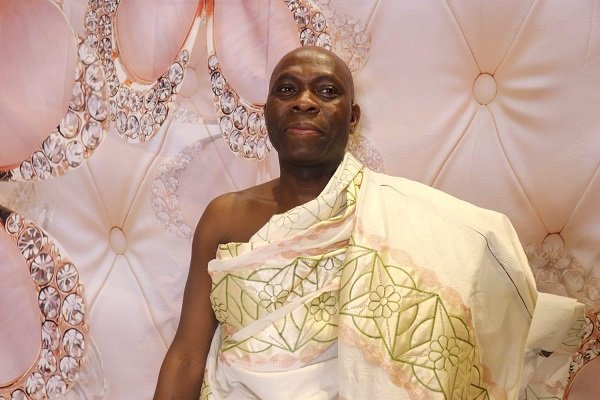
Today, I continue with my narration of personalities and their accomplishments as members of the Ghanaian Diaspora in Finland, with a focus on Mr Joseph Osei Amoah.
Mr Amoah is one of the senior members of the Ghanaian community in Finland and a top member of the Ghana Union Finland, an association of the Ghanaian migrant community in Finland.
He is an active and a well-respected person in the Ghanaian community in Finland. Mr Osei Amoah moved to Finland in the mid-1990s, and he has lived in Helsinki all this time.
Accomplishments and honours
It is important to recount accomplishments as part of the success stories of the personalities of Ghanaian descent in Finland in order to highlight their exploits both within the Ghanaian migrant community and in the wider Finnish society.
Mr Amoah holds a Master’s degree in Demography from the University of Helsinki. At the time he came to Finland in 1994, he had majored in Economics at the Bachelor’s level at the Kwame Nkrumah University of Science and Technology (KNUST).
Sometimes affectionately called “Chairman” in the Ghanaian migrant community, Mr Osei is a former Chairman of the New Patriotic Party’s (NPP) branch in Finland, assuming office around 2015, a few months after the branch was formed, until 2019 when he did not run again for the elections. He helped to bring vibrancy into the NPP Finland branch.
Religious life
Mr Amoah is a prominent member of the Global Methodist Church in Finland. In spite of his busy working life and other responsibilities, he remains a committed member of the Global Methodist Church in Finland.
He plays a key leadership role in the church, which is attended by many Ghanaian migrants and other African migrants, Finns, and those of other nationalities.
His position in Asanteman Finland
Mr Osei Amoah is an outstanding member of the Asanteman Finland, where he is the Gyasehene, a prominent position as a sub-chief in the Asante (and Akan) royal hierarchy, in the functioning of the traditional authority systemgenerally in Ghana.
The Asanteman Finland is an association formed purposely with the aim of supporting each other as well as to ensure unity among its members and others outside of the group.
One of its top priorities of Asanteman Finland is to display the Asante culture in Finland. Mr Osei Amoah finds this as very important since by upholding the traditional culture and heritage, the association enables its members and especially the young ones to get the chance to learn and appreciate Asante and Ghanaian cultural values. They do this through rites such as marriage, the naming ceremony, and death and funeral rites, which makes the people to learn more of their provenance and not forget their origins.
“My point is that, by displaying the traditional heritage it helps people to learn more about their provenance. For, I think it will be embarrassing to go home and see that even the young ones have much knowledge about how to perform certain rites whilst those of us in the diaspora may be deficient in understanding those practices”, he argued. It is also very important for the young ones who are born in Finland to learn what the culture of their original society is, he continued.
The Finnish educational system
Mr Osei has a lot to say about the Finnish educational system, which he sees as very good. “When we came to Finland, education was free. There were library books and manuscripts readily available in the library, and one could print or make as many photocopies as possible for your studies. There was more flexibility. One could read books and write exams on them for the necessary grades in order to complete your studies”. In his opinion, Ghana could learn much from the Finnish system, which is one of the best in the world.
He said the only initial challenge he found in Finland was how to master the Finnish language, without which it was difficult to get a job befitting one’s status after the studies. But things have changed today and there are many English courses so it is easy to study and get a job that matches your studies, especially in the area of ICT, he said.
His role in the Ghanaian community
Mr Osei Amoah has been very active in the Ghanaian community, as I have indicated earlier. He is still very active in the Ghana Union Finland, and has played a leadership in many functions organised by the Union, as a non-governmental organisation for the Ghanaian migrant community in Finland.
Mr Amoah has been a counsellor and mentor who has guided many young Ghanaian migrants on their career paths and has also been part in settling various kinds of conflicts between opposing parties or persons. In conclusion, I would say Mr Osei Amoah has succeeded in embossing his name in the golden pages of visionary Ghanaians in both Sweden and Finland.
With Dr Perpetual Crentsil