Hot!
Sam George defends Omane Boamah’s appointment as Director of Elections

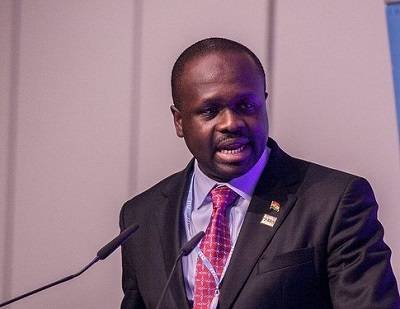
Sam George, the Member of Parliament for Ningo-Prampram, has called on the National Democratic Congress’ Council of Elders to dismiss a petition against the appointment of Dr. Edward Omane Boamah as the Director of Elections and ICT.
In a statement dated September 18, Sam George described the former Minister of Communications as the most qualified person within the party to be in charge of elections in the run-up to the 2024 general elections.
“Dr. Omane Boamah is an asset to the ‘great tradition of the party’,” George said, adding “He has served in many portfolios, including Minister of Communications and Minister of Youth and Sports. He is a highly intelligent and experienced individual who has a proven track record of success.”
Sam George’s comments come after a concerned supporter and social activist of the NDC, Delanyo Agbe, raised concerns about Dr. Omane Boamah’s appointment. In a petition to the leadership of the party, Agbe argued that Dr. Omane Boamah lacks the expertise necessary to execute his duties effectively.
However, Sam George dismissed Agbe’s concerns, arguing that he is simply trying to sow discord within the party.
“I urge the Council of Elders to disregard this petition,” George said. “Dr. Omane Boamah is the best choice to lead the NDC to victory in 2024.”
Below is the statement by Sam George
Monday 18th September 2023
Dear NDC Council of Elders,
I bring you warm greetings from the beautiful twin cities of Ningo and Prampram.
I am writing to you as a dedicated member of our great National Democratic Congress. I am currently the Deputy Ranking Member of the Select Committee on Communications, which exercises Parliamentary oversight of the Ministries of Communications & Digitalization and Information. I currently serve as the Secretary-General of the African Parliamentary Network on Internet Governance, the premier body recognised by the African Union Commission and the United Nations Multi Advisory Group to the UN Secretary-General, responsible for data policy and Internet governance issues. I have previously served on the Board of the National Information Technology Agency and also as a Communications Specialist to President John Dramani Mahama. I have run an ICT practice for almost two decades and have consulted on UNDP and World Bank-sponsored projects in the country. I speak at International Fora as a resource person for international CSOs, the AUC and the UN on technology, data policy, cybersecurity and internet governance.
Forgive the lengthy layout of the credentials above. It is necessary to establish that I have some level of competence on the subject matter to erase any doubts, if any, exist. My letter to you has become necessary following a petition addressed to your good selves and has become a matter of public knowledge. The petition touches on the suitability or otherwise of the nomination and appointment of Dr Edward Kofi Omane Boamah as the Director of Elections and ICT. I recognise the democratic rights of the petitioner to state his discomfort or disagreement with the appointment freely. However, that right must be exercised based on facts and evidenced by substance. I trust that you, our respected Council of Elders, will arrive at the best decision on the petition after consideration of my letter.
The petition raises issues that I will address individually.
LACK OF EXPERTISE:
I find it highly troubling that the suggestion is even made that the appointee needs more election management and ICT expertise. The appointee has served our great Party in government as Deputy Minister for Environment, Science, Technology & Innovation from 2009 to February 2012. He also served as the Minister for Communications from 2013-2016.
In both Ministries, he had responsibilities that covered the ICT sphere. As Minister for Communication, the nominee’s extensive track record is evident. Our government saw growth in leaps and bounds under his leadership in the ICT sector.
The current digitalisation drive in our country runs on the backbone infrastructure that the appointee oversaw, covering investments worth over US$300 million. From the 770km Eastern Corridor Fibre, which has opened up over 160 communities to the power of the internet, to the over 100 enhanced Community Information Hubs to the Accra Digital Center that has provided over 10,000 direct and indirect jobs and placed Ghana as a significant BPO destination to the several e-initiatives undertaken under the e-Ghana project that covered the Judiciary, Parliament, Health, Education, National Security, Immigration and Cybersecurity to the great strides we made in the areas of rural telephony and the National Data Center.
The footprints of the appointee are indelible and establish his remarkable credentials as not just a competent technology leader but a result-oriented leader who can build effective teams and exercise adequate oversight to achieve stellar results. If the appointee could accomplish these and more in four years for our government, I have absolute faith in him to deliver for our party. Indeed, it is even on record that he once strove to build a Mini Data Centre for our party at the national headquarters but for the inability of the then National Executives to agree on which office space to dedicate for the sensitive ICT project.
RISK TO PARTY CREDIBILITY:
The point made by the petitioner is vague. It needs to establish what credibility risk arises by appointing Dr Edward Kofi Omane Boamah (A former Minister for Communications and former Deputy Minister in two ministries between 2009 and 2013). A suggestion that “appointing an individual without substantial experience in the field could undermine the party’s credibility and tarnish its reputation” cannot apply to the appointee. I have established above a summary of the appointee’s experience and competencies, and as such, I am confident that this fear would not materialise as the appointee is well suited to ensure we are not saddled with such challenges.
NEED FOR SPECIALIZED KNOWLEDGE:
After reading the petitioner’s submission on this point, I reached the respected professional conclusion that he lacks a fundamental understanding of technology leadership. It has long been established that the most efficient and effective technology leaders are not necessarily themselves geeks but those with leadership and administrative acumen and technical understanding. Technology geeks do not necessarily make the best leaders, and this is evidenced when you look at the CEOs of most major technology corporations. Persons with leadership and administrative acumen who appreciate and understand technology are the CEOs and COOs of many Silicon Valley firms.
In this particular case, the appointee has vast administrative expertise as a former Student Leader, Medical Doctor, Deputy Minister, Minister and Deputy Campaign Coordinator in 2012 and has shown stellar knowledge of the technology landscape when he served as Minister for Communications and when he represented Ghana at the International Telecommunication Union (ITU) and the GSMA on several occasions. A case that readily comes to mind is the award Ghana received from the International Telecommunications Union under his watch for our homegrown solution to rural telephony challenges. This solution has been replicated in other parts of Africa, Asia, and Latin America. In addition, under his leadership, Ghana was elected to serve on the Council of the International Telecommunication Union (ITU) for four (4) more years with 130 votes out of 165 ballot papers issued at the Plenipotentiary Conference of the ITU in October 2014 in Busan South Korea. (https://www.myjoyonline.com/ghana-elected-to-the-council-of-the-international-telecommunication-itu-union/#!)
Source: Citinewsroom

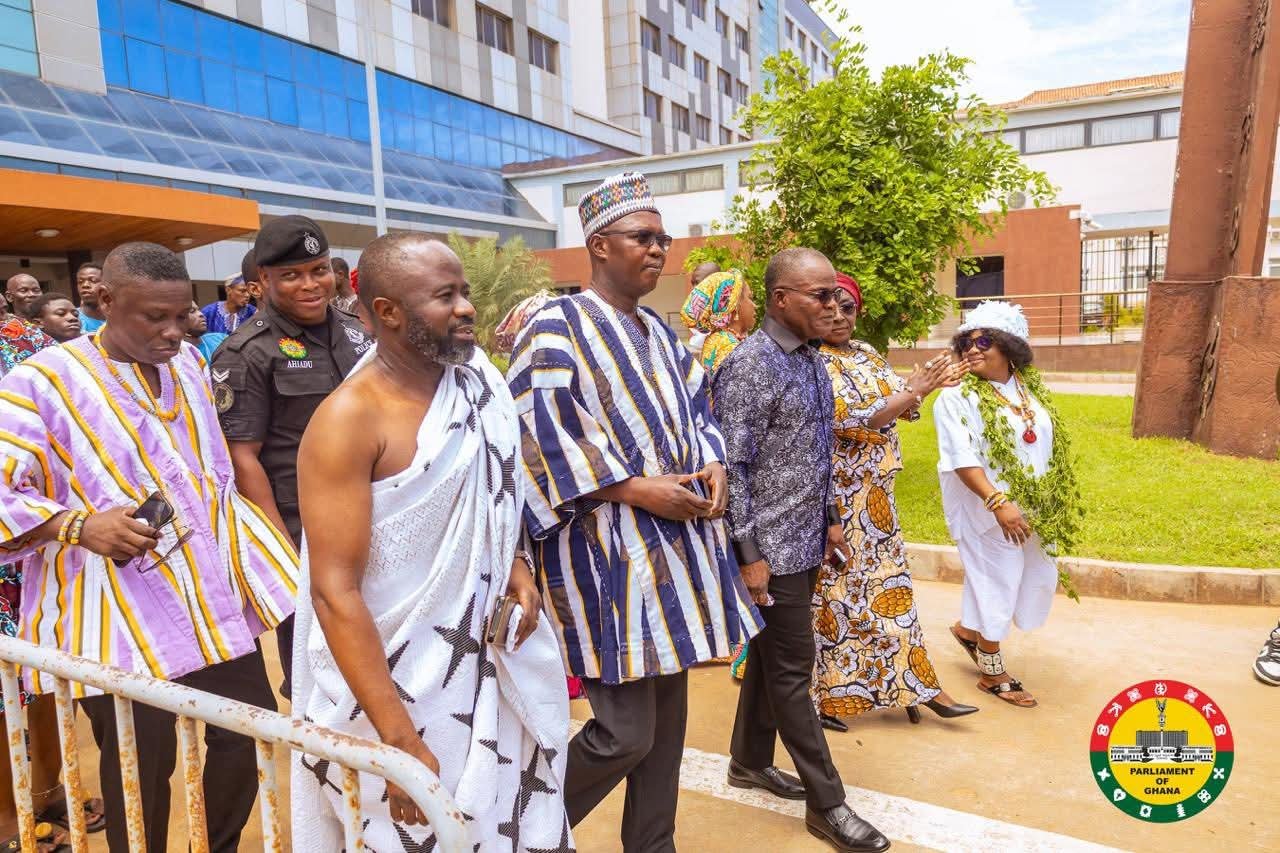
Ghana’s parliament has marked the 2nd edition of May Day 2026 under the theme “ Welcome Home”.
It was special day meant to celebrate the invaluable support of the workforce, recognizing the commitment, resilience, and contributions of workers to institutional growth and national development.
Delivering the message on behalf of the Speaker, the 1st Deputy Speaker, Bernard Ahiafor, described the theme as very apt, appropriate, and timely, noting that Parliament is more than a workplace, it is a shared home.

He emphasized that we cannot speak about work without speaking about people, reminding everyone that the true measure of our work is the well-being of our people.
He urged that our traditional clothing become an integral part of our everyday clothing, and that our local languages must become integral to our daily lives, interwoven into education and practiced at home.
Referencing Standing Order 63, which captures the use of local language as optional in deliberations, he encouraged a renewed commitment to identity, saying it is significant that we “come home” and present who we are so future generations can inherit a story they can fully tell.
The Clerk, Mr. Ebenezer Ahumah Djietror, in his remarks commended officers for their dedication and devotion to duty, calling on them to go the extra mile and leave legacies.
Echoing the reminder that an unexamined life is not worth living, he described the event as an invitation to reconnect with our roots through cultural revival.
The Deputy Clerk, C&FMS, Dr. Gloria Sarku Kumawu, urged all not to forget their roots, the people behind the stories of ministries, industries, and the strides made both in-house and beyond.
What began last year has now become a meaningful tradition, showcasing Ghanaian heritage, fostering unity, and encouraging innovation under the principle of diversity for unity and diversity for progress, she added.
The gathering brought together leadership, public officials, and staff across all levels, along with the media, standing as a unifying platform that honored service, celebrated culture, and reaffirmed a shared commitment to national development.
Hot!
Manhyia would serve as Ghana’s unifying force …Otumfuo assures on commemoration of 27 years on the Golden Stool

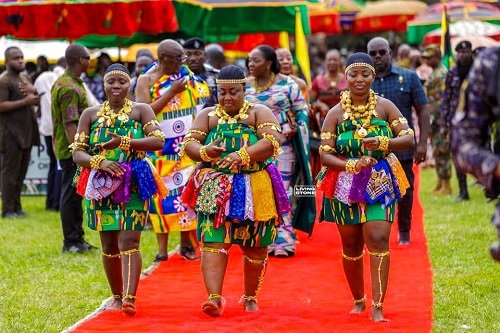
The Asantehene, Otumfuo Osei Tutu II, last Friday celebrated his 27th enstoolment with a colourful and culture-rich ceremony at the Manhyia Palace in Kumasi, drawing a distinguished gathering of dignitaries from across Ghana and beyond.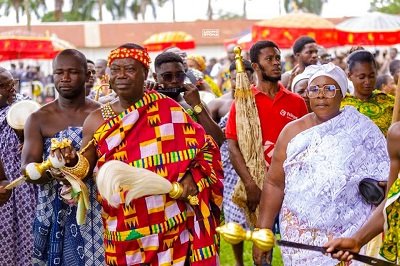
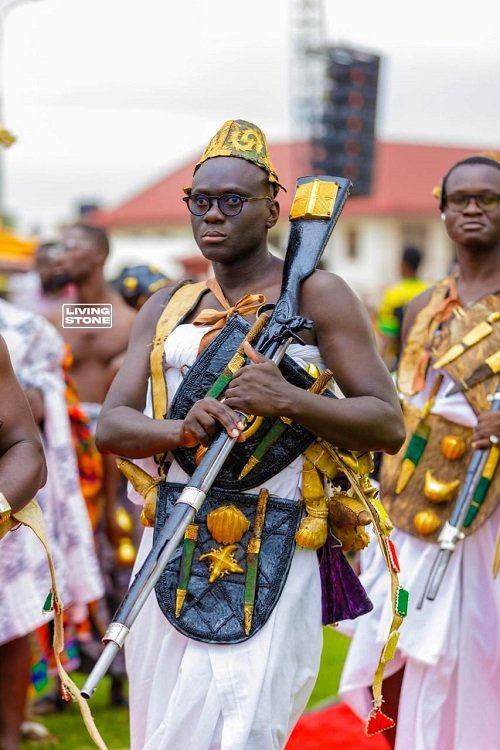
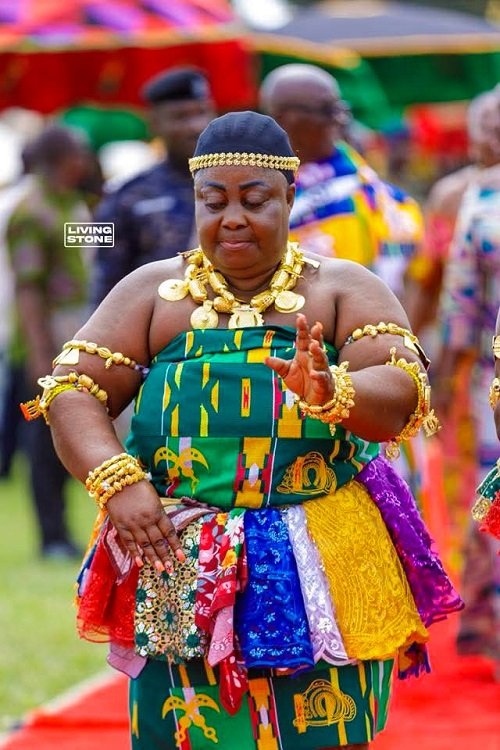
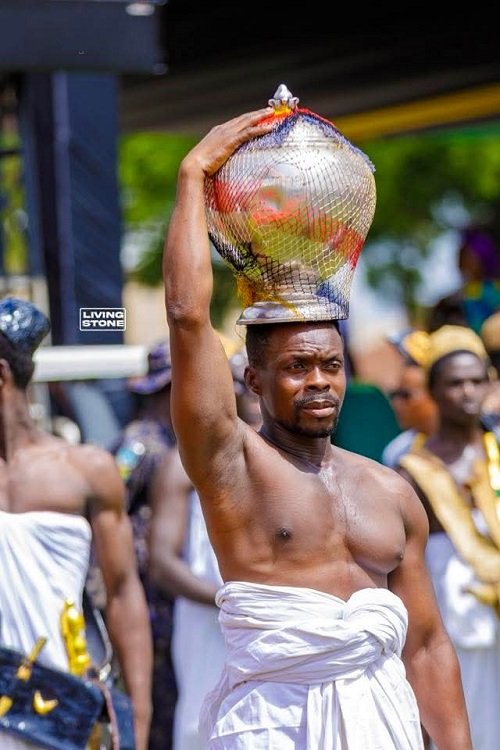

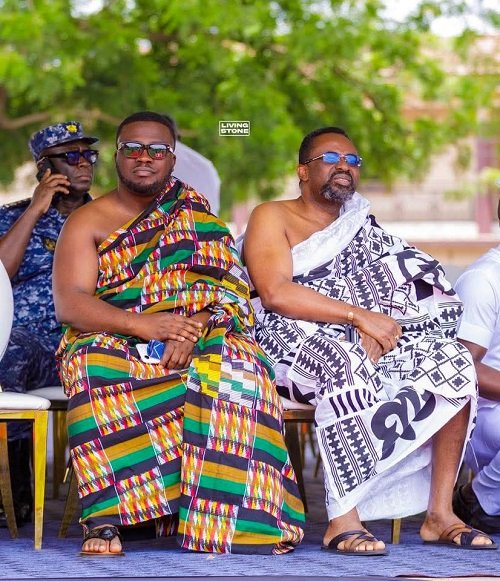
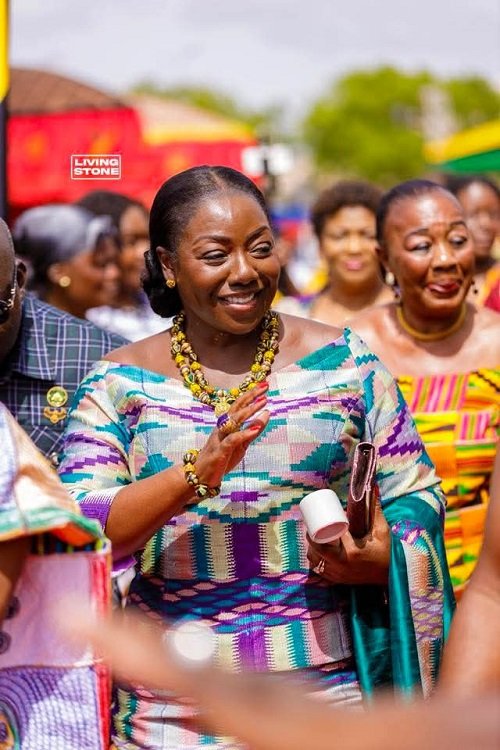
Clad in splendid kente and adorned in rich traditional regalia, the dignitaries added colour and elegance to the occasion, as the palace grounds came alive with a vibrant display of Ghanaian culture.
Traditional drumming, dancing and symbolic rites underscored the deep-rooted heritage of the Ashanti Kingdom, captivating guests and reaffirming the value of tradition in modern society.
Speaking at a high-level Executive Gala organised by the Diaspora Affairs Office of the Office of the President in strategic partnership with the E ON 3 Group, the ‘World-Meets-in-Ghana’ gala, the Asantehene urged Ghanaians to guard against the divisive tendencies of partisan politics.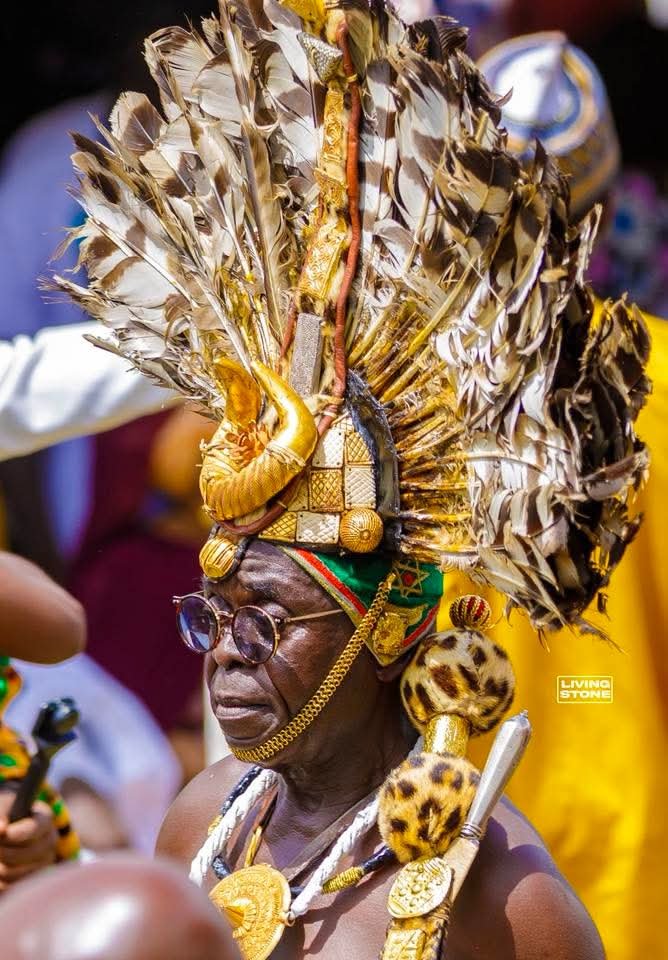
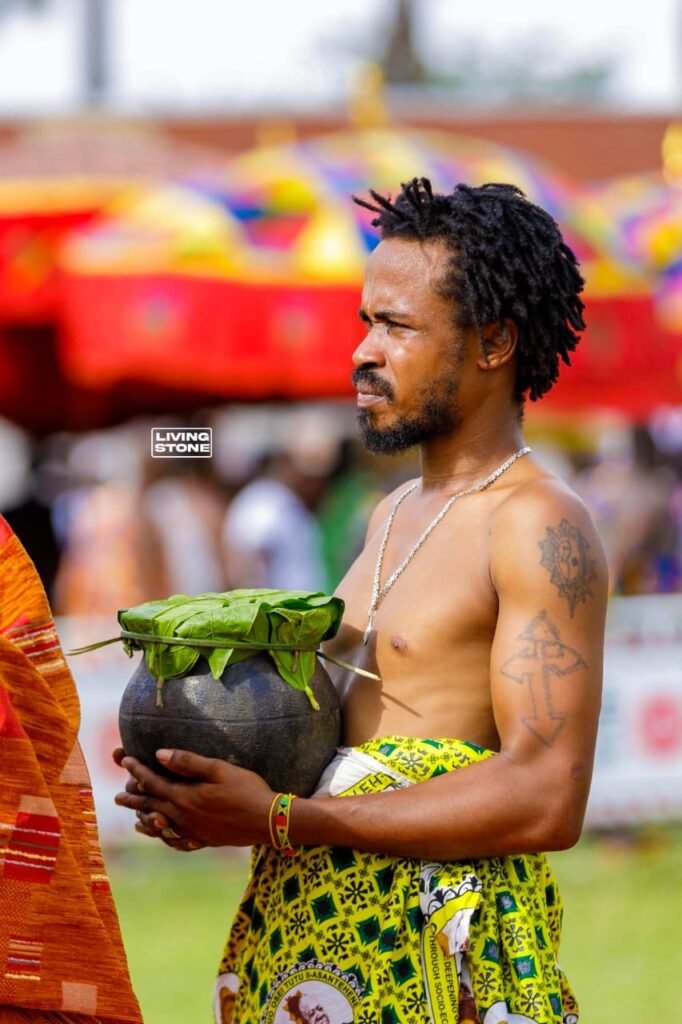
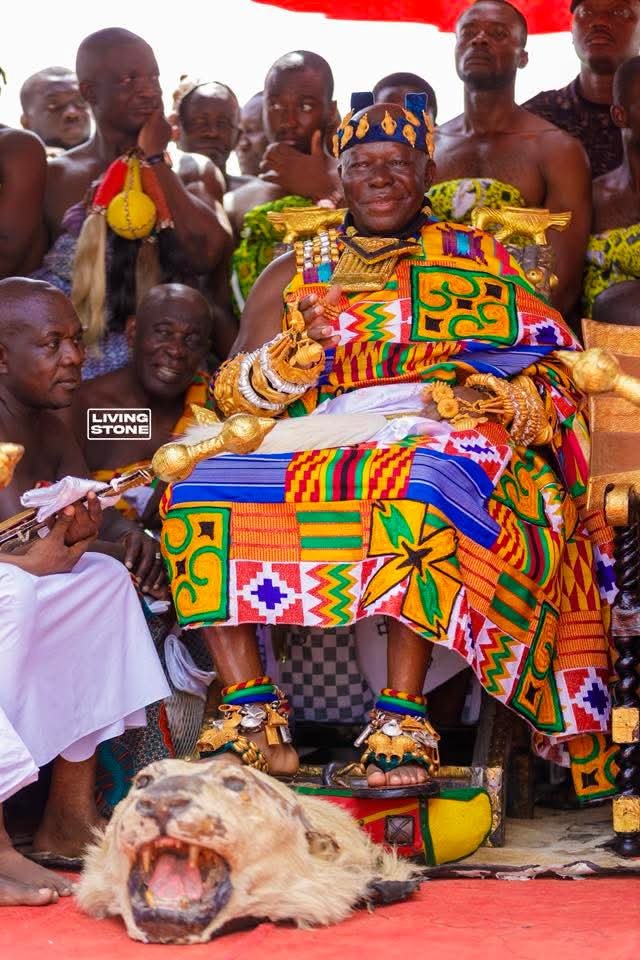
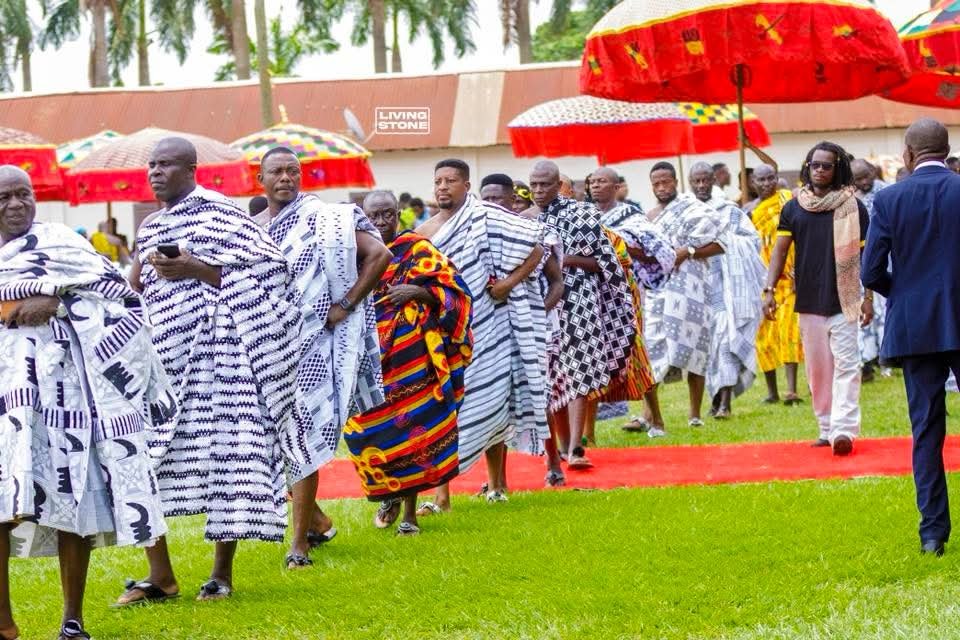
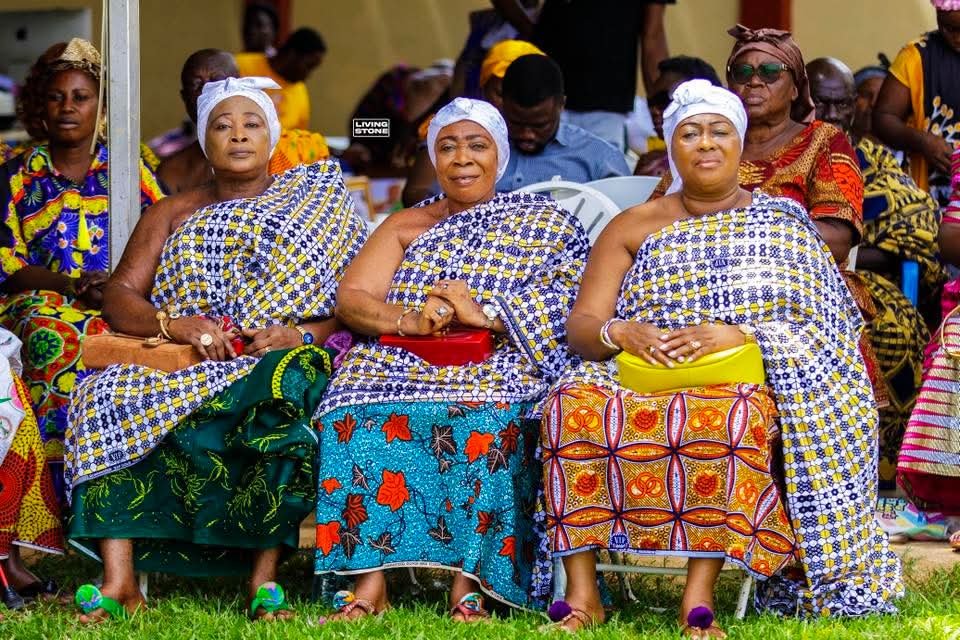
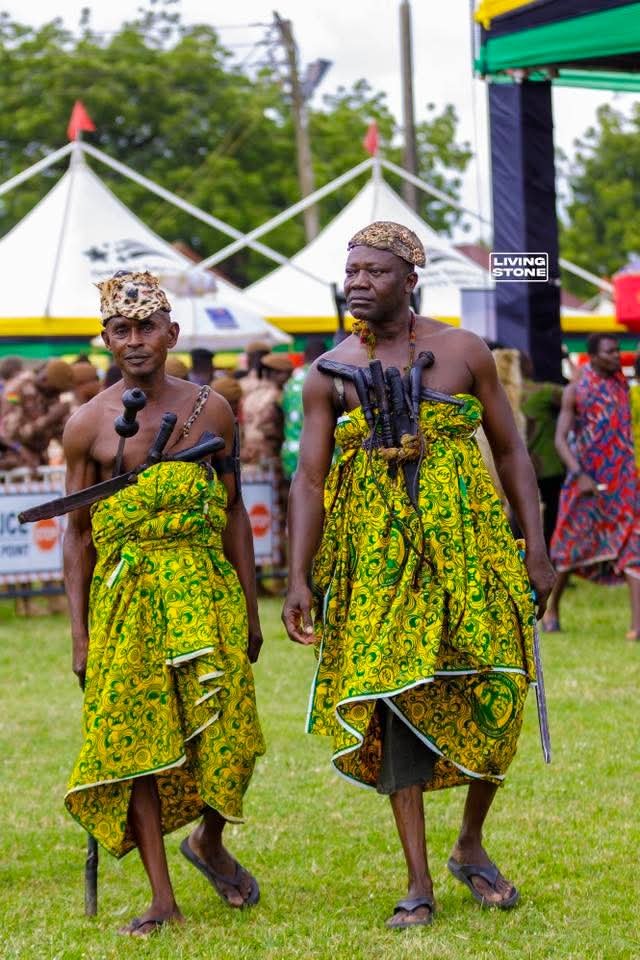
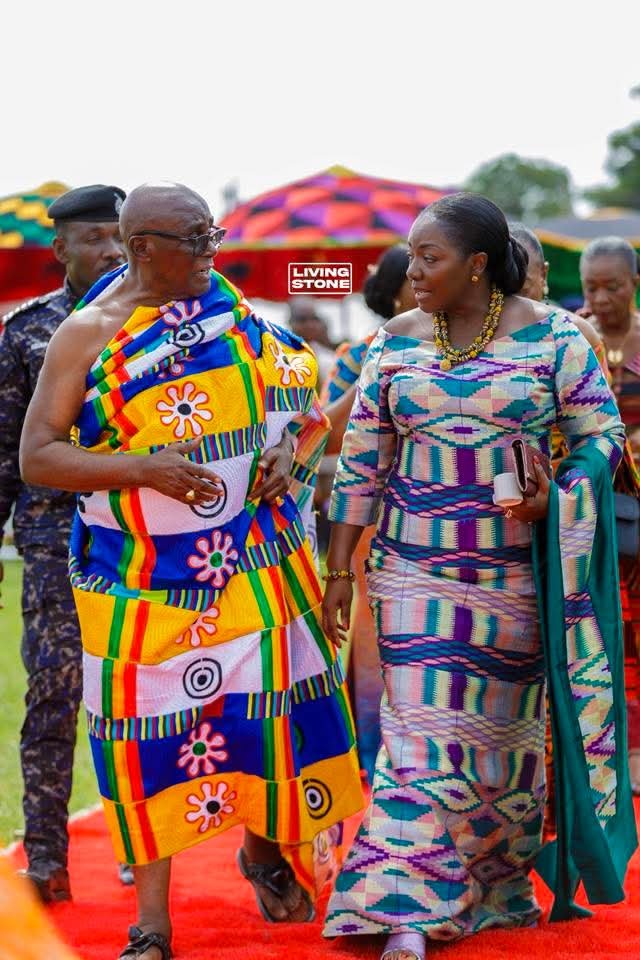
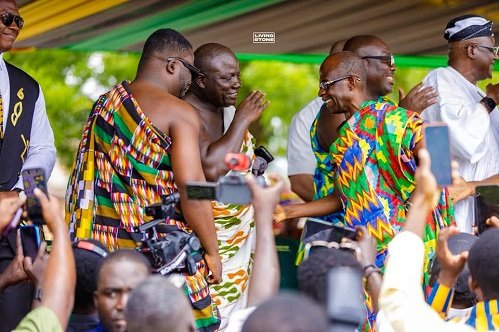
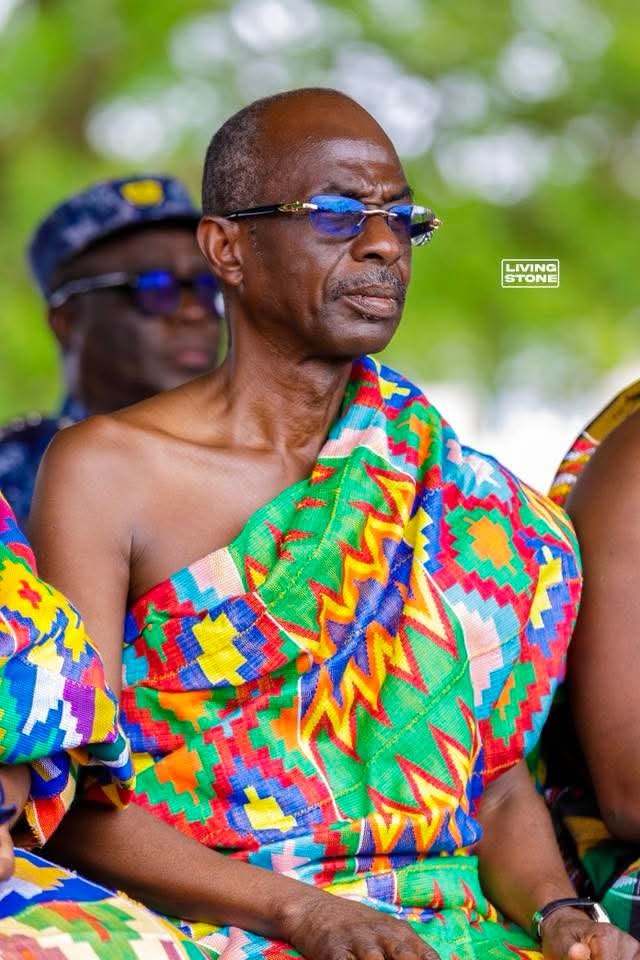
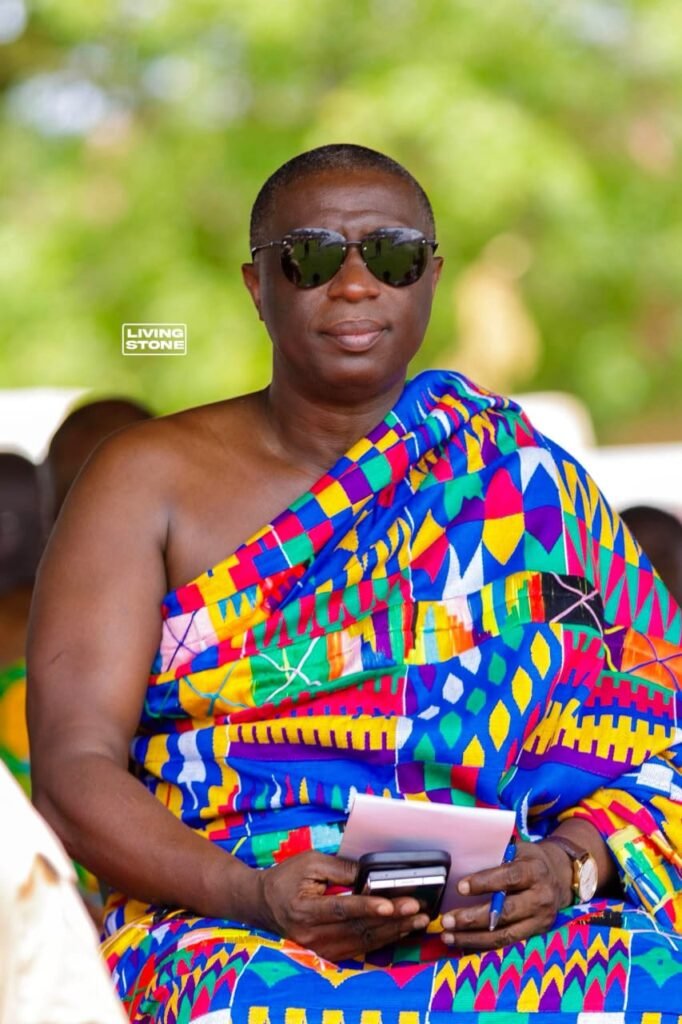
The event was to honour the Asantehene’s nearly three-decade reign under the theme ‘Advancing Peace and Sustainable Economic Development through Royal Vision’.
Otumfuo Osei Tutu II noted that such attitudes threatened the country’s long-standing values of unity, civility and brotherliness.
He assured that Manhyia would continue to serve as a unifying force for the nation.
The celebration also featured the presentation of commemorative gold coins to notable national leaders, including the President, John Dramani Mahama, former Presidents John Agyekum Kufuor and Nana Addo Dankwa Akufo-Addo as well as Dr Mahamudu Bawumia, a former Vice President in recognition of their contributions to peace and national development.
By Spectator Reporter