News
Unveiling untold stories: Exhibition sheds light on trans-atlantic slave trade legacies

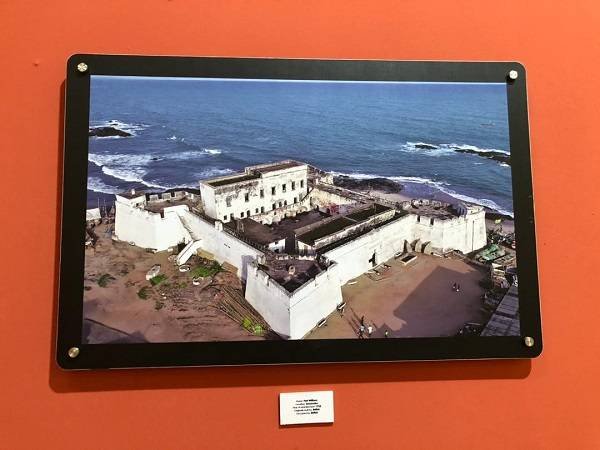
Slavery, a haunting chapter of history, has long been rec¬ognised as an outmoded custom in today’s world.
However, the intricate details of how it unfolded in Ghana is often overshadowed by a repetitive nar¬rative involving European countries’ trade with African nations.
To rekindle awareness of this forgotten past, the “Danmarks frie forskningfond,” an independent research fund in Denmark, has or¬chestrated an exhibition that delves into the history of slavery between Africa and the Caribbean—specifi¬cally the Trans-Atlantic slave trade.
At the inauguration of the event, Professor Mads Anders Bagges¬gaad articulated the exhibition’s purpose, emphasising its role in fostering collaboration between local researchers and international partners.
Dubbed “Authoring Slavery: Blind Spots,” the exhibition aims to cast a spotlight on overlooked aspects of the transatlantic slave trade.
As the exhibit unfolded, guests were moved by a recorded poem penned by Kofi Anyidoho.
The poem pays tribute to the souls lost during the brutal slave trade, honouring their tireless struggle to restore Africa’s dignity in the 20th century.
A Post-Doctoral Research Fellow from the University of Hull in the United Kingdom, Dr. Cassandra Gooptar took the stage to explore the enduring legacies of enslave¬ment and restorative justice.
She discussed the socio-political dimensions of the trans-atlantic slave trade, emphasising its lasting impact on contemporary society.
Dr. Gooptar highlighted the rele¬vance of modern day slavery, par¬ticularly in societies like the United Kingdom, where racial divisions persist and education often omits critical historical events.
The exhibition’s significance ex¬tended to its exploration of critical blind spots in the study of slavery.
Dr. Isabel Robinson underscored the importance of raising the profile of black history and addressing overlooked issues related to slavery.
Meanwhile, Dr. Emmanuel Sab¬oro’s presentation delved into the ethno-racial differences and colo¬nial effects that continue to shape Ghana.
He shed light on the term ‘Donkor’ which signifies captivity in northern Ghana, and discussed how ethnicity and skin color continue to influence identity perceptions.
The “Authoring Slavery: Blind Spots” exhibition successfully re¬vitalised the discourse around the trans-atlantic slave trade, shed¬ding light on hidden narratives and inspiring conversations about the enduring impact of historical injus¬tice on today’s world.
By George Obeng Osei


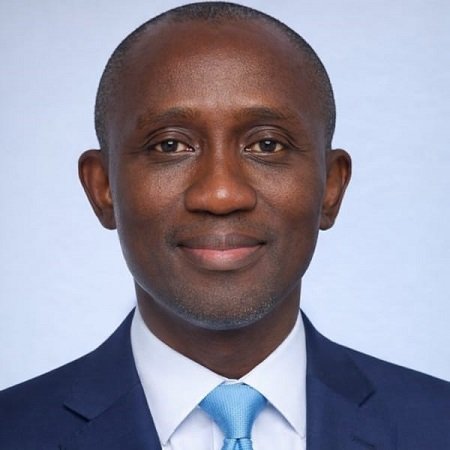
The Director of the Public Health Division of the Ghana Health Service (GHS), has urged Ghanaians to remain vigilant and observe good hygiene during the flooding and rainy season to prevent a cholera outbreak.
According to him, although flooding in some parts of the country has subsided, the risk of cholera remains because the conditions that promote the spread of the disease still exist.
“The risk of cholera still exists,” Dr. Asiedu-Bekoe said, explaining that cholera is closely linked to unsafe drinking water and poor sanitation.
Speaking on 3 FM on Thursday, he cautioned the public against becoming complacent a few days or weeks after the floods, stressing that people should continue to be careful about the food they eat and the water they drink.
“I want to urge Ghanaians to be careful what we eat and drink. Let’s not assume that because the flood came last week, we can lower our guard,” he said.
Dr. Asiedu-Bekoe noted that countries with access to safe drinking water and proper sanitation have largely eliminated cholera, adding that Ghana still has challenges in those areas.
He therefore advised the public to maintain high standards of personal hygiene, especially by washing their hands regularly with soap and clean water.
According to him, handwashing remains the most effective and affordable way to reduce the spread of cholera and other infectious diseases.
“The most cost-effective intervention is handwashing with soap and water,” he said.
According to him “That does not depend on whether there are floods or not. Make sure you wash your hands regularly with soap and water.”
He called on Ghanaians to maintain clean surroundings and practise proper sanitation to reduce the risk of disease outbreaks during the rainy season.
By: Jacob Aggrey
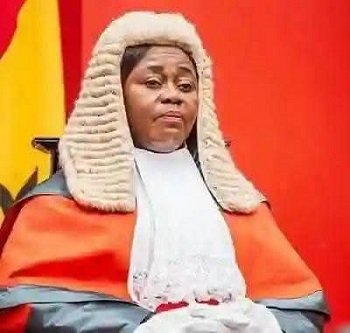
The Supreme Court has dismissed all four suits challenging the removal of Her Ladyship Justice Gertrude Torkonoo from office as Chief Justice.
The court delivered its rulings earlier this morning, ending the legal challenge at the domestic level.
This follows last week’s judgement by the ECOWAS Court, which also rejected applications seeking to overturn Justice Torkonoo’s removal.
Each of the four cases filed at the Supreme Court argued against the processes that led to Justice Torkonoo’s exit. The court, however, found no legal basis to grant relief and dismissed each application in its entirety.
In a brief statement by the Deputy Attorney-General Jusrice Srem-Sai after the rulings, he expressed appreciation to the legal team.
“Gratitude to our team of State Attorneys and members of staff,” he posted on Facebook, acknowledging their role in defending the state’s position through both ECOWAS and Supreme Court proceedings.
Background
Justice Gertrude Torkonoo was removed from office as Chief Justice following proceedings initiated earlier this year.
The move triggered multiple legal challenges, including four separate suits at the Supreme Court and petitions before the ECOWAS Court of Justice.
Both courts have now ruled against the challengers.
Last week, the ECOWAS Court dismissed the regional applications, and this morning’s Supreme Court decision closes the matter in Ghana.
By Edem Mensah-Tsotorme