News
Water justice & climate solutions: Policy makers urged to listen to voices of minority and indigenous people


- /home/u249204778/domains/spectator.com.gh/public_html/wp-content/plugins/mvp-social-buttons/mvp-social-buttons.php on line 27
https://spectator.com.gh/wp-content/uploads/2023/07/IMG_5118.jpeg&description=Water justice & climate solutions: Policy makers urged to listen to voices of minority and indigenous people', 'pinterestShare', 'width=750,height=350'); return false;" title="Pin This Post">
- Share
- Tweet /home/u249204778/domains/spectator.com.gh/public_html/wp-content/plugins/mvp-social-buttons/mvp-social-buttons.php on line 72
https://spectator.com.gh/wp-content/uploads/2023/07/IMG_5118.jpeg&description=Water justice & climate solutions: Policy makers urged to listen to voices of minority and indigenous people', 'pinterestShare', 'width=750,height=350'); return false;" title="Pin This Post">
Policy makers have been urged to listen to the voices of the minority and indigenous people as they have the key to unlock water justice and climate solutions.
Speaking at the launch of a report by the Minority Rights Group (MRG), the Co-Executive Director at Minority Rights Group, Madam Claire Thomas added that mostly it was the minority who felt the brunt of water crisis.
The report titled ‘Minority and indigenous trends report 2023: People- Process- Planet; sheds light on the effect of the situation on minority communities and how systematic discrimination had left many minority and indigenous communities with precarious access to safe drinking water.
It brings together voices and knowledge systems of over 35 indigenous and minority wisdom keepers at plenatary level, for real and effective action against water crisis.
It again revealed human activities that had led to disruptions in the global water cycle, leading to enormous consequences to millions of people and also takes an indebt look at the linkage of the situation to colonialism, which led to the global commercialization and predation of water and exposes how it was being used as a weapon for the marginalization of minority groups.
It again focused on the ongoing global water crisis which had become critical challenges that is facing humanity, like climate change, biodiversity loss and food insecurity and explores human rights implications of collapsing water systems.
The report contain three in-depth chapters, 35 case studies detailing the 10 most pressing intersectional aspects of the global water crisis, like access, sanitation, pollution, floods, drought, infrastructure, conflict, usage, governance and culture.
It highlights how systemic discrimination has left many minority and indigenous communities with precarious access to safe drinking water as governments and private water companies fail to invest enough resources in the areas where they live, even when they often face displacement by these water infrastructure projects that do not benefit them.
It further highlights that many minority and indigenous populations bear the brunt of water-related disasters, such as floods and drought, while facing exclusion in the emergency relief efforts that follow. And also touched on the indigenous peoples’ deep spiritual connections to the waters on their traditional lands and their centuries’ long experience of managing water sources render them especially vulnerable when these interlink ages are disrupted.
Madam Thomas stated that listening to minorities and learning from them was part of the solution to water crisis.
For his part, Nicholas Salazar Sutil, Commissioning Editor at MRG said “the solution are right before our noses.
Indigenous peoples and minority groups are offering water conservancy and water regeneration systems of knowledge that will help restore water cycles if adopted , which based on thousands of years of practices are evidence of achieving climate cooling, mitigation of extreme water events.
For instance she said there were terrible reports from floods in Pakistan of minorities being left without emergency relief, as well as similar reports from other parts of the world.
She said major concern in the report was an abuse of the rights of those who lived closest to water and often furthest away from infrastructure –minorities and indigenous peoples arguing that not only is it not enough to say that these people hold the key to climate solutions, but that water justice must also focus on the position and responsibility of majority groups.
For her recommendation she called on governments and corporations to uphold the fundamental right of every person to safe drinking water and sanitation, regardless of their status, vis-à-vis race, ethnicity, religion, language, caste, descent.
BY BENEDICTA GYIMAAH FOLLEY


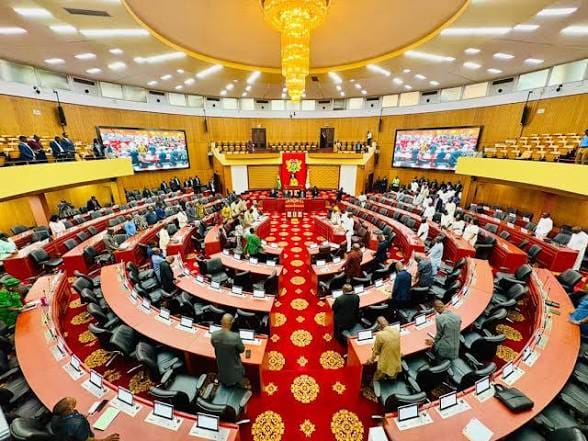
Parliament has clarified public commentary on social media regarding a notice on its notice board that read “No Vacancy for National Service Personnel 2026/2027. Kindly go for reposting.”
In a statement, signed by the Director of Media Relations, David Sebastian Damoah, Parliament said the notice has been misconstrued and was not a policy statement, a freeze on national service placements, or a change in its support for the National Service Scheme.
According to Parliament, the notice was a routine administrative message to prospective personnel who reported to the House, informing them that it has received more personnel than it can accommodate for the 2026/2027 service year and that they should seek reposting to other institutions.
It said it remains committed to the National Service Scheme and values the contribution of service personnel to its work, and regrets any confusion or inconvenience the wording may have caused.
By Edem Mensah-Tsotorme
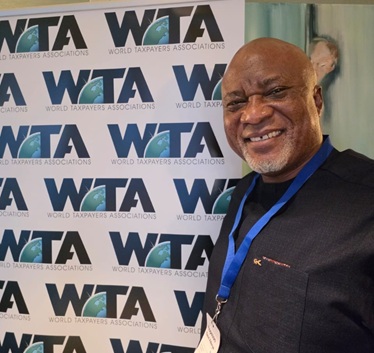
Ghanaian public advocate Hopeson Yaovi Adorye has been elected to the Board of Directors of the World Taxpayers Association (WTA).
The election took place on Sunday, October 5, 2026, during the Association’s conference in Kraków, Poland.
His election marks a significant addition to his international leadership portfolio and provides a platform for Ghanaian and African perspectives to contribute to global discussions on taxpayer rights, responsible taxation, transparency and prudent management of public resources.
Reacting to his election, Mr. Adorye expressed appreciation to the leadership and members of the WTA for the confidence reposed in him.
“I am deeply honoured by this confidence and conscious of the responsibility that comes with it. Taxpayers are at the heart of every economy, and they deserve fairness, transparency, accountability and value for the taxes they pay. I look forward to working with colleagues from across the world to strengthen the voice of taxpayers and promote responsible fiscal governance,” he said.
According to him, taxation should not be viewed solely as a mechanism for raising government revenue, but also as an important component of the social contract between citizens and the state.
Mr. Adorye said governments have a responsibility to ensure taxes are collected fairly and public resources are utilised efficiently to deliver quality infrastructure, healthcare, education, security and other essential services.
His election also creates an opportunity to bring African experiences into international conversations on taxation and public expenditure.
Mr. Adorye, who is Executive Director of Taxpayers League Ghana, has previously served as Global Board Chairman of the International Youth Network for UN Security Council Resolution 2250, an NGO associated with the United Nations Economic and Social Council (ECOSOC).
He is expected to use his new role to champion fiscal accountability, taxpayer education, good governance and stronger citizen participation in public financial management.