Features
Economic recovery on course

- /home/u249204778/domains/spectator.com.gh/public_html/wp-content/plugins/mvp-social-buttons/mvp-social-buttons.php on line 27
https://spectator.com.gh/wp-content/uploads/2023/04/Ken-Ofori-Attah-Pix.webp&description=Economic recovery on course', 'pinterestShare', 'width=750,height=350'); return false;" title="Pin This Post">
- Share
- Tweet /home/u249204778/domains/spectator.com.gh/public_html/wp-content/plugins/mvp-social-buttons/mvp-social-buttons.php on line 72
https://spectator.com.gh/wp-content/uploads/2023/04/Ken-Ofori-Attah-Pix.webp&description=Economic recovery on course', 'pinterestShare', 'width=750,height=350'); return false;" title="Pin This Post">
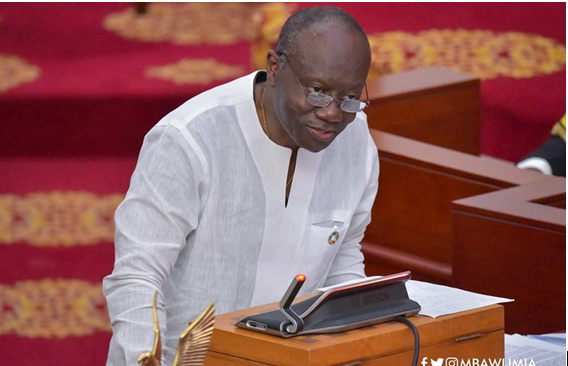
Ken Ofori Attah
There is no doubt that, in spite of the current economic challenges, the government is working hard round the clock to ensure an effective economic recovery in order to make things better for Ghanaians in the country.
It is an indication of the determination of the government to surmount the obstacle that is affecting the country today. What makes us hopeful is that, in spite of the economic difficulties facing the country, developmental projects in all parts of the country are still ongoing.
Technical, Vocational, Engineering and Technology education (TVET) is going alongside the free SHS being implemented with maximum alacrity. Other projects, such as the new regional and district hospitals as well as the promotion of electricity and water in various parts of the country, among others, are ongoing. Again, electricity supply has been relatively constant compared to what was experienced previously under what became known as “Dumsor”.
In other parts of Africa, for instance, power outages have become a common phenomenon. The cases of South Africa, Nigeria and a few other African countries testify to this fact.
COUNT OUR BLESSINGS
It is for this reason that people in Ghana must be happy and hopeful for happy days ahead. We need to count our blessings one by one.
It is true that economic conditions are very tough, but from all indications, every effort is being made to bring the situation under control. The Debt Restructuring Programme by the government is meant to bring the situation under control in order to push forward positive growth and this is the reason why the government is still negotiating with its creditors to bring the debt level under control.
The Domestic Debt Exchange has been completed successfully. In the same way, efforts are also being made to enter negotiations with our foreign counterparts to bring the situation under control as far as the foreign debt level is concerned.
The debt level has gone up not because of any reckless spending. Rather, they went into the building of schools, both technical and grammar education, the provision of water and electricity for the people, the construction of roads and many others.
This is a country that has proven to be responsible as far as developmental projects are concerned. It is believed that very soon, positive economic results will be encountered.
NEGOTIATIONS ON DEBT RESTRUCTURING
Finance Minister Ken Ofori Atta went to China to have negotiations on debt restructuring with officials of that country. Sources say the Minister went via Addis Ababa, where he attended the UNECA High-Level Ministers meeting on Global Financial Architecture. After that meeting, Mr Ofori-Atta headed to China on March 22, 2023.
The Minister who led the government delegation had bilateral talks with China as well as seek financial assurances for Ghana’s programme with the International Monetary Fund. This is an indication of the great effort being made by government to normalise the economic situation of the country and make it better.
The trip was postponed to the end of March because it coincided with the National People’s Congress of China meeting in early March 2023. The Minister of Finance has already held meetings with officials of Exim Bank China in Ghana, all in the line with re-profiling the country’s debt to China.
GENERATION OF FUNDS
The government is also working hard to derive enough money from Treasury Bills in order to keep things going. We therefore need to be hopeful because all these efforts are yielding the desired results in line with the economic recovery.
The Government of Ghana secured GH¢3.88 billion from the sale of treasury bills in its latest auction held on March 10, 2023. This was an oversubscription of the GH¢1.10 billion it was targeting.
However, interest rates have dropped significantly to 18 per cent. According to the auction results from the Central Bank, the government secured GH¢2.90 billion from the 91-day bill and GH¢972.49 million from the 182-day bill. The subscriptions surpassed the government’s set target of GH¢2.775 million but it sold more than the GH¢3.31 billion secured by the government in last week’s auction. Interest rates, however, reduced to 18.52 per cent for the 91-day bill, 22.8 per cent and 21.27 per cent for the 182-day bill.
CONFIDENCE IN ECONOMY
The oversubscription is an indication of great confidence in the Ghanaian economy. If there had been no confidence, there would have been undersubscription. This goes to show, among others, that things are on course for rapid recovery.
The fall in rates has been attributed to the successful debt restructuring program. According to the government, the Domestic Debt Exchange programme has accounted for the reduction in the rate of Treasury Bills from 35 per cent to 24 per cent.
There is therefore no doubt that things are gradually stabilising and getting better. If this is the case, then let us have confidence that, as long as we are on the right path, Ghanaians will soon smile.
What we are all seeking is for inflation to fall to a level that is lower than what it is now. If this happens, and it will surely do so, the economic recovery programme will move at a faster rate than it is now.
INFLATION
Inflation could fall sharply to below 40 per cent by the end of April 2023. According to a Senior Credit Research Analyst at REDD Intelligence, Mark Bohlund, his base effects analysis indicate that “inflation will fall by more than 10 percentage points by April 2023.”
The fall in inflation will not happen by mere chance. Rather, it will come about as a result of pragmatic steps taken by the government to achieve that purpose.
“The inflation rate has declined for two straight months and may fall more sharply to below 40 per cent by the end of April due to base effects,” said Mark Bohlund, a senior credit research analyst at REDD Intelligence. Bloomberg said the Ghana cedi, which whipsawed in 2022 over concern about its ballooning debt load and then optimism about a provisional International Monetary Fund bailout, has been relatively steady this year, helping to keep inflation in check.
ECONOMY TO BOUNCE BACK
In conclusion, therefore, the economic situation being experienced in Ghana is tough, admittedly, but the government has taken the right steps to ensure that positive results are achieved as early as possible. We must all therefore be hopeful that, as President Akufo Addo has said, the economy will surely bounce back.
Ghana will not continue to stay in this economic situation. We must therefore be hopeful in light of the ongoing recovery efforts that are taking place thanks to the bold economic steps put in place by the government.
The economic recovery is surely bound to occur within a short time, so we must all support the government with prayer and action in our daily practical dealings so that things will be better for all of us.
Email address/WhatsApp number of author:
Pradmat201@gmail.com (0553318911)
By Dr Kofi Amponsah-Bediako

There is a scripture that is found in Matthew 6:22 which says that the lamp of the body is the eye and therefore the eye must see well to enable the body to get to its destination.
What most people do not know is that behind the scenes, there is a strong interaction between the eyes and the brain before a picture becomes clear. The state of mind therefore is crucial to the eye seeing clearly to enable the body to process accurately the information the eyes are feeding it for proper identification of what the eyes see.
This is similar to how a person behaves i.e. what informs the decisions that forms in the mind that results in the actions that a person performs. The actions of a person does not therefore just happen but is as a result of things that went on in the mind, which in most cases resulted from information passed on to it by the eyes either consciously or unconsciously.
There are so many issues that affect our society which makes one wonder, whether the people who displayed such acts were created by someone or something other than God.
How can a person see a beach created by God with beautiful beaches and fresh air blowing all around, decides to defecate at such places, and therefore desecrate the environment? lt is simply mind boggling?
When other people in other countries who dwell on the coast are using their beaches for tourist attraction purposes as a means of livelihood and also to promote environmental health, some people living around our beaches, have turned them into rubbish dumping sites and toilets.
It is a very sad situation and the earlier we did something about it the better. It is a national emergency that must engage the attention, first of the government and then the citizenry, where religious bodies and NGOs must play a critical role.
The things we focus on in this country, needs to be addressed. Our minds which processes the info the eyes send to the brain, must be disciplined. There are certain behaviours that a disciplined mind can ignore even when the eye has provided info to the brain. One of the things a disciplined mind does, is the avoidance of a second look, which is critical for every person who wants to avoid adultery or fornication.
Once a person is not blind, he will see things. The boobs, the ‘shankus’, the coca cola shapes, the light complexioned, the dark complexioned etc. the eyes will definitely see and report same to the brain. What the brain or the mind decides to do or instructs the eye to do is the issue.
It can decide to instruct the eye to take a second look and let the mind drool over it or say ignore it and that will be the end.
If the mind becomes trained to focus on environmental issues like clean environment, the eyes will automatically be reporting on insanitary conditions to the brain as and when it sees them. The mind will pay attention to such data and begin to process them and to identify solutions to deal with the reported insanitary conditions.
There is the need to encourage citizens to train the mind to focus on the right thing so that in tandem with the eyes, focus will be maintained. When the mind is so trained, it communicates with the eye to also focus on hood things that helps in both are spiritual life and our secular lives, for indeed the eyes are the lamp of the body. God bless.
THE relationship between New Times Corporation (NTC) and African Concrete Productions (ACP) is based entirely on matters of the stomach. Each depends on the other in a dietary symbiosis, reinforced by the close proximity of each other
At lunchtime, you’d see a particular set of Times workers marching regimentally to ACP to face the wall. You’d think they are soldiers. It has long been declared that the company manufactures the best kokonte in the Greater Accra Region. ACP is, therefore, a culinary haven for those NTC kokonte fans, both male and female.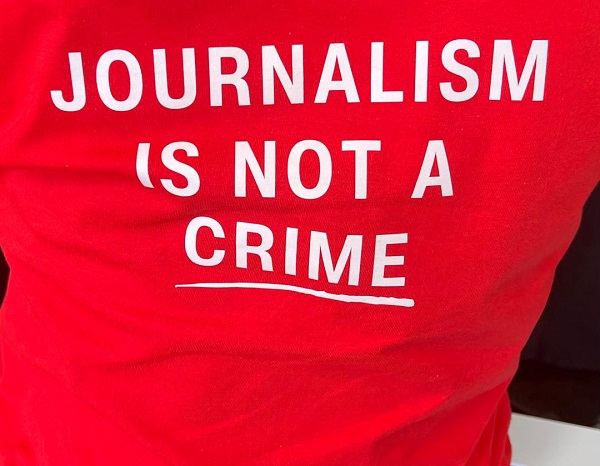
As the NTC kokonte warriors cross the border to ACP, you’d see some ACP banku fanatics dancing joyously to NTC. They are lucky folks because they do not have to obtain visa to enter into ‘Times’ to attack the balls of banku with precision and accuracy. They also claim that the lightsoup at ‘Times’ is arguably the best in West Africa.
So the relationship between the two entities was quite cordial and based practically on stomach palaver, until ACP workers staged an industrial revolution, whereupon the managing director, accountant and estate manager were allegedly stripped naked and locked up in a room. An insurgency had began in earnest.
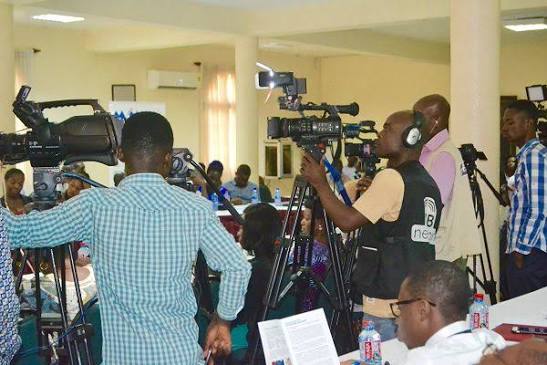
An ACP worker came to ‘Times’, this time not to eat banku and okro. He had come to inform newsmen that juicy stuff awaited them at ACP. It could make a front page lead story.
A camerawoman and a female reporter were accordingly dispatched to go and bring back news, juicy news as juicy as kokonte and groundnut soup.
I was driving to work when I espied the familiar camerawoman clicking away outside the ACP premises. I didn’t see any ‘Times’ reporter but angry workers who were on the verge of getting violent. I slowed down and the driver behind blew his horn at me like a lunatic. I drove on.
Later, I heard the reporter and camerawoman were harassed and brutalised. The report came,. “The camerawoman, Mrs Salome Adonu-Agbottah and reporter Mrs Doreen Allotey, in an attempt to retrieve the camera which the workers had seized from them were severely beaten. They were manhandled and almost pushed into a big gutter opposite the company’s premises.
BRUISES
“….The camerawoman had bruises on her body, her hand bag was destroyed and the money in it stolen. Mrs Allotey’s watch was also snatched and her feet stamped on.”
Luckily, it was not her nose that was trampled upon. She has a beautiful nose.
The bad news was received with extreme sorrow. If the victims had been men, it would not have seemed too bad. But to brutalise women is just unacceptable. The New Times Corporation has not stopped mourning the incident which has been condemned in many circles.
Some people keep asking me why Times sent females to cover a potentially violent demonstration. I tell them they might as well ask why CNN’s amazon, Christina Amanpour, is assigned to cover the carnage in Bosnia-Herzegovina and Rwanda. She is always on the frontline in jeans and jacket.
Journalism is a potentially hazardous profession, and once you accept to study and practise the trade, you might as well bone up to face any assignment as long as your superiors feel you are capable of handling it or you have demonstrated the capacity to handle it. Both males and females can be assigned anywhere, anytime just like policemen and women are assigned.
The only difference between cops and pressmen is that the latter are armed only with a pen and the former with a gun. The question is should newsmen also arm themselves so that in any event of an assault they would not be found wanting in self-defence? They can’t adequately defend themselves with a pen and a jotter. A pen cannot even disfigure an opponent’s upper lip.
Photo-journalists have particularly suffered violence. Spectator ace-cameraman Vincent Dzatse was severely assaulted by AMA men when he attempted to take pictures of their indiscretions.
Sports cameraman, P. K. Arthur has been beaten more than once at the sports stadium when riots errupted and he wanted to capture it on his lenses.
Some sports journalists have been banned from entering the Accra Sports Stadium by supporters because in their comments, they didn’t write “sense”. Some supporters once nearly lynched Christian Abbew, Spectator Sports Editor, near a courtroom. He was stoned like the biblical Stephen. He had gone to defend a contempt charge.
I think it is time journalists met and discussed how best to defend themselves in any event of an attack by individuals or mobs. In the pursuance of their duty, they must be free from harassment and assault.
Some journalists go to work and return home with a black-eye or a double fore-head. It is just not right. Something has to be done about it. I think journalists should be armed. But first we must be trained in the use of firearms so that our warning shot do not hit below the belt. What about training in Kung Fu?
This article was first published on Saturday, October 17, 1998.